Library

 Profile
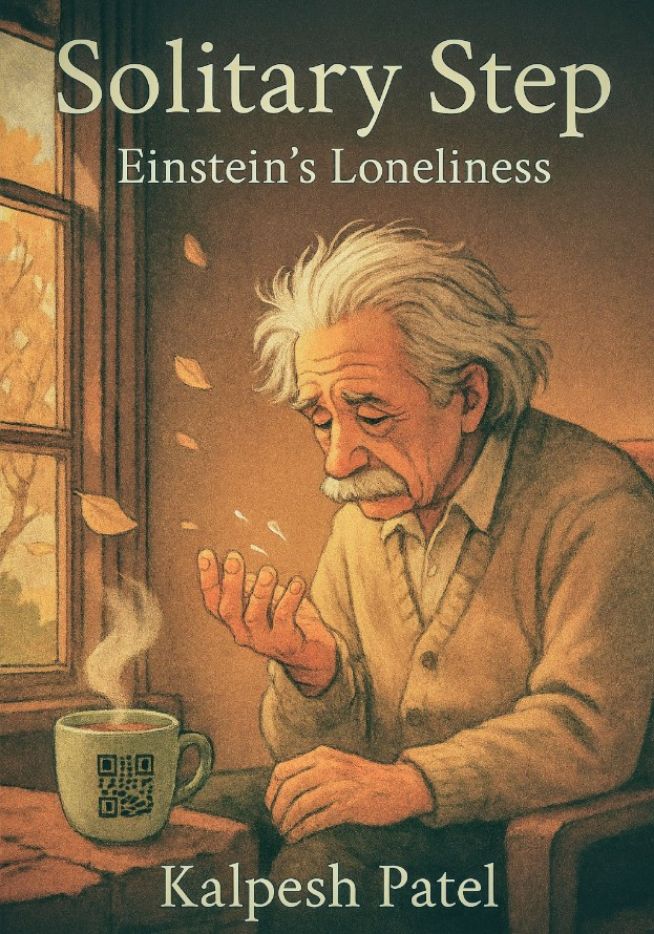
Solitary Step: Einstein’s Loneliness
Solitary Step: Einstein’s Loneliness

Solitary Step: Einstein’s Loneliness
There were no newspapers on the table.
No cameras.
No applause.
Only an old man sitting quietly beside a dim window.
His hair was white — not with wisdom,
but with weight.
Einstein studied the lines on his palm,
as if they held the fate of the world —
a world he helped change,
but not in the way he had hoped.
Outside, autumn leaves were falling —
one after another —
like humanity slowly shedding its innocence.
---
1. When Everything Was Bright
Years earlier,
he was full of laughter —
young, curious, restless.
He played with equations
like a poet plays with rhythm.
He believed the universe was a grand puzzle,
waiting for gentle hands to unlock its secrets.
> “Understanding the universe,” he used to say,
> “is like coming home.”
The world called him a genius.
Auditoriums filled.
Institutions honored.
Newspapers printed his smile.
And one day,
he glimpsed something no one had seen before —
an immense power inside the heart of an atom.
> “This is light!” he said.
> “The very light of creation.”
But the world did not see light.
The world saw power.
---
2. The Letter That Broke Him
One morning,
the room silent except for the ticking of a wall clock —
a letter arrived.
A thin envelope.
A short message.
But its weight could crush mountains.
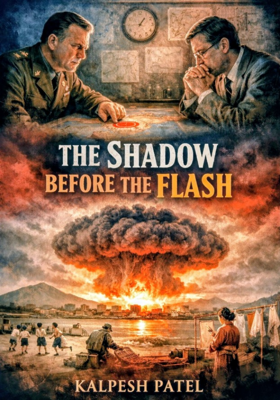
> “The bomb has fallen.
> Hiroshima is gone.”
Einstein’s fingers loosened.
The letter slipped from his hand
and drifted to the floor.
No scream.
No tears.
Just silence —
the kind that lives inside broken hearts.
Outside, children were still playing.
Birds were still singing.
But the world felt unbearably distant.
He whispered to himself:
> “The light…
> has become fire.”
---
3. The Solitary Step
The next day,
he walked to the small garden behind the library.
He told no one.
No one asked.
The soil was cool beneath his shoes.
He walked slowly.
Very slowly.
This was not escape.
This was return —
a return to his own conscience.
> “Science is innocent,”
> he murmured, voice trembling.
> “It is the human heart that chooses how to use it.”
He stopped walking.
Just one solitary step —
and it was enough.
A step not away from the world,
but into himself.
---
4. Late Understanding
Years passed.
History wrote his name in golden ink.
But no one noticed
that his eyes carried dust, not pride.
Einstein knew:
His discoveries opened the universe —
but humanity chose which doors to walk through.
One day, a young boy approached him.
> “Sir,” the boy asked,
> “Did you make the greatest invention?”
Einstein smiled — gently, painfully.
Leaves fell again.
Wind paused.
Time softened.
> “No, child.
> My greatest lesson was this —
> Science can give us power,
> but without humanity,
> that power becomes destruction.”
The boy nodded,
not fully understanding —
but the world would, someday.
---
Einstein returned to his window seat.
Old. Quiet.
But now honest with himself.
He was not trying to forget.
He was learning how to carry it.
One solitary step had brought him here —
to a place where science meets soul,
and regret becomes understanding.
And in that silence,
Einstein was not lonely —
just awake.
---