Library

 Profile
a confession by Miami sundaresan
a confession by Miami sundaresan

My name is Miami Sundaresan, and no, I have never lived in Miami. The city attached itself to me years ago during what was officially termed an “international policy exposure visit,” a phrase elastic enough to cover beachside hotels, purposeless conferences, and expenses that returned with me but left no intellectual souvenirs behind. The press had a field day. My supporters defended me with admirable creativity. Eventually, everyone settled on “Miami,” and like most political nicknames, it survived truth, denial, and explanation. I learned early that when something sticks long enough, it becomes identity.
That evening, I entered the forest for a secret meeting because forests are places where inconvenient things, documents, dissent, morality, do not function properly. I was to meet a man whose name never appeared on paper and whose interests could be summarized in figures rather than sentences. We were to discuss a mining clearance that would technically follow procedure while emotionally displacing thousands. I had done this before, many times, in air-conditioned rooms with coffee that cost more than rural wages. Doing it among trees felt almost poetic, as if nature itself were being consulted before being ignored.
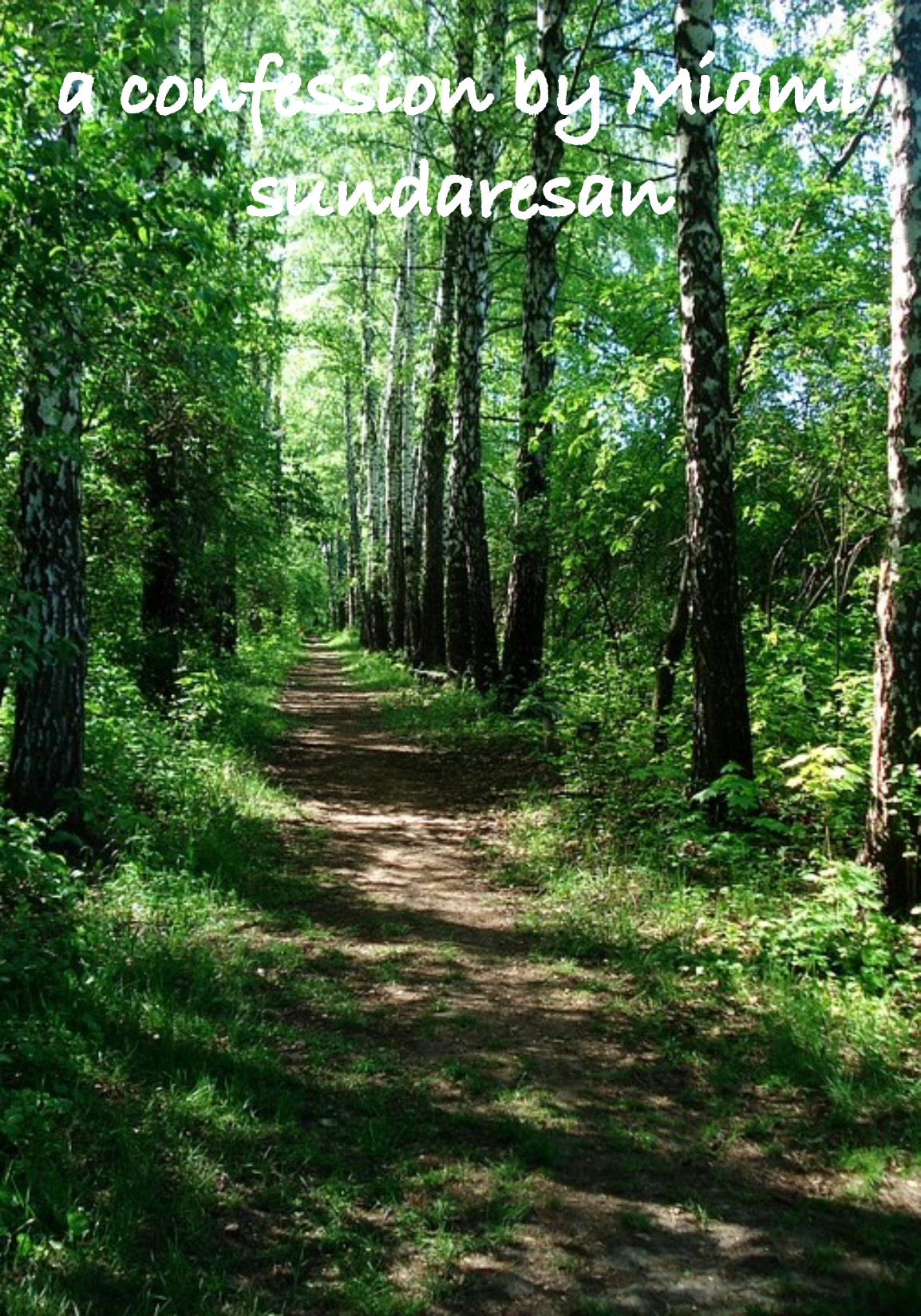
The forest greeted me with a silence that was not dramatic but disconcertingly attentive. There were no warning signs, no cinematic fog, no spiritual cues. Just trees standing the way trees always have, patient, rooted, and entirely uninterested in my importance. I checked my phone out of habit, more as a reassurance of power than necessity, and found no signal. I remember thinking, with mild irritation, that development still had some work to do here.
As I walked deeper, something subtle began to malfunction, not my body, but my internal narration. For decades, my thoughts had been disciplined, trained to immediately clothe discomfort in justification. If a project harmed people, it was “inevitable displacement.” If money changed hands, it was “facilitation.” If promises dissolved, they were “revised commitments.” That machinery had kept my conscience efficient and silent. Now, it stalled. Thoughts arose without their usual explanations, naked and awkward, like facts that had wandered into the wrong meeting.
When the idea occurred to me that this deal was wrong, I stopped walking altogether. The word wrong had not featured prominently in my vocabulary for years. Things were unviable, impractical, premature, but never wrong. Wrong suggested something dangerously simple, something that required no committee, no consultant, no spokesperson. It frightened me in a way raids and scandals never had.
I tried to laugh it off, the way one does when encountering an unexpected emotion in public. I told myself this was fatigue, dehydration, perhaps the forest air doing what opposition leaders had failed to do. But with every step forward, another layer peeled away. I remembered myself at twenty, earnest, argumentative, convinced that power was something to be challenged, not harvested. I remembered speeches delivered with no expectation of reward, opinions expressed without calculating audience reaction. I had forgotten how exhausting sincerity was.
Sitting on a rock, an act that felt symbolically beneath my designation, I understood the true danger of the forest. It was not exposing me to punishment, but to memory. It did not accuse; it simply removed my defenses and left me alone with earlier versions of myself, versions I had outgrown not because they were naïve, but because they were inconvenient. Without my practiced cynicism, the things I had done looked alarmingly clear. Corruption, stripped of rhetoric, is not complex. It is merely theft with excellent language skills.
I turned back instinctively, like a man reaching for a familiar lie. Behind me, the path seemed easier, smoother, lined with the comforts of experience. I could feel my old thoughts returning, warming up, rehearsing their roles: pragmatism over purity, outcomes over intentions, survival over ideals. Forward, the forest thickened, not menacingly, but expectantly, as if waiting to see whether I would choose difficulty over familiarity.
The realization arrived gently but firmly: the forest did not force reform. It offered choice. Backward lay power without peace; forward lay peace without power. Both paths were honest. Only one was survivable in public life. I stepped forward anyway.
The lightness I felt was not joy, exactly, but relief, the relief of no longer carrying the weight of constant self-explanation. Lies, I discovered too late, are heavy not because they are immoral, but because they require maintenance. Truth, though inconvenient, rests quietly once stated.
When I emerged from the forest, my security detail looked at me the way people do when something has changed but they cannot yet name it. They asked about the meeting, the delay, the plan. I told them it was cancelled because it was wrong, and watched their faces rearrange themselves around a concept they had not expected to hear aloud.
Later that night, alone with my reflection, I studied the man I had become, or perhaps the man I had returned to. Miami Sundaresan, the brand, still existed. The influence remained, at least for now. But the justifications had not followed me out of the forest.
For the first time in many years, I felt oddly unarmed. And for the first time, I suspected that might be the point.
Disclaimer
This is a work of fiction. All characters, names, events, and situations are imaginary. Any resemblance to real persons or actual events is purely coincidental. The story is intended as satire and reflection, not as a depiction of real individuals or political entities.