Library

 Profile

Father of wireless technology
Father of wireless technology

The forgotten “Father of wireless Technology”
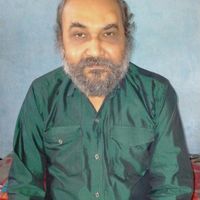
Jagdish Chandra Bose, the Indian scientist who pioneered wireless communication in 1890s.
“The true laboratory is the mind,
Where behind illusions we uncover the laws of truth”
-Jagdish Chandra Bose (1858-1937)
Jagdish Chandra Bose was a man of many talents who made several significant discoveries in his life but believed in the importance of invention rather than inventor.
Sir Jagdish Chandra Bose born in 1858, in the district Mymensingh of the Bengal presidency (Present day Bangladesh),Bose was known most significantly for his research on radio development, also a polymath, physicist, biologist, biophysicist, botanist and archaeologist, and an early writer of science fiction from British India. He pioneered the investigation of radio and microwave optics, made significant contributions to plant science, and laid the foundations of experimental science in the Indian subcontinent. IEEE named him one of the fathers of radio science. Bose is considered the father of Bengali science fiction, and also invented the Cresco graph, a device for measuring the growth of plants. A crater on the moon has been named in his honor.
Bose attended the University of Cambridge, the University of London and St Xavier’s College in Kolkata for his higher studies. But before all this, his school life was spent in a village pathshaala (school). Even though he belonged to a well-to-do family, Bose’s father believed it was important to know one’s mother tongue and people before mastering English.
At a conference in 1915, Bose looked back on his time in the village pathshaala and said, “At that time, sending children to English schools was an aristocratic status symbol. In the vernacular school, to which I was sent, the son of the Muslim attendant of my father sat on my right side, and the son of a fisherman sat on my left. They were my playmates.” He said: “It was because of my childhood friendship with them that I could never feel that there were ‘creatures’ who might be labeled ‘low-caste’. I never realized that there existed a ‘problem’ common to the two communities, Hindus and Muslims.”
Bose initially wanted to study medicine, however due to his sickly disposition he instead attended Christ College at the University of Cambridge and got a B.A. degree in Natural Sciences. He returned to India in 1885 and took up a job as an Assistant Professor of Physics at Presidency College in Kolkata. Bose was among the pioneers of research in radio technology and demonstrated, for the first time ever, wireless communication using radio waves, almost two years before Italian physicist Guglielmo Marconi, who is credited for developing the first proper system of radio communication in 1897.
Marconi is credited with the development of radio technology because Bose had an aversion to patenting. The latter’s scientific contribution was used by Marconi to send the first transatlantic radio signal in 1901.Bose was against patenting because he believed knowledge should be available to everyone and not constrained by patenting. As a result, despite his extensive scholarship, he is almost ‘forgotten’ in the West and by many others.
Patenting was even discouraged at the Bose Institute, a research institute which he founded in 1917. When asked by his nephew who the real inventor of the radio was, Bose said, “It is not the inventor but the invention that matters.”
The Bose Institute is Asia’s first modern research Centre which focuses on interdisciplinary research. It has conducted research across the board, in the fields of plant sciences, biotechnology, structural biology, biomedical sciences and molecular biology. It also fosters research in interdisciplinary physics such as astroparticle physics and cosmic rays and foundations of quantum physics.
To recognize his achievements in the field of wireless telecommunications, a crater on the moon has been named after Bose. The crater has a diameter of 91 km and is located near Crater Bhabha (named after Indian nuclear physicist Homi Bhabha) and Crater Adler (named after German chemist Kurt Adler).
“They who behold the one, in all the changing manifoldness of the universe, unto them belongs the eternal truth, unto none else, unto none else.”
These lines are stated by J.C. Bose.
Jagdish Chandra Bose was true legend who believed that the inventions or discoveries are not to be used for wealth creation but should be for the benefits of people.
When you will be looking back in his life, you will bow your head and pay homage to them.