Library

 Profile
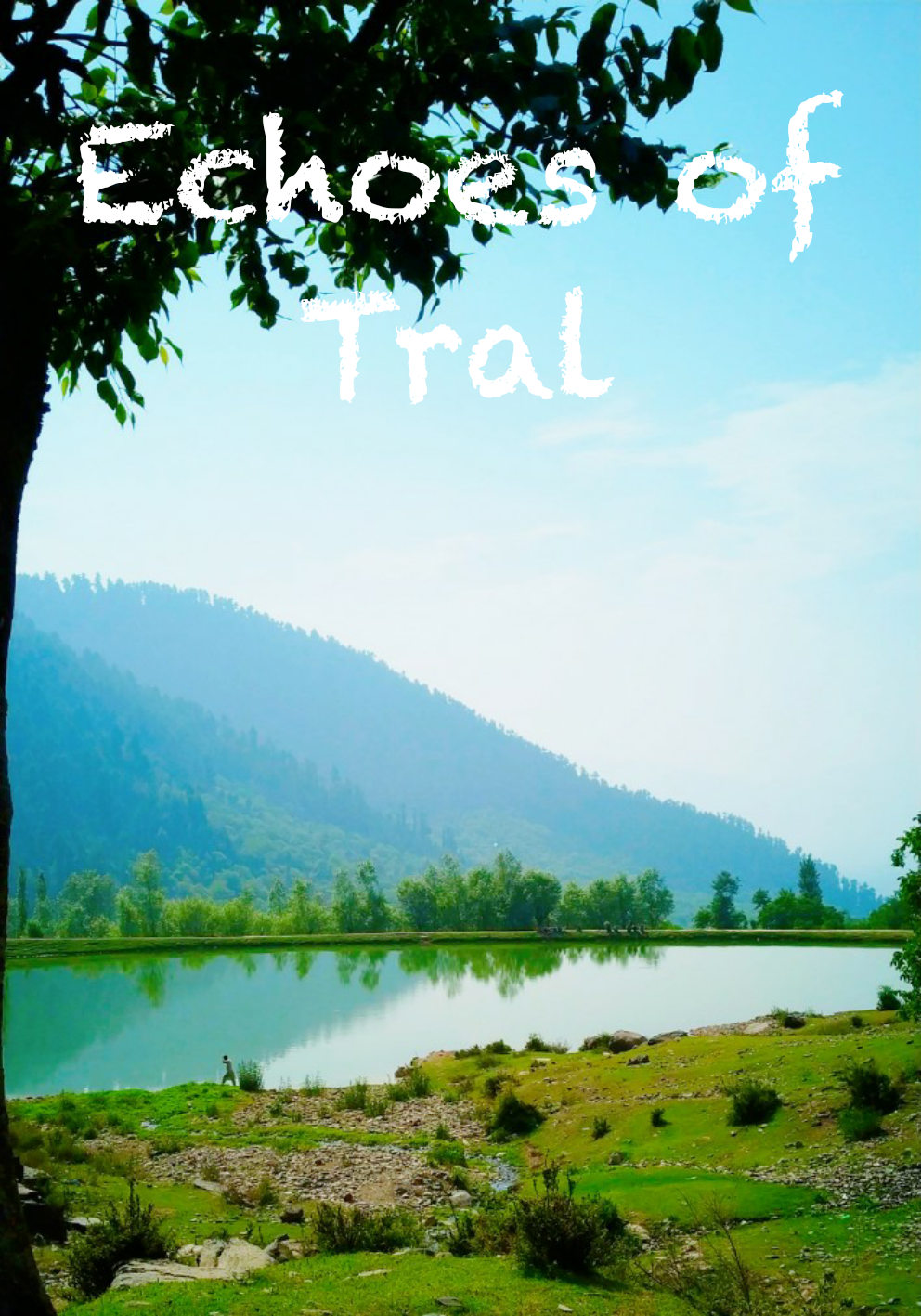
Echoes of Tral
Echoes of Tral

Rehan’s life in the village of Tral had been one of quiet simplicity, until his heart was captured by a love so pure and consuming that it altered the course of his existence. Zainab, a young woman from a respected family, had unknowingly become the center of his universe. From the first moment Rehan saw her, something deep within him stirred. He admired her from afar, yet his love was more than an infatuation. It was a profound devotion—a longing for something far beyond the physical realm. He believed that their love was predestined, a bond that had been written in the stars.
But love, as Rehan was soon to learn, does not always follow the path we envision. Zainab’s father, a strict man with rigid expectations for his daughter, prohibited any communication between them. Despite this, Zainab, too, had feelings for Rehan, though she communicated them only through fleeting glances and subtle gestures. Their love existed in the space between words, an unspoken understanding that both sustained and tormented them.
As time passed, the obstacles grew. Zainab, bound by familial duty, distanced herself from Rehan, and though the love between them persisted in silence, it seemed as though fate had conspired to keep them apart. Rehan, devastated by the loss, retreated into himself, the ache in his heart becoming a constant companion.
In the solitude of his own pain, Rehan began to reflect deeply on the nature of love, fate, and destiny. He turned to philosophy and mysticism, seeking wisdom in the words of the great sages and poets. Rumi’s poetry resonated with him the most, particularly the idea that love, in its purest form, was not something to be possessed but something to be experienced. Rumi’s teaching that “the wound is the place where the Light enters you” became a guiding mantra for Rehan. The pain of his unrequited love, he realized, was not something to avoid but something to embrace—an opportunity for spiritual growth.
Through his studies, Rehan’s understanding of love began to evolve. He no longer saw it as something bound by earthly attachments but as a force that transcended time and space. Love, he came to believe, was a reflection of the Divine, a cosmic force that flowed through all things. It was in this shift of perspective that Rehan began to experience a quiet peace. He no longer yearned for Zainab’s presence, for he understood that true love was about freedom—freedom for the other to live their life and freedom for oneself to grow and evolve.
The Return to Tral
Several years passed, and Rehan, now a man transformed, returned to Tral. His heart, once weighed down by the longing for Zainab, was now light with the wisdom he had gained from his years of introspection. He had become a student of life, exploring not only philosophy and mysticism but the sciences as well. His understanding of the interconnectedness of all things deepened, and he began to see the world as a vast web, each thread connected to another, every action reverberating through the fabric of existence.
When Rehan returned to his village, he did not come as the young man who had once been in love with Zainab, but as a teacher, a man who had learned to embrace life’s impermanence. The villagers, especially the younger generation, sought him out, drawn by the wisdom he exuded. Rehan began to gather them by the river or beneath the ancient trees of the village, sharing with them the lessons he had learned during his years of solitude.
He spoke to them of love, not as an emotion to be clung to, but as a force that flowed freely through the universe. "Love," he would say, "is not something that can be grasped. It is a river that flows through all of us, and we must learn to let it move, not to dam it with expectations." He taught them that true love was about freedom—the freedom to love without conditions, without attachment, without the need to possess.
Rehan also spoke of suffering, not as something to be avoided, but as a necessary part of life’s journey. "Suffering is not punishment," he told them. "It is the furnace in which the soul is refined. Without suffering, we would not know joy. Without darkness, we would not appreciate the light."
The villagers, though initially skeptical, soon began to see the wisdom in Rehan’s words. His teachings brought peace to many who had struggled with their own hearts—whether in matters of love, family, or the uncertainty of life. Rehan became a guiding light for those seeking understanding, helping them to navigate their own journeys with greater compassion and insight.
The Dream’s Revelation
One evening, after a particularly fulfilling day of teaching, Rehan sat by the river, contemplating the lessons he had shared with the villagers. His heart was at peace, for he had finally come to understand that his love for Zainab, though unfulfilled in the earthly sense, had served as a catalyst for his personal growth. His love had not been in vain; it had led him to the very truths that now guided his life.
As he sat there, the quiet murmur of the river soothing his thoughts, Rehan closed his eyes and drifted into a peaceful sleep. In the dream that followed, he found himself back in the village of Tral, though it felt different—unreal, almost as if it were a place suspended between worlds. The air was thick with meaning, and as Rehan wandered through the familiar streets, he saw Zainab, as beautiful as ever, walking toward him.
Their eyes met, and in that single glance, all the unspoken words between them were understood. There was no need for conversation, for Rehan realized that their love was not confined to this world—it was eternal, a bond that existed beyond time and space. Zainab smiled at him, and without words, he understood that she had found her own path, just as he had found his.
As Rehan continued his journey through the dream, he encountered the villagers, who greeted him with the same warmth and respect they had shown in life. But there was something strange about the way they moved, the way they spoke—it was as if they were actors in a play, performing their parts with an air of detachment. Rehan sensed that he was not in the real world, but in a space between dreams and reality, where the boundaries of time had no meaning.
He stood at the river’s edge, watching the water flow, and suddenly it dawned on him: he was not in the village at all. He was in a dream. The village, the people, the teachings—all of it had been a creation of his mind. This was not the Tral he had known; it was a world born from his own consciousness, a world shaped by his thoughts, his desires, and his longing for meaning.
In that moment, Rehan understood the nature of the journey he had undertaken. His love for Zainab, his pain, his philosophical inquiries, and his teachings—they were all part of a greater truth. Life, he realized, was a dream, fleeting and impermanent, but full of meaning. Love, in its purest form, was not something that could be held onto—it was a force that flowed through the universe, touching all things, and it was only in the acceptance of its impermanence that one could truly experience it.
As the dream began to fade, Rehan smiled. He had learned what he needed to learn. The journey was not about the destination, but about the lessons along the way—the wisdom gained through love, loss, suffering, and acceptance. And in that moment, Rehan knew that all things, whether dream or reality, were part of the same cosmic dance—a dance of love, freedom, and the ever-unfolding mystery of existence.
The Awakening
Rehan awoke, the sunlight filtering through his window, pulling him back into the waking world. He sat up, his heart racing, as the vivid images of the dream began to fade. His mind was still caught in the dream’s embrace, yet there was a deep sense of peace within him, a quiet knowing that transcended both dream and reality.
He walked to the window, his heart full of gratitude. Whether the events of his life had been real or a dream, it no longer mattered. What mattered was the wisdom he had gained, the love he had experienced, and the freedom that came from accepting the impermanence of all things.
Rehan smiled softly, knowing that life, in all its forms, was like a dream—a beautiful, fleeting experience that, when embraced fully, revealed its deepest truths. And in that realization, he found his peace.
The End