Library

 Profile
Echoes
Echoes

Echoes.
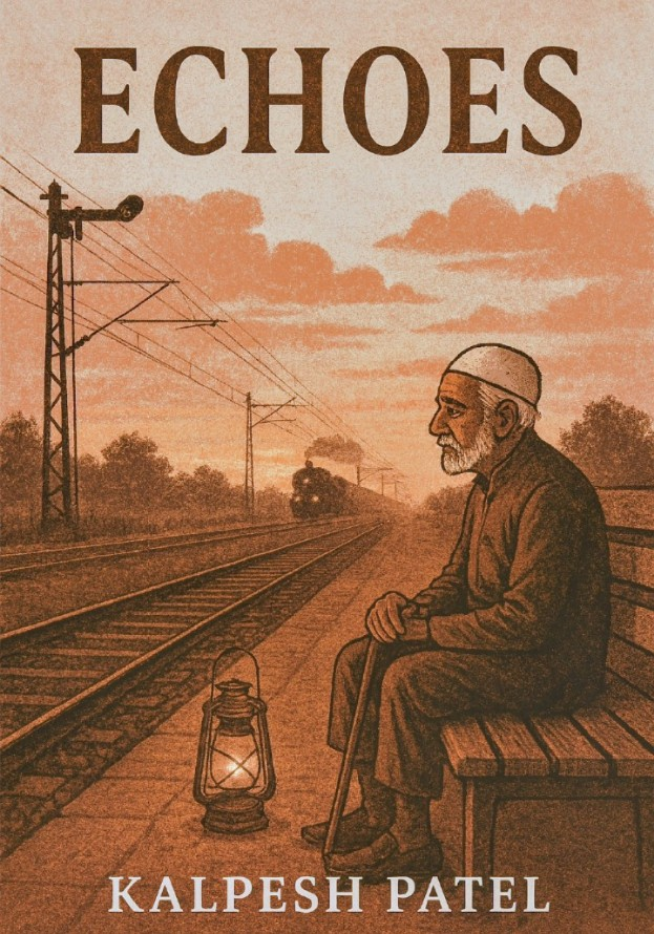
The rails outside the town were not just tracks of steel; they were veins of memory, carrying the pulse of countless lives. At dusk, when the sky bruised into shades of violet and rust, Rahim Chacha would light his lantern and sit on the wooden bench near the station. His posture was steady, his gaze fixed on the horizon, as if he were listening to something beyond the ordinary hum of trains.
The Keeper of Echoes
Rahim Chacha believed that every train left behind an echo—an invisible residue of human longing. He said the rails were like mirrors: they reflected not faces, but destinies. When the train thundered past, its whistle tore through the silence, and Chacha would whisper, “Another story has begun.”
- Echoes of Departure: He imagined the young bride clutching her wedding sari, the student with trembling hands over his admission letter, the laborer carrying nothing but hope. Each departure was a fragment of courage, a leap into the unknown.
- Echoes of Return: He saw mothers waiting with trembling eyes, children rehearsing the word “Papa” after months of absence, and lovers who had counted every heartbeat until reunion.
The Folklore of Waiting
The villagers spun tales about him. Some said Rahim Chacha had once lost his family in a train accident, and since then, he had vowed to guard the rails. Others whispered that he was chosen by the spirits of the tracks, destined to listen so that no soul’s journey would fade into silence.
Children often gathered around him, curious about his vigil. One boy once asked, “Chacha, why do you never board a train?”
Rahim Chacha’s smile was slow, like dawn breaking:
“Beta, trains carry bodies. Echoes carry souls. If I leave, who will listen to the souls?”
The Winter of Shadows
One bitter winter night, the fog swallowed the station whole. The lantern’s glow was a fragile island in the mist. A train roared past, but strangely, no passengers seemed to alight. Rahim Chacha leaned forward, listening harder than ever.
What he heard was not laughter, not footsteps, but a chorus of whispers—unclaimed, restless, aching. The echoes were heavier that night, as if the rails themselves mourned.
He closed his eyes, and for a moment, he felt the weight of every journey—every exile, every return, every unfinished goodbye. His tears fell silently, merging with the cold iron beneath his feet.
The Legacy of Echoes
Years later, when Rahim Chacha was gone, villagers still spoke of him. They said that if you sat by the rails at dusk, you could hear faint whispers—echoes of lives long past. Some believed it was the trains. Others believed it was Rahim Chacha himself, still listening, still keeping vigil, ensuring that no soul’s journey was forgotten.
And so, the rails sang on, carrying not just passengers but the eternal echoes of human longing.
---