Library

 Profile
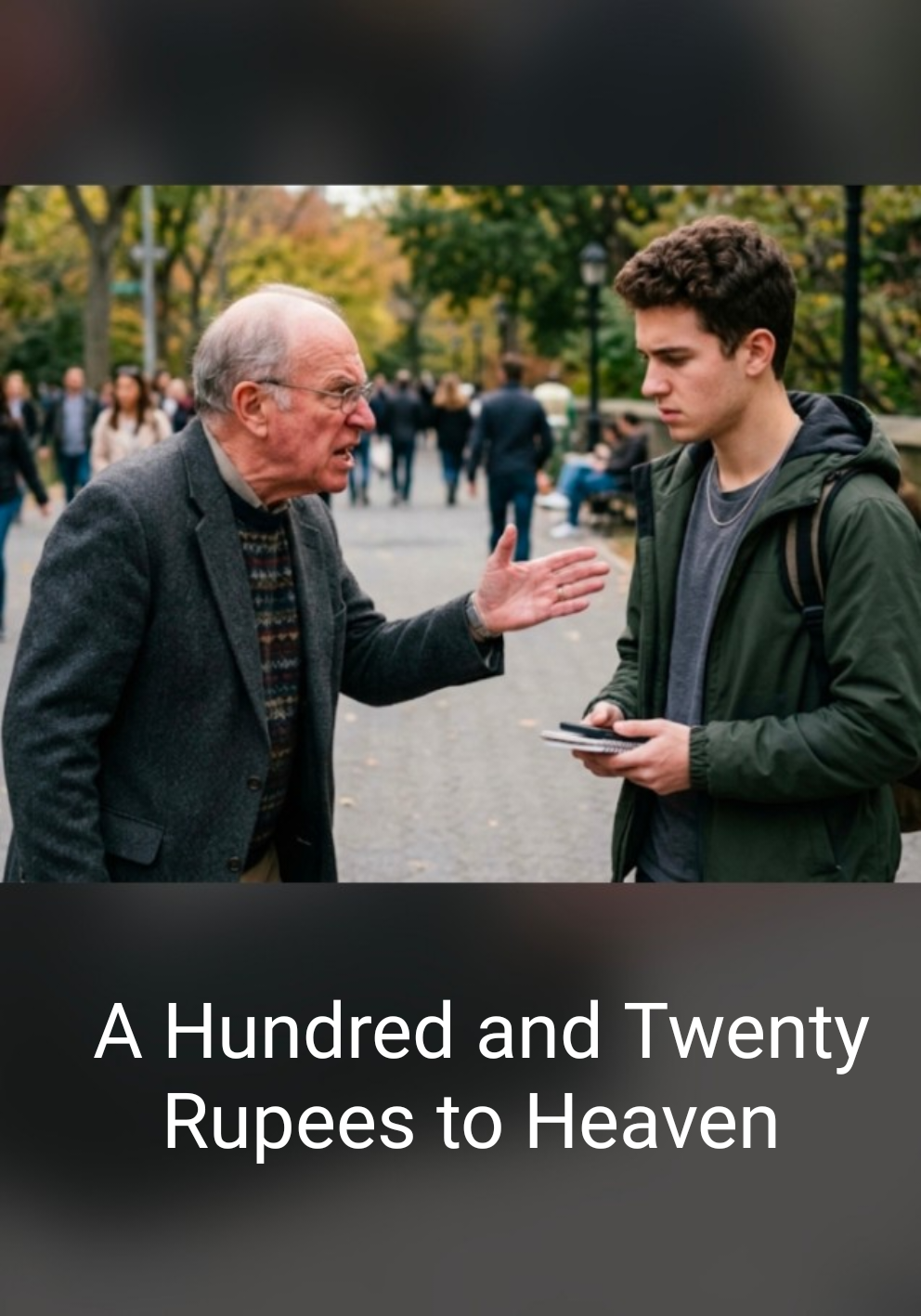
A Hundred and Twenty Rupees to Heaven
A Hundred and Twenty Rupees to Heaven

The morning sun had barely cleared the dense canopy of mango trees in the courtyard when Pandit Srinivas Shastri began his day, as he had for the past forty-five years. Retired as the revered Principal of City College, he was a man built entirely of strict routine, deep orthodoxy, and an unyielding adherence to ancient Brahminical tradition. His day began at four in the morning with a cold bath, followed by hours of silent japa, chanting, and deep meditation in the small, sacred room where the aroma of sandalwood and burned camphor permanently hung.
Yet, for all his spiritual discipline and scholarly accomplishments, Srinivas Shastri suffered from a distinctly unspiritual ailment that threatened his peace every single morning: chronic, agonizing constipation.
For years, his younger brother, Subhash, had been his savior in this matter. Subhash, who had taught political science at the local university, understood the old man’s delicate constitution. Every month, Subhash brought him a specific glass jar of hand-crafted Ayurvedic chyawanprash—a rich, dark, pungent herbal paste infused with rare laxative herbs. It worked wonders. A single tablespoon before bed guaranteed a smooth, effortless morning, leaving Srinivas in a serene frame of mind for his prayers.
Everything changed when Subhash secured a prestigious visiting professorship in Germany. With Subhash off to Heidelberg, Srinivas was left stranded. The bottle ran dry, and within three days, the old Principal’s morning peace vanished, replaced by an unbearable heaviness and an increasingly fiery temper.
Enter Avik, Srinivas’s seventeen-year-old grandson. Bright, quick-witted, and thoroughly modern, Avik could not bear to watch his normally stately grandfather pacing the veranda in distress, muttering curses at his own digestive system.
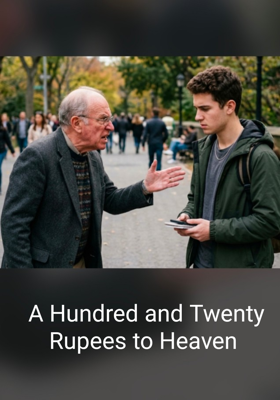
"Dadu," Avik announced one afternoon, watching the old man wince as he sat down on his wooden chair. "Don't worry. Uncle Subhash gave me the exact formulation name before he left for Germany. Give me five hundred rupees, and I’ll run down to the market and fetch your medicine."
Srinivas looked up from his scriptures, his eyes narrowing through his thick spectacles. "You? You don't know the first thing about Ayurveda, Avik. Your head is filled with cricket scores and western pop music."
"It’s just a bottle from the market, Dadu. Uncle Subhash was paying five hundred rupees for it. Give me the money, and I’ll handle it."
Grudgingly, Srinivas reached into his silk kurta pocket, pulled out a crisp five-hundred-rupee note, and handed it over with a stern warning. "Go straight to the shop and come straight back. Do not wander."
An hour later, Avik returned, whistling merrily, and handed his grandfather a modest plastic jar filled with dark paste along with eighty rupees in change.
Srinivas picked up the plastic bottle, staring at the label in utter disbelief. He adjusted his glasses, rubbed his eyes, and looked again.
"What is this?" Srinivas’s voice trembled with rising indignation. "Where is the glass jar from the traditional Vaidya shop? And why have you given me eighty rupees change from a five-hundred note?"
"It only cost one hundred and twenty rupees, Dadu!" Avik declared cheerfully. "Exact same ingredients."
The atmosphere in the room instantly turned arctic. Srinivas stood up, his tall frame trembling with righteous fury. He was a retired Principal; he knew arithmetic, and more importantly, he knew the deceitful tendencies of modern youth.
"One hundred and twenty rupees?!" Srinivas thundered, his voice echoing across the courtyard. "Subhash bought this very mixture for four hundred and ninety-nine rupees every single month! Are you telling me you found the exact same sacred formulation for a quarter of the price? You shameless boy! You bought some cheap, fake dirt and pocketed three hundred rupees of my money!"
Avik blinked, caught completely off guard. "Dadu, no! Listen to me—"
"Do not lie to me!" the old man roared, striking his walking stick against the marble floor. "Where is the rest of my money?!"
Avik wiped his forehead, realizing he was trapped by his grandfather's stubborn logic. He threw his hands up in defeat. "Alright, fine! My friends were at the café near the square. I... I spent the rest on a coffee party with them!"
"A coffee party!" Srinivas gasped, clutching his chest in theatrical horror. "You took my sacred medicine money to drink black bitter bean-water with your rogue friends! You jeopardize your old grandfather's health for a quick snack!"
In a fit of overwhelming anger, Srinivas seized the plastic bottle from the table and flung it straight out the open door. It sailed through the air, ricocheted off a trunk of a hibiscus plant, and landed with a dull thud on the damp grass of the garden.
"Get out of my sight!" Srinivas barked, turning back to his altar, his face flushed red.
Avik sighed, walked out into the yard, picked up the unscathed plastic jar, dusted it off carefully, and slipped it into his pocket.
Dinner that evening was a tense affair. Srinivas sat on his floor mat, picking at his rice and boiled vegetables in stony silence. His stomach was bloated, his mood foul, and he refused to make eye contact with anyone.
After the kitchen was cleared, Avik stepped into his grandfather’s bedroom, holding the plastic bottle and a glass of warm water.
"Dadu," Avik said softly. "Please. Just try it once."
Srinivas snapped his eyes open from his evening meditation. "Have you no shame? I told you I will not put that cheap poison into my body!"
"What is all this commotion?"
Savitri, Srinivas’s wife, stepped into the room. Gentle, practical, and long accustomed to her husband’s dramatic outbursts, she stood between the two with her hands on her hips.
"Look at your grandson, Savitri!" Srinivas declared, pointing an accusing finger. "He stole my money, fed his friends coffee, and now he wants me to consume a hundred-and-twenty-rupee concoction instead of my proper four-hundred-and-ninety-nine-rupee medicine!"
Savitri looked at the small plastic jar, then at her grandson's earnest face, and finally at her husband's visibly uncomfortable abdomen.
"Srinivas, stop acting like a child," Savitri said calmly. "Your stomach has been stiff as a wooden plank for three days. You haven't smiled since Subhash left for Frankfurt. What difference does the price make if it offers relief?"
"You are siding with this naughty rogue?!" Srinivas shouted, bewildered by the betrayal. "You, my own wife, encouraging dishonesty and sub-standard medicine? It is cheap! Good medicine costs money!"
"Good medicine is medicine that works," Savitri replied firmly, taking the glass and the spoon from Avik. "Subhash is in Germany now. We don't have his vaidyas. Take one spoonful. If it doesn't work, you can scold the boy all day tomorrow. But if you don't take it, you won't sleep, and if you don't sleep, no one in this house will sleep."
For ten minutes, the bedroom turned into a battlefield of tradition versus practicality. Srinivas argued on points of ethics, economics, and Ayurvedic principles. Savitri countered with sheer persistence, while Avik offered quiet, apologetic nods.
Finally, exhausted by his own bloating and overwhelmed by his wife’s unrelenting pressure, Srinivas threw his hands up.
"Fine! Give it to me!" he snapped. "If I die of food poisoning tonight, the blood of a devout Brahmin will be on both your hands!"
He snatched the spoon, scooped a generous portion of the dark paste, shoved it into his mouth, swallowed it down with warm water, and slammed the glass onto the nightstand. "Now leave me to my prayers!"
The night passed in quiet tension.
At five in the morning, the household was still enveloped in twilight darkness. Avik lay awake in his room, half-anxious about whether his grandfather’s stubbornness would explode again at sunrise.
Suddenly, the heavy wooden door of the master bedroom clicked open. Quick, urgent footsteps hurried across the corridor toward the bathroom at the back of the house.
Ten minutes passed. Then twenty. Then half an hour.
Avik crept out of his bed and stood near the kitchen, where his grandmother was already boiling tea. They exchanged a silent, amused glance.
When the bathroom door finally creaked open, out stepped Pandit Srinivas Shastri.
He did not walk with his usual stiff, aggrieved posture. His spine was straight, his face was radiant, and he looked as though a ten-ton boulder had been lifted off his soul. The heavy cloud of misery that had hung over his forehead for days had completely vanished, replaced by an expression of supreme, unadulterated bliss.
He walked into the courtyard, took a deep breath of the cool morning air, and let out a long, contented sigh. The relief was absolute, flawless, and miraculous.
Seeing Avik standing by the veranda post, Srinivas stopped in his tracks. He stared at his grandson for a long moment.
Avik braced himself, expecting another lecture on coffee parties or cheap goods.
Instead, the old Principal threw his arms wide open, rushed forward, and pulled his grandson into a tight, warm embrace, patting his back with overwhelming enthusiasm.
"Avik! My boy! My brilliant boy!" Srinivas beamed, his eyes bright behind his glasses. "It was a miracle! Pure nectar! Never in my seventy years have I experienced such complete, effortless liberation of the bodily humors!"
Savitri walked out with two cups of morning tea, shaking her head with a soft smile. "So, the cheap medicine worked?"
"Cheap?!" Srinivas exclaimed, turning to his wife with utter earnestness. "It is not cheap, Savitri—it is efficient! It is modern progress! To think that foolish Vaidya was charging poor Subhash five hundred rupees for something this boy secured for a mere hundred and twenty! It shows the brilliant economic mind of today's youth!"
He turned back to Avik, cupping the boy’s face in his hands, showering him with traditional Sanskrit blessings. "May you live long, my child! May knowledge and prosperity follow you everywhere! You have saved your grandfather's morning prayers today."
Avik smiled, holding back his laughter as he looked at the old man's glowing face.
"Thank you, Dadu," Avik said softly, gently keeping his hands in his pockets---where only a few coins remained.