Library

 Profile
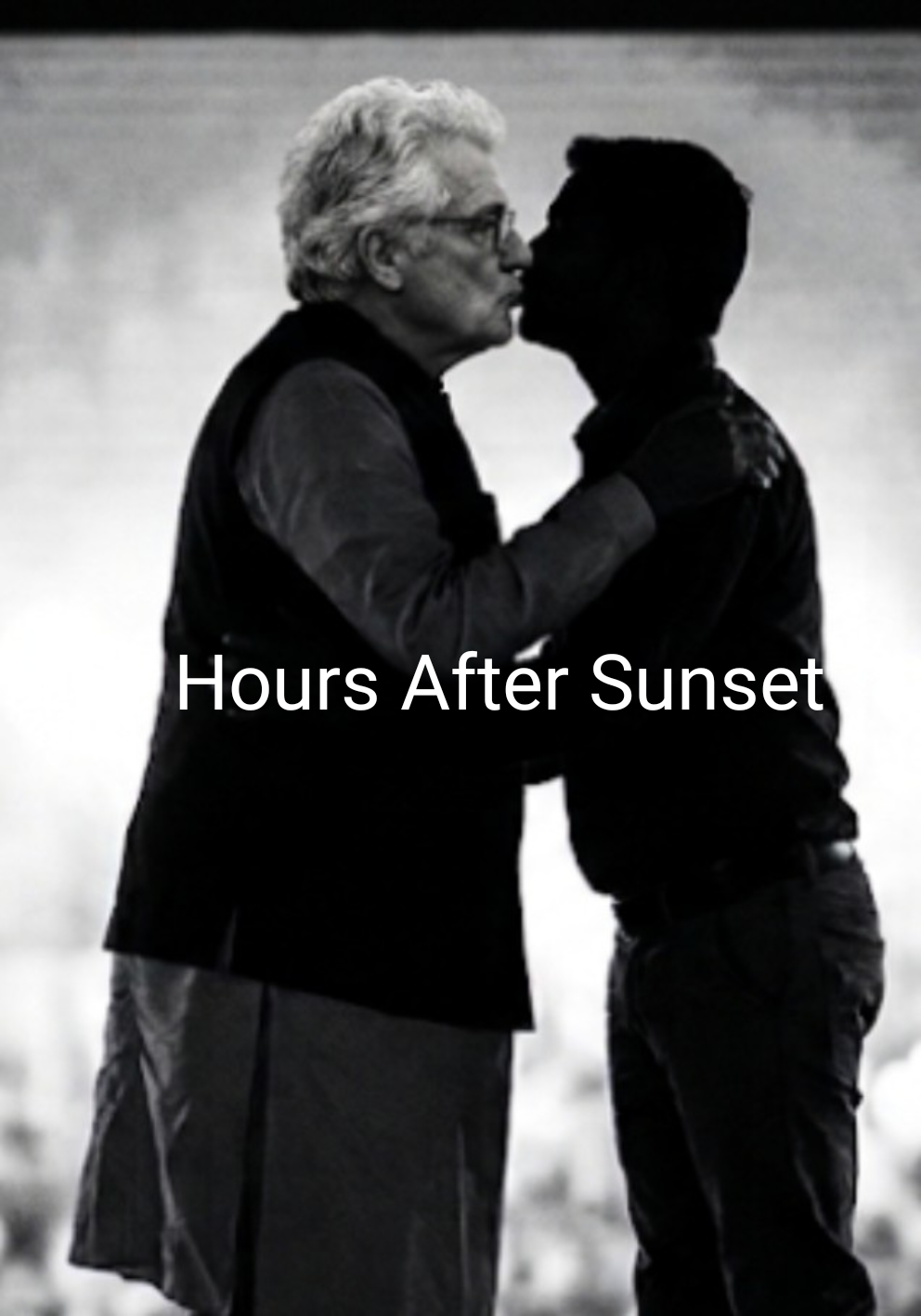
The Hours After Sunset
The Hours After Sunset

(The story of a predator politician)
The old constable arrived at my house on a Sunday afternoon, when the city seemed to have withdrawn into itself. The streets were unusually quiet, and the heat had driven even the street vendors indoors. He stood at the gate for some time before ringing the bell.
I recognised him immediately, although nearly twenty years had passed since I had last seen him. His name was Raghunath Behera. He had served in the police department for more than three decades and had retired with a modest pension. In his younger days, he had been a familiar figure in our locality, a man who knew everybody and whose uniform commanded an almost automatic respect.
But the man standing before me seemed to have lost something more important than his youth. His shoulders were bent, his eyes were restless, and his face carried the exhausted expression of someone who had spent too many years arguing with his own conscience.
"Can I speak to you privately?" he asked.
I led him into my study.
He declined tea. For several minutes he sat without speaking, staring at the bookshelves. Then he began.
"I have come to tell you something. I do not know whether you will believe me. Perhaps you will think I have gone mad in my old age."
I waited.
"Do you remember Minister Devendra Pratap?"
The name was familiar to everyone. Pratap had once been among the most celebrated political figures in the country. He had occupied important offices, addressed enormous gatherings and appeared regularly on television. His speeches were filled with references to morality, sacrifice, discipline and the greatness of the nation. His admirers regarded him almost as a saint.
Even after his retirement from active politics, his influence had remained considerable. His photograph could still be seen in public buildings, and politicians of every generation invoked his name whenever they wished to speak about integrity.
"Of course I remember him," I said.
The constable lowered his voice.
"I worked for people close to him. I knew what happened behind those walls."
He paused, as if the words themselves had become difficult to carry.
"I was not merely a witness. I was involved."
That admission changed the atmosphere of the room.
Raghunath told me that, during a particular period of his service, he had been asked to help arrange meetings between influential people and young boys and men. Some came from poor families. Others were students looking for opportunities, employment or assistance. They were introduced to the constable through acquaintances who promised them money, help with their studies or access to powerful people.
Two of his friends were involved in the arrangement. They knew which families were struggling, which young people were ambitious and which ones could be persuaded by promises of financial assistance.
The young people were taken to private premises where they were expected to meet the influential leader and sexual predator.
"What did they know about the purpose of these meetings?" I asked.
"Some knew very little. Some suspected something but were reassured. They were told that powerful people could help them. They were young, inexperienced and often desperately in need of money."
He looked down at his hands.
"Afterwards, they were given money. Sometimes large sums. We received our share too."
He did not attempt to make his role sound respectable. He spoke without theatrical remorse, but every now and then his voice faltered.
"Why did you do it?" I asked.
He gave a tired laugh.
"That is the question I have been asking myself for years. At first, I told myself I was only following instructions. Then I became accustomed to the money. We all did. When a man begins to earn from another person's helplessness, he gradually stops asking whether the arrangement is right or wrong."
I asked him whether the young people had been exploited.
He nodded.
"There was exploitation. There is no other word for it. The man was powerful. They were not. They could not speak freely, and they did not know whom they could trust. Some were frightened. Some were confused. Some returned looking as though they had aged several years in a single evening."
He stopped speaking.
Outside, a bicycle bell rang twice. Somewhere in the neighbourhood, a child was calling to his mother. Ordinary sounds seemed strangely out of place beside the confession unfolding in my study.
"What happened to them afterwards?"
"That is what troubles me most," he replied. "I know of some who never recovered their confidence. One young man stopped attending college. Another left the town. A third became withdrawn and refused to discuss those days even with his closest friends. I do not know what became of all of them."
"Did anyone complain?"
"Who would dare? The man they were dealing with had ministers, officials, police officers and wealthy supporters around him. His name opened doors. A poor boy's word could not compete with his reputation."
Raghunath leaned back and closed his eyes.
"He was admired everywhere. People touched his feet. Newspapers praised his simplicity. He spoke about the protection of children and the moral reconstruction of society. Sometimes I stood behind him during public functions and listened to those speeches. I knew what he was doing in private. Yet I remained silent."
There was something particularly disturbing about this contradiction. It was not simply the alleged misconduct of a powerful man; it was the elaborate world of respectability that had protected him.
Pratap's public life had been carefully constructed. He wore simple clothes, avoided ostentatious displays of wealth and spoke with an air of moral authority. He was photographed visiting schools, meeting poor families and distributing scholarships. His followers described him as a man who had sacrificed personal comfort for the nation.
Perhaps the most effective disguise of power was not secrecy itself, but the ability to make people believe that certain things were impossible.
A man who spoke so beautifully about morality could not possibly be immoral. A leader who was revered by millions could not possibly exploit the vulnerable. A public figure whose name was associated with service could not possibly be responsible for private suffering.
People preferred the reassuring image.
And those who knew the truth had reasons to remain silent.
"Did you ever try to stop?" I asked.
"Several times. But by then we were trapped in the arrangement. I was afraid of losing my job. I was afraid of the people around him. And, if I am honest, I was afraid of losing the money."
He looked at me.
"You may despise me. You should."
I did not answer immediately.
There are confessions that invite sympathy, and there are confessions that demand judgement. Raghunath's was of the second kind. He had not been a helpless bystander. He had helped bring vulnerable young people into the orbit of a powerful man and sexu and had profited from their vulnerability.
His fear might explain his silence, but it could not erase his responsibility.
"Why have you come to me now?" I asked.
"Because I am old. Because I cannot carry this any longer. Because I have begun to understand that the money was never worth what we did."
He took a folded sheet of paper from his pocket.
"I have written down some details. I have not included everything. There are names. Some of the boys are now grown men. I do not know whether they want their past exposed. I do not want to hurt them again."
That was the first thing he had said which seemed to place their interests above his own.
I did not take the paper immediately.
"Have you spoken to anyone else?"
"No."
"Have you considered speaking to a lawyer or an appropriate authority?"
He nodded.
"I have thought about it. But I do not know what will happen if I speak publicly. The man is dead, but his followers are still powerful. Some people may call me a liar. Others may say I am trying to damage his reputation."
"And what do you want from me?"
"Nothing. I only want somebody to know that the public image was not the whole truth."
He pushed the paper towards me.
I left it unopened.
For a while we sat in silence.
I thought of the young people he had mentioned. They had once been ordinary boys with ordinary hopes. Perhaps one had wanted to become a teacher. Another might have dreamed of joining the civil services. Someone else might simply have wanted to earn enough money to support his family.
They had entered the story believing that an opportunity was being offered to them. They had not understood the nature of the power they were confronting.
Years later, their lives had continued, but not necessarily without consequences. The world had moved on. The political leader had retained his place in public memory. His speeches were quoted, his photographs displayed and his admirers continued to defend his legacy.
But what about the young people?
Who remembered them?
The constable rose to leave.
At the door, he turned around.
"Do you think I can ever be forgiven?"
I looked at him for a long moment.
"Forgiveness is not something I can give you on behalf of those young people," I said. "You must first acknowledge what you did. If you have information that can help establish the truth, you should consider giving it to the proper authorities. But do not expect confession alone to cancel responsibility."
He nodded slowly.
After he left, I returned to my study and looked at the folded paper.
I did not open it that evening.
For the next few days, the conversation occupied my mind. I found myself thinking about the strange relationship between public morality and private conduct. History is full of men whose public achievements have been so dazzling that their private failures are either forgotten or deliberately concealed.
A leader becomes an institution. An institution acquires admirers. Admirers become defenders. Eventually, questioning the man is treated as an insult to the nation, the movement or the ideals he once represented.
But no public achievement can make the suffering of another human being irrelevant.
I also thought about Raghunath. He had come to me hoping that the act of confession might relieve him of his burden. Yet the burden did not belong to him alone. The young people had carried their own memories for years, without recognition or acknowledgement.
Perhaps the deepest injustice was not only that they had been exploited, but that their experiences had been made invisible by the very reputation of the man responsible.
A week later, I received a letter from the constable.
It was brief.
He wrote that he had decided to approach a lawyer and disclose what he knew. He did not ask me to publish his story. He only requested that I preserve the paper he had left behind until he had taken proper advice.
At the end he had written one sentence:
"I remember the faces of those boys more clearly than the face of the man we served."
I read it several times.
That evening, I went for a walk. The sun was setting behind the buildings, and the streetlights were beginning to glow. Young men were returning from college, laughing and talking as they moved in groups. A boy was cycling home with a schoolbag bouncing against his back.
They seemed so ordinary, so absorbed in the small concerns of their lives.
I wondered how many of them knew that the world was not always as respectable as it appeared. How many understood that power could sometimes disguise exploitation as opportunity, silence as consent and money as compensation?
The old constable's confession had not given me a complete account of what happened. It had given me something more troubling: a glimpse of a system in which powerful people could depend upon the cooperation of ordinary men, while vulnerable people were left to bear the consequences.
The leader was no longer alive. His admirers would continue to celebrate him. His speeches would remain in circulation, and his portrait would probably occupy its place in public buildings for years.
But somewhere, perhaps in another city, one of those young men was still trying to put his life together. Perhaps he had married, found work and raised a family. Perhaps he had never told anyone what had happened. Perhaps the memory had become something he carried silently, like an old injury that had healed on the surface but never entirely disappeared.
I could not know.
I only knew that history must not be written exclusively by those who possess the power to make themselves memorable.
Sometimes the most important stories belong to those whose names are never recorded.
And sometimes the truth waits for years in the conscience of a man who has finally grown too old to remain silent.
The hours after sunset had passed long ago. But for those young people, the darkness had not necessarily ended.