Library

 Profile
The Measure of Blood
The Measure of Blood

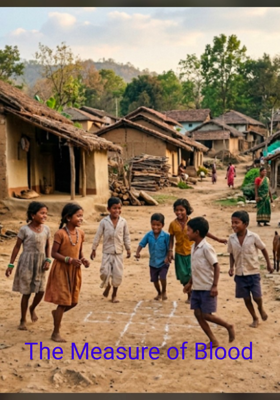
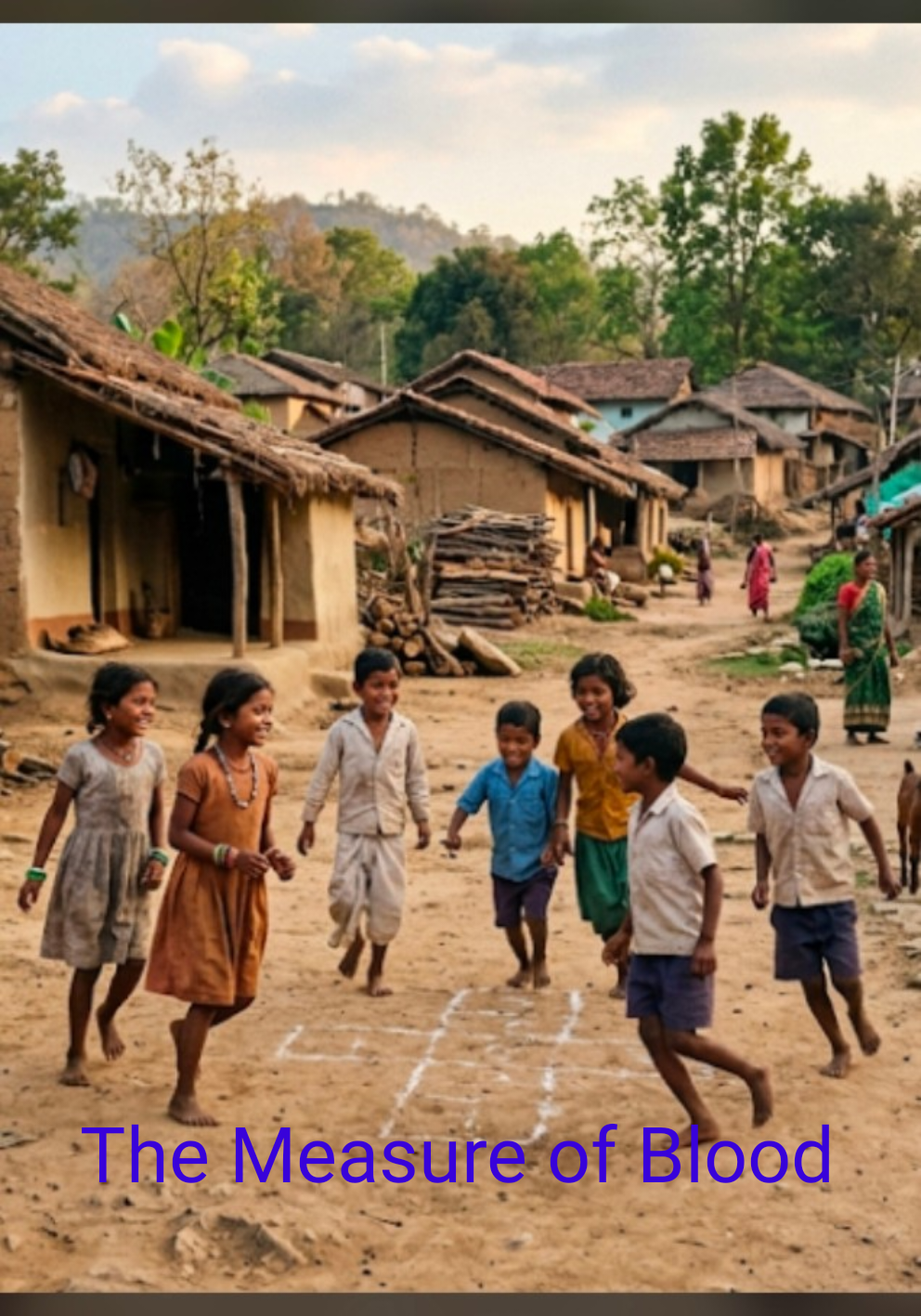
The village of Bhalupada lay hidden among green hills and sal forests. Mud houses stood in neat rows, and in the evenings the air filled with the sound of cattle bells and tribal songs.
In one of those houses lived Sukru Majhi, a hardworking tribal farmer.
Sukru had never completed his matriculation.
As a child he had struggled with studies. His father had been illiterate. His grandfather had never entered a school. This became a wound in Sukru's mind.
Often he would say:
"Education is not for people like us."
His friends would protest.
"Why do you say that, Sukru?"
Sukru would shake his head.
"Look around. The clever people are rich people. The sons of officers become officers. The sons of professors become professors. What do tribal children become? Labourers like us."
Years later he married a gentle and hardworking girl named Bani.
One evening, while they sat outside their hut watching the sunset, Bani said:
"If we have children, I want them to study."
Sukru laughed bitterly.
"Study? Let them learn farming. Books do not enter our blood."
Bani frowned.
"Knowledge belongs to everyone."
Sukru remained silent.
A Brilliant Child
A son was born to them.
They named him Suresh.
From an early age, the boy was different.
He asked endless questions.
"Father, why do stars shine?"
"Father, where does the river begin?"
"Father, why do some words have different meanings?"
Sukru would scratch his head.
"How should I know?"
The village schoolmaster soon noticed the boy's talent.
One day he told Sukru:
"Your son is exceptionally bright."
Sukru laughed.
"Master, don't joke with me."
"I am serious."
"How can a tribal boy be exceptional?"
The teacher stared at him.
"Intelligence has no caste, tribe, or bank account."
But Sukru remained unconvinced.
The Rise of Suresh
Years passed.
Suresh topped every examination.
Teachers bought books for him.
Some paid his school fees.
When he passed Class 10 with outstanding marks, the whole village celebrated.
Yet Sukru sat quietly.
His friend Laxman asked:
"Why aren't you happy?"
Sukru replied:
"I am happy... but also confused."
"Confused about what?"
"How can my son be so intelligent?"
Laxman burst out laughing.
"Because he studies day and night!"
But Sukru's doubts only grew.
Suresh moved to Bhubaneswar.
He studied English Language and Literature.
His professors admired him.
Soon he earned scholarships.
Then came astonishing news.
He received an offer to pursue a PhD in Ireland.
The village erupted with joy.
People danced.
Drums echoed through the night.
But Sukru sat alone beneath a mango tree.
His thoughts tormented him.
"This is impossible."
The Poison of Doubt
One evening he confronted Bani.
"Tell me the truth."
She looked surprised.
"What truth?"
"Suresh cannot be my son."
Bani froze.
"What are you saying?"
"No one in my family could pass matriculation."
"And?"
"My son speaks English better than city people."
"Because he studied."
"No. Such intelligence comes from rich blood."
Bani's face turned pale.
"You are insulting both me and your son."
But Sukru had become obsessed.
Whenever someone praised Suresh, his suspicion deepened.
He would mutter:
"A tribal labourer's son cannot become a scholar."
The villagers repeatedly tried to reason with him.
The schoolmaster said:
"Sukru, you are confusing poverty with ability."
Another villager said:
"A seed grows according to its care, not according to the wealth of the gardener."
But Sukru refused to listen.
Harvard
Years later Suresh completed his doctorate.
Soon another miracle arrived.
He became a young professor at Harvard University.
Newspapers carried his photograph.
Television channels interviewed him.
The entire village felt proud.
Only Sukru remained troubled.
One night he shouted at Bani:
"Admit it! He is not my son!"
Bani broke down in tears.
"For thirty years I have endured your doubts. I have never betrayed you."
But Sukru's fear had become stronger than reason.
The Return
One winter morning an expensive car entered the village.
Children ran after it.
Out stepped Professor Suresh Majhi.
Beside him stood a smiling young Irish doctor with blue eyes.
"Father!"
Suresh embraced Sukru.
"Mother!"
He touched Bani's feet.
The young woman folded her hands.
"Namaste. I am Brinda Hill."
The village welcomed them warmly.
Yet Sukru's face remained troubled.
Suresh noticed.
"Father, why do you seem unhappy?"
Sukru lowered his eyes.
"Nothing."
But everyone knew.
The Test
Among the guests was Dr. Prakash, a close friend of Suresh.
After hearing the story, he sighed.
"This nonsense has gone on too long."
A DNA test was arranged.
Samples were collected.
The village waited anxiously.
Days later the results arrived.
Dr. Prakash opened the report.
The crowd fell silent.
He smiled.
"The probability of paternity is over 99.99 percent."
The villagers cheered.
"Suresh is Sukru's biological son."
Bani wept.
Years of humiliation vanished in a moment.
Sukru stood motionless.
The paper trembled in his hands.
Suddenly he burst into tears.
Great sobs shook his body.
He fell at Bani's feet.
"Forgive me."
Bani lifted him up.
"Enough. Let the past die."
Then Sukru turned toward Suresh.
His voice broke.
"Son... forgive your foolish father."
Suresh embraced him.
"There is nothing to forgive."
A New Understanding
That evening the family sat outside the house.
The moon hung over the hills.
Sukru looked at his son and daughter-in-law.
He shook his head in wonder.
"I still do not understand."
Suresh smiled.
"Understand what?"
"How a poor tribal boy became a professor at Harvard."
Suresh laughed softly.
"Because many people helped me. Because Mother sacrificed. Because teachers believed in me. Because I worked hard."
"Not because of rich blood?"
"No, Father."
Suresh pointed toward the village school.
"There are many brilliant children there."
"Even among tribals?"
"Especially among tribals."
Sukru remained silent.
The old belief that had ruled his life was finally crumbling.
After a long pause he said:
"All these years I thought intelligence belonged to rich people."
Suresh replied:
"Intelligence belongs to human beings."
Tears again filled Sukru's eyes.
For the first time he understood that poverty, tribe, and lack of education were not chains placed upon the mind.
As the village lamps flickered in the darkness, Sukru Majhi sat proudly beside his son—the Harvard professor—and beside Brinda Hill, his Irish daughter-in-law.
And though he still marveled at the miracle of Suresh's success, he no longer doubted the truth.
The blood in his son's veins was his own.
The brilliance in his son's mind was proof that human potential can bloom anywhere—even in a small tribal hut beneath the forests and hills.