Library

 Profile
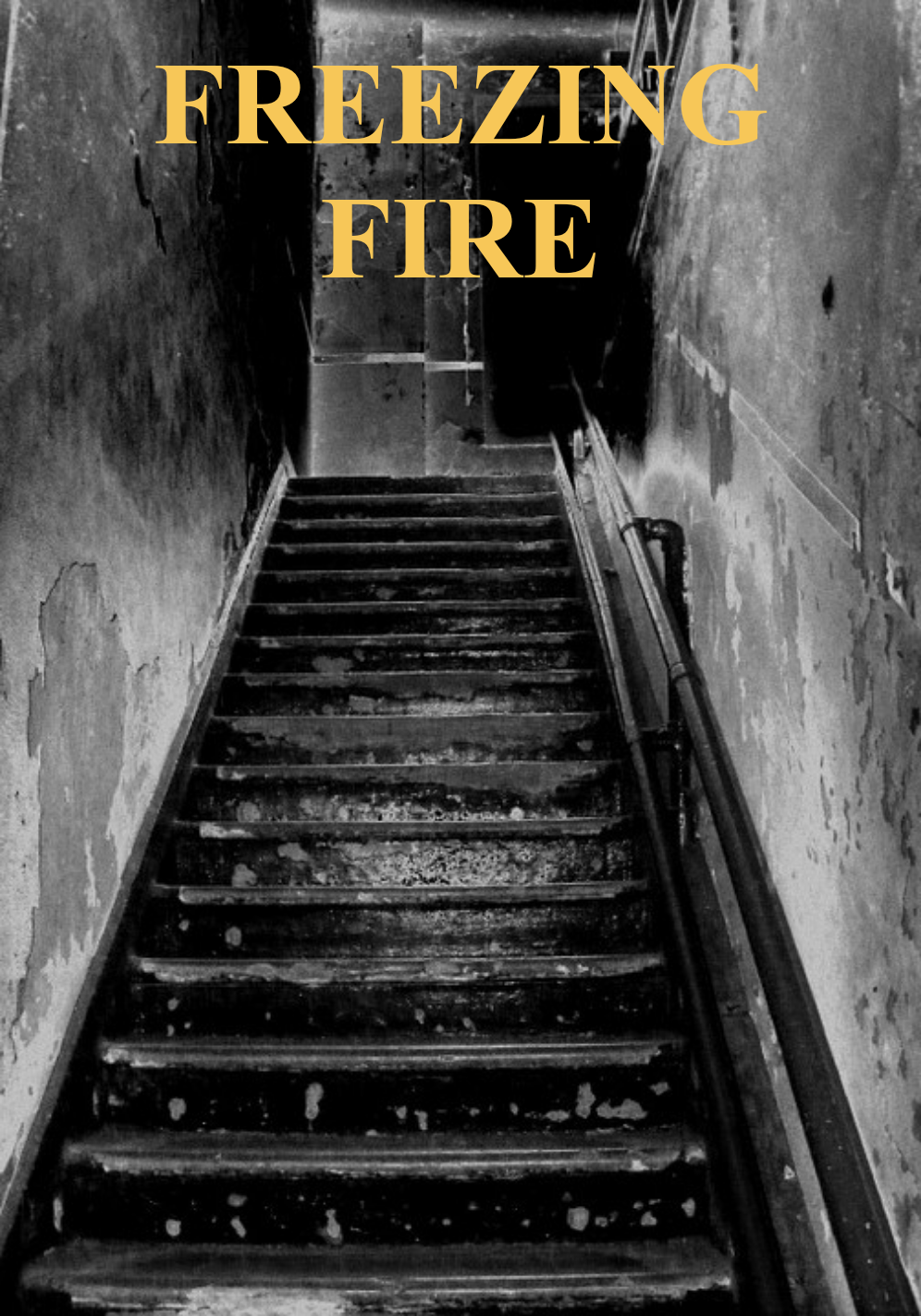
Freezing Fire
Freezing Fire

Aravinth is a successful tourist guide, leading a happy life with few of his close friends Dinesh, Ram and Sai Adhithya. They roams around various places of India. Likely Bangalore, Kerala and parts of North India.
They have a fun life, having no seriousness and no concern about having a family, other than money. While having a dinner across the roadsides of Pazhani, Aravinth and his friends have a conversation.
Aravinth tells Dinesh, "Hey Dinesh. Before going back from Pazhani, we must have an adventurous ride da."
"Like how you wanted to have an adventurous ride?" asked Ram.
"We have to go for a dark and big bungalow and have fun" said Aravinth.
Hearing this, Sai Adhithya starts to sweat and fearfully he asks them, "Where should we go? Dark and big bungalow ah?"
"Hey...why is he sweating like this da? I think he have got feared" said Dinesh and he laughs.
"Don't make fun da. I can't accompany you to dark places. I am feeling fearful da" said Sai Adhithya.
"Have a cup of beer. Your fear would go away" said Ram and he laughs.
"Hush! Be quiet da. I know how to convince him" said Aravinth.
"Adhithya. Have a good experience by coming to this ride da. Obey our words, kindly" said Aravinth.
Since, his friend have asked, Adhithya agrees and accompany them. While travelling in the car Adhithya asks them, "To which place are we going da?"
"Varathamanadi da" said Dinesh.
Adhithya feels happier. Dinesh asks him, "Why are you so much happier da?"
"Hey. There only, Varadamanadi dam is famous da. I am eager to to it. Drive faster Aravinth" said Adhithya.
"Did you see? How much he is happier?" asked Ram, to which Aravinth smiles. Finally they reaches the bungalow near to Varadamanadi dam.
While going near to the Bungalow, Aravinth's close friend Astrologer Dhiraviam calls him and asks, "Aravinth. Where are you residing at present?"
"Uncle. We are near to Varadamanadi Dam" said Aravinth.
Aftermath of this, Aravinth is not able to hear what his uncle comes to say and henceforth, hangs his call. He reaches the bungalow and drives his car inside to it.
As they enter inside the bungalow by opening the gate, climate change occurs. The whole places turns darker, Sudden Thunderstorms are heard.
When they enters inside the house, Adhithya notices a tree, falling down due to the heavy thunderstorm and he terribly fears.
Ram sees a big spider near to the wall of a window and experiences a little signs of fear. Like Adhithya, Ram similarly suffers from the fear of Animals, which he hides from his friends. The friends slowly enters into the house and takes rest, by allotting their respective rooms.
That whole night, Adhithya is awkward, thinking about the tree. He turns off the light and tries to sleep. But, in vain.
Suddenly he hears an unanonymous and strange sound. Half closing his eyes, he crossed to the window and fumbled to slam it, making sure that the latch was in place this time.
The wind had started his lamp moving, and when he turned back the whole room seemed to be swinging around. One moment the fight was blazing in his eyes, the next it was flooding the opposite wall. But in between the blaze and the flood it lit the middle of his room, and standing there – shaking the rain off his hat – was a stranger.
He looked harmless enough. He was no more than six inches taller than Harvey, his frame scrawny, his skin distinctly yellowish in colour. He was wearing a fancy suit, a pair of spectacles and a lavish smile.
Adhithya fearfully shouted and he wakes up to see, no one besides him. Hearing his terrific sound, his friends come and turns on the light, "What happened da?"
"I got a bad dream da" said Adhithya.
"For that, why are you shouting da?" asked Ram.
"I saw an evil stranger in the dream" said Adhithya.
His friends scolds him and asks him to have a good sleep. As he suffers from schizophrenia, his friends thinks that, he lied.
The next day, Adhithya saw the stranger(in his dream) in real(near to the house) and gets feared terribly. He keeps quiet and goes with his friends to the dam, roaming around the places.
They again enters into the bungalow and the place turns darker. Suddenly, the place gets heavy rains and the friends are disturbed with the heavy thunderstorm sounds.
After the rain slows down, Aravinth feels an ugly and rotten smell nearby a place. He goes to analyze the smell. Upon interrogating, they finds out two dead snake and spiders respectively.
Adhithya fearfully takes the snake and threw it far to a forest. However,as he threw the snake, it starts to crawl. He fearfully runs away from the place.
Due to the fear of animals, Ram turns ill and falls asleep. Aravinth takes care of him with his friends. While taking rest, Ram hears a few strange sounds and terribly shouts, out of fear. Aravinth asks him, "What happened da? Why are you sweating? Why you are shouting da?"
"I heard a few strange sounds and Thunderstorms da. Ask this to Adhithya also. He too feared a lot" said Ram.
"He suffered from Schizophrenia. You are now gone mad and lost control of your mind. Why are you both fearing like this da?" asked Dinesh.
"It's true! Yes, I have been ill, very ill. But why do you say that I have lost control of my mind, why do you say that I am mad? Can you see that I have full control of my mind? Indeed, the illness only made my mind, my feelings, my senses stronger...I could hear sounds I have never heard before. I heard sounds from heaven and I heard sounds from hell!" said Ram.
Adhithya tells Aravinth, "I already told you right! There is something strange in this bungalow. I further suspected a few things in this bungalow da."
"What you suspected da?" asked Dinesh.
"When we entered inside the bungalow, did you all noticed the sky turning darker? Did you all noticed strange thunderstorms? Haven't you realized something strange happening in this bungalow?" asked Adhithya.
Aravinth started to realize the strange incidents. Henceforth, they decides to instigate the happenings around the house. While searching the places for getting a few clues, Dinesh takes an old diary.
He forms his friends together in a meeting and shows the diary, "asking them to see the diary."
Dinesh starts to read the diary. (It goes as a narration.)
This is a diary that I write depicting a few incidents that happened in my life. My name is Harsitha. I was born into a brahmin family. My parents died in a floods and I was adopted by a Temple priest in Pazhani Murugan Temple.
There, Mani Siddhar adopted me, prior to the request of the Temple priest. Knowing that I hailed from Brahmin family background, he planned to give me a physical training. I got trained in Martial arts such as Adimurai and Kalaripayattu.
Siddhar taught me the ideologies and themes of Ramayana, Bhagavad Gita, Garuda Literature and Mahabharata. Besides these, I was thought the siddha values.
It's aftermath only, Siddhar told me that, "I have to save the Temple from strangers and evil people, who are ready to sell the important cultures and traditions of Hindus, for the sake of money."
Slowly, Harashita gained control over the Temple and became the savior. A few Christian people came across Pazhani. They wishes to convert the people to Christian and henceforth, wanted the Murugan Temple to get eliminated permanently.
However, their plans were thwarted by my tricks. Since I became an intruder and stood as a protecting sword to the temple, those Christian people bribe the local MLA and came inside the temple.
Sensing them, I killed the henchman of those MLA and Christian people using martial arts skills. But, the MLA as an act of a coward, takes the Garuda Literature book nearby and threatens to burn the book.
I pleaded with him not to do like such. The Christian priest hit my head and attacked me brutally. Before dying, I vowed to protect the Temple as well as the nearby Dams, Forests and resources as trained by the Siddhar(who now resides in a tomb.)
Later on, I came as a spirit and handicapped the MLA and Christian priests, crippling their life forever.
(Narration ends.)
"In order to protect our Hindu traditions, religious behaviour and cultures, I continued to remain as a spirit besides being buried in the sands of the Bungalow(where the friends resides)" said Dinesh(reading from the diary.)
"Hey. Then why did she terribly feared us da? I am unable to get the reasons!" said Adhithya.
Harsitha comes as a spirit and tells them, "I didn't do it wanted. I saw your's love for adventure. This one isn't an adventurous ride for you? You have all learned about the importance of Hinduism right?"
They all nods their head. She gives them a big book, that depicts the importance of Ancient Hinduism(consisting of various people's lifestyle, martial arts, life of Siddhar, Pandiya, Chera and Cholas), Temples and Medicines to cure various diseases.
Aravinth starts to read the book: (Goes into Narrative mode)
The History of Tamil Nadu dates back to 6000 years. It can be broadly divided into Ancient, Medieval and Modern Tamil Nadu. Many of the historians believe in the theory of the Aryan invasion in the South. The Tamils belonging to the Dravidian race had to move further South due to the invasion by the Aryans.
The history of the area dates back to more than two thousand years ago. Tamil Nadu was originally known as Tamilham and the proof of the Tamilham settlements are clear with the existence of ancient ports like Karipattinam, Arikamedu and Korkai. The birth place of Dravidian culture has witnessed several great dynasties. The Pallavas ruled in the 4th century A.D. The Cholas ruled between 1st and 4th centuries. They rose to power again in the 9th century, only to be replaced by the Pandyas in the 14th century. The East India Company started their factory in 1640 at Madras. They fought with the Dutch and the French to establish their supremacy. Tamil Nadu has contributed a lot in the country's struggle for freedom. After India's Independence, the state of Madras came into existence and 1968, the name was changed to Tamil Nadu.
The History of Tamil Nadu consists of the rise of the different kingdoms under the then rulers. History of Tamil Nadu is a witness to the rise and fall of the several dynasties under their able and incompetent rulers. The Chola dynasty rose in power in Tamil Nadu between the 1st and 4th centuries. Karikalan was the first and one of the famous ruler of the Cholas. Later in the 9th century, the Cholas regained power under Vijayalaya Chola.
Rajaraja Chola was the greatest ruler among the later Chola rulers. It is during his reign that the architecture reached the pinnacle. Rajendra Chola I was the successor and the son of the ablest ruler Rajaraja Chola. He further expanded the kingdom of the Cholas and consolidated the empire as well. He even established a new capital called Gangaikondancholapuram to commemorate a political victory.
The Pandyas that came to prominence after overthrowing a decaying Chola empire. The Cholas were mainly known for their administrative capabilities, for the different constructions in the kingdom and for their aesthetic senses.
Ancient
Tamil Nadu, is one of the largest state of India. It is also one of the southern most state. The History of Ancient Tamil Nadu can be traced back to about 6000 years back. The Dravidian Civilization encapsulates the state of Tamil Nadu as well some of its neighboring states of Kerala, Karnataka and Andhra Pradesh.
The history of Ancient Tamil Nadu can be placed somewhere between 1st to 9th centuries. The civilization of Tamil Nadu is considered to be one of the oldest civilization of the world. There is much debate regarding the origin of the Tamils. One can not rule out the theory of the invasion of the Aryans. It is generally believed that it is due to the Aryans that the Dravidians had to stay back in the far south.
During the 1st to the 4th century, the early Cholas ruled the lands of Tamil Nadu. The first and the most important king of this dynasty was Karikalan. This dynasty was mainly known for their military prowess. The dam named Kallanai over the river Cauvery was constructed with the initiative of the king Karikalan.
The Chola Dynasty occupies a major part in the History of Ancient Tamil Nadu. The kings of the dynasty were also known for constructing the different temples. The Brahadeswarer's Temple is such a magnificent example of Chola architecture.
The Pallava Dynasty ruled Tamil Nadu for near about 400 years starting from the later half of the 4th century. Mahendravarman I and his son Narasimhavarman were the greatest rulers among the Pallavas. Thus the Ancient Tamil Nadu has the marks of glorious history.
Medieval
The history of Tamil Nadu is very rich and boasts of the prowess of the rulers of the different dynasties. The Medieval Tamil Nadu spans the 9th to 14th centuries. The Dravidian Civilization of Tamil Nadu is considered to be one of the oldest civilization of the world.
The history of Medieval Tamil Nadu starts with the Cholas regaining their power in the 9th century. It is mainly under Rajaraja Chola and his son Rajendra Chola that the re-establishment of lost power was possible. The Chola rulers defeated the other rising powers like Cheras, Pandyas and the Mahipalas. To celebrate the victory over the Mahipalas of Bihar and Bengal, a new capital called Gangaikonda Cholapuram was established by Rajendra Chola. The Chola empire spread far and wide with the winning battles.
In the 14th century, the power of the Cholas declined gradually. The power was over taken by the Pandyas. But soon they were over powered by the Muslim invaders. This invasion of 1316 completely destroyed the power of the Cholas and Pandyas of South India.
As a reaction to the Muslim invasion, the Hindus took the initiative of building Vijaynagara empire. The empire also assembled the remaining Chola rulers as well to confront the Muslims. The capital of Vijaynagara empire was Hampi. It occupies an important and prosperous place in the Medieval Tamil Nadu. This Hindu empire couldnot survive for long as it has to surrender in the hands of the Sultans of the Deccan in the Battle of Talikota. The fragmented Vijaynagara empire was later ruled by the Nayaks.
The History of Medieval Tamil Nadu prospered under the Nayakas of the South. Their rule proved to be a very peaceful one, compared to the prior periods of turmoil in the Medieval Tamil Nadu.
Modern Tamilnadu
The history of Tamil Nadu is enriched by the prowess and deeds of the rulers of different dynasties in the earlier periods. The Modern Tamil Nadu has an equally glorious history to share with the rest of the world. The southern most state of India, Tamil Nadu's Dravidian culture is one of the oldest of the world.
The rise of the British regime in Tamil Nadu marks the advent of the Modern Tamil Nadu. They established their settlement in the southern India. The British settlers grew strong under the East India Company. They took the advantage of the conflicts and quarrels among the existing rulers in South India.
During the same time, other European powers tried to establish their power in South India as well. The Dutch settlement was formed in India along with the French colonies. But the British power emerged more powerful, as they defeated the French army and completely drove out the Dutch power from South India. Gradually the British power consolidated their firm hold in the Southern Indian states including Tamil Nadu.
Modern Tamil Nadu is also marked by the nationalistic movement. The anti-colonial feeling against the British started of these movements in the 18th century. In this state the movement was carried under the chieftains of Shivgana and Tirunelveli.
After India gained independence in 1947, the state of Madras was renamed as Tamil Nadu in the year 1968. The History of Modern Tamil Nadu is fascinating and records the bravery of the sepoys fighting against the British hegemony.
18 Siddhars of Tamil Nadu
The first number corresponds to the list above and the second number is the location on this map. Those names in italic do not belong to the official list of the 18 tamil siddhars. Nandidevar as seen on the official list above should be located in Thiruvaduthurai however I have not been able to locate it yet, the temple only contains the deity Nandidevar.
1) Agastiar Siddhar
Jeeva samadhi temple (Kumbeeswara-Temple)
2) Agapaei (Nayanaar) Siddhar - Not part of the 18 siddhars
3) Tirumoolar siddhar
jeeva samadhi temple (Masilamaneeswarar temple)
4) Sivavakkiyar / Nandi Devar
Masilamaneeswarar temple
5) Bhogar / Boganathar
Palani hill murugan temple - jeeva samadhi of Bhogar siddhar
6) Kumbamuni - another name for Agathyar Siddhar
Sri Aadi Vinayakar (human faced Ganesh) // Sri Kumbamuni Siddhar (Ganesh) // Agathyar Siddhar
Image taken in a temple in Kumbakonam (Kutandai is the old name of Kumbakonam)
70. Agatthiyar the one within,
Translation:
You said you told us
Am I the child born for Kumbamuni?
You told me that you pacified, what will I do?
Siva sivā my guru Is it not to be mentioned?
His wisdom- what is its type
Is it silver or gold or is there something other than these two?
We praise you, My Guru! The one who is within the heart
You will talk about this to Pulatthiyar.
Commentary:
This verse is Pulatthiyar's part of the conversation. He asks Agatthiyar whether he is Agatthiyar's baby for him to pacify him. He wonders about the nature of Konkanar's wisdom. He asks whether it is gold or silver or anything other than these two. Silver and gold represent evolved states.
7) Vamadevar / (Vanmeegar) Valmiki
Ettukudi Murugan Temple
8) Idaikadar
Back entrance of the Annamalaiar Temple - Thiruvanamalai
back entrance of the temple, at the cow shed
Jeeva samadhi of Idaikadar near the cow shed
9) Sathaimuni / Sathainathar
Sattainathar jeeva samadhi temple in Thiruvedagam
The second jeeva samadhi of Sattainathar is located in the Ranganathaswamy Temple (Inside Goddess Ranganayaki temple. As you enter the entrance, turn right and go around the deity's main place.)
10) Kamalamuni / Kamala munivar
Thiyagarajar temple in Thiruvarur
11) Machamuni Siddhar
Jeeva samadhi on top of the Tiruparankundram hill in Madurai
12) Konganar / Konganavar
Jeeva samadhi - Thiruvaduthurai - 2 Km from Gomuteeswarar Temple
13) Pathanjali
Brahmapureeswara temple in Thirupattur 30 km from Trichy
Jeeva samadhi
14) Pambatti
Sri Pambatti Siddhar Jeeva Samadhi Peetam Sankaran Kovil
Arulmigu Subramaniyaswami Thirukovil, downstairs
15) Sundaranathar
Meenakshi Amman temple
Jeeva samadhi is located It is on the left corner from the signboard.
16) Kuthambai
Periya Kovil Jeeva samadhi - Mayiladuthurai
17) Karuvoorar
Pasupatheeswarar Temple - Karur
18) Goraknath / Korakkar
Goraknath jeeva samadhi temple north of Poigainallur
19) Thanvanthri
Jeeva samadhi
20) Pulathiyar siddhar - Not part of the 18 siddhars
21) Ramadevar (Yakub siddhar)
The trail is behind Raakachi Amman temple about 7 km trekking up hill to reach the jeeva samadi of Ramadevar.
Alagar Malai jeeva samadhi
None of the pictures of the 18 siddhars come even close to how they really looked like and it is very difficult to find real drawings as most of them were destroyed by time or were never made. However some are available and they are mostly naked as that is how they were in real life. Below you find some examples.
Sattaimuni siddhar (Sattainathar)
Sattaimuni siddhar
Goraknath
Old Pratima, At Gorakhnath Temple, odadar, Porbandar, Gujarat, India
Thirumoolar siddhar
Martial arts:
Martial Arts were compulsory for male children from the age of 5 - 7, as their duty was to preserve their Mother Land. Some of the Martial Arts practiced by the Ancient Tamil People are:
Traditional Gymnastic Exercises (Mallarkhambam)
Burning Torch Games
Kuttu Varisai
Silambam
Vaazh Veechu - Sword Fight
Archery
Deer Horn Fight
Spring Sword Fight
Valari - Traditional South Indian Boomerang
Thigiri - Traditional South Indian Chakra Yuddham
Adimurai, today is commonly known as Southern Kalari or Thekkan Kalari.
Malyutham - Traditional Wrestling
Gusthi - Traditional Boxing
Urimaram Eruthal
Varma Kalai - The art of Vital Points
Medicinal values:
Vivid description of four herbs in a Tamizh kaappiyam attracts our attention. The kaappiyam is 'Raamaavataaram" composed by Kambar (fondly known as the Kambaraamaayanam); and the description is given by Jaambavaan to Hanuman.
One to enliven the dead—
One to refix body parts that
Are torn and shred---
One to remove weapons---
And another redeem the original form---
Jaambavaan urges Hanuman to rush to the Sanjeevi hill and bring forth the herbs, so that all the fallen and slain Vaanaraa warriors (of course, including the human Lakshmanaa) could be revived.
Hanuman leaps out northward to a long journey, searching all the while for the Sanjeevi hill.
However, we too jump hither and thither, searching for avenues of such medical and scientific information.
And it is indeed a matter of intense curiosity and joy that Tamizh literature abounds with such information.
One is surprised at the kind of TRAUMA MANAGEMENT that the ancient Tamizh-s practised.
A key factor in the lives of ancient Tamizh-s was 'battle' and performance therein.
Heroic deeds were hailed in toto, and the Sangam literature has numerous such deeds to enumerate.
Running parallel to deeds of heroism, is the undercurrent of bedside and emergency medical practice.
Tamil literature is also a treasure trove of medicine
Ancient Tamils knew about trauma care, disaster handling, rehabilitative support and acute emergency management, says Dr. Sudha Seshayyan.
Vivid description of four herbs in a Tamizh kaappiyam attracts our attention. The kaappiyam is 'Raamaavataaram" composed by Kambar (fondly known as the Kambaraamaayanam); and the description is given by Jaambavaan to Hanuman.
One to enliven the dead—
One to refix body parts that
Advertising
Advertising
Are torn and shred---
One to remove weapons---
And another redeem the original form---
Jaambavaan urges Hanuman to rush to the Sanjeevi hill and bring forth the herbs so that all the fallen and slain Vaanaraa warriors (of course, including the human Lakshmanaa) could be revived.
Hanuman leaps out northward to a long journey, searching all the while for the Sanjeevi hill.
However, we too jump hither and thither, searching for avenues of such medical and scientific information.
And it is indeed a matter of intense curiosity and joy that Tamizh literature abounds with such information.
One is surprised at the kind of TRAUMA MANAGEMENT that the ancient Tamizh-s practised.
A key factor in the lives of ancient Tamizh-s was 'battle' and performance therein.
Heroic deeds were hailed in toto, and the Sangam literature has numerous such deeds to enumerate.
Running parallel to deeds of heroism, is the undercurrent of bedside and emergency medical practice.
Puranaanooru
Puranaanooru (the four hundred of objectivity) describes several battle scenes. It talks of fresh wounds and wounds that had bits of weapons stuck in themselves.
These wounds were treated with viscous applications (similar to ointments of today) and were stuffed with soaked cotton.
When bits and pieces of weaponry got stuck in injuries (as arrows and swords and javelins caused the wounds, small broken bits of the pointed ends of weapons got into them), they were removed using swords and knives.
Small niches were made in the wounds and the immersed pieces removed.
Cotton soaked in medicinal emulsions were used to seal open wounds.
When wounds were many, the individual was made to lie on terracotta stretches that were smeared with emulsions.
Seevagachinthamani, one of the five perunkaappiyam-s, goes to say so: The wounds were large like caverns; balls of emulsion were placed inside these; and when they were larger, rolls of cloth were also placed along with the balls so as to maintain it soft and to control bleeding.
Pathitru-p-paththu is a book on the Cheraa kings. It consists of hundred verses, sung by ten poets ( ten verses each) and is in praise of ten Chera rajaah-s.
As the book talks about the valour of the kings, information on their battle-field strategies and wound management are also found.
The fifth part runs thus:
The scar on his chest. . scar of glory. .
The scar made by long sutures. .
Wrought by needles of silver glow
Dug and drawn like the fish of cool water
Down and up as it goes. . . .
The sequence is a kind of recap. This particular king had gone to the battlefield earlier; and there, had sustained injuries on his chest. One such injury was long and deep. It was sutured.
In the process of keeping the borders of the wound together, a needle that shone like silver (or a silver needle) was put in and drawn out. The movements of the needle being taken up and down, looked like a shiny fish jump in and out of water.
The description is awesome. It talks of the instrument used; of the type of treatment accorded; the style of implementing the treatment (or method); the speed and technique by which it was carried out.
'Velloosi' could probably indicate that the needle was shiny, but also can mean that the needle was made of silver. As the fish cut through the stretch of water, the sharp edged needle did so.
The efficacy of the treatment is vouched by the fact that the long, bright and shiny scar of the Chera king adds charm to him.
A verse in puranaanooru (verse 281 – kaanchi thinai – thodaa kaanchi-th thurai – theenkani iravamodu vembu manai-ch cheree-i) by a poet named Arisil kizhaar warrants special attention.
A particular warrior who had been helping the king is now wounded. He has been brought to the camp by some women.
They are aware of his strength and courage. It is their duty and desire to give him necessary medical help.
And so, what do they do? They nurse his wound with an emulsified paste. They disperse tiny seeds of white mustard with stalks of lilies.
They burn incense at a comfortable distance inside the dwelling. They have already kept bunches of leaves of neem and jasminus, in the sills and shades of the tent.
To the background of harmonious music from instruments, they also sing.
The tent should probably be made a model of combination therapies. Why so? Because it offered Medical and surgical treatment – in terms of trauma care
Supplementary therapy – in terms of incense and cologne
Preventive measures – in terms of disinfectants
Mental rejuvenation – in terms of music and support
It is not any exaggeration, if only the tent could be ranked a place of TRAUMA CARE, DISASTER HANDLING, REHABILITATIVE SUPPORT and also a centre of ACUTE EMERGENCY MANAGEMENT.
Techniques
It is also pertinent to note that the captions of some of the books of old Tamizh literature are based on drug practices or techniques.
Books of the didactic eighteen (or the eighteen books of justice or the eighteen of lower count – pathinen keezh-k kanakku) are classic examples. Amongst these eighteen are ELAADHI, SIRUPANCHA MOOLAM, THRI KADUKAM. What do these captions indicate?
ELAADHI – Elam aadhi – meaning elam (cardamom) and others; elaadhi is actually a drug; a drug made out of a combination of elam, lavangam (clove), siru naaval poo (eugenia), milagu (pepper), thippili (piper longum) and sukku (dried ginger); the drug 'elaadhi' is a panacea for bodily ailments; as it has six components, each verse in the book elaadhi has six important facts told; these six facts serve a panacea for mental and societal ailments.
SIRU PANCHA MOOLAM – this again indicates a combination drug; a drug made of five different roots (moolam – root); kandankaththiri (solanum xanthocarpum), siru vazhu thunai (cleone), siru malli (gymnema), peru malli (hiptage) and nerunji (tribulus) are the five; the roots of these five are mixed to formulate the drug; each verse of this book pours out five salient aspects of life and living.
THRI KADUKAM – Sukku (dried ginger), milagu (pepper) and thippili are three medicinal products; a combination of these three have been widely used by the ancient Tamizhs to keep away diseases; thri kaduga choornam is used even today; as is seen in the preceeding two books, each verse of thrikadugam gives out three important tenets of virtue.
These captions are not mere names. Their very use in didactic literature denotes the meaning associated with them and also the familiarity of these.(Narration ends)
"We have to spread the importance of our religion da. Then only, we could stop the other religion people who come for converting our people" said Aravinth, to which everyone accepts.
Now, they are asked by Harsitha Iyer to show this for all people and make them realize the importance of Hindu's cultural significance. The Friends exit from the bungalow and proceeds to their house.
After a few days of going through the books, Aravinth submits the books to the government and it is asked to be protected in the laboratory of Archeology.
When being asked by the Media Media Aravinth, "How did you get these books sir?"
"We went to a bungalow near to Pazhani, recently. I saw these books in the house, while going casually" said Aravinth.
"What these books all convey us sir?" asked a media reporter.
Adhithya replies saying, "It depicts the importance of our Hindu culture. How we have been careless, without knowing about our ancient Tamil trader's life. It's important to safeguard our cultural significance, traditions and a many others, which we have missed, a few decades ago."
The friends have an exit from the place, with a sign of happiness that, they are now starting to realize the value and importance of life, after having an harsh experience in that bungalow.