Library

 Profile
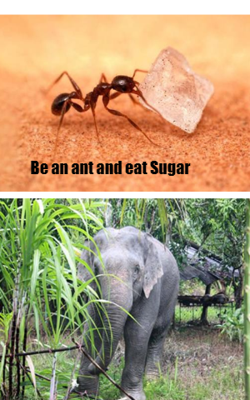
Be an ant and eat Sugar
Be an ant and eat Sugar

I sat by the bed of my paternal uncle—my mentor, well-wisher, and the man who had supported me during the most crucial phase of my life. As he lay in the hospital bed, frail and into his early nineties, loosing strength with the age.
I fondly call him Sali Anna. Growing up, I was closer to him than to my own father. My youth was filled with cherished memories of him taking me to the fields, teaching me about birds and animals, singing songs, and teaching me how to swim and ride a bicycle. In his younger days, he would occasionally smoke, winking and telling me not to tell anyone—though he eventually gave up the habit for good. Looking back, I have endless reasons to be grateful for everything he gave me.
In recent years, for reasons unknown to me, his sons and family kept their distance from my family. Regardless, my respect and gratitude for him never wavered, and I made it a point to visit him whenever possible. This was one such occasion. I had travelled overnight casually planning to see him, only to learn upon arrival that he had been hospitalized. Despite his illness, he was overjoyed to see me, inquiring about my health and family. I felt immensely grateful to be by his side when he needed comfort.
As I sat beside him, one pivotal moment from our past stood out vividly in my memory.
I was eighteen at the time, studying in 12th standard (PUC II), blissfully unaware of the harsh realities of the adult world. I was living with my foster parents—my maternal uncle (Mama), a police officer, and my paternal aunt (Mami). Having no children of their own, they had brought me up since I was nine years old. My relationship with them was complex; though I respected them, I always felt like an outsider. My uncle could be exceptionally rough, and I was no stranger to beatings from his leather belt. Yet, I choose not to dwell on the dark moments, as the light of my later life far outweighs them.
At the time, we lived in Athani, a town about a hundred kilometers from our native village. My daily routine was demanding: wake up early, clean the house, and fill a 500-liter water tank by hauling pots from a public tap 200 meters away. Only after washing the clothes and completing my chores could I get ready, eat breakfast, and head to school.
One morning, I fell ill and couldn't pull myself out of bed. There was no water for bathing. Enraged, my uncle dragged me from the bed and began beating me with his belt, shouting, "You lazy fellow, get up and fill the water!" He never asked why I was lying down; he simply continued to strike me.
In a moment of overwhelming physical pain and emotional anguish, I lost my composure and blurted out words I regret to this day: "If I were your real son, would you beat me like this?"
The effect was instantaneous and devastating. My aunt burst into tears, and my uncle froze, completely taken aback. A heavy, suffocating silence fell over the house, witnessed by two visiting guests. I realized too late the immense emotional damage I had inflicted. Physical pain passes, but words like those leave an everlasting mental wound. As the saying goes, an arrow that leaves the quiver never returns. Words can be forgiven, but they are rarely forgotten.
For days, absolute silence governed the house. Though I apologized repeatedly, I had crossed an invisible line—a Laxman Rekha. Forgiveness was withheld. Food was no longer served to me. I survived for days on raw groundnuts, jaggery, and puffed rice that happened to be in the kitchen.
When the time came to submit my final examination forms, I needed two rupees for the fee. I asked my uncle, but he ignored me. Desperate on the final deadline day, I sold my old textbooks and solution notes to classmates just to raise the two rupees and register in time.
Shortly after, an all-expenses-paid ten-day NCC outdoor camp was scheduled in Nandgad, near Belagavi. It was a desperate breather for me. I simply had to pack my clothes and NCC dress. I had nothing other than two pairs of dress. Charcoal and salt mixture was our tooth paste and fingers the brush. Green Gram flour used to be our soap. So nothing much to carry. I wore no shoes other than NCC shoes. I did not even have Chappals or slippers back then. We were used to walk barefoot to college. I wasn’t the only one, there were many like me. When I told my foster parents about the camp, they offered no reaction whatsoever.
The camp was rigorous and immersive. Surrounded by dense forest and green hills, we were trained in .22 rifle handling, bayonet combat, and field tactics. During one exercise, we were stationed half a kilometer apart on a forested hill, instructed to track trails silently without speaking.
Standing alone in the foggy forest with a loaded rifle in hand, the isolation hit me all at once. Tears streamed down my face. Helpless, broke, and unsure if I even had a home to return to, a dark thought crossed my mind for a fraction of a second—to end my existence. But in that gloomy moment, the narrative of Anton Chekhov's The Bet, which my English professor had taught us, flashed in my mind: It is better to live in whatever circumstances than to cease to exist. That thought anchored me.
When I returned home after ten days, hoping time had healed the wound, I found the atmosphere unchanged. The guests were gone, leaving behind an eerie silence. Still starved and ignored, I leaned on the quiet support of a neighbor who studied at the same college. She accompanied me on our long daily walk to campus—taking the "11 Number Bus," as we colloquially called walking on foot. On occasion, she shared her lunch with me, providing brief respite during a desperate time.
Eventually, word of my situation reached Sali Anna. He travelled from the village to visit us. After staying two days, he quietly observed that my foster parents were not speaking to me and that I was growing visibly frail from lack of food.
On his second evening, he took me for a long walk down an empty street. When he gently pressed me to tell him what was wrong, I broke down in tears and showed him the tender bruises still visible on my back.
He listened quietly, then shared wisdom that altered the trajectory of my life:
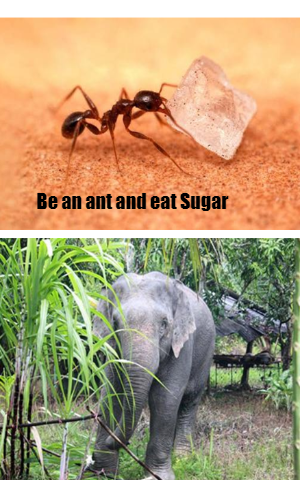
"You should not have said those words; you hurt them deeply. I know you are young, but you must think about your future. Who will support your education if they abandon you? Your father cannot take care of you, and there are no colleges in our village. In life, there are occasions when one must become an ant and eat sugar, rather than trying to be an elephant to eat sugarcane. ( ಇರುವೆ ಆಗಿ ಸಕ್ಕರೆ ತಿನ್ನಬೇಕೆ ಹೊರತಾಗಿ ಆನೆಯಾಗಿ ಕಬ್ಬನ್ನಲ್ಲ ) Show that you are small, not big. When we go home, hold onto their feet and do not let go until they forgive you."
We returned home. When my uncle arrived from duty, Sali Anna signalled to me. I immediately fell at my uncle's feet, pleading for forgiveness. Sali Anna stepped in, saying, "He made a mistake, but he is young. Please forgive him and continue your guidance." After a tense pause, my uncle agreed.
I then went to my aunt. She initially turned away, crying, "If we had our own child, we wouldn't have had to hear such words from you!"
I didn't argue. I simply held her feet firmly. Sali Anna consoled her again, asking her to treat me as her own child and grant me pardon. Finally, she softened and forgave me.
Before leaving for the village the next morning, Sali Anna reminded me one last time: "Remember—be an ant and eat sugar."
Things at home gradually improved. While the warmth was never fully restored, I was able to complete my education and build a life—indebted forever to their shelter and my uncle's intervention.
Sali Anna’s proverb became a lifelong compass for me. By nature, I carry a quick temper; once my threshold of patience is crossed, I can burn bridges. But remembering his words taught me to tame my nature, quiet my mind, and choose humility over pride during conflicts.
Today, as I look at my own children, that same lesson is the greatest piece of wisdom I can pass on to them: Be an ant and eat sugar.