Library

 Profile
A Beginner’s Irony
A Beginner’s Irony

“One should not aim at being possible to understand but at being impossible to misunderstand.”
Marcus Fabius Quintilian
I started my career in Kanpur a North Indian City with a Public Sector Undertaking. Though I was born and brought up in North Karnataka, I was familiar with Hindi as I had studied Hindi as a subject from sixth standard till tenth standard and also had completed my Rashtrabhasha Praveen exam. Adapting to the new language and people was not a problem for me, so I chose to stay in the company-provided quarters—a gated community exclusively for company employees, where everyone felt like one big family.
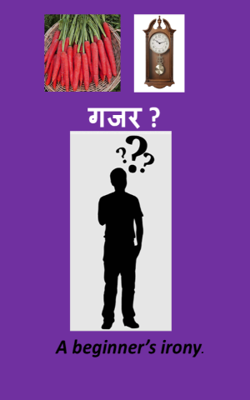
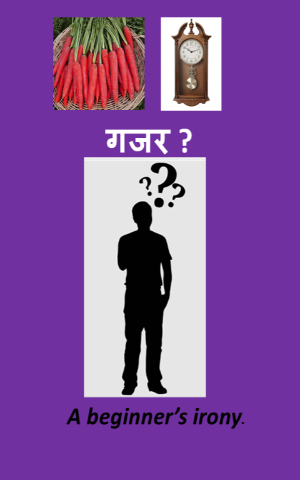
In such close-knit communities, socializing was common. Since there were no food delivery services like Swiggy or Zomato back then, we often cooked for ourselves or occasionally dined out at the few local food joints. Invitations for meals were a treat, especially on Sundays. While many of us South Indians spoke Hindi, not everyone was fluent, leading to amusing or serious misunderstandings. For instance, I once mistook “गजर” (gajar) for carrot, while it actually meant “striking clock.” I’ll share two humorous incidents that illustrate these language challenges.
Incident 1: The Vegetable Vendor
There was a Vegetable market halfway between the Office and Township, offering fresh seasonal produce from the banks of Ganga at reasonable prices. Most of us would bring the vegetables from this market when coming home after office hours. One evening, while buying vegetables, I heard the raised voice of one of my South Indian colleagues. He was arguing in whatever little Hindi he knew, with the vegetable vendor.
Noticing the commotion, I approached him and asked in English what was wrong. He said the vendor was cheating him. He had purchased some vegetables and when asked the price, the vendor had said “Dhai Rupaiaha” (ढाई), he had given him the money but vendor was now demanding one more Rupee.
The vendor was getting agitated and saying “ साहबजी इन्होने ढाई रूपया का सब्ज़ी लिया है और डेढ़ रूपया दिया है। एक और रुपया बाकि है। ( Sahab, he has purchased vegetables worth two and a half Rupees and he has given me one and a half Rupees. One more Rupee is pending.) I told vendor to calm down.
I asked my friend how much he had given, he said he had given him One and a half Rupees. I understood the confusion. Before I explained him the problem, I asked him why he thought the vendor was cheating.
He explained that he had previously purchased vegetables from another vendor who said the cost was “Dedh” (डेढ़) Rupees. He had given that vendor two and a half Rupees, and the vendor had accepted it. Since the current vendor was asking for “Dhai,” he assumed it meant one and a half Rupees.
I explained that this vendor was right because “Dhai” means Two and a Half and “Dedh” means one and a half. He had actually given one Rupee more to the first vendor. After hearing this, he gave the vendor the additional Rupee. The vendor calmed down.
However, my friend was furious, muttering, “These fellows are crooks, taking advantage of us not knowing the language.”
We turned back to go home. After going some distance, I heard a vendor shouting at my friend “Bhaisahab Suniye, aapne zada paise diye hain, vaapas le lijiye.
( भाईसाहब सुनिए, आपने ज़्यादा पैसे दिए हैं वापस लीजिए |)
This was the first vendor from whom my friends had made some purchases. He had recognised my friend and called him back to return the extra money. Now my friend was embarrassed for calling them crooks. He realised, he had given the money and moved on without giving time for the vendor to respond. He approached the vendor and said in his Best Hindi, “Thank you for your honesty. Kindly keep it as a gesture of goodwill”. The vendor expressed his gratitude. Those days one Rupee was a significant amount.
My friend laughed at himself and took out his small pocketbook to note down the words “Dhai” and “Dedh” for future reference. We both laughed as we pedalled our cycles home.
Incident 2: The Dinner Party
The second incident involved a South Indian colleague, Maran, who had recently married. His wife was newly learning Hindi, tried to speak in the local language despite being able to converse in English with his friends. One day, they invited me and a north Indian Colleague, Mr Sharma, for dinner. It was summer, and my wife and Mr Sharma’s wife were away visiting their mothers. It was common for family people to invite single colleagues (forced bachelors, as we used to call those days) for dinner during that time.
On the evening of the invitation day Sharma and I went to their house. They welcomed us and offered us cold drinks. While we were chatting, the hostess was busy preparing the food. Occasionally, she asked if we needed tea, coffee or water. Once the food was ready, she announced in Hindi. “खाना तैयार हो गयी | सब लोक खाना” (Khana tayaar ho gayi | Sab lok khana)—“The food is ready. Everyone, please eat.”
We sat out on the floor to eat. Most of us did not have dining tables back then; it was common to squat on a mat and eat. She brought the plates filled with food. We were hungry and started eating. During the meal, Sharmajee finished eating roti. Seeing that, the hostess offered more fresh roti, for which Sharmajee said “Bus, ab bus,” ( बस, अब बस |). (It's enough)
The hostess, without realizing the harsh meaning of her words, pressed him for more, saying “शर्म नहीं आती और लो” (Sharam nahi aati aur lo)—“Are you not ashamed, have more.”
Both Maran and Sharma’s faces turned red. Maran told his wife in his language to stop speaking in Hindi, but she did not understand the issue and repeated the same sentence calmly while holding the warm roti. Maran got up and took her inside. Sharma was unsure whether to stay or leave, feeling too embarrassed to move. I explained to him that she was new and her Hindi wasn’t perfect; she likely meant, “Don’t be shy, have more” (शर्माइएगा नहीं और लीजिये).
Sharma sat with his face down, unsure of what to do, as leaving would seem like an insult to Maran. Shortly after, Maran and his wife returned. (Maran must have explained the mistake to her.) The wife was in tears and apologized in English, saying, “Mr. Sharma, I am very sorry. I should have been careful. Please forgive me. I meant ‘Shy,’ not ‘Have more.’ I am extremely sorry once again.” She went inside, and we could hear her sobbing.
Sharma consoled Maran and tried to lighten the mood by saying, “शर्माजी कभी शरमाते नहीं” (Sharmajee never shies away). We finished our meal, and though the hostess was visibly upset, she managed to come out and say goodbye.
Over time, the families grew closer, and she learned to laugh about the incident with new South Indian friends.
These experiences highlight the humorous and sometimes awkward situations that can arise from language barriers. They remind us that while not being familiar with a language can lead to misunderstandings, it also creates opportunities for learning and building connections.