Library

 Profile
Bheemana Dibba ( Bheema's Mound)
Bheemana Dibba ( Bheema's Mound)

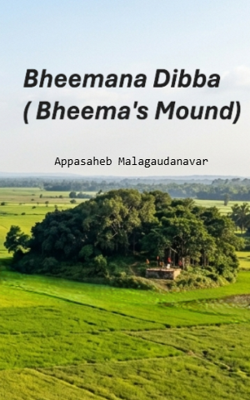
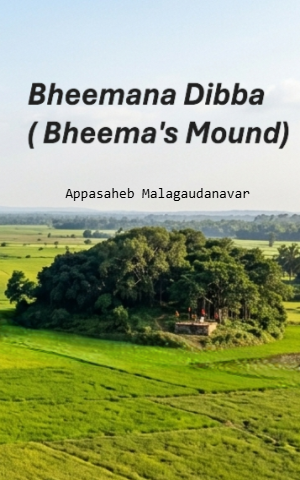
A few days ago, I travelled to my foster village. As I drove towards it, about a kilometre before reaching the village, I passed a large mound on the right side of the road and tried to recall its name. It was known as Bheemana Dibba (Bheema’s Mound), and it carried a story behind it.
The mound was massive, crowned with large trees—especially peepal, banyan, and Indian blackberry trees. With its dense overgrowth of grass and shrubs, it stood like a green cap over the surrounding farmlands. The mound also featured what the locals called a Gadduge—the seat or throne of the village deity—on the side facing the road. Far from being a literal throne, it was a simple rectangular platform made of stone.
Every year during the Dussehra and Ugadi celebrations, the deity’s palki (palanquin) would travel around the village boundaries and stop at such seats. At each stop, the palki would rest for fifteen minutes while neighbouring landowners offered prayers, fruits, and grains.
But this is not the main story.
The mound was named after a man called Bheema, a fierce and brave individual who belonged to the generation before my maternal grandfather. My grandfather revered him deeply. Ironically, when I saw Bheema during my childhood, in the final years of his life, he appeared withdrawn, staring endlessly into space, meek and fearful.
My grandfather often spoke about him and about the “seven known fears”:
Ihaloka Bhaya – fear related to this world (loss of comfort, security, etc.)
Paraloka Bhaya – fear of the next world or next birth
Adana Bhaya – fear of losing wealth or possessions
Akasmata Bhaya – fear of sudden calamity or accident
Ajeevika Bhaya – fear regarding livelihood
Apayasha Bhaya – fear of disgrace, insult, or loss of reputation
Marana Bhaya – fear of death
Among all fears, the fear of death is perhaps the most overwhelming. Even the bravest person can collapse when confronted with it unexpectedly.
In his prime, Bheema feared nothing. He would guard fields infested with foxes and jackals at night, always wrapped in a black kambali (a coarse blanket woven from black sheep wool) and carrying a bamboo staff. He had a large handlebar moustache that intimidated younger villagers. Yet my grandfather always insisted that beneath his fearsome appearance, Bheema was soft-spoken and kind-hearted.
The mound itself was rumoured to be haunted by ghosts and wandering spirits. No one dared remain near it after dusk. Farmers working in nearby lands would pack up and leave before sunset. During harvest season, they would even move harvested crops to fields closer to the village road so they would not have to stay near the mound at night.
This story goes back nearly sixty years, to the days when Bheema was at the height of his strength and reputation.
The village leaders, known as the Panchas, once decided to organise a challenge to identify the bravest man in the village. Such contests were common before the week-long village jatre (fair), held from Ugadi, the Hindu New Year.
The challenge was simple, yet terrifying.
The contestant had to walk alone at midnight on an Amavasya (new moon night) and drive a wooden peg into the ground about thirty feet behind the Gadduge. No lamps or torches were allowed. The challenger could carry only a stick.
The challenge was announced throughout the village by the gong-man, who also declared that the winner would be publicly honoured during the jatre.
It was early March, when most fields were empty and being prepared for sowing, making navigation easier in the absence of tall crops.
Only one man accepted the challenge: Bheema.
Two days before the event, the gong-man announced that Bheema was the sole contestant. The entire village talked about him, and Bheema walked proudly through the streets, occasionally twisting his moustache with satisfaction.
The night of the challenge finally arrived.
The Panchas and many villagers gathered in the courtyard of the main village temple, the only place illuminated throughout the night by oil lamps. The temple also housed perhaps the village’s only clock.
The walk from the temple to the mound normally took around thirty minutes during daylight, but at night it could take forty-five minutes or more because of the darkness and the narrow trails through the fields.
Bheema arrived around ten-thirty that night. The atmosphere was filled with whispers and nervous conversations. The Panchas encouraged him and explained that a small group of men would wait near the roadside close to the mound, though they would leave fifteen minutes after his departure.
They handed him a bright orange wooden peg about a foot long, similar to the stakes used to tether calves. He was instructed to hammer it into the ground using whatever stone he could find, then return to the roadside and shout the name of the village deity.
As the clock struck eleven, the Panchas signalled for Bheema to begin.
Dressed in his usual white shirt and dhoti, wrapped in his black kambali and carrying a bamboo stick, Bheema bowed before the deity and prostrated himself in prayer. Then he touched the feet of the Panchas and sought their blessings.
The villagers cheered loudly.
With confidence and a smile on his face, Bheema raised the peg in one hand and waved at the crowd before setting off with long, determined strides. Within minutes, he disappeared into the darkness beyond the village.
The villagers were instructed not to follow him. Only a select group would leave later and wait near the road beside the mound.
Bheema walked steadily beneath the dark sky lit only by distant stars, carefully following the route he had practised in previous days. He occasionally whistled to himself as he walked faster and faster.
When he reached the turn leading from the main road to the mound, he looked back toward the village. Faint light from the temple and a few scattered houses flickered in the distance.
Farmers of those days were skilled at navigating by the stars, often spending nights in their fields to protect crops from animals and thieves.
Bheema now approached the mound itself. The slope was gentle, causing him no difficulty. Calmly and confidently, he continued forward while silently praying.
As he reached the edge of the mound, he could immediately sense the difference between the open farmland and the wild overgrowth surrounding the Dibba. He searched for the Gadduge and finally spotted its outline.
The sounds of crickets and insects filled the air. Occasionally, jackals howled in the distance while dogs barked from faraway farms. Wind rustled through the grass, shrubs, and trees around him.
The night breeze was cool.
Dry leaves crackled beneath his feet. Thorny bushes occasionally caught hold of his kambali, forcing him to free it carefully before moving ahead.
At last, he reached the Gadduge.
The ground there was relatively clear because villagers regularly came to offer prayers before beginning their work in the fields. Relieved and happy, Bheema bowed before the shrine.
Then he searched for a stone normally used for breaking coconuts at the Gadduge. Finding one, he picked it up and moved deeper into the mound.
The vegetation grew thicker. Using his stick to clear the way, he advanced step by step. According to the challenge, he had to go at least thirty feet beyond the shrine.
The slope became slightly steeper, but Bheema remained fearless.
Finally, he found a patch of soft ground.
He placed the peg and stone down and adjusted his kambali. It was pitch dark.
Kneeling, he held the peg firmly and hammered it deep into the earth using the stone. After driving it in, he tugged at it to ensure it was secure, then struck it a few more times.
Satisfied, he smiled.
But as Bheema tried to stand up, something yanked violently at his kambali.
He pulled away instinctively, but the force held him back.
In the suffocating silence, he heard what sounded like a wheezing breath.
At that moment, Bheema’s courage vanished.
Convinced that a spirit had seized him, he was overwhelmed by a terrible fear of death. Panic consumed him. He screamed, “I am dead!” and bolted through the darkness.
He stumbled repeatedly, crashing through thorny bushes and shrubs. Thorns tore into his skin and clothes. Blood oozed from several cuts, but he was no longer aware of anything except terror.
By then, the village team waiting near the roadside heard his cries. Someone flashed a torch and saw him running wildly through the fields.
A few men rushed towards him and finally caught hold of him.
Bheema was trembling violently. He had wet himself and was barely conscious of his surroundings. All he kept repeating was:
“I am dead… I am dead…”
He did not recognise the men around him.
Someone wiped his face with a towel. Curled into himself like a frightened child, he lay trembling and crying.
Unable to walk, he was finally carried back to the village on a folded kambali.
When they brought him to the temple courtyard, the Panchas and a large crowd had already gathered. Rumours spread quickly through the village.
Everyone believed the spirits of the mound had attacked him.
He was laid down on a stone platform and offered water. He drank a little but spilled most of it. He continued shivering, whispering repeatedly:
“The ghost caught my kambali… I disturbed them… I am dead…”
There were no doctors in the village in those days.
The temple priest was called. After observing Bheema, he declared that he had been attacked by spirits and advised that he be chained and confined inside a room in the temple shelter until he recovered.
The village agreed.
Bheema had lost his wife early in life and had never remarried. He had no children. His younger brother was his only close family member.
After much persuasion, the brother agreed to keep Bheema inside a temple room, though without chains. Family members promised to care for him continuously.
Even after being laid on a bed, Bheema curled into a foetal position, staring endlessly into empty space.
Occasionally he would tremble violently and cry aloud:
“I am dead…”
As dawn arrived, normal village life slowly resumed, though everyone continued speaking about the incident.
My grandfather, who was one of the Panchas, had been away attending a function in another village. When he heard about the incident, he returned immediately.
He tried speaking to Bheema, but Bheema merely stared at him and repeated the same words:
“I am dead.”
After listening carefully to the entire incident, my grandfather asked whether anyone had gone back to the mound to investigate.
“No,” they replied. “Everyone is terrified.”
My grandfather laughed.
“Then I shall go myself,” he said.
He was brave like Bheema, but calmer and more rational.
With dusk still two hours away, he walked towards the mound. Some nearby farmers warned him not to anger the spirits further, but he dismissed their fears.
“Ghosts and spirits are creations of our own minds,” he told them. “They do not exist physically.”
He entered the mound, offered prayers at the Gadduge, and then walked deeper inside.
Soon he found the orange peg exactly where Bheema had driven it.
And there, trapped between the peg and the earth, was the corner of Bheema’s black kambali.
In the pitch darkness, Bheema had accidentally pinned his own blanket to the ground.
The “ghost” that had held him back was nothing more than his own kambali.
My grandfather called the nearby farmers and showed them the truth. Though initially hesitant, they eventually entered the mound and saw it for themselves.
Bheema had actually completed the challenge.
My grandfather brought back the peg and kambali to the village and convinced the Panchas that Bheema deserved to be honoured.
He later tried explaining everything to Bheema as well.
But Bheema never truly recovered from the shock.
It took years before he could even manage ordinary daily activities normally again.
Such is the power of thanatophobia—the fear of death—which can paralyse even the strongest of men.
From that day onward, the mound became forever known as Bheemana Dibba.
The mound that once tested courage became, forever after, a reminder of how fear itself can defeat even the bravest man.