Library

 Profile
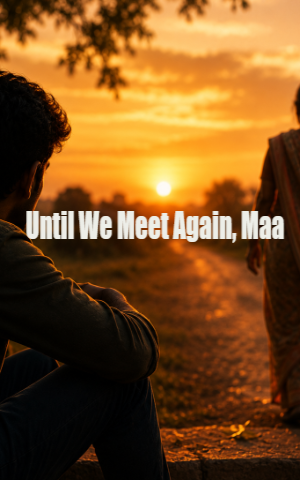
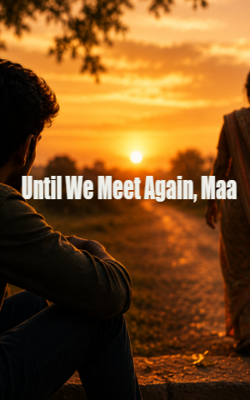
Until We Meet Again, Maa
Until We Meet Again, Maa

There are some conversations that remain unfinished forever.
Mine began one evening, almost one and a half years after I had left home. I sat alone in my government quarters, miles away from everything that had once felt familiar. Outside, the world moved with the urgency of the General Election. Inside, there was only silence—a silence that carried one question I had wanted to ask my mother for months.
"Maa, how are you?"
It was the same question she had asked me every time we spoke. She never expected a long answer. She only wanted to hear my voice. And I knew that if I ever stood before her again, she would smile first, look into my eyes for a moment, and then remain silent—as she always did. Her silence had never been empty. It was full of love, concern, sacrifice, and thousands of unspoken prayers.
People often ask why I left home.
The truth is, I never really wanted to.
I left because I could no longer bear to watch my mother cry.
Many nights, I had seen her quietly bury her face in a pillow so that no one would hear her tears. I never asked what troubled her. Children often believe that their parents are stronger than pain itself. Only later do they realize that strength is sometimes nothing more than suffering in silence.
My mother had mastered that silence.
Before she became our mother, she had been a State-level debate champion, a young woman filled with confidence, dreams, and a voice that could move an audience. Life, however, had different plans. Marriage, responsibilities, and endless sacrifices slowly replaced applause with routine. Yet she never complained. She chose a life where everyone else's happiness came before her own.
Even today, I have not met another woman who gave away so much of herself without ever asking for anything in return.
She became a mother at an age when most people are still learning about themselves. From that day onward, every dream she had quietly stepped aside so ours could find a place to grow. She carried burdens she never spoke about, storms she never described, and heartbreaks she carefully hid behind an ordinary smile.
Perhaps she believed that if her children knew how difficult her life had been, they would walk more slowly toward their own dreams.
She wanted us to fly without the weight she had carried.
If only she had known that we had grown up. That we were no longer children. That we had become strong enough to hear the stories she had spent years protecting us from.
I wanted to tell her that.
I wanted to tell her that she no longer had to fight alone.
She often told me that I reminded her of her elder brother. Whenever she looked at me, she said she could see his reflection. He was no longer in this world, but through me she hoped some part of him still lived on. Every time she said those words, I felt both honoured and burdened. I tried every day to become the person she believed I could be.
I don't know whether I succeeded.
I know I wasn't the perfect son.
I broke promises. I made mistakes. More than once, I placed my disappointments upon her shoulders. Yet she never judged me. She simply smiled—the kind of smile only mothers possess—a smile that forgives before an apology is spoken.
For years, I searched for the right words to tell her how sorry I was.
They never came.
Life kept postponing that conversation.
Duty always arrived before emotion.
At that time, I was serving far away from home. The nation was preparing for one of its biggest democratic exercises, and as a civil servant, my responsibility came before my personal life. Every day was consumed by work. Every leave application felt impossible. Every phone call ended with the same promise:
"I'll come home soon, Maa."
I believed there would always be another tomorrow.
I wrote this letter because I thought it would bridge the distance until I could finally return home. I imagined sitting beside her, reading it aloud, stopping every few lines because she would interrupt me with her familiar smile. I imagined laughing at my own tears while she gently told me not to be so emotional.
That day never came.
Before I could return, a road accident took her away.
The letter reached a future that no longer existed.
Today, whenever I read these words, they no longer feel like a letter waiting to be delivered. They feel like a conversation suspended somewhere between heaven and earth—a son still asking his mother, "How are you?", and a mother still answering with the same silent smile.
People say time heals everything.
I have learned that it doesn't.
Time simply teaches us how to carry the absence of someone who once carried us.
Sometimes, when I hear my own voice on television or during official events, I wonder whether she can still hear it somewhere beyond the skies. I hope she knows that every achievement carries her fingerprints. Every success belongs to her before it belongs to me. Every step I take is built upon the sacrifices she never spoke about.
If love could travel through memories, this story would find its way to her.
And if I am ever blessed with one more conversation—just one—I won't talk about my job, my responsibilities, or the years that kept us apart.
I will simply sit beside her.
Hold her hand.
And ask the question I never got to ask in person.
"Maa... how are you?"