Library

 Profile
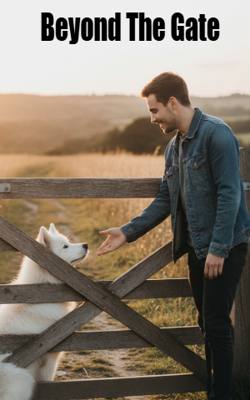
Beyond The Gate
Beyond The Gate

Subbu’s life was a straight line — not a wave, not a curve, just a plain straight road. Every morning at exactly 7:00 a.m., the alarm would scream, and Subbu would open his eyes to the same ceiling, the same fan, the same rented single room where nothing ever changed. He would brush, fold his bedsheet carefully, splash water on his sleepy face, and start walking — a quiet 15-minute walk through the hill-station lanes. The air was cool, sometimes misty, sometimes smelling of wet soil. It was the only time Subbu felt like he belonged somewhere. He walked without a destination — maybe to feel alive, maybe to escape the emptiness of his own room. After the walk, when he returned, the room would already be filled with students — teenagers between 14 to 18, eyes full of dreams, books spread on his small wooden table. They called him Sir, but to Subbu, they were the little seeds who could grow into tall trees someday.
He would teach them for two hours — sometimes Maths, sometimes English, sometimes life. By 9:30 a.m., he would wrap up, prepare breakfast, and get ready for office. He cooked like a husband, arranged like a father, and lived like a man who had a family — although he had none. His parents stayed far away, in a village where memories were still warm, but distances were colder than the hill-station winds. He missed them — but he never allowed himself to think too much. “Better not to touch the wounds,” he told himself.
Every day, after office hours, Subbu walked back home with slow steps, observing people selling peanuts, roasted or fried. Street vendors sold flowers — marigold, jasmine, roses. The colours tempted his heart. He always believed colours should exist not only in festivals but in everyday life. Yet, his own life was like a grayscale movie — routine, lonely, predictable. He bought vegetables from the market, watched a movie, cooked something delicious, and ate in silence. He had no one to serve his food to. He often looked at the empty chair across him and wondered when someone would sit there — not as a guest, but as home. His life was a loop — wake up, teach, office, return, cook, sleep. No one waited for him. And Subbu had become an expert in accepting loneliness.
Until one unexpected holiday morning.
Subbu was cooking in his small room when something unusual caught his eye. A movement near his door. He went outside and saw a dog — thin, weak, trembling, with ribs visible like a painful sketch. She was pregnant. Her eyes weren’t begging for food — they were pleading for love. Those eyes held stories — of hunger, pain, exhaustion, and somewhere deep within, hope.
Subbu knelt down slowly.
“It’s okay… I won’t hurt you,” he whispered.
The dog flinched… yet didn’t run. Subbu rushed inside, took biscuits, dipped them in warm milk, and offered carefully. The dog sniffed once, then ate like she had not tasted food in days. Subbu smiled softly.
That was the first time in years someone ate food he offered with pure happiness.
Without planning, without thinking, Subbu made a small space near his parking area — he placed an old blanket, a bowl of water, and a small aluminium plate. He cared for her not as a stray animal, but as someone who had suddenly entered the empty part of his heart. She began to trust him. Her eyes followed him when he left for office and shined when he returned. For the first time, Subbu didn’t return to an empty home — someone waited for him.
Three days later, in the middle of the night, he heard a sharp cry. The mother dog was in labour. The cries felt like knives in the silence. Subbu rushed outside. She licked his hand once but refused to let him touch her — as if saying, “I can handle this. Just stay with me.”
Subbu sat outside the whole night — listening, worrying, praying. A mother fighting for the life inside her, and a lonely man witnessing the miracle.
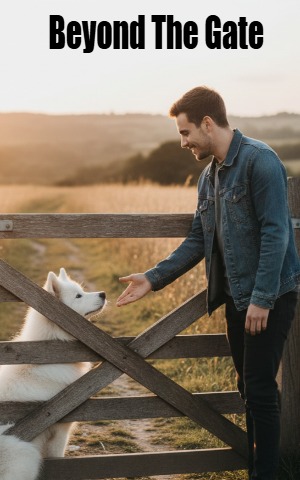
By morning, she brought him near the corner, pulling his pant gently with her mouth. And there they were — four tiny puppies, curled like cotton balls. Three were black-white mixed. One was pure white, like a small snowflake fallen from heaven.
Subbu touched them gently.
His heart melted.
Something inside him whispered — Family.
Days passed. The puppies opened their eyes. They crawled, stumbled, learned to bark. Students loved playing with them, especially the white one. The white one was different — calm, soft, gentle. When Subbu picked him up, the pup would nuzzle his neck as if he recognized Subbu’s beating heart.
Subbu named him Sabu.
Sabu was Subbu’s reflection — silent, observant, loyal.
Both of them were mumma’s boys.
But life, like a cruel editor, doesn’t keep all characters.
One puppy died due to a health issue. Another fell into a drain and drowned. A student adopted one. Only Sabu remained — the white one. The special one.
Sabu was Subbu’s shadow.
He walked with him, ate with him, waited for him.
One morning, while Subbu was playing with Sabu, his phone rang.
“Hello?”
His expression changed.
“What…? Is it true? I’m coming.”
His voice trembled. His eyes filled.
He threw his bag on his shoulder hurriedly and told the students, “Take care of Sabu.”
He left.
Sabu waited.
Days passed. Sabu didn’t eat. Students tried, neighbours tried. Sabu refused. His eyes remained fixed on the gate, waiting for the person who didn’t return.
15 days later, Subbu returned.
He stepped down from the bus — bald head, shaved face, no moustache. His shoulders were heavy with grief no one could see. Sabu recognized him instantly. Tail didn’t wag — it trembled. Eyes didn’t sparkle — they overflowed. He ran, jumped, cried, pushing his head into Subbu’s legs.
Subbu knelt down and held him.
“How many days have you not eaten, Sabu… my boy?”
Sabu dragged Subbu’s pant and ran. Subbu followed him to the roadside near the National Highway.
“What is it, Sabu?” Subbu asked.
A shopkeeper nearby spoke casually,
“A truck hit a dog here… around 15 days ago.”
Subbu froze.
The world stopped spinning.
It was her — Sabu’s mother.
And that same day… Subbu’s phone call was about his own mother’s accident.
Two mothers.
Two boys.
Both left motherless on the same day.
Subbu sank to his knees and hugged Sabu tightly.
That moment — one lonely man and one lonely pup — held onto each other like two broken pieces forming something complete.
From that day forward, Subbu no longer walked alone.
And Sabu no longer waited for someone to return.
Two mumma’s boys, wounded by life, healing each other — without speaking a single word.