Library

 Profile

The Man by the Window
The Man by the Window

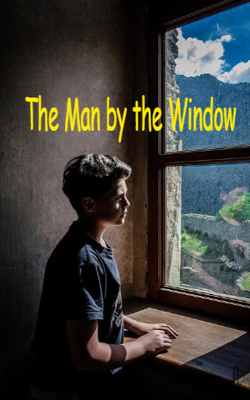
The ceiling fan creaked as it circled slowly above him. Evening light spilled into the small room, and as always, he sat by the window. The sky was painted orange and blue, and for the hundredth time, he asked himself the question he never seemed to answer—What have I done with my twenty-nine years?
He sighed, tapping his fingers on the window frame. “So many years… and still, nothing clear.”
His shelves were lined with books, their spines stiff and unread. As a boy, he had begged for books, often reading the same tattered novel again and again. Now he had more than he could count, yet none of them called to him. Reading wasn’t about the paper anymore—it was about life. And lately, life felt like a story he couldn’t finish.
His phone buzzed. A message from his mother: “Have you eaten?”
He didn’t reply. Family was there. Someone he loved was there. A respectable job was there. But something deeper was missing. He thought of himself as selfish, too caught up in his own world to ever truly make others happy.
He leaned back in his chair, letting the memories wash over him.
It was different in the university days. He could still see it—the cracked walls of the hostel room, his thin mattress on the floor, his old bike parked outside. His pockets were always empty, his clothes worn, but he felt alive.
He remembered the afternoons when he would ride into the hills, the engine sputtering as if it too shared his hunger. The valleys opened before him, the air crisp, the forests whispering secrets only he could hear. He would stop, look out at the endless green, and smile. Loneliness never hurt him then. It was a friend. It gave him strength, made him feel like he was meant to pave his own path.
One evening, his roommate had laughed at him.
“Why do you always go off alone?”
“To think,” he had answered simply. “And because the hills don’t ask questions.”
Back then, he felt certain of who he was.
Now, as an officer, he walked through busy streets in a city that didn’t feel like home. People saluted him, respected him, but the uniform felt heavier than it looked. At night, when he locked the door of his government quarter, silence pressed in. He often sat staring at the wall, thinking of the boy who had once found joy in emptiness.
One colleague had told him during lunch, “You’ve got everything people dream of—secure job, family, respect. What else do you need?”
He had smiled faintly, hiding the truth. What else? Myself, he thought.
That evening by the window, as the sky dimmed into twilight, a realization stirred. The sky above him was the same one he had seen as a boy, the same one that stretched over the hills where he once found peace. The world had changed, but the sky hadn’t. The freedom he missed wasn’t gone—it had always been within him.
He stood, almost without thinking, and walked to his bookshelf. His fingers brushed over the dusty covers until they stopped at one—the same book he had read endlessly as a boy, its spine worn and faded. Slowly, he opened it. The pages smelled of time, but the words were alive.
A small smile touched his lips. For the first time in years, he felt that same boy stirring inside him—the dreamer, the wanderer, the one who believed in carving his own road.
He whispered softly, as if confessing to himself, “Maybe I was never lost. Maybe I just forgot the way.”
The fan still creaked overhead. The window was still open. But inside, something had shifted. He was no longer only searching—he was beginning again.