Library

 Profile
The Riddle of a Man's Character
The Riddle of a Man's Character

It was my first visit to Delhi.
I was travelling home alone on a crowded overnight train and loneliness clung to me like the heat in that dimly lit compartment. I tied my attach-case—containing my ticket, a few clothes, and my only copy of the manuscripts I had written—to the railing above my berth and fell into an uneasy sleep.
When I awoke, the sun was already high and the station signs blurred past the window. But the moment I looked up, my heart dropped.
The attach-case was gone...!
I asked around, pleaded with co-passengers, checked with the train conductor, but no one had seen anything. No one had noticed a thing. My mind raced: my ticket, my ID, and most painfully, the fruits of five years of toil—my unpublished writings—all lost.
I had come to Delhi in the hope of meeting editors. Of finding a break. I had met none. And now, I had nothing left—no money, no luggage, no prospects.
I stood on the platform like a broken statue, tears stinging my eyes, when a large man in plain clothes stepped up to me. His gaze was calm and kind. “You look lost, beta,” he said.
He introduced himself as Inspector Hari Om Yadav from Bihar. He was about 45, with a deep voice and eyes that held stories.
“Don’t worry,” he said, clapping me on the shoulder. “You’ll get your bag back. But even if you don’t, life will give you better things.”
He bought me lunch, gave me ₹2,000 for my journey, and sat with me until I boarded a train for Bhubaneswar. He reminded me of a father—dignified, composed, spiritual. He told me he was from Motihari, a town once walked by Gandhi. As I left, he handed me a slip of paper with his phone number and address.
Back home, I told my family about this good Samaritan. We stayed in touch over the years. He’d tell me about the pressures of his job, how politics interfered with justice, and how his only escape was meditation and the Bhagavad Gita. I began to admire him.
But life, as I would learn, is never what it seems.
In 2013, a chilling news report stunned me: an Inspector of Police in Bihar had burned his wife and two young daughters alive. The report named him—Hari Om Yadav.
I froze. No. This couldn’t be the same man.
But he was.
Apparently, he had been in an affair with a lady constable. His wife had protested. The case details were horrific. He was arrested, tried, and sentenced to 10 years in prison.
I remember sitting beside my wife and saying, “How can a man be both so kind and so cruel?”
She looked at me and said, “You were poor in judging the character."
I had failed to judge the inspector?
The news haunted me. I avoided reading anything more. I couldn't reconcile the man I knew with the monster the world now believed him to be.
Then, in 2023, came another twist.
It was almost a decade after the horror that had turned Inspector Hari Om Yadav’s life upside down. The world had moved on, as it always does, and few remembered the case of the Bihar police officer who had supposedly murdered his wife and two young daughters in a fit of rage and betrayal. The newspapers had relished every salacious detail when it broke—his alleged affair with a female constable, his wife's repeated complaints to her parents, the rumours of domestic abuse, and the horrifying images of a house in flames with three charred bodies pulled out from the wreckage.
The verdict seemed obvious. In the public imagination, he was a monster. A trusted officer turned murderer. A husband and father who had torched his family to make room for forbidden love. Social media had called for the harshest punishment. Justice, people said, had been served when the court sentenced him to ten years in prison. No one looked beyond the surface. No one asked why an otherwise decorated officer, known for his kindness and spiritual inclinations, would commit such a gruesome act.
But in 2023, everything changed.
A lesser-known investigative piece, published in an independent digital journal focused on wrongful convictions, reopened the story. The journalist, a persistent young woman named Ananya Sinha, had stumbled upon the case during her research into custodial torture. But as she began to dig deeper, she realized that something in the Yadav case didn’t add up.
For one, the physical evidence was oddly circumstantial. There were no eyewitnesses, no CCTV footage placing him at the scene when the fire started, and strangely, no clear motive except for the assumed affair. The alleged constable lover had vanished from the narrative even before the trial began. Most damningly, there had been no autopsy that confirmed whether the family had died before the fire—or during it.
Sensing something awry, Ananya began to retrace the final few weeks of the Yadav family's life. She reached out to neighbors, relatives, and old colleagues. One detail emerged that the court had overlooked or perhaps deliberately ignored: the wife, Prerna, had been receiving strange calls from an unknown number in the months leading up to her death. She had mentioned it to her mother. At the time, it was assumed to be spam or crank calls. But what Ananya unearthed was far more sinister.
By acquiring old phone records and working with a cyber-forensics volunteer group, she discovered that Prerna had been in contact—almost obsessively—with a man named Adil Hossain, an auto-driver living in East Delhi. Their connection had started on Facebook. What began as casual comments and friendly chats had slowly escalated into flirtation, and eventually, into a toxic virtual relationship. Adil, she learned, had developed an unhealthy obsession with her. He would send her poems, voice notes, and photos.
When she stopped replying, he became wild and enraged.
Adil was the nephew of a top Muslim politician.
Further investigation revealed that Adil had visited Bihar multiple times during that period, under assumed names. Hotel records placed him in the vicinity of the Yadav residence days before the fire. And one chilling testimony from a chaiwala near the neighborhood recalled a man with a Delhi accent asking about “Inspector sahib's house” late at night.
It was the toxicology report, however, that finally cracked the case. Ananya managed to get access to the original post-mortem records through RTI applications. Hidden within pages of vague bureaucratic language was a small, overlooked note: traces of sedative substances had been found in the stomachs of all three victims. The report had been filed but never followed up. The implication was horrifying—Prerna and her daughters had likely been drugged before being set on fire.
Ananya traced Adil’s current location through his online footprint. A fake profile led her to an apartment in Ghaziabad, where he was living under a different name. He had grown a beard, changed his appearance—but a handwriting sample and fingerprint analysis confirmed it: he was indeed the man from the case.
Faced with mounting evidence and eventually confronted by police in Delhi, Adil broke down. In a full confession, he revealed the chilling truth.
He had fallen hopelessly in love with Prerna, believing she would leave her husband and start a new life with him. But when she tried to cut ties with him, he grew vindictive. Unable to bear the rejection, he made a final trip to Bihar. He visited her home under the pretense of a casual guest. That night, he brought drinks laced with sedatives. The family consumed them unwittingly and drifted into sleep. Then, in the stillness of night, he poured petrol over the sleeping figures and struck a match. He shut the door behind him and fled, taking her mobile phone to destroy any trace of his presence at the spot.
He returned to Delhi, resumed his life, and watched from afar as news reports painted Hari Om Yadav as the murderer.
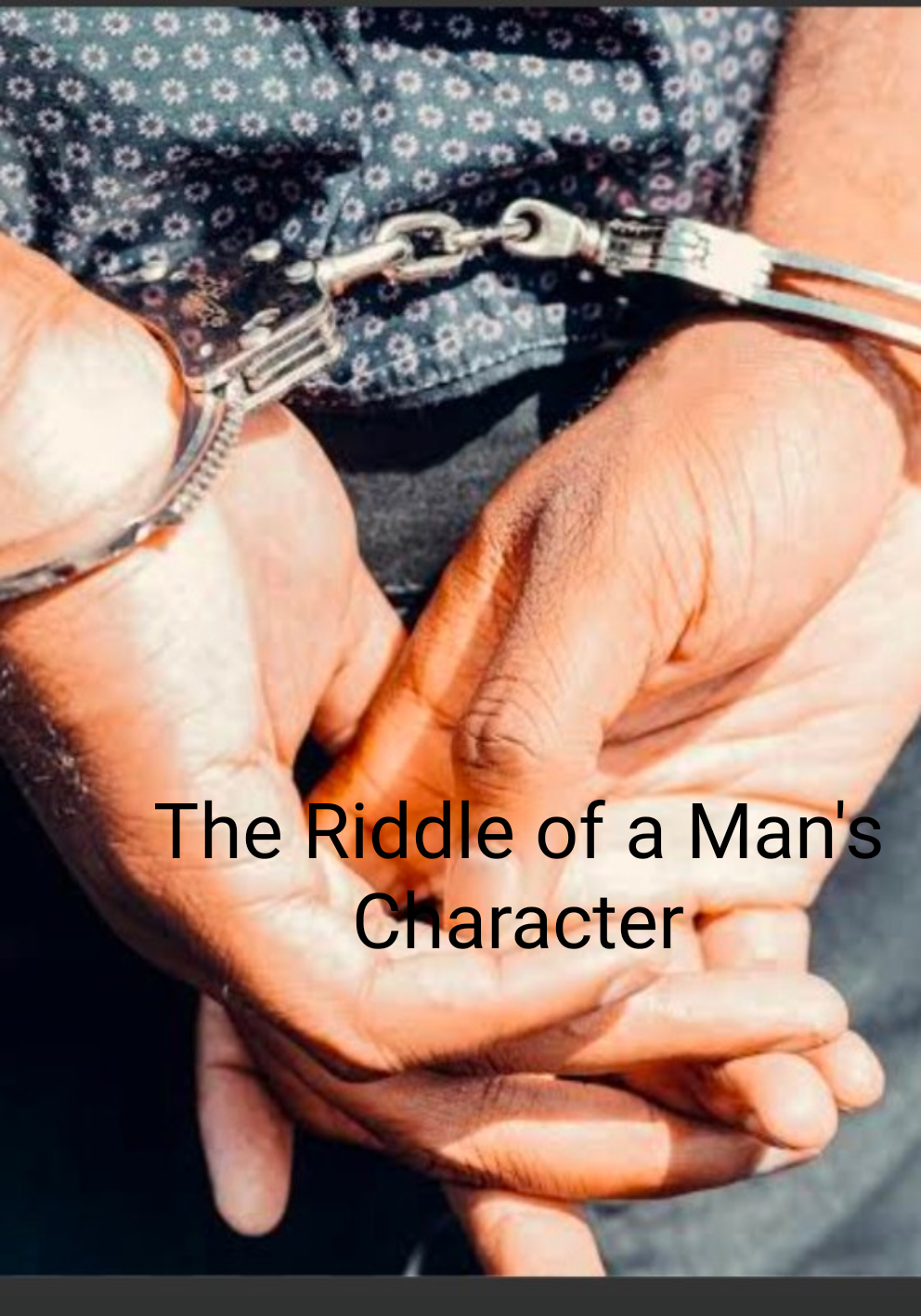
The Inspector had returned from duty the next morning to find his world reduced to ash and bone. Neighbors blamed him. His in-laws screamed for justice. The force suspended him. Within a week, he was arrested, paraded in handcuffs, and declared guilty in the court of public opinion long before the trial began.
In prison, he refused to defend himself aggressively. He spoke little, prayed often, and kept a copy of the Bhagavad Gita beside him. Fellow inmates respected him. Some feared him. But none knew the truth.
When Adil finally confessed, the court had no choice but to reopen the case. Hari Om Yadav was exonerated. But when the news of his innocence was officially declared, he did not speak to any reporters. He refused interviews, rejected any offers of reinstatement or compensation.
All he said, in a brief handwritten note to the media, was this:
"The law in India is blind. Like me, many innocent people are suffering in silence. I forgive the authorities, but I cannot return to the life I once knew."
Then, without ceremony, he left.
Rumours floated that he had been seen boarding a bus to Haridwar. A few pilgrims said they saw a man matching his description meditating near Badrinath. One sadhu in Rishikesh spoke of a tall, silent man who spent his days feeding stray animals and chanting a mantra under a peepal tree.
But no one could confirm it. He had vanished.
I read Ananya Sinha’s article with trembling hands. I remembered the man who had helped me when I was young and desperate. The man who had saved me. The man the world had condemned to ten years in prison!
A good man had been buried under a lie. And now, he had turned his back on a world that had done him the same.
I looked at the final words of her article. A quote from the Gita, perhaps given to her by the Inspector himself:
“Among thousands of men, only one strives for perfection. Among those who strive, only a rare soul knows Me in truth.”
Tears welled up in my eyes. Not just for him—but for all those wronged by the system, whose voices go unheard.
The man who saved me had become a ghost, a wandering spirit in the Himalayas. And yet, to me, he would always remain a riddle—a man wronged, and yet noble; shattered, yet deeply spiritual. A light snuffed out by injustice, but never fully extinguished.
It was too late by the time the truth came out. He was released, but he refused his badge, his salary arrears, or any compensation.
“The law is blind,” I thought. “Like him, many innocent souls rot in jails,unknown and unloved.”
Then he disappeared. Word spread that he had left for the Himalayas, with nothing but a small bag and a copy of the Bhagavad Gita.
I often sit and wonder: what made this man so complicated, so deeply misunderstood? A protector, then a suspect. A convict, then a sage.
Was he always spiritual, or did suffering force him to discover his divinity?
I never got to meet him again. Perhaps no one will. But sometimes, in the silence of the night, I remember his words to me on that train platform in Delhi:
“Keep struggling. You will find success one day.”
Yes, I did. But not before life taught me that a man is not one thing. A man's character is a riddle—full of shadows and light, grace and grief.
And sometimes, the ones who save us are the ones most in need of being saved and given protection.