Library

 Profile
The Brick and the Book
The Brick and the Book

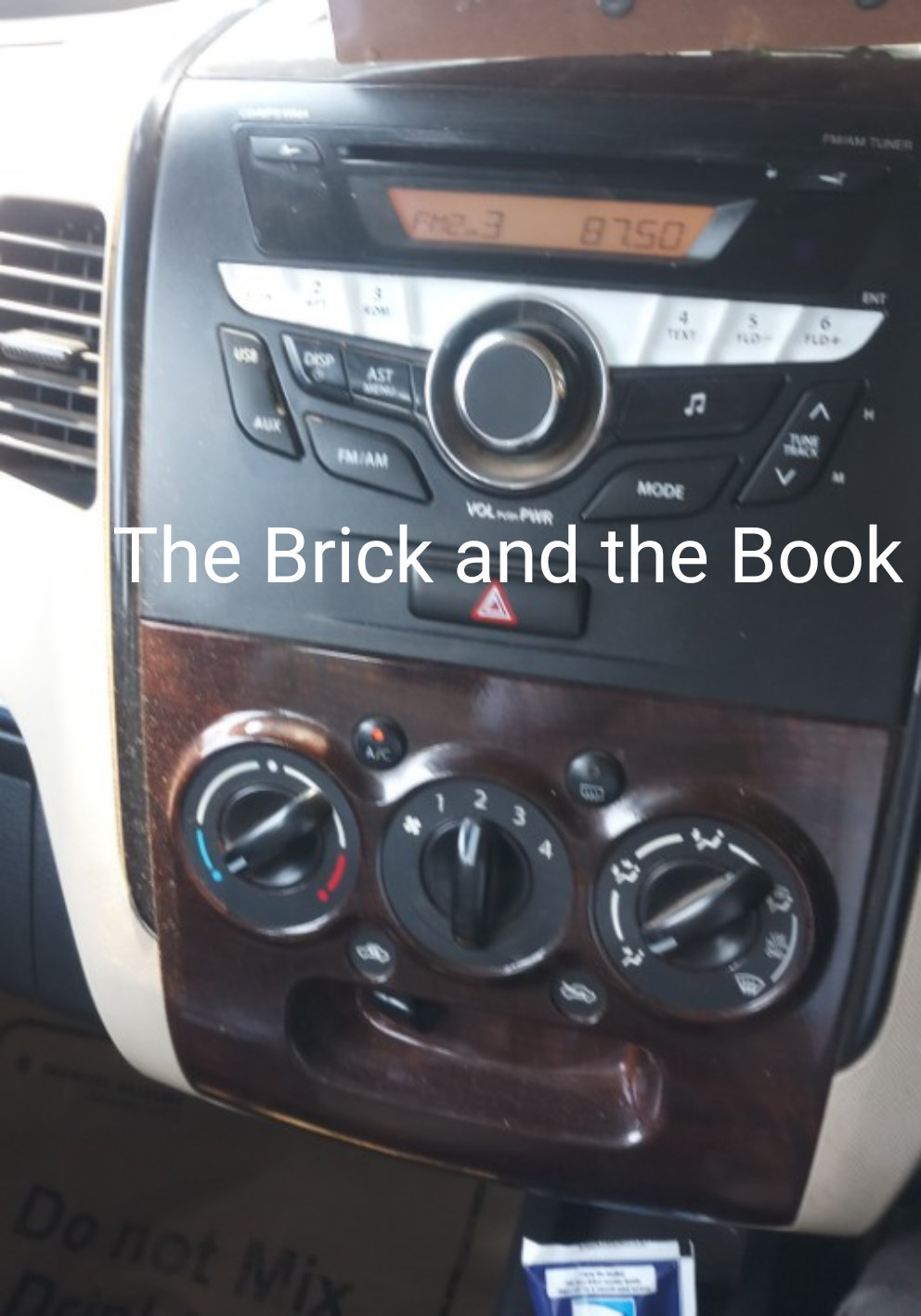
We drove to Master Canteen in my rickety old Maruti, its dashboard rattling like a tin box full of coins. My wife and daughter were excited about shopping. I, as usual, wasn’t. So I parked the car on the roadside and said, “You two go and buy whatever you want. Take your time.” My daughter chuckled, already guessing what was coming.
“Pap, you never come with Ma to the shops. Why?” she asked.
I shrugged. “Because your mother shops with the patience of a saint and the calculation of a jeweller. I’d rather sit here and enjoy some peace.”
She rolled her eyes. “I’m not like her, you know. I shop like you—quick and clear.”
I nodded with pride as they disappeared into the mall.
I stayed in the car, humming an old Kishore Kumar tune and tapping the steering wheel. The late afternoon was golden, with long shadows and the distant echo of street vendors.
Suddenly, I noticed the headlights were on.
Damn! I had forgotten to turn them off. I turned the key. Nothing. Again. Dead.
Frustrated, I stepped out. As I looked around for help, I saw a thick-necked, glossy-headed man sitting a few feet away inside his car, reading a book. He had a pudgy face, his large glasses glinting in the fading sunlight. He looked… unbothered.
I approached him nervously.
“Sir, please… can you help me steer the car? The battery’s drained. I’ll push. I left the lights on by mistake.”
He didn’t respond. Just flipped a page like I was air.
“Sir, please. Just sit in the seat and turn the steering. I’ll do the rest.”
He looked up finally, lazily, and said, “Replace the battery.”
Then he went back to reading.
I felt like I’d been slapped.
I stood there, helpless, embarrassed. And then I saw a young sweeper nearby in a yellow BMC jacket. He was sweeping leaves and wrappers, humming to himself. I called out. Without a second thought, he jogged over.
Just then, an auto-rickshaw driver parked nearby called out, “Sir, you push. I’ll steer.”
Together, we got the car rolling. After a few feet, the engine coughed to life like an old smoker. Relief flooded me. I thanked them both from the bottom of my heart.
But something burned inside me. I glanced back.
The old man was still reading, smug in his indifference.
Without thinking, driven by rage and insult, I picked up a brick from the roadside. I walked silently, like a shadow. And then—crack!—I hurled it with all the strength in my body.
It hit the side of his head.
His scream shattered the air.
Then silence.
No one saw me. The street was dim, and the camera near the lamppost hadn’t worked for months. I calmly walked back, started my car, and drove towards Pragnya Bookstore and stopped behind a wide baniyan tree.
I called my wife.
“Buying a book,” I told her.
When they joined me, we drove home. I didn’t speak a word.
The next morning, while sipping tea and reading the newspaper, a headline in The Samaja froze my fingers mid-air:
“Miscreant Attacks Famous Author”
I read it twice.
The man I’d hit was Purna Chandra Sharma, an award-winning poet and storyteller. He was reading one of his latest stories in an Odia magazine when someone “tried to rob him at knife point,” as he claimed. He had apparently “fought bravely” and “defended himself like a true hero.”
They had published a list of all his literary awards—Sahitya Academy, Odisha Ratna, and others. My tea went cold.
But strangely, I felt no guilt.
The man had no kindness, no empathy. He might have been a great writer—but he was no gentleman. No saint.
Some say stories change lives.
That day, it was a brick that wrote the story.
The year was 2013. And I, to this day, have never told a soul.