Library

 Profile
Flappy Bird The game was aggravating, but addictive
Flappy Bird The game was aggravating, but addictive

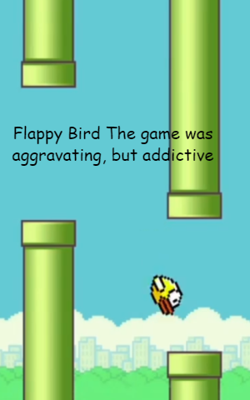
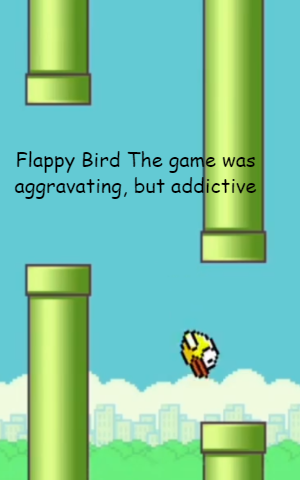
Flappy Bird bore resemblance to earlier mobile games developed by Nguyen, such as Shuriken Block or Super Ball Juggling. The artwork paid a charming tribute to vintage sprite art, the gameplay was exceedingly straightforward, and the difficulty was significantly increased, resulting in games that lasted only a few seconds.
The idea seems deceptively straightforward: Tap the screen to ascend, let go to descend, and navigate through openings in a sequence of emerald conduits that were evidently inspired by the pipes in the Super Mario franchise. The gaps were conspicuously spacious, exceeding the bird's height by a significant margin. However, because to the bird's rapid movement and abrupt dives, successfully navigating through the gap without crashing proved exceedingly difficult. Since you only receive one point for each pipe cleared, it is quite probable that your high score will be in the single digits, if not zero.
Flappy Bird initially had a similar level of success as Nguyen's prior games, meaning that only a small number of people were aware of it. In late October, he issued a minor update that rectified some software glitches. After a few days, there was a shift - someone other than Nguyen posted the initial tweet regarding the game.
The game was exasperating, yet compelling. Furthermore, due to the tendency of unhappiness to seek companionship, gamers who encountered it felt the need to express their frustrations. During the month of November, the number of users of Flappy Bird gradually increased. Reviews started to gradually come in: initially one per day, then three, and eventually reaching a total of 20. The expansion of Flappy Bird appeared to be solely driven by word of mouth, as players conveyed their ambivalent feelings towards the game. Nguyen utilized Twitter to engage with his gradually expanding group of fans, even making a commitment to adapt the game for Android.