Library

 Profile
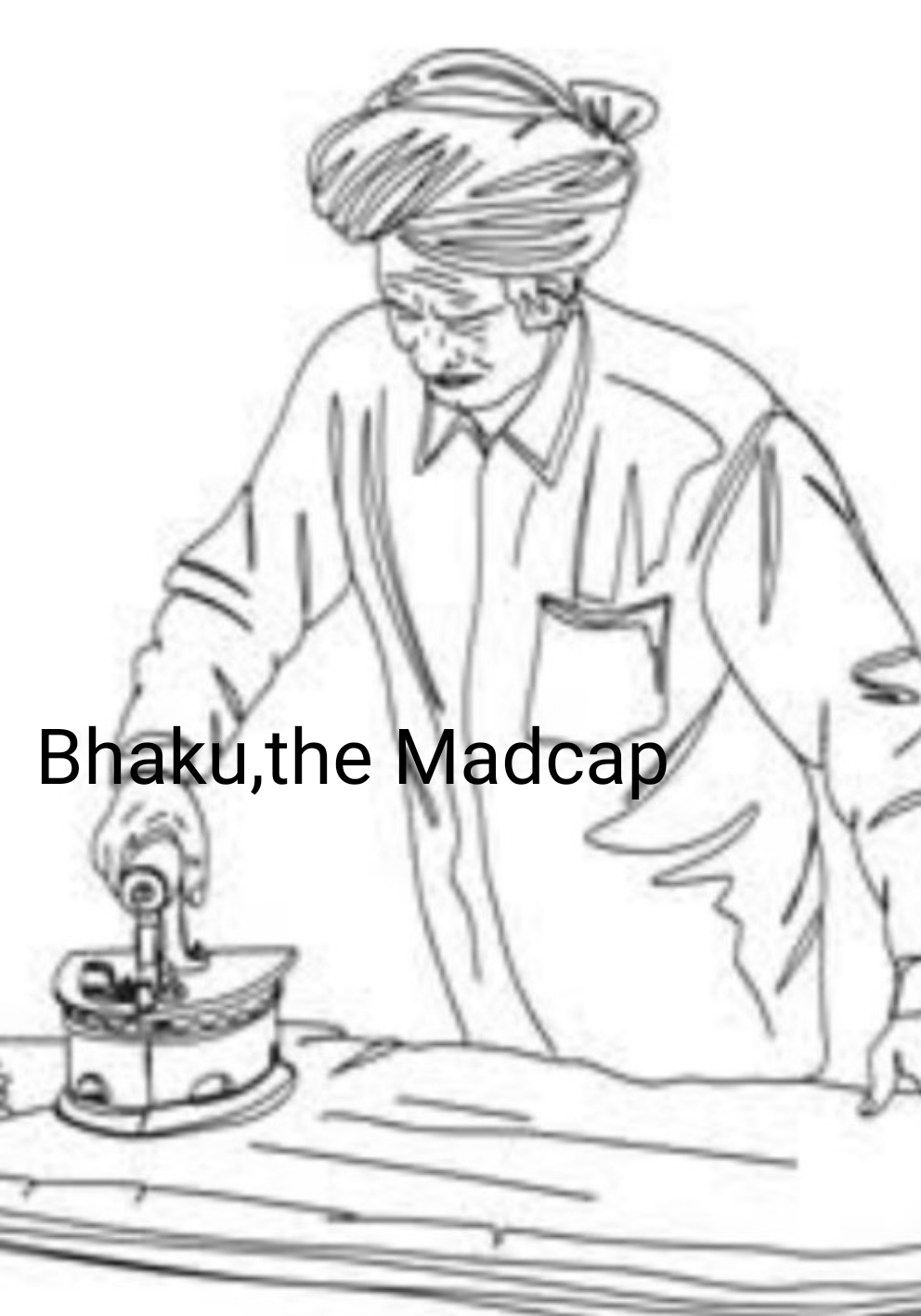
Bhaku,the Madcap
Bhaku,the Madcap

In the bylanes of the old town lived Bhaku, the laundry man. A man as stiff as starched linen, with a limp that made his walk a slow, dragging shuffle. His face was a permanent frown, and words escaped his mouth as grudgingly as coins from his iron grip. Children often followed him, giggling, calling him names and mimicking his awkward gait. But Bhaku neither scolded nor smiled—he only grumbled and trudged on.
The afternoon was sweltering, and tempers flared as sharply as the sun overhead. Bhaku stood barefoot on the cracked stone path, his wiry frame trembling with indignation. Before him, the widow Seema, her most regular and once-trusting customer, glared with intense distaste, a half-bundled set of rumpled clothes clutched in her hand.
"You call this work?" she bellowed, waving the garments. "Late! And double the price? Are you mad, Bhaku?"
Bhaku’s eyes, usually filled with a mischievous sparkle, darkened with frustration. His head twitched sharply to the side, a gesture the village children had come to mimic. "Iron does not press itself, Ma'am! The coal costs more! The river runs low; I fetch water myself! Do you think my arms do not tire?"
"But you promised!" she shot back. Her voice cracked with the strain of the argument, attracting curious glances from a few passersby. "Promised the clothes would be ready for the festival..! Promised a fair price! Now look at them — creased, smelling of smoke — and you dare to ask for more!"
Bhaku stepped forward, a bundle of rage barely contained. His fists clenched at his sides. "Promises?" he spat. "Did you promise I would eat when prices soared? That I would wear shoes? No! Only Bhaku must keep promises! Only Bhaku must work till his back snaps!"
Their voices climbed into a crescendo, two wounded beasts roaring in the dust. The people, once charmed by Bhaku's eccentricities, now watched the spectacle with a mixture of pity and unease. There was a madness stirring in Bhaku’s eyes — not the harmless foolishness they knew, but a storm cloud ready to burst.
And somewhere between an exchanged curse and a tossed coin rolling into the gutter, the tragedy, swift and unseen, began its slow, inevitable journey.Seema didn't visit Bhaku's shop.
Despite his ill-temper and chronic lateness in delivering clothes, Bhaku still remained the town’s most favorite washerman. His iron could breathe life into the limpest fabric, leaving shirts and sarees crisp and proud. People often whispered that Bhaku was a madcap, a fool who had no sense of business. Yet, they still brought him their finest clothes.
One fateful night, the skies split open. The rain fell in wild torrents, and a ferocious storm roared through the streets, tearing branches and rattling windows.
In a building nearby, Seema, the widow of a brave army officer, tried to descend the stairs with her three-year-old son, Varun, in tow. The power had long since gone, and she relied on the pale torchlight from her phone to guide her.
But fate slipped its hand into the night—Seema stumbled. She fell hard, gasping in pain, and little Varun cried out as his tiny leg twisted unnaturally. She screamed for help, but behind locked doors and shuttered windows, no one dared to venture out into the wrath of the storm.
Except Bhaku.......!
Seema was perplexed and speechless.
Hearing her cries, he had limped out into the rain, dragging his old trolley rickshaw behind him. He reached the mother and child, wrapping them hastily in a torn polythene sheet he had tied to the trolley. With no thought for himself, Bhaku pulled the heavy cart into the raging storm. The rain lashed at him, soaking him to the bone. Lightning clawed at the sky, and thunder cracked like war drums, but Bhaku kept moving, his limp now a steady, painful rhythm against the cobblestones.
At last, through flooded streets and trembling shadows, they reached the hospital.
The doctors rushed to care for Seema and Varun.The boy had suffered a crack in his right foot.It took about a month for the little boy to get back to normal.
People, once so quick to laugh at Bhaku, now watched him with awe.
By morning, the storm had passed, but Bhaku's legend had begun. The town buzzed with praise for the "madcap" who had shown a heart braver than most of those close to the helpless widow. Seema, tears of gratitude shining in her eyes, clasped Bhaku’s calloused hand and called him her brother.
From that day forward, Bhaku lived in a small room in Seema’s house, an honoured brother and protector. He still ironed clothes, still grumbled and frowned, but now, when children mimicked his limp, they did it with a smile of respect. For they all knew behind Bhaku’s rigid ways lay a heart as fierce and tender as any hero's.
He boasted to his customers about his nephew Varun who always stood first in class.Some customers couldn't understand how a washerman was able to send his nephew to a top class expensive public school in the city.Seema had inherited enough from her late husband to last her a century.