Library

 Profile
The Shadow Before the Flash.
The Shadow Before the Flash.

The Shadow Before the Flash.
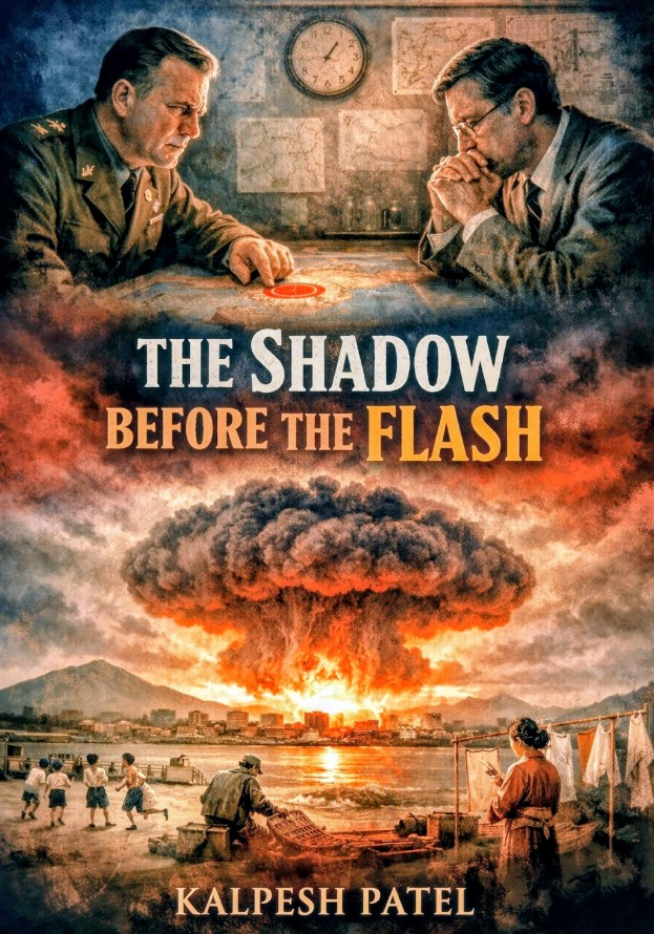
The war room was heavy with silence. Commander Joban, whose very name meant youth and vigor, spoke with the urgency of a man who believed action was life itself.
His words were sharp, forged in duty: “Hiroshima was not enough. Japan still resists. Every day we wait, more of our young men die. One more strike, and the war ends.”
Across the table sat Alen, the scientist whose name carried the weight of rock and harmony. His voice was softer, but it trembled with strength.
“Commander, you speak of youth saved. But I see youth destroyed. Faces turned to shadows, laughter silenced. We are not ending war — we are ending innocence.”
Joban’s jaw tightened. He was the embodiment of vitality, yet his decision threatened to extinguish the vitality of thousands.
Alen’s hands shook, but they were steady in conscience, like stone resisting the tide.
---
Far away, Nagasaki lived in fragile rhythms.
Children chased each other in the schoolyard, their laughter rising like spring blossoms.
A fisherman mended his nets, speaking of rumors that peace might soon arrive.
A mother folded laundry, humming a lullaby, believing tomorrow would be ordinary.
None of them knew their city’s name was already inked in red on a map thousands of miles away.
---
Back in Washington, the dilemma sharpened.
Joban pressed his hand against the map, hovering over Nagasaki. His name — youth — now stood at the edge of destroying youth itself.
Alen whispered, almost to himself: “We are choosing between shadows and fire. Once we cross this line, harmony will be lost forever.”
The generals shifted uneasily. The silence was louder than any argument.
Joban stared at the map, Alen at his hands, and the clock ticked on, indifferent.
Years past fast, but...it is written on stone that...
“The world would see the fire.
But eternity would remember the silence before it.”
---
The moment stretched, suspended like a blade above the world.
In Nagasaki, laughter echoed in the schoolyard.
In Washington, silence echoed in the war room.
Joban’s vitality demanded action.
Alen’s harmony pleaded for pause.
And between them lay the shadow before the flash.
---
The word “Joban” (जोबन) comes from Hindi/Sanskrit roots and carries meanings tied to youth, vitality, and beauty.
Core Meanings
Youth / Young age — the state of being young, full of energy.
Beauty and charm — especially the radiance of youth, freshness, and attractiveness.
Meanings of Alen
Rock / Little Rock — from Gaelic ailin, symbolizing resilience and stability.
Handsome / Noble — from Old Breton alan, often linked to attractiveness and dignity.
Deer — another Breton interpretation, suggesting agility, grace, and natural vitality.
Harmony / Peace — some traditions connect it to balance and calmness.
---
Symbolic Layer for Your Story
If Commander Joban’s name evokes youth and vitality, then Scientist Alen’s name evokes strength, harmony, and resilience. Together, their names create a symbolic tension:
Joban — the vigor of youth, pushing forward with urgency and force.
Meaning of Alen.
Alen — the rock of conscience, standing firm against the tide of destruction.
This contrast deepens the narrative of subject story :-
Joban embodies the drive to act, Alen embodies the plea to pause. Their very names become metaphors for the nuclear dilema versus restraint, urgency versus harmony.
Author’s Note:
This narrative is not a retelling of history, but a reflection on the moral shadows that precede irreversible decisions. The characters are symbolic embodiments of urgency and conscience. The story does not seek to justify, condemn, or reinterpret historical events, but to contemplate the human tension between action and restraint.