Library

 Profile
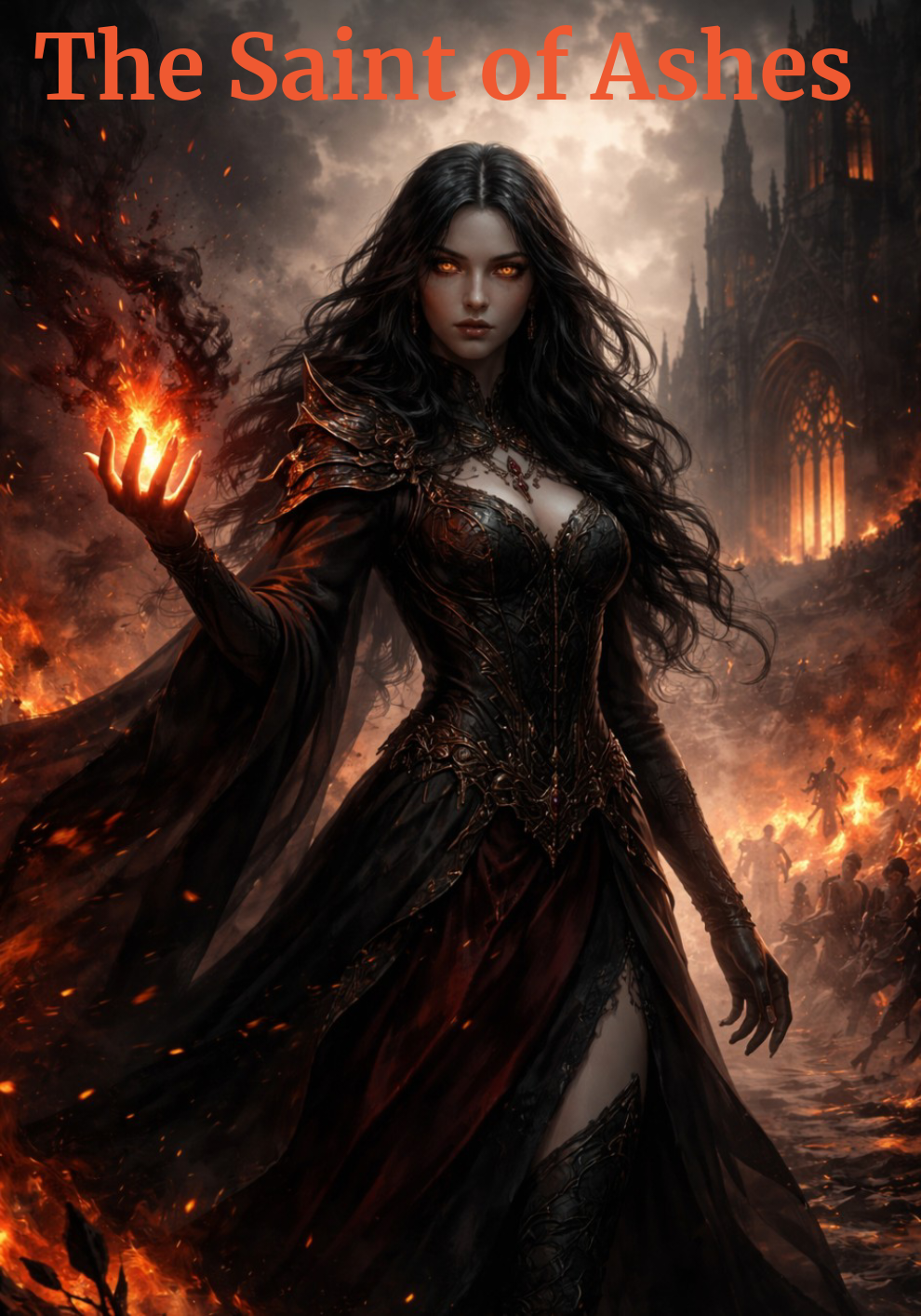
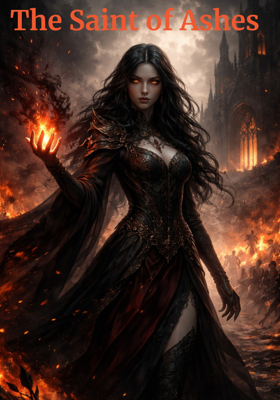
The Saint of Ashes
The Saint of Ashes

They call me a monster now.
It’s almost amusing—how quickly devotion curdles into disgust. How easily prayers become curses when the god you begged for answers... actually answers.
But I suppose I should start at the beginning.
Villains are always misunderstood, or so they claim.
I am not misunderstood.
I am remembered correctly.
Just not completely.
My name is Nyra Veyl.
Once, it meant nothing.
Now, it is whispered like a warning.
I was born in a dying kingdom where the sky had forgotten how to rain.
The land cracked like old bone beneath our feet, and the rivers receded into thin, mocking veins. Crops failed, livestock starved, and people began to look at one another the way wolves look at wounded prey.
And above it all stood the Temple of Lume—white marble, untouched by dust, its golden spires piercing the lifeless sky.
They said the gods still listened.
They said all we needed was faith.
So we prayed.
Oh, how we prayed.
I remember my mother’s hands, rough and trembling, clasped together every night. Her lips cracked as she whispered into the dark, begging for rain, for mercy, for anything. I remember my younger brother, too weak to cry anymore, lying beside her like a shadow that had forgotten its shape.
And I remember the priests.
Their robes were always clean. Their bowls were always full. Their voices rang loud and certain as they told us suffering was a test—an offering to prove our devotion.
“Endure,” they said. “The gods are watching.”
I believed them.
Of course I did. I was young, and hope is the cruelest lie we tell ourselves.
The day my brother died, the bells of the temple rang.
Not for him, of course. For a festival.
I carried his body to the temple steps myself. He was light—too light, like holding something already halfway gone.
I remember the heat of the stone beneath my knees as I begged.
“Please,” I said, my voice breaking like brittle glass. “You said the gods listen. Then make them listen. Take anything. Take me—just… not him.”
The priests watched.
One of them—High Seer Vaelor—stepped forward. His eyes were soft with something that almost looked like pity.
“The gods do not bargain with mortals,” he said gently. “Your brother’s suffering has ended. Rejoice in that.”
Rejoice.
I looked down at my brother’s hollow face, at the stillness where breath should have been, and something inside me... shifted.
Not broke.
Not shattered.
It changed.
“Then your gods are cowards,” I said.
The courtyard fell silent.
I remember the way the air seemed to tighten, as if even the wind feared what I had said. Vaelor’s expression hardened, his pity curdling into something colder.
“Blasphemy,” he murmured.
Maybe it was.
Or maybe it was the first honest thing anyone had said in that place.
They exiled me for that.
Not immediately—no, the temple was far too dignified for such crude reactions. They waited until nightfall, until the streets were empty and the world was quiet.
Then they dragged me beyond the city walls and left me there with nothing but the desert and my anger.
“Repent,” they told me. “And perhaps the gods will forgive you.”
I laughed.
It wasn’t a sane sound.
I wandered for days.
The desert does strange things to the mind. The horizon stretches into eternity, and time becomes something soft and meaningless. Hunger gnaws, thirst burns, and reality begins to unravel at the edges.
That’s when I found it.
Or perhaps… it found me.
A ruin buried beneath the sand—black stone carved with symbols that seemed to move when you looked at them too long. It felt wrong, in a way the temple never had.
Honest.
I don’t remember deciding to enter. One moment I was standing outside, staring at the jagged entrance, and the next I was inside, the darkness swallowing me whole.
It was cold there.
Not the comforting cool of shade, but a deeper chill that seeped into my bones. The air hummed with something ancient, something vast and patient.
And then… it spoke.
You are angry.
The voice wasn’t sound. It was thought—slipping into my mind like a shadow.
“Yes,” I whispered.
You were abandoned.
“Yes.”
You want to be heard.
I hesitated.
“No,” I said slowly. “I want them to suffer.”
There was a pause.
Then, something like amusement curled through the darkness.
Good.
I don’t know what it was.
A god, perhaps. Or something older—something the gods themselves had forgotten.
It didn’t demand worship. It didn’t speak of faith or devotion or tests.
It offered a simple truth.
Power answers where prayers fail.
And it offered me that power.
Not freely—nothing of worth ever is—but at a price I was more than willing to pay.
“Take it,” I said. “Take whatever you want.”
It did.
I felt it tear through me, unraveling and remaking, carving something new from the hollow shell I had become. It hurt.
Gods, it hurt.
But pain was nothing new to me.
When it was over, I was no longer the person who had knelt on those temple steps.
I was something… else.
I returned to the city as a storm.
Not of rain—no, that would have been mercy.
I brought ash.
The sky darkened as I walked through the gates, the air thick with the scent of burning. People stared, fear blooming in their eyes as they felt what I had become.
The temple bells rang again.
This time, for me.
Vaelor stood at the top of the steps, his white robes gleaming against the gathering darkness.
“You,” he said, his voice tight with something he couldn’t quite hide.
“What have you done?”
I smiled.
“Something your gods never could.”
The first flame ignited with a whisper.
It spread quickly—faster than it should have, devouring wood and stone alike. The city erupted into chaos, screams tearing through the air as fire consumed everything it touched.
The priests tried to stop me.
They prayed.
They begged.
They called upon their gods with desperate, trembling voices.
Nothing answered.
Of course it didn’t.
I stood before Vaelor as the temple burned behind him, the golden spires melting into rivers of molten light.
“Where are they?” I asked softly. “Your gods.
Your salvation.”
He didn’t answer.
He couldn’t.
Because for the first time, he understood.
There was nothing there.
“Please,” he said finally, his voice breaking. “There are innocent people—children—”
“Innocent?” I echoed.
“Were we innocent?
When we starved? When we begged?”
His silence was answer enough.
I stepped closer, the heat of the flames curling around me like an embrace.
“You taught us that suffering is a test,” I said. “That endurance is virtue.”
I tilted my head, studying him.
“So endure.”
They say I destroyed the kingdom that night.
They say I slaughtered thousands, turned a city to ash, and laughed as it burned.
Some of that is true.
Not all.
I didn’t kill everyone.
Only those who still believed.
The ones who clung to their prayers even as the fire consumed them. The ones who chose faith over truth, illusion over reality.
The rest?
I let them live.
Someone has to remember.
Now, years later, they whisper my name like a curse.
Nyra Veyl.
The Saint of Ashes.
A mockery, perhaps—but not an inaccurate one.
Because I did what their gods never could.
I answered.
Not with mercy. Not with kindness.
But with truth.
And truth, as it turns out, is far crueler than any lie.