Library

 Profile
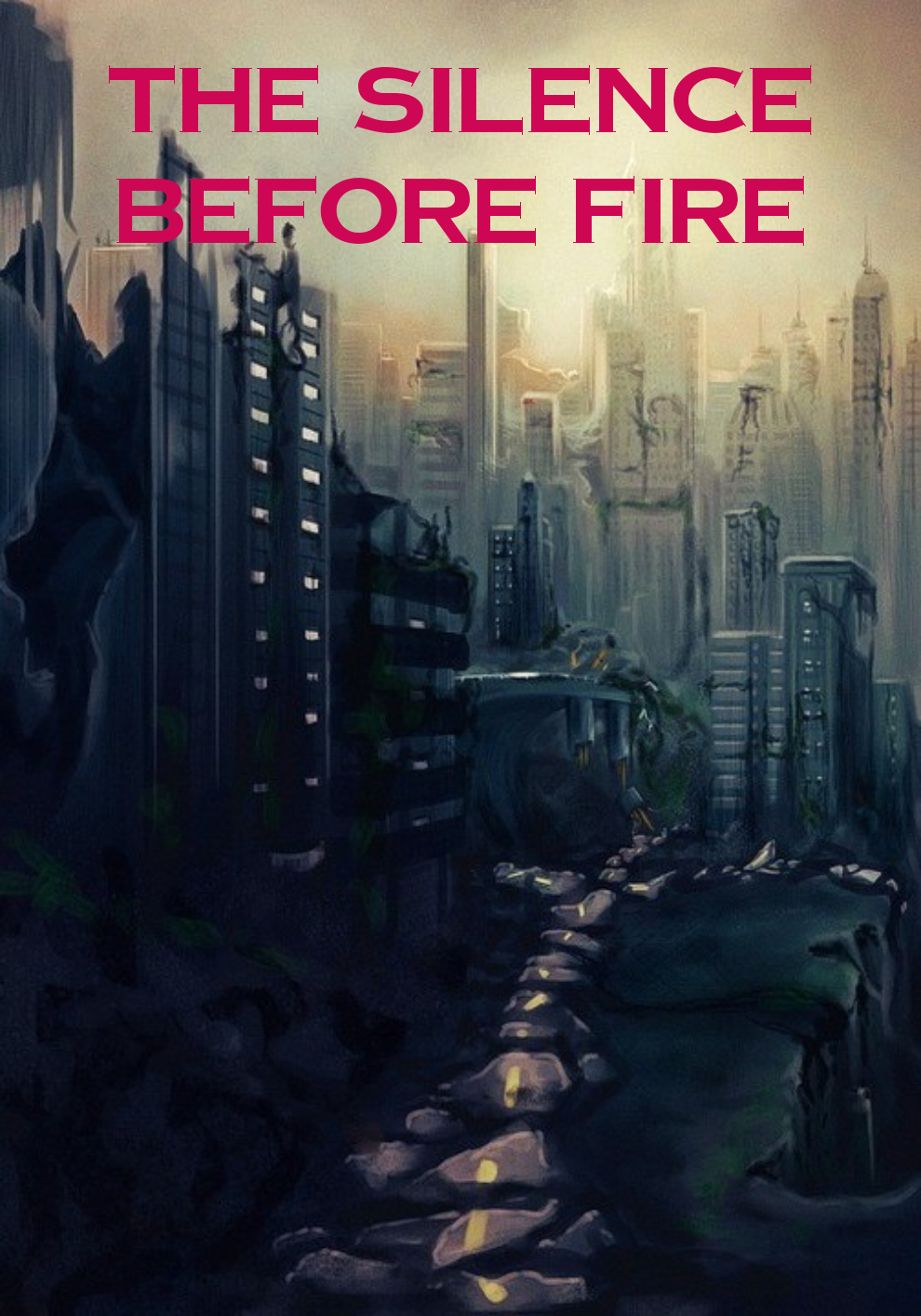
The Silence Before Fire
The Silence Before Fire

Into the clutches of blinking screens and sterile sirens,
the world kneels.
Time snarls—
each second a blade pressed against the throat of the sky.
I sit where decisions rot before they are born,
where maps bleed red veins
and borders tremble like frightened ribs.
The warning arrives like a prophecy written in static.
A scream without a mouth.
A missile without certainty.
Incoming.
Unverified.
Minutes to impact.
Fear devours reason quietly,
like rust eating steel from the inside.
Hands shake inside tailored authority.
Power tastes of iron and ash.
I am crowned with numbers,
buried under probabilities.
Outside, cities breathe—
unaware lungs filling with borrowed air.
Children dream in unguarded colours.
Lovers turn their backs in sleep,
trusting a dawn that has not promised to arrive.
Inside me,
a hurricane collapses into a single thought:
What if we are wrong?
Protocol sharpens its teeth.
Strike first, it whispers—
salvation disguised as violence.
Kill before being killed.
Burn to prevent burning.
History applauds the obedient.
But doubt blooms—
a translucent thorn around my heart.
What if this threat is a ghost,
a hallucination born from machines trained to fear?
What if the enemy is silence misheard as footsteps?
Minutes fall like bodies.
Sweat traces maps on my spine.
The room suffocates in held breath.
Eyes watch me as if I am already a god,
already a monster.
If I press the button,
fire will bloom obediently.
The sky will split its ribs open.
Oceans will remember how to boil.
Names will dissolve into smoke
before their owners can scream them.
If I wait—
if I hesitate—
and the missile is real,
the guilt will arrive faster than light,
engraved with millions of faces.
There is no clean choice.
Only different shades of damnation.
I think of hands once warm,
of voices that taught me mercy
before power taught me fear.
I think of how easily the world ends—
not with hatred,
but with panic wearing authority’s uniform.
The countdown howls.
I choose to wait.
Silence becomes unbearable—
a cave of dissipating colours.
Time stretches, skinning my nerves.
Then—
Truth crawls out of the wires.
A fault.
A misreading.
A star coughing solar fire into blind machines.
A lie born from expectation.
No missile.
No enemy finger twitching in the dark.
The apocalypse exhales.
Systems stand down.
Weapons return to sleep.
The world survives by the width of a breath.
But relief does not come.
Because I now know how fragile existence is—
how close annihilation lives to routine,
how easily fear could have crowned me executioner.
Outside, dawn arrives like nothing happened.
Golden. Indifferent.
Unaware of how close it came to being erased.
Inside, something remains scorched.
I have not saved the world.
I have merely postponed its funeral.
And I understand now—
The greatest danger is not the missile.
It is the hand that trembles above the button,
taught that destruction is safer than doubt.
The room empties,
but the echo does not.
Chairs remember the weight of bodies
that nearly authorized extinction.
Screens dim, embarrassed,
their blinking eyes averting blame.
Coffee goes cold beside classified folders
labeled with euphemisms for ending everything.
I walk out carrying nothing in my hands
and too much in my chest.
Hallways stretch like confessionals—
long, narrow, unwilling to absolve.
Every step feels borrowed,
every breath an unauthorized miracle.
Outside, the air smells ordinary.
This is what unsettles me most.
No ash.
No sirens mourning continents.
Just traffic complaining,
vendors arguing over change,
a stray dog negotiating survival
with the morning sun.
People pass me—
entire universes disguised as strangers.
Each one a probability I almost erased.
Each one unaware
they were once reduced to a variable
in a model designed to end them efficiently.
I watch a woman tie her child’s shoelaces,
fingers clumsy with love.
I watch an old man curse the stairs,
stubborn enough to keep climbing.
I watch life insist on itself
with reckless faith.
How do you rejoin a world
you almost burned alive?
The manuals never prepared me for this—
the aftermath of restraint.
They teach escalation, containment, response.
They do not teach how to carry the weight of not killing,
how mercy leaves bruises too,
how choosing nothing
can feel heavier than choosing fire.
At night, sleep interrogates me.
Dreams replay the countdown
but remove the ending.
I wake soaked in futures that did not happen,
my hands clenched
as if still hovering above fate’s switch.
I begin to see it everywhere—
this quiet proximity to ruin.
In arguments sharpened by pride.
In borders drawn by exhausted men.
In algorithms that mistake noise for intent.
In crowds chanting certainty
because doubt takes too long to explain.
We have built gods out of speed.
Out of reaction.
Out of fear wearing efficiency’s face.
And we call it safety.
But safety is slow.
Safety asks questions.
Safety risks looking weak.
Safety requires someone willing
to sit inside terror
without outsourcing it to violence.
I was not brave.
I was terrified in the opposite direction.
Terrified of being remembered
as the man who ended mornings.
Terrified of the silence after the fire—
the silence that never apologizes.
The world continues,
oblivious to the scar in its timeline.
History will not footnote my hesitation.
There will be no monument
to the button unpressed,
no anthem for the choice to wait.
And maybe that is how it must be.
Maybe survival should feel anonymous.
Still—
when people talk about doomsday
as if it were inevitable,
as if destruction were destiny’s hobby,
something in me tightens.
I want to tell them:
it almost happened because someone panicked.
Because fear sounded official.
Because authority confused action with wisdom.
I want to tell them
the end of the world does not arrive screaming.
It arrives confidently.
With charts.
With procedures.
With calm voices saying,
“We cannot afford uncertainty.”
And I know now—
the future depends less on our weapons
than on our pauses.
On our willingness to let doubt speak
before fear finishes the sentence.
The fire will always be ready.
That is easy.
What is rare—
what is unbearably human—
is the hand that learns to tremble
and still does not press.