Library

 Profile
Before I Close Again
Before I Close Again

For years, he had lived behind closed doors.
Not the doors of a house, but the ones that existed somewhere inside him.
Behind them were things he had never said, questions he had never asked, memories he had carefully folded away, and emotions he had convinced himself were better left untouched. He had become very good at being alone. So good that loneliness had stopped feeling like loneliness.
It had become routine.
Then, somehow, someone came along.
There was no grand entrance. No dramatic beginning. Just conversations.
Small conversations at first.
A few words became a few hours. A few hours became familiarity. And familiarity became something he had almost forgotten how to experience—being understood without having to explain every silence.
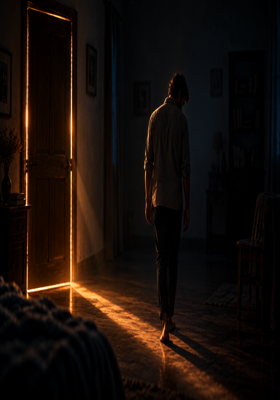
And then, without realizing it, he opened a door.
Just a little.
He spoke about things he had never spoken about. He shared thoughts he had carried for years. He allowed pieces of himself to escape from rooms he had kept locked for so long that even he had forgotten what was inside them.
And strangely, it felt good.
He felt lighter.
He looked forward to those conversations.
He began cherishing the smallest moments—the laughter, the pauses, the random conversations, the comfort of simply knowing that, somewhere in the day, there would be a little space where it was just the two of them.
And perhaps that was where everything became complicated.
Because he wasn't in love.
At least, he told himself he wasn't.
He didn't want promises. He didn't want possession. He didn't want to define what they were.
He only wanted time.
Her time.
Their conversations.
Their little world.
Just the two of them.
And suddenly, a thought began troubling him.
Why do I expect this?
Why do I want her time?
Who am I to expect that she should always be available?
Why does it bother me when someone else occupies the time I wanted?
Am I becoming selfish?
Am I asking for something I have no right to ask for?
The questions kept coming.
And every question created another question.
He would have entire conversations with her in his head—conversations that never happened.
He would imagine explaining himself.
Then he would imagine her response.
Then he would argue with that response.
Then he would disagree with his own argument.
Sometimes he would laugh at himself.
Sometimes he would become angry.
Sometimes he would simply sit quietly and wonder why something so beautiful had suddenly become so complicated.
The truth was painfully simple.
She had done nothing wrong.
She was still the same person—kind, good, genuine, and completely entitled to her own life, her own people, her own priorities, her own time.
The problem was not her.
The problem was the expectation growing quietly inside him.
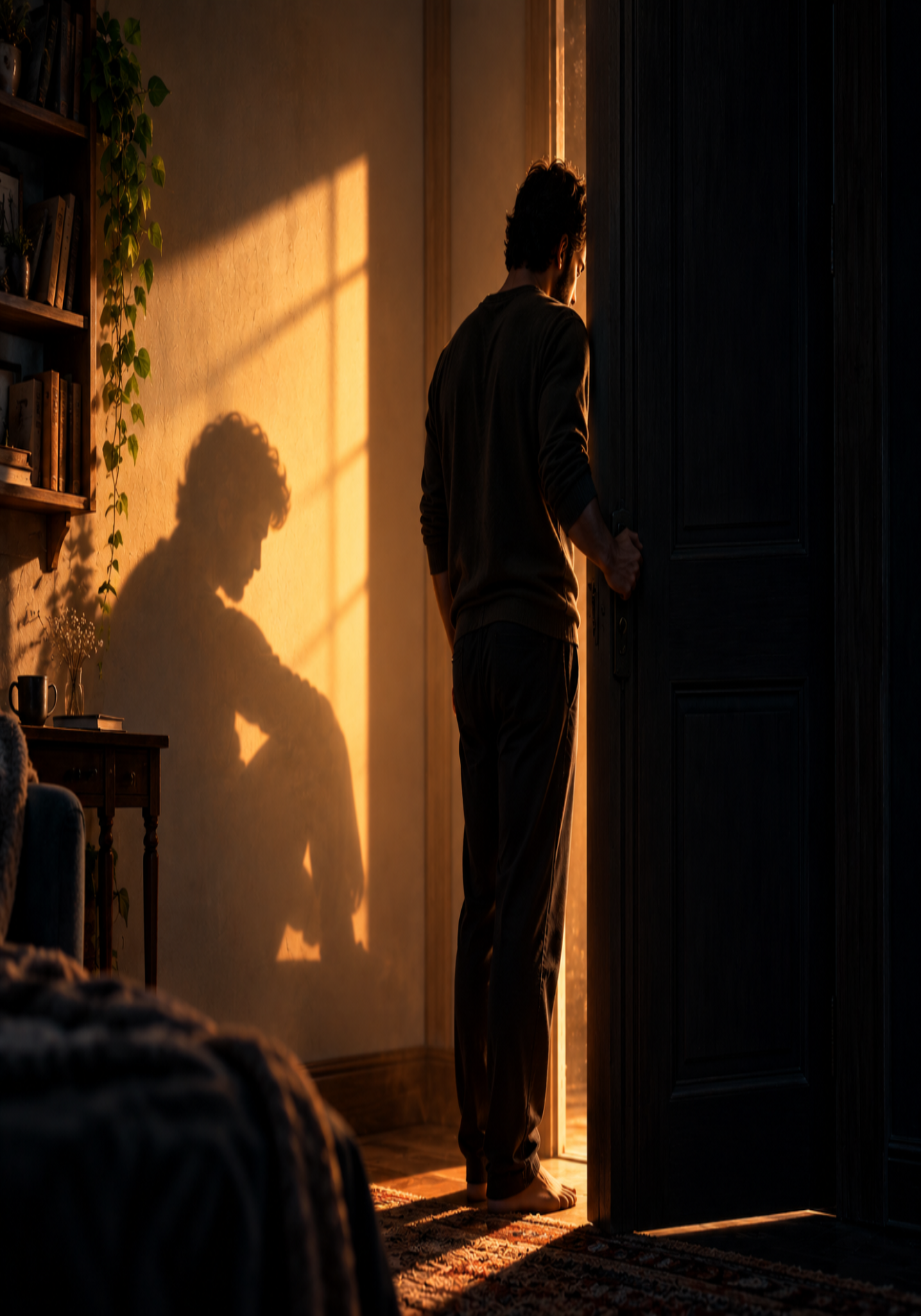
He had opened a door expecting nothing.
But once the light entered, he began wanting it to stay.
And that frightened him.
Because he knew that time could never be demanded.
Attention could never be claimed.
And companionship, no matter how beautiful, could never become an obligation.
So one night, he sat alone and thought about all the doors he had opened.
He remembered every conversation.
Every confession.
Every moment he had felt safe enough to be vulnerable.
Every time he had smiled because of something she had said.
Every moment he had thought, I wish this moment could last a little longer.
And then he wondered whether he had made a mistake by opening himself at all.
Perhaps the old version of him had been wiser.
Perhaps those doors should have remained locked.
Perhaps silence was easier than expectation.
Because when you expect nothing, you cannot be disappointed.
When you need no one, no one can make you feel alone.
When you never reveal yourself, nobody can accidentally touch the places that hurt.
So he began closing the doors again.
Slowly.
Quietly.
Not because she had hurt him.
Not because she had failed him.
But because he had started asking from her something she had never promised to give.
And he didn't want his affection to become a burden.
He didn't want his expectations to become her responsibility.
He didn't want to punish a good person for feelings she had never asked him to develop.
So perhaps the kindest thing he could do was step back.
Not disappear.
Not become cold.
Just return to himself.
To the quiet rooms.
To the locked doors.
To the life where he had learned how to carry everything alone.
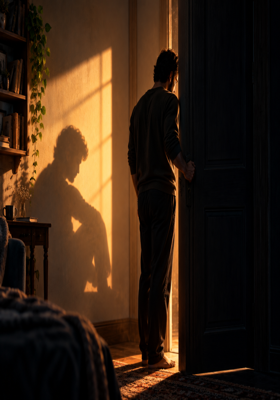
Yet, as he closed the final door, he paused.
For the first time, he realized something.
Maybe opening that door had not been a mistake.
Maybe every person who enters our lives is not meant to stay forever in the same way.
Maybe some people simply arrive to remind us that there are still parts of us capable of feeling.
Capable of trusting.
Capable of speaking.
Capable of wanting someone's company.
And maybe that was enough.
He smiled.
A little sadly.
A little gratefully.
Then he closed the door.
Not because he regretted what happened behind it.
But because sometimes loving a moment means knowing you cannot demand that it remain.
And somewhere deep inside, he knew that he would always remember the light that once entered that room.
Even after he turned it off.