Library

 Profile
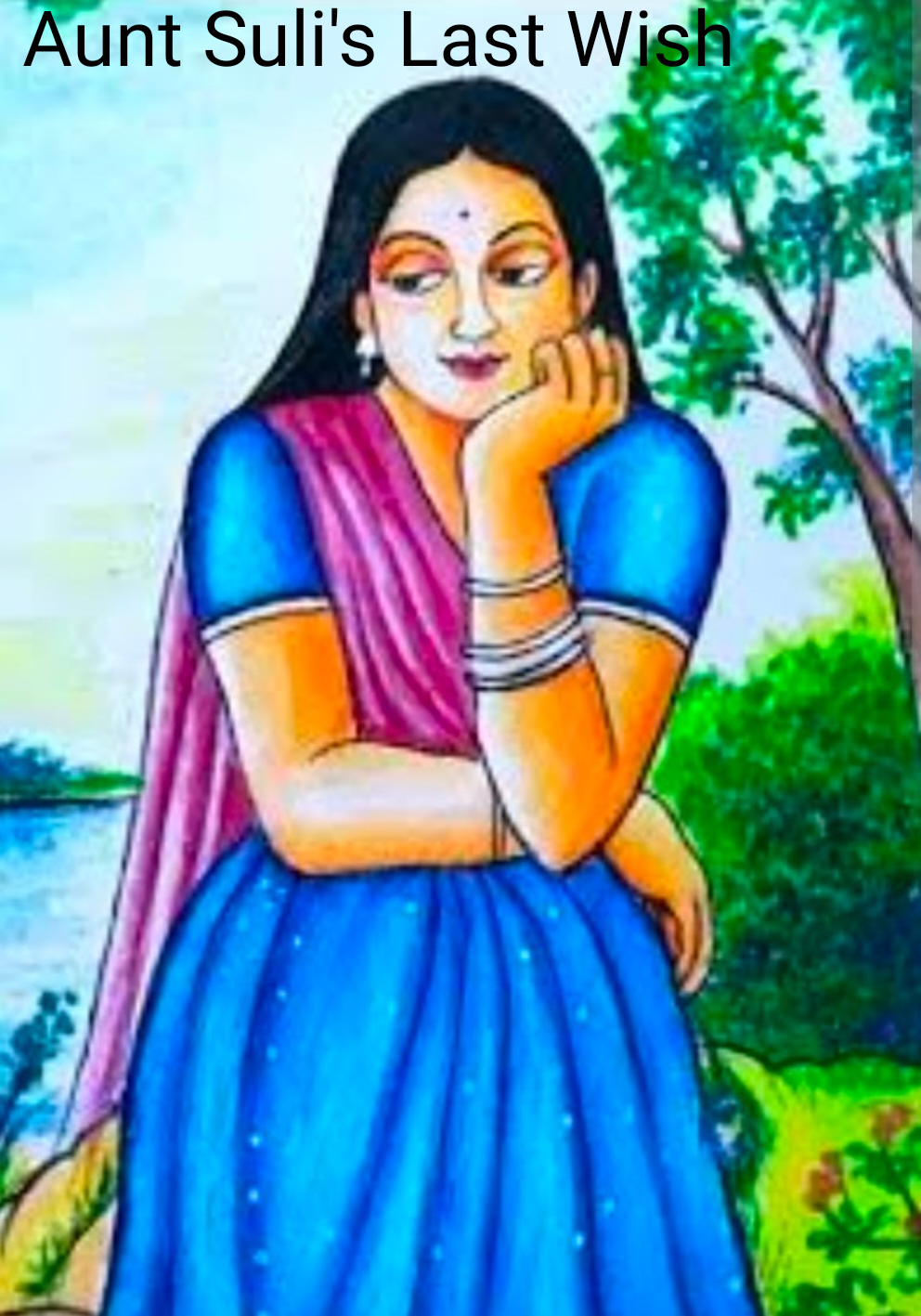
Aunt Suli's Last Wish
Aunt Suli's Last Wish

My name is Raghav. My younger brother is Shriram. Life handed us misfortune early on—our father died of dropsy when I was just ten, and Shriram was five. At that time, our only real possession was a few acres of ancestral land, left untouched even as our father fell ill.
After his death, the land remained, but our house—an old mud structure—was destroyed by a storm. Homeless, and destitute, we turned to the only person we could: Aunt Suli.
Aunt Suli lived in the same village. She was my father's cousin, a woman known for her sweet tongue and steely ambition. When we arrived at her door with no shelter, she welcomed us—but not without hidden motives. She fed us, clothed us, and gave us a place to sleep. But we became her errand boys—running to the bazaar, fetching water, even tending to her goats.She also made my mother do all sorts of work.
We didn’t mind. We were grateful, and we were children. When she offered us ₹500 to mortgage a piece of land that belonged to us to her— framed as help for "your future education"—we signed the paper. We didn't know what "mortgage" truly meant, only that we had nowhere else to go.
Over the years, Shriram and I worked hard. We studied under lanterns and walked miles to school.After my graduation in English,we came to Bhubaneswar for higher studies.I studied M A in Utkal University, and my brother studied +2 science at BJB college. Our mother’s meagre family pension of ₹500 barely fed us, but we survived.
Aunt Suli, meanwhile, became known in the village as our benefactor. She boasted of how she had raised two brilliant boys. But the villagers saw through her veneer. They knew the work we did and the land she had seized. Whenever they tried to reason with her, she'd shout them down, insisting it was her sacrifice that had made us what we were.
Years passed.
One day, while I was looking for a job and Shriram had just finished his intermediate, we heard that Aunt Suli was bedridden and seriously ill, and that she intensely yearned to see us before her death.We were deeply touched and remembered her.I told my brother to pay a visit to her.He instantly agreed, postponing some of his engagements in Bhubaneswar.She hadn’t walked in a year and needed oxygen and round-the-clock care. Her sons—government servants—had set up a private room in the house like a hospital. A nurse stayed inside; doctors came every few days.
Aunt Suli would often be delirious and say: "Raghav… Shriram… I... I wanted to see you... many times... but body... no strength… every day I ask... 'Have they come?'... No answer... no one brought you… I say, 'Call my boys… my two sons… my heart sons'... You were small, crying, and I held you... now big men… smart, strong… I want to see you… one last time… come..
sit near…me.... don’t go too soo..n… talk to me… like old days… haan? Let me look... again… again… one more time… before I... before I go..."
At we reached my village Bhanjapur Sasan.Both of us went to her house.When we entered her room, she looked like a husk of her former self. The cunning sparkle in her eyes had faded. She lifted her hand weakly and muttered something about signing papers. The mortgaged land, she said, needed to be legally transferred to her children. Apparently, they had lost the mortgage document. The land was now worth five lakhs. She wanted us to sign it over—for free.
Her eldest son stood beside her like a statue, saying nothing.
We said nothing either. We nodded politely and left.
On the way back to Bhubaneswar, silence sat between us like a stone. My heart was conflicted. This woman had housed us when we had no roof. But she had also fed off our helplessness, taken advantage of our innocence, and now, even from her deathbed, wanted to rob us of what little legacy we had left.
A week later, we began receiving desperate phone calls from her sons.They were pressuring us to transfer our ownership of the land to them.
Just before she died, they say, Aunt Suli made her sons promise they would take the land from us. Her dying wish, apparently.
Death doesn’t change one's greed,alas!
Within a month, we sold the land to another buyer for ₹6 lakhs. We used that money to clear our debts, pay for Shriram’s engineering course, and finally rent a one-room flat where sunlight didn’t struggle to enter.
As for Aunt Suli’s family—they never spoke to us again. At village gatherings, they avoided eye contact. They grumbled to others about betrayal. But the villagers knew the truth.
Some say she grew vegetables on that land for twenty-five years.She harvested what might be fifty times the sum of five hundred rupees.What about our childhoods that grew under her manipulations? What about the broken backs, the tired feet, the hunger, the rain-soaked nights, the hours of unpaid labour? My mother's hard work she did for the manipulative aunt?
The land was never truly hers. Nor was it ever truly ours. It was just a piece of earth.We two children grew into men with her help,but she had planted both food and lies.
There are people in this world—like Aunt Suli—who cling to life not out of love for living, but out of a stubborn attachment to their material possessions. For them, wealth, land, gold, and property are not mere objects but extensions of their identity. They measure their worth in acres and ornaments, and even in their final moments, they are unwilling to loosen their grip. Aunt Suli had everything—a spacious house, government servant sons, a nurse on call, and doctors attending to her. But on her deathbed, hooked to oxygen and saline, what weighed most heavily on her mind was not her soul or her sins, not reconciliation or reflection, but a piece of mortgaged land. She had used that land for decades, grown vegetables, and enriched herself from it—but that wasn’t enough. She wanted legal ownership passed to her sons, even when her time on Earth was measured in hours. She muttered with failing breath about court papers, signatures, and property rights day and night. It was not life she loved—it was the illusion of control, the comfort of possession. This is the tragic folly of many: they prepare their entire lives for a comfortable living, but forget to prepare for a meaningful dying. They fail to see that possessions are transient, and that death—silent, impartial, and absolute—comes to strip away all that we hold dear. People like Aunt Suli build empires out of bricks and bonds, but leave behind bitterness and broken relationships. They hoard, not knowing that their treasures will one day be inherited, sold, or forgotten. Even on their deathbed, they negotiate, manipulate, and strategize, believing they can extend their control beyond the grave. This clinging, this desperation, is not strength—it is fear masquerading as attachment. They do not fear death itself; they fear dying without their belongings safely transferred to those they favour. Such people die not in peace, but in turmoil, haunted by the idea that someone else might claim what they once called "theirs." In truth, nothing ever belonged to them. Not the land, not the money, not even the bodies they so meticulously adorned.
The Earth lends us her gifts briefly; she reclaims them without notice. The wise understand this and live with detachment, using possessions, not being used by them. But the ignorant, like Aunt Suli, confuse ownership with immortality. They believe if they secure their treasures, they can cheat time. What a terrible delusion. For no property paper has yet been taken into the afterlife, and no locker key has opened the gates of heaven. When the final moment comes, it is not what you held in your hand, but what you held in your heart that matters. Aunt Suli, like many others, chose the temporary over the eternal. Her legacy is not one of generosity, but of grasping. And in that, she reminds us how foolish it is to value gold over goodness, and property over peace.