Library

 Profile
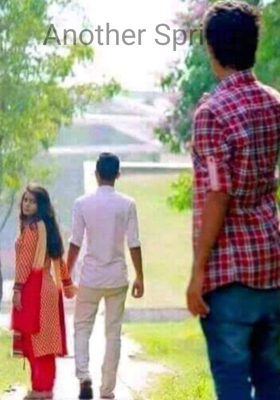
Another Spring
Another Spring

Another Spring
Chapter- 1
It wasn’t a pretty old memory. Just a few days ago, this happened—a night draped in silence and strangeness.
I had gone to Athagarh on some work that dragged longer than expected. By the time I wrapped up, the clock had quietly crept past 8:30 PM. The stars had already taken their seats in the night sky, and the moon, bright and full, cast a pale silver veil upon the earth.
My initial plan was simple, to drive back to Bhubaneswar through the old Cuttack– Sambalpur road. A straight, familiar route.
But my friends protested.
“It’s late already,” they said. “Why take the risk? Stay here tonight. You can leave early in the morning.”
I smiled faintly, brushing away their concerns. “Don’t worry. The roads are smooth now—broad ribbons of shining black. In just an hour or so, I’ll be at home. Besides, nothing compares to sleep in your own bed. Sleep is a stubborn guest—it rarely visits unfamiliar rooms.”
I looked out. The night was beautiful. A moonlit hush had settled over everything. Bhubaneswar wasn’t too far. Cross Mundali bridge, pass Barang, then Nandankanan, and the city slowly rises like a dream from the darkness.
But my friends had more to say.
They warned me of the forested stretch near Naraj–Megha Ghati. “That area is an elephant corridor,” one said. “After dusk, herds descend from the hills to drink at the Mahanadi. They don’t care for headlights. Just last week, a biker was mauled. The poor guy was found unconscious in a ditch, the bike smashed. Barely survived.”
I laughed. “I’m not on a bike, am I? I’ll be in my car. If I see elephants, I’ll wait. Don’t worry. I’ll call you once I reach home.”
And with that, I started the car.
Chapter -2
The road ahead unspooled like a dark ribbon, the headlights cutting through the blackness. Trees lined either side—silent sentinels in the night. My old Maruti hummed softly, its tires whispering against the asphalt. Inside, Lata Mangeshkar and Mohammed Rafi wove their golden melodies into the night air. I tapped the steering wheel and hummed along.
But now and then, a shadow flickered in my mind—elephants. My foot pressed harder on the accelerator, the music grew louder, and my humming became louder still. Fear doesn’t always scream.
Sometimes, it sings.
Soon enough, I saw it—the worn yellow sign that read:
“Caution: Elephant Corridor – Next 2 km.”
I eased my foot off the gas.
The world outside felt still—eerily so.
The forest on both sides breathed slow and deep, like something alive, waiting. My eyes scanned the roadside. But nothing. Not even the rustle of a leaf.
Once past the final bend of that stretch, I exhaled. A soft smile crept onto my lips as the road widened again.
And then—just around the curve—the Naraj Bridge appeared, washed in the milky moonlight. The river below shimmered faintly. It was a hauntingly beautiful sight—half dream, half mystery.
But beauty has its shadows.
As I began climbing onto the bridge, something flickered in my headlights—a silhouette. Someone was on the road.
No—staggering.
A lone figure, swaying like a drunk or a ghost.
As I drew nearer, he climbed—yes, climbed—onto the parapet of the bridge.
In the silver light, I saw him clearly now. A young man. Arms outstretched. Ready to jump.
My heart froze—but my body acted.
I slammed the brakes. Tires screeched. The car jolted to a stop. I flung open the door and ran, the night air slicing across my face. Just as he began to lean forward—I caught his wrist and yanked him back.
He stumbled, landing hard on the concrete walkway.
He looked barely twenty two, twenty-three. His eyes were hollow, haunted. His beard was unshaven, his face gaunt. But his clothes were neat—he looked like a student. A boy from a decent family, not a beggar. Not a madman.
“Let me go!” he screamed, pushing against me. “Let me die! What’s left to live for? I don’t want to live anymore!”
He thrashed, but I held his arm with all my strength.
He was crying, cursing, pleading.
I couldn’t let go.
Something in me—something older, something instinctual—wouldn’t allow it. He was the age of my own son. What could break a young man like this?
Heartbreak? Failure? Shame?
Anger. Pity. Confusion. I felt it all swirling in me like a storm.
And then—without knowing why—I slapped him hard.
He stopped.
His body slumped. He sat down slowly on the cold concrete, shaking, silent.
I sat beside him.
He hid his face in his palms and began to sob.
And now, my anger melted into compassion. Not guilt for the slap—because perhaps it saved him. It jolted something inside.
I placed a hand gently on his shoulder. He leaned in, collapsing into my chest like a child. He wept harder. I let him cry.
When his sobs softened into silence, I whispered, “Son… what happened? What pain brought you here—to this place, at this hour, under this moon? Life is rare. A gift. A delicate flame. Who gave you the right to extinguish it?”
He didn’t answer—just cried more.
I stood up, walked briskly to my car parked nearby, opened the door and fetched a bottle of water. Yet I couldn’t take my eyes off him—I feared he might suddenly make another attempt to leap. But he didn’t. He sat quietly, and I slowly began to feel more at ease.
He didn’t move.
I returned, held the bottle to him.
“Here. Drink.”
He took it wordlessly, splashed some water on his face, drank a few gulps, and then poured the rest over his head.
I sat down beside him again, close enough that our shoulders touched.
“Tell me,” I said gently. “What was so terrible that you decided to throw your life into the river?”
He turned to me slowly, eyes red, face wet.
“You won’t understand,” he whispered. “I trusted someone too much. That’s my only mistake. Why should I trouble you with my tragedy?”
I smiled. “Maybe you’re right. Maybe I won’t understand. But tell me anyway.” I replied, “I don’t know whether it will do any good or not. But maybe, just maybe, I can help you somehow.”
He looked at me—frustrated, bitter.
“What help can you give me? Can you go explain to her? The one who never understood my love? The one who played with my heart like a toy?”
He choked.
But I remained calm and still, unaffected.
Not seeing any reaction in me, his voice softened slightly. “Will you be able to explain anything to her? To the one who couldn’t understand me? The one who never understood my love? What will she understand if she didn’t even recognize what we shared?”
“Her name was Subhadra,” he continued. “We studied together in school—in the same class. We didn’t get admission to the same college for our graduation, so we had to go our separate ways.
But our love had blossomed since our school days. However, as college changed, so did she. Her love changed, her lover changed.
I loved her with all my heart—more than I loved my own life. I was willing to sacrifice everything for her. My love for her was genuine, pure. But she was just playing with my emotions. It was a game for her. Two days of affection—and then, like an old toy that no longer brought her joy, she discarded me when she found a new one. How can you possibly explain anything to such a deceitful girl?”
As he finished his story, I couldn’t help but burst into laughter.
At that moment, I realized: this was the story of a heartbroken lover—a classic case of betrayal in love. One that almost ended in suicide in many cases.
He looked at me in utter disappointment and said,
“Sir, people cry over the love stories of Laila-Majnu and Kedar-Gauri. And here you are, hearing my pain and laughing at it—so cruelly, without an ounce of sympathy!”
I stopped laughing, looked at him gently and replied,
“First of all, don’t call me ‘Sir.’ Call me ‘Uncle,’ okay?
And second—will you tell me your name?”
He nodded and said,
“Yes, Uncle. My name is Srikant.”
Chapter-3
“Srikant,” I said slowly, letting his name settle between us in the moonlit silence.
“What a beautiful name. Strong. Gentle. Like a quiet stream.”
He didn’t respond. Just looked away—his eyes glassy with tears and the weight of a heart too tired to beat for love.
I took a deep breath.
“You speak of Laila-Majnu and Kedar- Gauri,” I said. “But do you really know their stories? Or have you just heard fragments of them—romanticized, half-sung, half- forgotten?”
He turned toward me slightly, curious despite himself.
“Let me tell you something, Srikant. Those love stories became immortal not because of their romance or suffering—but because of the purity of their love. There was no demand, no possession, no expectation. Their love was surrender. It rose above jealousy and desire. It didn’t seek reward—it only knew how to give.”
The wind rustled the river below. The bridge was bathed in the gentle glow of moonlight. Somewhere far away, a pair of headlights cut through the fog like a dream passing through the night.
Their love is eternal because it was free from expectation and attachment. There was no selfish desire to possess one another. Their love faced all barriers of society and family, and still stood strong. I’m calling them ‘they’—but really, they had become one, though two separate people. One of them even ready to gave up their life for the other.
But what do I see in your love story? You’ve come here alone, thinking of ending your life—and your beloved? Perhaps she’s now enjoying dinner with her new lover at a fancy hotel or strolling through some park, right? That’s your love story. One-sided.
If she had truly loved you, she would have been here with you today, not elsewhere. Why are you mourning her loss? Instead, feel compassion for her—how unfortunate she is! She lost someone who would’ve given up his life for her.
“But your story, my dear boy...” I continued, “your story is different.”
“You came here alone, to end your life—while the one you claim to love... where is she?
He flinched. His hands clenched into fists.
“That’s not love, Srikant. That’s pain pretending to be love.”
I leaned in gently.
“If she truly loved you, she would have stood beside you here, on this cold bridge, facing this night with you. But she’s not here. You are. Alone. Trying to jump—not because you loved her too much, but because you expected her to love you back just the same. And she didn’t.”
He looked down, his silence shivering in the night air.
“You mourn her, but you should feel sorry for her instead,” I said. “She lost someone who would’ve given his life for her. How unfortunate she is. And how blessed you still are... to have a heart that can love so deeply.”
A moment passed.
He whispered, “But... it hurts so much, Uncle.”
I nodded slowly. “Yes, it does. Because your heart is still alive.”
And then, after a pause, I said something I had never spoken aloud for years.
"Srikant sat beside me—silent, worn out by his emotions and the cold river breeze. I could see the way his shoulders had slumped, the fire of anger now replaced with a slow-burning sadness.
Chapter- 4
I placed my hand gently on his shoulder and said with a soft smile,
“You know, Srikant... at your age, falling in love is almost inevitable. It’s like the monsoon—you can’t stop it, you just learn to dance in the rain.
I too was swept away once.”
My first love,” I continued, “wasn’t a fairy tale either. It didn’t end with wedding bells or rose petals. In fact, it ended in silence.”
I stared out across the river, the moonlight rippling over the water like an old, forgotten song.
He nodded, hesitantly.
“Her name was Sunanda.”
His eyes blinked, curious now.
“She was radiant—beautiful in a way that made even the dullest mornings feel like spring. My classmate. We were both doing our post-graduation in the same subject. Strangers at first. But then... as if destiny was weaving something silently between us, we kept crossing paths.”
I smiled to myself.
“Sometimes in the college corridors, sometimes on the walk between academic blocks, sometimes in a crowded market... or during the colorful chaos of a village fair. Our eyes would meet—just briefly—but enough to stir something quiet and strange.”
Srikant listened, spellbound.
“Every time our eyes met, I felt something warm bloom inside me. I don’t know why. It wasn’t lust. It wasn’t daydreaming. It was... as if my soul remembered her from another life. I would smile without meaning to. And when her eyes lingered for a moment longer than necessary, my heart would whisper, ‘She knows... she remembers too.’”
The moon, above us, glowed brighter now—as if listening too.
“Our ‘hello’ turned into small chats. She would borrow notes from me. We’d sit at the university canteen solving problems—not just academic ones. Slowly, gently, we began to fall for each other. It wasn’t dramatic. It was... honest. Soft.”
“We never shouted our love from rooftops. But everyone knew. It was in the way we looked at each other, laughed at silly jokes, and walked side by side in the evenings. We weren’t just classmates anymore. We were companions.”
Srikant was quiet—his breath calm now.
I continued, “That phase of life... was magical. And yet, like all seasons, it passed.”
I paused and looked at him. “That first love, Srikant... it’s something else, isn’t it? So pure. So intoxicating. I used to wish time would just stop. That the days wouldn’t end. That we could sit there—side by side—forever.”
“But time...” I shook my head with a smile. “Time never listens to lovers. It keeps ticking forward, indifferent.”
He looked at me. I nodded.
“Yes. Time moved on. Classes ended. Exams finished. The university gates closed behind us. We went our separate ways. We didn’t have smartphones then. Only landlines. And handwritten letters that carried the scent of longing.”
“We wrote to each other. Often. Our words carried everything we couldn’t say aloud. Dreams. Fears. Promises.”
“Then... one day, the phone rang.”
I took a deep breath. “It was Sunanda.”
Her voice had changed that day—no longer the playful tone I knew so well. She sounded distant. Mechanical.
She said, ‘Baba has found a match for me. He’s an SDM in a sub-divisional head qtr. Smart. Established. I’ve met him. He’s nice.’
And then she said something I’ll never forget—‘I’m happy. Please forget me.’
Srikant’s head turned sharply toward me.
Srikant stared at me, stunned.
As if forgetting your first love is as easy as switching off a light,” I said with a half-laugh.
“She ended the call, just like that. No drama. No tears. Just... a quiet goodbye.”
Srikant’s lips trembled. His voice came as a whisper, “That must have shattered you…”
“It did,” I admitted. “But not in the way you think.”
“I didn’t cry. I didn’t scream. I simply walked to my desk, opened the drawer, took out her last letter... and burned it.
I stood by the window and watched the smoke rise—as if I was releasing her from my soul.”
He looked at me with wide, silent eyes.
I looked at him.
“And here you are, Srikant. At the same crossroads where I once stood.”
Chapter-5
I turned to look at him.
“She walked away not because I was wrong or unworthy. But because someone else had become the prince of her dreams, and her family approved of, and I? I was discarded —like an empty Coke bottle tossed into the dustbin of her life.”
There was a long silence between us.
Then I smiled and said, “You see now, Srikant? Your story... it reached the same crossroad mine once did. The same heartbreak. The same betrayal. But the choices we made at that moment... were very different.”
“You chose to climb onto this bridge, ready to throw your life away.”
“And I?” I paused, leaning forward gently, “I chose to start living.”
“And here you are, Srikant. At the same crossroads where I once stood.”
“But instead of turning around and walking on... you chose to jump.”
He looked down, ashamed.
I gently placed a hand on his shoulder.
“And that’s where you and I are different.”
Srikant sat beside me, listening in silence—his eyes moist, but his breath calm, steady.
I leaned back against the parapet, watching the moon cast its pale silver veil across the dark Mahanadi below. Somewhere in the distance, a wildflower trembled in the breeze, and a pair of lovers walked silently hand in hand, disappearing into the shadows of the bridge.
I don’t know why... but at that moment, I thought of Sunanda again.
Did I ever truly hate her?
Did I ever carry anger or bitterness in my heart?
No.
Instead... I had only ever thanked her.
Yes, thanked.
She had been the first spring in my life.
The one who made me feel love for the very first time—raw, tender, intoxicating.
How could I ever call that a betrayal?
I softly said, almost as if speaking to the wind,
“Sunanda... you made me feel alive. You made me understand the power of connection, of longing, of dreams stitched between heartbeats. And though we were not destined to walk together, I am grateful for your presence. You taught me that change is the oldest truth of this universe.
Everything changes—people, seasons, even the color of the sky.”
I turned to Srikant, who was now quietly watching me, and smiled.
“I never called her love a betrayal. She simply chose a different path, seeking her own happiness. And if her heart led her there—who was I to stand in the way? We cannot imprison someone in our love. We only love truly when we learn to let go... with grace.”
There was a long silence.
And then I said, “Srikant, do you read poetry?”
He shook his head faintly.
I smiled. “You must. When you're lost and broken, poems have a strange way of whispering truths the world forgets to tell us.”
“A poet named Binay Mohapatra once wrote something that returned to me that very day. It helped me walk away from pain... with peace. Perhaps it’ll help you too.”
I closed my eyes and recited slowly, letting the words sink into the moonlit stillness around us:
‘Love only whispered softly,
Why so gloomy, my friend?
Life doesn’t end
in just one spring,
A single season of bloom
doesn’t define the garden.
What are these seasons?
They’ll return again,
Everything will come back,
Just smile a little today —
Not every day is the same.’
(Poem-life never ends in one season (English translation of Odia poem "Gotie rutu re jivan sareni)".
As I finished, I looked at Srikant. His lips were trembling, but a faint smile had begun to take shape. A fragile smile—but real.
The river below kept flowing. The moon kept watching.
And we both sat quietly, two strangers... bound for a brief moment by shared sorrows and silent understanding.
Seasons change, Srikant. And when they do... so do we.
Chapter-5
True love — it is neither selfish nor possessive. It does not crave control; it longs only to surrender.
To make someone truly your own, you must first be willing to become theirs completely. That, in its purest form, is love.
But today, love often wears a different mask —
What is called love often begins in desire and ends in demand. Where once there was sacrifice, now there is self- interest. Greed has crept in like rust, corroding the purity of love in our world.one born of longing, laced with expectation. Desire has replaced devotion, and the sacred selflessness of love has withered under the weight of self-interest and greed.
After Sunanda left, I didn’t collapse — I chose to rise. Something in me hardened and matured. I turned all my focus toward my career — my path, my purpose. And perhaps because I didn't chase success, it came to me — slow and steady, like gentle rain after a long drought.
I didn’t rush the journey.
I knew well — the wheel of time never ceases to turn.
Summer fades.
Then comes the monsoon.
And with it, the promise of spring — when even the most barren soul finds itself blooming again.
I believed… that one day the courtyard of my spirit would fill once more with fragrance, that a gentle breeze would stir dormant emotions, and a new thrill would ripple through my being.
Love, I knew, would return. And when it did,
it would carry the same scent, the same subtle magic, though never again the innocence of the first bloom.
Yes, love did return.
But this time, it came without masks — no illusions, no fragile fantasies, no heartbreaks hidden behind smiles. This love was calm, true, and deeply human.
It didn’t sweep me off my feet. It held me in place, anchoring me in the quiet strength of companionship.
Each day, it added new colors to my life —
like petals slowly unfolding in the morning light. A fragrance lingered, not from one flower, but from a garden full of lived moments.
By now, Srikant’s face had changed. The shadows had receded; the despair that once dimmed his eyes was gone. In its place, I saw something fragile yet powerful —
a flicker of hope. A dream reborn. A desire not just to survive, but to live, truly live.
I placed a reassuring hand on his shoulder.
“Come on, Srikant,” I said softly,
“Get up.
Tell me where you'd like to go.
I’ll drop you.”
He stood, slowly but surely, his voice is steadier than before.
“No, Uncle. You’ve already given me more than I asked for.
Please go home — Aunty must be waiting. My bike’s near the bridge. I’ll ride back to the hostel.”
I smiled.
“Then at least let me drop you to your bike.”
As he opened the car door and stepped in,
he turned to me with a quiet, heartfelt smile.
“Don’t worry, Uncle,” he said.
“I’m not thinking of ending anything anymore.
Your favorite poet — Binay Mohapatra — his lines… they’ve become my truth now.”
He paused, looked out at the night sky, and continued, “I too will wait. Spring will definitely come to me one day.
And love…
yes, love will rain again.”
In those words, a lightness filled the car.
We laughed —
a laughter full of relief, of healing, like a deep breath after a long silence.
I looked at him and said,
“Then here’s another of his verses — just for you:”
‘My waiting still continues,
Someday, someone will come,
Apply balm to this wounded heart,
And once again
give me
the feeling of spring
In this scorched garden of my soul.'—
(from “Love and the Winged Horse” (Translation of Odia poem'Prema O' Pakshiraj Ghoda')
(This is English version of my Odia story 'Rutu Badale' (ଋତୁ ବଦଳେ) ।
The End