Library

 Profile
A different love story
A different love story

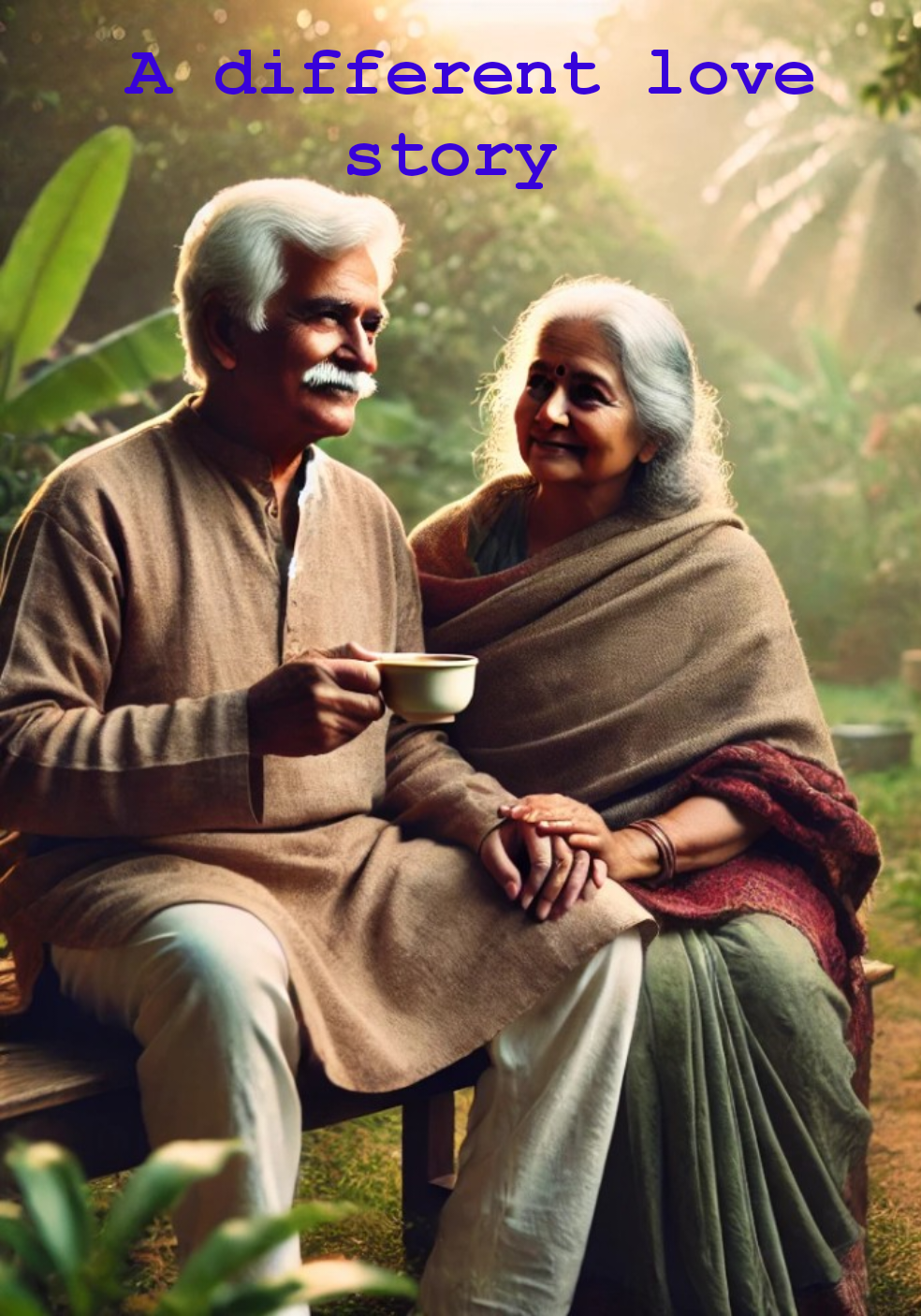
"A different love story" Someone once said, “The road never truly ends; it only reaches different stations at different times. And the journey of a traveler, too, comes to an end.” This final departure requires no preparation—no luggage, no companion. Just an inevitable pause at a predetermined station. No friends, no partners, just oneself. Just solitude. I once read an article where a philosopher asked: Who is your true life partner? His answer was neither parents, siblings, spouse, nor children. Not even a beloved wife. The only constant companion from birth to death is one’s own body. And once you leave that behind, what remains? Who remains? Yet, a question lingers in my mind—am I merely a soul? Do I exist only as long as I reside in this body? If so, what is life? What is love? Is everything just an illusion? And if it is, then this illusion is the most beautiful of all, for it teaches us how to live. People live and die believing in it. The body alone is not our life partner. As long as there is breath, there is love. There are bonds. And our breath—our very existence—is shared with our parents, siblings, spouse, and children. --- The soft chime of temple bells breaks my thoughts. Dawn has passed, but the sun has yet to rise fully over the horizon. The murmur of sacred chants drifts through the morning air, carried by the scent of burning incense. Perhaps the Gayatri Mantra. I don’t perform rituals myself, but she does—for both of us. Sumati Devi, my wife. My dearest. You may wonder why I call her that. It is not poetry. It is not drama. I call her my beloved because she is half of my soul, half of my existence. We are intertwined so deeply that we are no longer separate. Like milk and water mixed together—inseparable, indistinguishable. That is our love—balanced, whole, complete. The rustle of her saree in the doorway tells me she has finished her prayers. I hear her waking up our son and daughter-in-law. "Wake up! It’s already seven! Don’t you have office today? Tea is ready!" Even before her own breakfast, she has already prepared my tea. Soon, she will take a small pitcher of water and step out onto the veranda, where the sacred Tulsi plant stands in the small courtyard. She will pour the water, light an incense stick, and murmur her prayers. I once heard a priest say that offering incense in the morning and an oil lamp in the evening by the Tulsi plant brings blessings. She has done it every single day since she entered this house as a bride. She returns, placing my tea beside me. "Will you bathe first, or should I bring your breakfast?" "I don’t feel too well today. Just bring me some tea for now. I’ll freshen up later." Concern flickers across her face. She sets the pitcher down and walks toward me, pressing her cool fingers against my forehead. "You don’t have a fever, but what’s wrong?" "Nothing, just a bit of uneasiness. A little back pain," I reassure her. Her expression changes instantly. "Ever since you retired, your routine has completely changed! You sit all day, reading, glued to that laptop—no exercise at all." She brings me two biscuits and a tablet. "Take this. It helped when I had back pain before. You’ll feel better." I take the tablet but watch her carefully. "And what about you? Have you eaten anything? If you stay on an empty stomach for too long, you’ll get acidity again." She sighs. "I had tea and some leftover roti. The daughter-in-law is preparing breakfast. We’ll eat together after you freshen up." I gesture for her to sit with me, and we drink our tea in comfortable silence. I watch her, lost in memory. Even today, I remember her draped in a pink saree, a twenty-year-old girl stepping hesitantly out of a flower-adorned car, her head slightly bowed in nervousness as she entered this house for the first time. My younger sister blocked her path, demanding a gift in exchange for entry. Mother scolded her lovingly, "Let the new bride enter first. You’ll get your gift later." That was the day she became the soul of this home. She embraced everyone as her own, never complaining, never demanding. Whether there was abundance or scarcity, she accepted everything with quiet grace. An unknown girl, one day, took on every responsibility of this house. Now, without her, everything seems incomplete. Even after our son got married, she never stopped worrying. "Mother, take some rest," our daughter-in-law often says. "You’re getting old. If you work too much, you’ll fall ill." But does she ever listen? --- I realize I have been staring at her for too long. She notices. "What are you thinking about so deeply?" she asks, sipping her tea. I laugh. "Nothing at all! Who said I was looking at you? You’ve grown old now. What’s left to admire?" She smirks. "Oh? So today, I look old to you? Well, I have aged, haven’t I? Why would you look at me anymore?" I shake my head, smiling. "Who says you’ve aged? Looking at you, no one would believe we already have grandchildren. Even today, you look just like the young bride who first stepped into this house." She rolls her eyes. "Enough with your sweet talk." I change the subject. "You pray every morning and light the evening lamp in front of Tulsi. What do you ask from God?" She hesitates. "You wouldn’t understand. My prayers are between Him and me." But I already know. Like every woman, she bows before God each morning, praying for my long life. She asks for one blessing—that she may leave this world before me, with sindoor in her hair and bangles on her wrists. But she doesn’t know how selfish my heart is. Whenever I think of her, I pray, "Oh Lord, grant her wish. But take me away before her." Because how will I live without her? A sandalwood tree is valued for its fragrance. It is honored for its scent. But if that fragrance disappears, what remains of its worth? It turns into lifeless wood, fit only for burning—either in a hearth or on a funeral pyre. She is that fragrance in my life. But how do I explain that to her? Perhaps she doesn’t even know how much she means to me. She isn’t just my wife, my partner—she is half of my very soul. I am merely a dormant bulb, and she is my electricity. Tell me, how can a bulb shine without power? --- Outside, the morning sun has risen a little higher, casting golden rays into the veranda. The scent of incense still lingers in the air. She finishes her tea and stands up, ready to head back inside. Before she leaves, she refills my cup without a word, her fingers briefly brushing mine. In that simple gesture, in that quiet moment, I realize—this is love. The only truth I have ever known. (Part 2) A quiet warmth lingers in the room long after she leaves. I sip the fresh tea she poured for me, feeling its heat spread through my chest. Outside, the world stirs fully awake—the newspaper boy flings the daily across the gate, the milkman rings his bicycle bell, and the neighbor’s radio hums an old melody. I watch her from the veranda. She moves with practiced ease, tending to the small garden near the Tulsi plant, plucking a few fresh leaves. A sparrow lands near her feet, pecking at invisible crumbs, unafraid. It knows her presence well. She is humming. A tune from an old film, perhaps from our youth. The sound carries toward me, gentle, familiar. I wonder if she knows how much I cherish these moments. How much I have always cherished them. --- Once, many years ago, I had asked her, "What is love to you?" She had smiled, stirring sugar into my tea. "Love is not just words, not grand gestures. It is in the little things. Waking up early to prepare your tea. Keeping your clothes ready before you ask. Knowing what you need before you say it." At that time, I had laughed. "So love is routine? Love is duty?" She had looked at me then, her eyes holding something deeper. "No. Love is knowing that even in silence, even without asking, I am always here." I didn’t understand it fully then. Not in my youth, when love seemed like poetry and passion, like promises and longing glances. But today, as I watch her, I understand. Love is in the quiet. In the second cup of tea she pours without asking. In the way she presses my forehead to check for fever. In the prayers she offers every morning, not for herself, but for me. In the way she has become a part of my breath, my existence—so deeply entwined that I cannot tell where she ends and I begin. --- The sun is higher now. She finishes in the garden and turns toward me. "Why are you staring at me again?" she asks, shielding her eyes from the sunlight. I smile, shaking my head. "Just admiring my old wife." She scoffs but doesn’t hide her smile. "Breakfast is ready. Come inside." I nod but don’t move immediately. Instead, I watch her retreat into the house, her saree swaying with each step. Someday, this house will be emptier. Someday, these moments will only be memories. But not today. Today, she is still here. And so, I follow. ----- The warmth of her hand lingers in mine, like a promise unspoken. For a long time, we sit there, saying nothing, wrapped in the quiet comfort of our togetherness. She finishes her tea and rises. "I should check on the kitchen. The daughter-in-law must be finishing up." I nod, watching her disappear inside. Even now, she can’t sit still for too long. Always moving, always tending to something or someone. A gust of wind rustles the Tulsi plant in the courtyard, carrying with it the fragrance of marigolds from the neighbor’s garden. I take a deep breath, closing my eyes. --- Time moves differently when you have lived long enough. Some days feel endless, while entire years slip away unnoticed. I remember being young, newly married, thinking we had a lifetime ahead of us. And now, here we are—at the twilight of our years, still walking side by side. But time is never kind. --- Evening comes gently, the sky painted in hues of orange and pink. Sumati lights the evening lamp in front of the Tulsi plant, just as she always does. She folds her hands in prayer, her lips moving silently. I know what she’s asking for. I know the words she never speaks aloud. I sit in the veranda, watching her. After a while, she turns to me, smiling softly. "Are you hungry? Should I bring dinner?" I shake my head. "Not yet. Sit with me for a while." She hesitates but then settles beside me. "Do you remember the first time we sat like this?" I ask. She thinks for a moment, then chuckles. "You mean the first time you tricked me into sitting with you?" I laugh. "Tricked? That’s a strong word!" "Oh? Then what would you call it?" I grin. "A well-planned effort." She shakes her head, but I see the amusement in her eyes. "Tell me something," I say. "What?" "If you could relive any moment from our life, which one would it be?" She pauses, thinking. The golden light of dusk makes her features glow, softening the lines of age. "The day our son was born," she says finally. "The moment I held him for the first time, when you looked at him and then at me, as if you had never seen anything more precious." I smile, remembering. "That was a good day." "What about you?" she asks. I don’t have to think. "The day you walked into this house for the first time." She looks at me, surprised. "Why that day?" "Because that was the day my life truly began." For the first time in a long while, she is silent. I see something shift in her expression, something unspoken but deeply felt. The sound of laughter drifts from inside the house—our son, our daughter-in-law, their world continuing as ours slows down. She places her hand over mine, her grip firm, steady. I cover her hand with my own, holding onto this moment, this fleeting piece of time. The lamp flickers beside the Tulsi plant, its glow casting long shadows. "Let’s go inside," she says after a while. I nod, standing slowly. She holds my arm, supporting me as I rise. Together, we walk back inside. And in that moment, I know— This is love. Not grand gestures, not passionate declarations, but this. This quiet, unwavering companionship. This understanding that needs no words. This is the kind of love that lasts. xxx The night settles around us, quiet and familiar. The house hums with life—distant laughter from our son’s room, the soft clinking of utensils in the kitchen, and the occasional bark of a stray dog from the street. Sumati moves around the house, completing her small rituals, ensuring everything is in place before retiring for the night. I watch her from our bed, as I have for decades now. It’s a habit, a silent reassurance that she is here, that everything is as it should be. She finally enters our room, adjusting the folds of her saree, tucking a loose strand of hair behind her ear. "Did you take your medicine?" she asks, placing a glass of water on the bedside table. "You always ask, and I always take it. You don’t need to remind me." She gives me a knowing smile. "Yet, if I don’t, you forget." I chuckle, knowing she’s right. She switches off the bright overhead light, leaving only the dim glow of the bedside lamp. The room feels smaller in the soft light, cozier, wrapped in a warmth that only years of shared existence can create. She climbs into bed beside me, sighing as she settles in. I feel the mattress shift with her presence, a sensation so familiar that it feels like home itself. For a long moment, there is silence. Then, she speaks softly, almost hesitantly. "Do you really think about all this? About what will happen when one of us is gone?" I turn to look at her. The faint light outlines her face, her once-black hair now streaked with silver, her skin lined with the stories of our years together. "I do," I admit. "Not because I want to, but because time forces me to." She sighs. "I don’t like thinking about it." "Neither do I. But pretending it won’t happen doesn’t change the truth." She looks away, her fingers tracing the edge of the blanket. "Then tell me—what will you do if I go first?" Her voice is quiet, almost afraid of the answer. I swallow, the thought of it alone enough to tighten my chest. "I don’t know," I say honestly. "Maybe I’ll keep living out of habit. Maybe I won’t." She frowns. "Don’t say things like that." "Why not? You’d do the same." She doesn’t deny it. I turn onto my side, facing her fully. "Sumati, if you leave first, you’ll take half of me with you. How is a man supposed to live with only half of himself?" Her eyes glisten, but she blinks away the emotion. "You will," she says firmly. "You must." "And if I go first?" I ask. She forces a small smile. "Then I will continue, just as I always have. Just as a woman is expected to." "Expected to," I repeat. "But will you want to?" She doesn’t answer. She doesn’t have to. For a long time, we simply stare at each other, a lifetime of love, worries, and unspoken promises passing between us in the silence. Then, she reaches out, placing her palm over mine. "Let’s not talk about this anymore," she whispers. "We are here, now. That’s what matters." I nod, squeezing her hand gently. "Yes. That’s what matters." And so, we close our eyes, wrapped in the quiet, in the love that has sustained us for a lifetime. The future remains uncertain, but tonight, she is here. I am here. And that is enough. xxxxx The night deepens, and silence settles over the house. The distant echoes of the world fade—no more temple bells, no more hushed conversations from the next room, just the rhythmic ticking of the old wall clock and the steady breath of the woman beside me. I look at her one last time before closing my eyes. How many such nights have passed like this? How many more are left? I do not know. But tonight, I feel content. As I drift toward sleep, a strange thought crosses my mind—perhaps love is not about grand declarations or passionate promises. Perhaps it is about this—the quiet companionship, the presence of someone who knows you beyond words, the comfort of a hand reaching for yours in the middle of the night. Perhaps love is just this—knowing that even in silence, you are understood. Tonight, I do not pray for a longer life. I do not ask for more time. I only pray that when the time comes, we do not have to walk the last stretch of the road alone. That we may leave this world the same way we have lived in it—together. And with that thought, I finally close my eyes, surrendering to the peaceful embrace of the night.
This is the English version of my original Odia story "Bhinna eka prema kahani" translated by self with AI assistance. ("ଭିନ୍ନ ଏକ ପ୍ରେମ କାହାଣୀ")