Library

 Profile
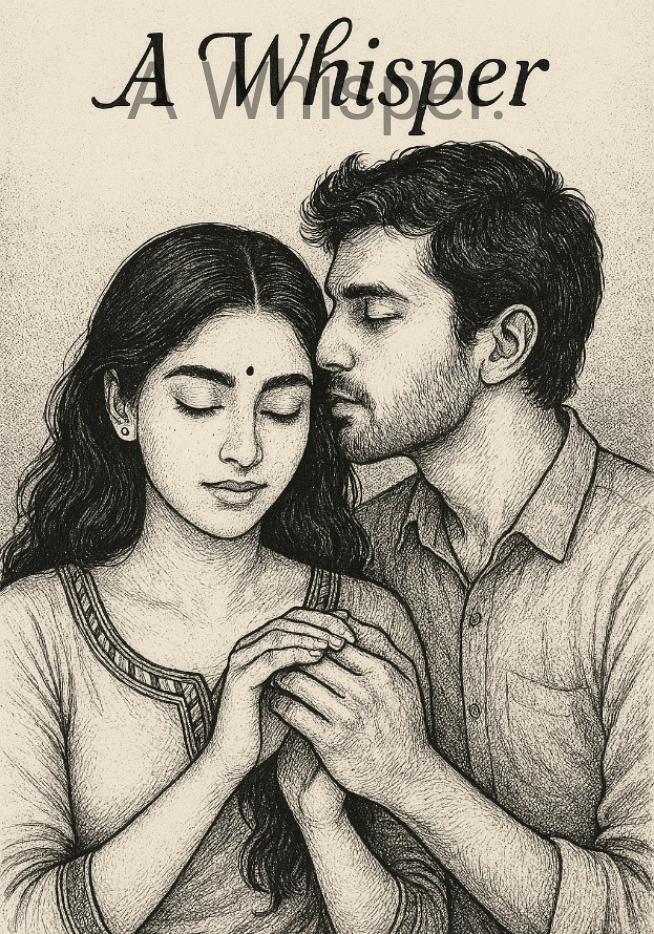
A Whisper.
A Whisper.

On the quiet seventh floor of the city library, where winter’s breath fogged the tall arched windows and silence reigned like a soft monarch, Umangi moved gracefully among the shelves. Her cotton kurta, pale as first snow, rustled softly as she walked. The cart beside her rattled faintly under the weight of poetry anthologies and philosophy books—covers worn, spines softened by many hands.
She touched each book with reverence, as if awakening old souls. Her ink-stained fingers traced the spines like a pianist seeking her next note. When she paused to read a line—perhaps from Neruda, or Faiz, or Meena Kumari—her lips parted slightly, breathing in the words like incense in a temple of thought.
In a quiet corner, half-hidden behind a stack of journals, Umang watched. Not with hunger. Not with haste. But with the stillness of someone witnessing something rare. For weeks, he had come to this floor at the same hour—not by chance, but by quiet magnetism. There was poetry in her silence, protest in her softness, and a kind of radiance that made the outside world feel louder—and less necessary.
Tonight, he approached.
“You shelve poetry like it’s a prayer,” he said, his voice low and careful—like a cello’s first note in an empty hall.
Umangi turned, surprised but not startled. She studied him—a man with eyes that didn’t wander, and hands that didn’t search but steadied. “Because it is,” she replied, tucking a stray lock of hair behind her ear. “A good poem touches you—but always with respect.”
There it was—that hush between strangers on the edge of something new. Not the awkward silence of a first meeting, but the charged quiet of two minds recognizing each other.
Umang reached for the book she’d just placed in the cart. Their fingers brushed. A whisper of warmth passed between them. Nothing rushed. Nothing claimed. Yet deeply felt.
“I think some touches do what words never can,” he murmured. “But the rare ones—like yours—do both.”
Umangi’s breath caught for a moment. “Most people want to be seen,” she said. “Few truly want to see.”
He smiled—not wide, but slow—like sunlight emerging behind a hill. “I do. Not just you, but the quiet revolutions you carry. The ones made of poems and persistence.”
She looked down, then up—eyes shimmering, not with tears, but with recognition.
They sat on the ledge near the fogged window, knees nearly touching. Outside, the city blinked with distant lights. Inside, two souls unfolded. They read verses to each other—sometimes aloud, sometimes in silence—letting the quiet between words speak more than syllables ever could.
There was no kiss. No desperate reaching. Just presence. A nearness. The kind that lingers longer than passion. The kind that begins before permission is needed.
Before parting, he whispered, “With you, I don’t want to change your world. I want to walk beside you while you change it.”
Umangi, clutching a dog-eared poetry book to her chest, replied with a smile that felt like spring: “Then come.”
—
The next evening, they met again—not in the library, but beneath the gulmohar tree outside. The sun was melting behind the buildings, casting golden fire across the branches.
Umangi was already there, seated on the stone bench, her notebook open in her lap. She wasn’t writing. Just waiting.
Umang sat beside her, wordless. She didn’t move away.
“Do you think two people can make the world gentler?” she asked, eyes fixed on the glowing horizon.
“I think you already do,” he said. “And if I can be even a small echo of that—I’ll be proud.”
She turned to him—not with surprise, but with a deep stillness. Slowly, deliberately, she reached for his hand. This time, it wasn’t a brush of fingers. It was the embrace of palms. A declaration, silent and whole.
The world didn’t shift in that instant.
But something did.
In the touch of two hands and the promise of shared purpose—in poetry that healed and silences that listened—Umangi and Umang didn’t escape the world.
They found a reason to remain in it. Together.
—
Weeks passed. Spring warmed the city. The gulmohar flamed red, and each evening Umangi and Umang met beneath its canopy—exchanging verses and silences that no longer needed translating. Their bond deepened, quietly, like ink bleeding into handmade paper.
But there was something Umangi never said.
Every night after their meetings, she returned home to her younger brother, Dev. Three years ago, a tragic accident had stolen his voice. Once curious and bright, he now sat in silence, his gaze distant, his spirit locked behind quiet eyes. Their parents were gone. She had raised him since. Her world—so poetic, so passionate—was quietly tethered to duty.
She never told Umang.
Until one evening, after walking her halfway, he said softly, “Let me walk you all the way today.”
She hesitated—but nodded.
When they reached the small apartment, Dev sat as always, surrounded by sketchbooks. He didn’t look up.
“This is Dev,” she whispered. “My reason for staying strong. The world I’m trying to change.”
Umang knelt beside him. He didn’t speak. He didn’t push. He simply sat.
The next day, he returned—with a gift: a handmade pop-up book, filled with verses and delicate illustrations. A story of a silent moon and a talking star. Dev opened it slowly. His eyes lingered. His lips parted—but no sound came.
Until a week later.
One line—just one—he read aloud, voice rasped with rust but unmistakably alive:
“The moon is silent, but it still shines.”
Umangi’s hand flew to her mouth.
Tears fell—of wonder, not sorrow. She turned to Umang, who stood in the doorway, as still and steady as ever.
“You didn’t just walk beside me,” she whispered. “You changed my world.”
He stepped forward and held her—not tightly, but with the calm of someone who knew the exact shape of her solitude.
And in that moment, Umangi understood:
Changing the world isn’t always about leading revolutions.
Sometimes, it’s about helping one soul heal.
Sometimes, it’s about letting someone help you.
And sometimes—just sometimes—it’s about letting love in,
not to complete you,
but to remind you
that you were never alone.
---