Library

 Profile
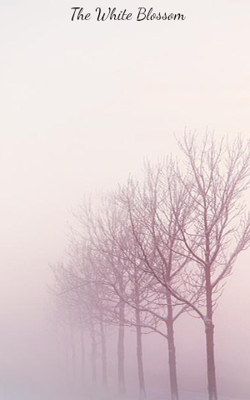
The White Blossom
The White Blossom

🌸 The White Blossom
✍️ By Vijay Sharma Erry
(For #WritcoStoryPrompt119 — What does a white blossom symbolize?)
It was the first day of spring in the little hill town of Munnar, where the mist still hugged the mountains like a shy bride. The air smelled of wet earth and blooming jasmine. Amidst all this beauty, stood a small tea shop near the old church—Thomas Tea & Tales.
And inside that little shop sat Aarav, a young painter who had once dreamt of coloring the whole world but now only painted in shades of grey.
Scene 1 – The Blossom FallsAarav stirred his cup of tea absentmindedly. The steam fogged his glasses, blurring the view outside. Through the window, he saw a small girl pluck a white flower that had fallen from the tree outside the church.
She smiled, tucked it behind her ear, and ran away.
Something about that innocent act touched him. That white blossom—it wasn’t just a flower. It was pure, untouched by the world’s dust.
Aarav picked up his sketchbook and began to draw the white blossom. For the first time in months, his hand didn’t tremble.
The waiter, Thomas, looked over his shoulder.
“You painting again, sir?”
Aarav nodded slightly.
“It’s strange, Thomas. I used to paint colors, now I can only see white.”
Thomas smiled. “White is all colors together, sir. Maybe you’re finding peace.”
Peace? That word hurt more than it healed. Because peace was something he had lost two years ago—on the day his fiancée Maya had died in a car crash, on the way to their wedding.
Scene 2 – Two Years BeforeMaya was the kind of girl who laughed with her whole face. She loved white flowers—especially white hibiscus.
“White means forgiveness, Aarav,” she used to say. “It’s what the heart wears when it’s ready to start again.”
On their last morning together, she had handed him a small bunch of white blossoms and whispered,
“When I wear these tomorrow, I’ll look like peace itself.”
He never saw her alive again.
When the news came, Aarav didn’t cry. He just stopped painting. Stopped speaking. Moved to Munnar, far from the city that smelled of grief.
Scene 3 – The VisitorOne misty morning, as he sat sketching by the churchyard, a soft voice broke his silence.
“Excuse me… are you the artist who paints here every day?”
He turned and saw a young woman, perhaps in her mid-twenties, dressed in a simple white salwar. Her hair was braided neatly, and there was a white blossom tucked near her ear.
For a second, Aarav forgot to breathe. She looked so much like Maya.
“Yes,” he said quietly. “I paint sometimes.”
“I’m Anya,” she said with a smile. “I work at the orphanage nearby. The children told me about the man who paints without colors. They said you make sad rainbows.”
Aarav smiled faintly. “That sounds like something a child would say.”
Anya tilted her head. “Can I see your paintings?”
He hesitated, then nodded.
Inside the little shop, he opened his sketchbook. Page after page—mountains, churches, clouds—all in shades of white and grey.
Anya touched one page gently. “You know… white isn’t the absence of color. It’s forgiveness, purity… sometimes even a promise.”
Aarav looked at her, puzzled. “You sound like someone I used to know.”
She smiled mysteriously, “Maybe I’ve just known loss too.”
Scene 4 – The Painting of HopeOver the next few weeks, Anya kept visiting the tea shop. Sometimes she brought the children from the orphanage, sometimes she just sat quietly watching him paint.
One afternoon, she asked, “Why don’t you paint in color again?”
He sighed. “Because every color reminds me of her.”
Anya looked out the window at the white blossoms swaying gently in the wind. “Maybe she’s the color white now, Aarav. Maybe she’s trying to tell you she’s still here—just softer, calmer, purer.”
He looked at her with moist eyes. “You sound like a poet.”
She laughed, “No, just someone who believes that love never dies—it just changes its form.”
That night, Aarav couldn’t sleep. He dreamed of Maya standing in a field of white flowers, smiling.
When he woke up, he painted the entire canvas white… and then added a faint outline of a girl standing amidst blossoms.
He titled it “The Return.”
Scene 5 – The Truth Behind the BlossomWeeks turned into months. Aarav began to feel alive again.
He painted sunsets, children, laughter—and yes, white blossoms.
Then one rainy evening, he went to the orphanage to give a painting lesson to the kids.
But when he reached, the caretaker looked surprised.
“Sir, you’re here for Anya?”
“Yes, she told me to come.”
The woman looked at him with pity. “Anya passed away… two years ago. She was one of the teachers here. Died in a car crash while going to donate books to the children.”
Aarav froze. “Two years ago? That’s… the same day…”
The woman nodded. “She loved white flowers. We planted a white hibiscus tree in her memory outside the church. Maybe you’ve seen it.”
He stumbled backward, his hands trembling.
That was the same tree under which he had seen the white blossom fall on the first day of spring.
He walked to the churchyard in the rain. The hibiscus tree swayed gently, its white flowers glowing faintly in the drizzle. One blossom fell at his feet.
He picked it up and whispered,
“Maya… Anya… maybe you never left.”
The wind carried the scent of jasmine and hibiscus. The church bell rang softly, and in that moment, he felt an embrace—a warmth that wasn’t of this world.
Scene 6 – The White ExhibitionA year later, Aarav held his first art exhibition in Kochi. The title was simple:
“White Blossoms.”
People walked in, expecting dull, pale art—but they were greeted by something else entirely.
Each painting had life, depth, and emotion.
One painting showed a woman standing beneath a white hibiscus tree, smiling toward the light.
Another showed a child picking a fallen blossom, the symbol of innocence continuing beyond loss.
At the center hung the painting “The Return.” Beneath it, a small note:
“White is not the end of color; it’s where all colors rest together.
It is love, forgiveness, and peace reborn.”
As people applauded, Aarav stood silently near the window. Outside, petals of white hibiscus floated down like gentle snow.
He whispered softly,
“Thank you, Maya… thank you, Anya. You taught me to see again.”
Years later, people still visited Thomas Tea & Tales to see the famous painter who brought peace to canvas.
Children played near the church, plucking fallen white blossoms, sometimes placing them on strangers’ palms, saying,
“This means love that never dies.”
Aarav would smile each time and whisper,
“Yes… a white blossom means forgiveness, rebirth, and the kind of love that even time cannot erase.”
And every spring, when the hibiscus bloomed again, he would paint silently beneath it, feeling the gentle fragrance of eternity.
🌸 Meaning:
A white blossom symbolizes purity, peace, forgiveness, and eternal love.
It reminds us that endings can also be beginnings—where pain transforms into peace, and love turns into light.