Library

 Profile
Unwritten Path
Unwritten Path

Unwritten Path
By Vijay Sharma Erry
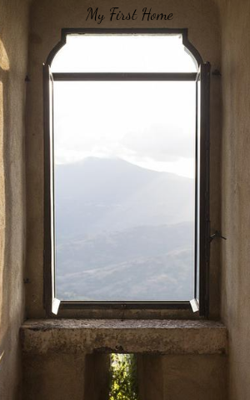
The monsoon had arrived early in Shimla, turning the pine-scented air thick with mist and the promise of disruption. Ananya stood at the window of her tiny attic flat, watching rain streak down the glass like impatient fingers. At twenty-nine, she had built a life of careful corners: a junior copywriter at a boutique ad agency, a savings account that grew by exactly ₹3,000 each month, and a routine that began with black coffee and ended with the 10:17 p.m. local train back from Delhi.
But today, the train was cancelled. A landslide had swallowed the tracks near Kalka, and the news ticker on her phone glowed with the word indefinite.
Indefinite. The word lodged in her throat like a fishbone.
She opened Instagram out of habit. There was Rhea—college batchmate, now a creative director in Mumbai—posing on a yacht, caption: Living my plot twist. There was Vikram, the quiet boy from statistics class, now a TEDx speaker with a verified blue tick. And there, in the suggested reels, was a stranger named Priya who looked exactly like Ananya but with better cheekbones and a corner office in Singapore.
Ananya’s thumb hovered, then pressed compare. The attic suddenly felt smaller, the ceiling lower, the rain louder.
She closed the app and opened her diary instead. The last entry, dated three months ago, read: Goal: Pitch the Himalayan Tea campaign by September. Don’t chicken out.
September had come and gone. The pitch remained a Google Doc with 14 versions and zero courage.
The phone buzzed. A text from Ma: Train cancelled? Come home if you can. Your cousin Neha just got engaged to an IAS officer.
Ananya stared at the message until the screen dimmed. Neha was twenty-five.
She packed an overnight bag, not because she wanted to go home but because the alternative was staying in the attic with her own reflection. The bus to her parents’ village left in forty minutes. She ran through the rain, shoes squelching, and boarded just as the conductor slammed the door.
The journey was six hours of hairpin bends and devotional songs. Ananya pressed her forehead to the cool window and tried to meditate the way her yoga app instructed. Observe the thought. Let it pass. But the thoughts were stubborn passengers.
What if the landslide never clears?
What if the agency fires me for missing tomorrow’s meeting?
What if I die single, unpublished, and perpetually almost-something?
At the halfway mark, the bus stopped at a dhaba for tea. Ananya stepped out to stretch her legs and found herself beside an old woman selling woollen shawls. The woman’s face was a map of sun and wind, her eyes the colour of over-steeped chai.
“Beta, you look like someone carrying the whole mountain on your back,” the woman said, wrapping a crimson shawl around Ananya’s shoulders without asking. “Try this. Warmth is a kind of certainty.”
Ananya opened her mouth to refuse—she had a jacket—but the wool was soft, hand-knitted, smelling of woodsmoke. She paid ₹400 without bargaining.
“Tell me something,” the woman continued, pouring tea into a kulhad. “When you were a child, what did you want to be?”
The question was so old it felt new. “An astronaut,” Ananya said, surprising herself. “Or a writer. I used to fill notebooks with stories about girls who talked to clouds.”
“And now?”
“Now I write taglines for detergent.”
The woman laughed, a sound like dry leaves dancing. “The clouds are still there, beta. They just wear different uniforms.”
Back on the bus, Ananya opened her notebook—the physical one, not the app—and wrote a single line: The mountain doesn’t compare itself to the sky. It just rises.
Home was a riot of marigolds and relatives. Neha’s engagement photos were already framed on the mantelpiece. Ma hugged her too tightly. Papa asked about the train. Her aunt cornered her in the kitchen: “Beta, you’re almost thirty. Neha’s fiancé has a government job, quarter in Lutyens—”
Ananya escaped to the terrace. The rain had followed her here, softer now, a Himachali drizzle. She sat on the swing where she used to read Enid Blyton and watched the village lights flicker on one by one.
Her phone buzzed again. An email from her boss: Hope you’re safe. Take the day if needed. Also—client loved your Version 9 of the tea campaign. Wants to meet Thursday.
Thursday. Two days away.
She should have felt relief. Instead, panic bloomed. Version 9 was the one she’d written at 2 a.m. after three glasses of wine, half-joking, half-prayer. It was raw, unpolished, nothing like the safe campaigns she usually submitted.
Footsteps on the stairs. Neha, glowing in a lehenga the colour of ripe mangoes. “Di, you okay? You look like you’ve seen a ghost.”
“I think I accidentally sent the wrong pitch,” Ananya whispered.
Neha grinned. “Good. Wrong is interesting.” She sat beside her, the swing creaking. “Remember when we were kids and you made up that story about the girl who could rewind time? You said she only used it once—to unsay something mean to her sister.”
Ananya’s eyes stung. “I was a better writer at ten.”
“You were a different writer. Not better.” Neha nudged her. “Di, I’m terrified. IAS officers have spreadsheets for emotions. What if I mess this up?”
Ananya looked at her cousin—really looked. The perfect eyeliner hid faint shadows. The smile was practiced.
“You’re allowed to be scared,” Ananya said slowly. “I’m scared too. But maybe that’s the point. The mountain doesn’t know it’s a mountain until the climber arrives.”
Neha laughed. “You’re weird when you’re profound.”
That night, Ananya couldn’t sleep. She crept downstairs with her laptop and opened Version 9. The campaign was called Steeped in Storm. It told the story of a tea picker named Lhamo who braved landslides to harvest the first flush, not for glory, but because the leaves wouldn’t wait. The tagline: Some things are worth the uncertainty.
She read it aloud to the empty living room. Her voice shook, then steadied.
The next morning, she caught the early bus back. The landslide had been partially cleared; trains would resume tomorrow. She spent the journey rewriting, not to fix, but to listen. Every time the old urge to compare crept in—Rhea would have used AR filters, Vikram would have a TED talk about tea—she wrote a counter-line in the margin: This is my storm. My steep.
Thursday arrived with sunshine sharp as broken glass. The client, a wiry man from Darjeeling named Mr. Dorji, listened to her pitch in silence. When she finished, he tapped the table.
“My grandmother was a picker,” he said. “She used to say the best tea grows where the mountain tries hardest to shake you off. Your campaign understands that.”
They shook hands. The deal was hers.
Back in Shimla, Ananya hung the crimson shawl on her wall. Some evenings, she wrote—not for clients, but for the girl who talked to clouds. The stories were messy, full of cancelled trains and almost-pitches, but they were hers.
One night, months later, her phone buzzed with a notification. Rhea had posted a blackout poem: I measured my life in someone else’s milestones. The comments were full of heartbreak emojis.
Ananya opened her diary and wrote:
Today, I choose the uncertainty that is mine alone. The mountain does not apologize for its height. The cloud does not envy the rain. I am learning to rise without comparison, to fall without apology. And in the space between—what a vast, trembling, beautiful indefinite.
She closed the book, turned off the light, and for the first time in years, slept without setting an alarm.
Outside, the pines whispered to the mist, and the mist, mercifully, did not whisper back.
(Word count: 1200)