Library

 Profile
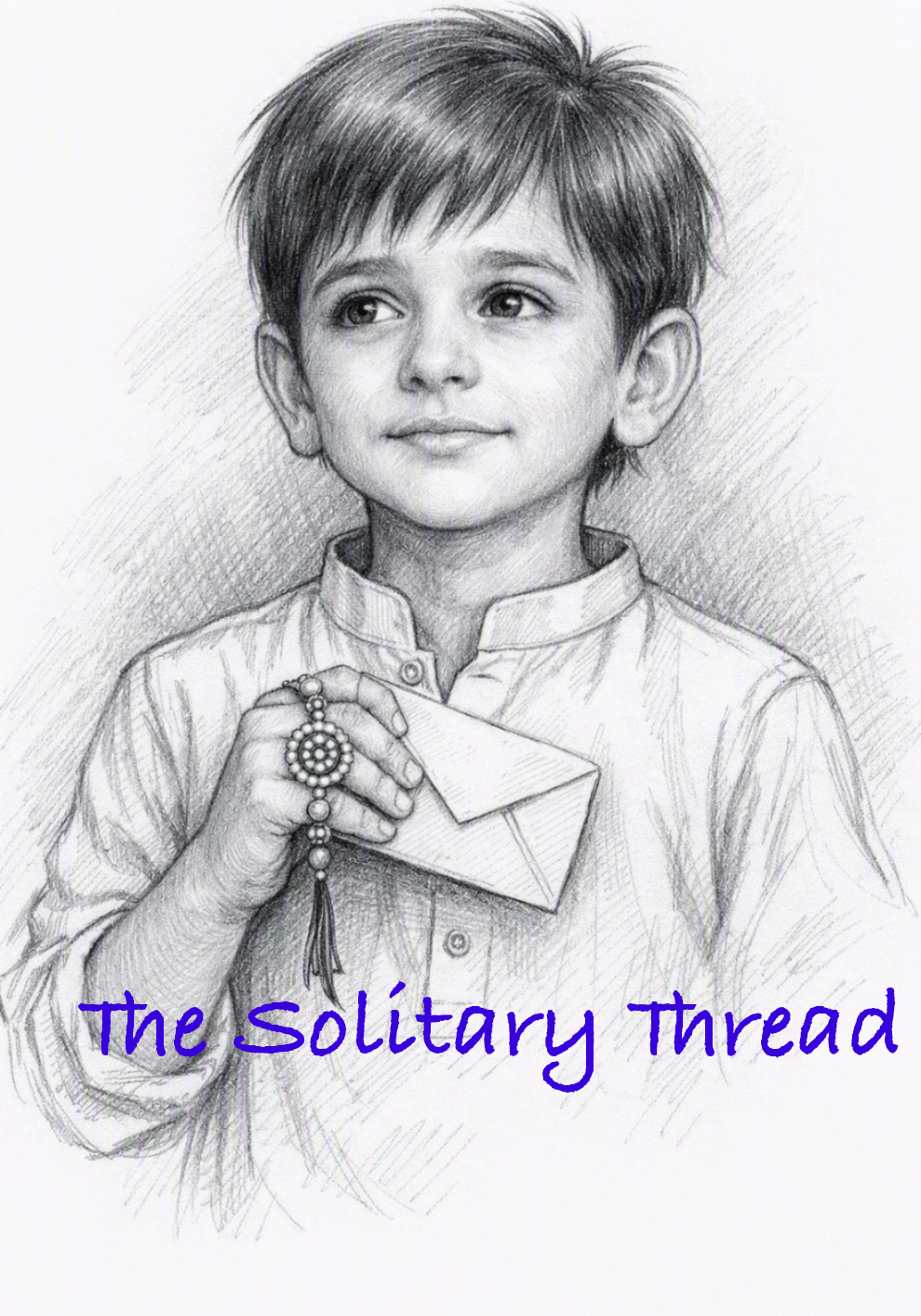
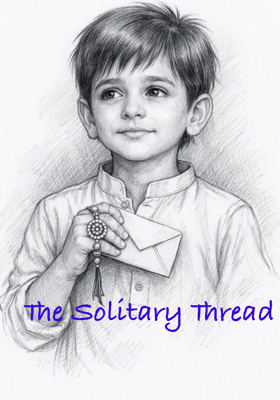
The Solitary Thread
The Solitary Thread

The cardboard courier envelope sits on the corner of my glass coffee table, its synthetic barcode catching the harsh glare of an overhead LED tube light. It arrived twenty minutes ago, handed over by a hurried delivery boy in a water-stained uniform who barely paused to scan a confirmation code before rushing down the concrete stairwell of this high-rise.
Inside the sealed plastic sleeve lies a single, intricately woven Rakhi, nestled on a square of velvet cardstock with a generic printed blessing. My sister sent it from eight hundred miles away with three taps on a smartphone screen, bridging the geographical chasm through logistics algorithms, yet leaving the vast silence of my living room completely untouched.
There is no sound of brass bangles clinking in the hallway. There is no sweet, heavy scent of boiling milk, bay leaves, and crushed cardamom drifting from a wood-fired kitchen to wake me from sleep.
Outside my window, the city hums with the indifferent roar of morning traffic, gray asphalt stretching toward a smog-tinted horizon, oblivious to the fact that today is Shravana Purnima.
In this rented apartment, the kitchen counter is sterile and bare—no stone mortar, no soaked rice ground into batter, no smoke curling upward toward a clay-tiled roof.
I pick up the thread with my left hand, holding it between my fingers, feeling the smooth polyester fibers. Without a sister to tie it, without a mother to bless the sweet morsel placed in my mouth, the festival feels stripped of its pulse, reduced to a solitary artifact resting under an electric bulb.
It is on mornings like this that memory ceases to be a gentle remembrance and becomes an ache so sharp it takes the breath away.
Thirty years ago, Gamha Purnima did not begin with the chime of a smartphone notification; it began in the blue, mist-draped hush that preceded the dawn.
Long before the sun cleared the canopy of coconut palms and bamboo groves, my mother was already awake. The first sound of the festival was always the rhythmic scrape of her broom across the earthen courtyard, followed by the soft splash of well water mixed with cow dung to purify the danda and the wide verandah. To an eight-year-old child cocooned beneath a thin cotton sheet, that sound was the rhythm of safety itself. As the darkness thinned into pale violet, the gentle chhap-chhap of her fingers on the floor meant she had begun drawing the jhoti chita. Using a paste of newly harvested raw rice ground fine with water and applied with a small rolled cloth held between her thumb and middle finger, she coaxed delicate patterns from the wet earth—blooming lotus stalks, concentric sunbursts, and endless trails of tiny grain sheaves symbolizing abundance.
By the time my sister and I rubbed the sleep from our eyes, the house had already transformed into a sanctum. The kitchen, with its twin mud hearths built by my mother’s own hands, was glowing with embers of dried tamarind wood and coconut shells.
The air was heavy with an aroma that exists nowhere in the modern world: the perfume of fresh khiri simmering slowly in a deep brass handi. Mother never skimped on the milk on Gamha Purnima. She would reduce liters of pure, unadulterated cow's milk until it turned the pale golden color of autumn grass, stirring in fragrant Arua rice, thick shavings of fresh coconut, jaggery, and green cardamom pods bruised in the stone pestle. Beside the hearth sat a polished iron tawa, smoking lightly under a brush of ghee. With practiced grace, she would pour ladles of fermented batter—black gram and rice soaked overnight and beaten into airy froth—onto the hot iron. The hiss of the batter hitting the skillet was followed instantly by the irresistible, nutty fragrance of chakuli pitha, its edges crisping into lace while the center remained pillowy soft.
We were not allowed to taste a single crumb until the rituals were complete, no matter how desperately our stomachs grumbled or how wide our eyes grew watching the stacks of pitha grow high on fresh banana leaves.
Gamha Purnima in our village was not merely a celebration of sibling affection; it was the sacred birthday of Lord Balarama—Haladhara—the wielder of the plough. It was the day humanity bowed its head in gratitude to the soil, the cattle, and the iron tools that coaxed life from the mud.
After my father bathed at the pond, he would bring in the implements of our survival from the sheds and storehouse. One by one, they were washed clean with well water and lined up against the inner courtyard wall: the heavy wooden hala (plough), the curved langala, the sharp crescent of the daa (sickle), the broad-bladed kati, and the heavy iron tangia (axe). To a child, these were dangerous, forbidding tools of hard labor, usually caked with red field mud and sweat. But on this morning, under my mother’s devotion, they became divine.
Mother would approach each tool with a brass tray bearing vermilion, yellow turmeric paste, raw rice grains, and fragrant red hibiscus flowers. With infinite reverence, she would mark the cold iron blades and worn wooden handles with three broad stripes of crimson and yellow. She treated the sickle that reaped the paddy with the same delicate tenderness with which she touched the feet of the household deities. She would drape garlands of wild marigolds and tulasi leaves across the yoke of the plough.
"Without the plough, there is no grain," she would whisper, pressing a pinch of consecrated vermilion to my forehead and then my sister’s. "Without the axe and the sickle, our hands are helpless before the jungle and the field. Never look down on the tools that feed you, my son."
Then came the cattle. Our pair of bullocks and the milch cows were bathed until their coats shone. Their horns were oiled and painted with bright red vermilion, and around their necks, mother tied garlands made of wild grass and flowers. They were fed sweet balls of rice flour, jaggery, and coconut—the sacred Gamha Ladu—before anyone in the family took a morsel of food. In that village courtyard, the boundary between human life, the beasts of burden, and the earth itself dissolved into a single, sacred ecosystem of gratitude.
Only after the worship of Haladhara and the earth was complete did the house turn its joyous attention to Raksha Bandhan.
My sister, dressed in a bright cotton frock that smelled of sun-dried starch, would carry a small bell-metal plate she had arranged under mother’s watchful eye. On the plate lay a burning ghee lamp, a small bowl of sandalwood paste, raw unbroken rice grains dyed yellow with turmeric, a piece of chakuli pitha, a cup of warm khiri, and the Rakhi.
In those days, there were no commercial satin bracelets embedded with plastic stones or cartoon figures bought from online storefronts. The Rakhis of our childhood were simple, honest creations made of crimson and yellow silk threads, sometimes braided with silver tinsel and a small rosette of colored felt.
I would sit cross-legged on a low wooden plank (pidha) on the verandah, trying to look solemn and grown-up. My sister would stand before me, her small face serious with the importance of the ritual. First came the cool touch of sandalwood paste on my forehead, pressed firmly with her ring finger, followed by a few grains of rice that stuck to the fragrant paste. Then, she would take the burning wick and circle it three times before my face in aarti, the warmth of the flame brushing my cheeks.
When she tied the thread around my right wrist, she would pull the knot tight—sometimes a little too tight, making me wince, which would immediately break her solemnity into a suppressed giggle.
"Now you have to protect me forever," she would declare with all the theatrical authority of an elder sister.
"And what will you give her?" my mother’s voice would ring out from the kitchen doorway, her apron dusted with rice flour, her face flushed from the hearth fire, her eyes crinkling with that profound, unconditional warmth that anchored our entire world.
I would reach into the pocket of my shorts and produce the crisp two-rupee or five-rupee note my father had slipped me earlier that morning. My sister would snatch it with triumphant delight, and in return, she would break off a corner of the hot, sweet chakuli pitha, dip it deep into the creamy khiri, and feed it to me with her own fingers.
Then came the feast. We would sit side by side on woven straw mats, banana leaves laid out before us, while mother served ladles of steaming khiri that pooled like liquid silk, surrounded by golden, porous chakuli and spiced potato curry. She never sat down until our bellies were round and full, standing over us with a hand on her hip, urging us to take just one more ladle, just one more pitha, her love measured in the endless hospitality of her kitchen.
The afternoon was a blur of village joy. The older boys and young men would gather near the village square for the traditional Gamha Diyan—leaping over high bamboo hurdles erected over soft mounds of straw and earth, cheered on by elders, celebrating the virility and strength of the monsoon season. We would run through the dusty lanes with our friends, showing off the bright threads on our wrists like badges of honor, our laughter echoing until the monsoon dusk settled over the fields.
Standing now in my high-rise apartment, looking down at the thread on the glass table, the contrast is almost unbearable.
The village home has long grown quiet. The earthen hearths where mother cooked have returned to clay and dust; the hands that ground the rice and tied marigolds to the plough have been gone for years. My sister lives in a distant city, juggling the relentless demands of her own career and family, managing her love through express parcel deliveries and ten-minute video calls between office shifts.
I open the small plastic pouch and take the Rakhi out. I manage to wrap the thread around my own wrist, fumbling with one hand and my teeth to pull the knot secure against my skin. It sits there—bright, colorful, and silent.
There is no khiri on the stove today. There are no farming tools to worship; my tools now are a laptop, a plastic keyboard, and a glowing monitor, none of which have ever known the touch of sandalwood or the blessing of an earth-born mother.
Yet, as I sit in the quiet room and close my eyes, the concrete walls of this city begin to fade. In the sanctuary of memory, the fragrance of burning tamarind wood rises once more. I can hear the soft whisper of the rice paste flowing from mother’s fingers onto the morning floor. I can see my sister’s bright eyes reflecting the golden flame of the brass lamp, and I can feel the gentle, reassuring weight of my mother’s hand resting upon my head.
Distance and time have taken away the village, the festival, and the sacred feast, but they cannot dismantle what was built in love. Across hundreds of miles of wire and concrete, across the vast threshold that separates this world from the one my mother now inhabits, the thread remains tied—not merely to my wrist, but to the very soul of who I was, and who I will always be.