Library

 Profile
The Quiet War
The Quiet War

📝 A Reflection on Resistance, Integrity, and the Silent Weight of Systems
The other day, I sat down with a friend — a fellow educator from a neighbouring school. What started as a casual exchange over work quickly unraveled into something deeper, rawer. He spoke of wounds — not the visible kind, but the ones earned from years of silent battles within a system that never quite sees you unless it needs to use you.
We talked about private organisations — the intricate dance of hiring and firing, of CVs that vanish without explanation, of promotions handed not by merit but by proximity. Nepotism, cynicism, scepticism, ego, politics — not new stories, but they still sting each time they’re told. And this friend of mine, he wasn’t bitter for the sake of it. He was broken because he had tried. Earnestly. Honestly. And still, it wasn’t enough.
I listened, and I shared. Not to offer solutions — there are none simple — but to say: you are not alone in this. Many have been here. Many are still here. Struggling, surviving, swallowing words they’d rather scream.
And then I told him something I believe deeply:
"This is not your failure. This is a systemic failure." And it is unfair — profoundly unfair — to ask one individual to fix a structure designed to protect itself.
You can try to stand tall, but if the ceiling was built low, even standing becomes an act of rebellion.
He wasn’t struggling because he was a hypocrite. He was struggling because he still held onto ideals in a place where ideals are dangerous. In institutions — be it academic or corporate — the moment you choose integrity over self-interest, you become an outlier. And in such systems, being an outlier is lonely, risky, and often thankless.
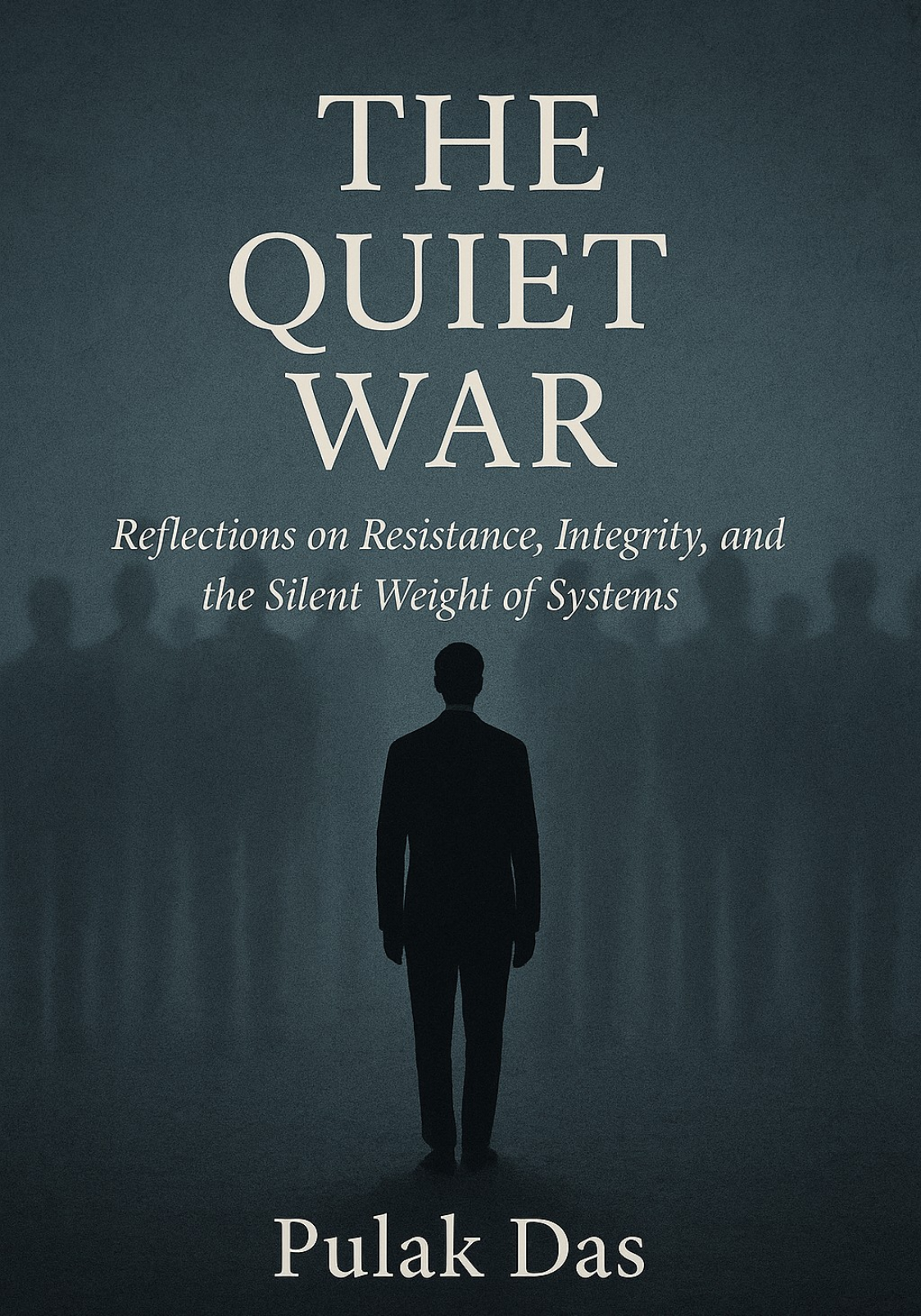
That’s when I spoke to him about the bystander effect. We always imagine change to come from a hero — someone bold enough to take the first step. But the real tragedy is this: even when that hero emerges, the crowd rarely follows. They applaud. They whisper support. But they don’t move. Out of a hundred people, maybe ten will believe in the cause. Eighty will remain neutral. Ten will actively resist. And in that math, neutrality quietly strengthens oppression.
So, I asked him —
Do you believe in your values enough to stand alone?
Would you fight the system knowing it may never reward you — only resist you?
It’s a heavy question. And honestly, one without a fair answer.
Because here’s the grimmest reality: if you live in Rome, and strive with the Pope, you will lose — at least at first. The system protects its own, and it punishes dissent. Not always overtly. Sometimes it just sidelines you, ignores you, drains you until you stop.
But I also believe — deeply — in what they say, whether or not Gandhi ever actually said it:
"First they ignore you. Then they laugh at you. Then they fight you. Then you win."
So yes, there is hope. But it is not a soft, easy hope. It’s the kind that bruises your hands from holding on too long. It’s the kind that demands you keep showing up, even when no one else does.
That day, I didn’t tell my friend to be brave for the world. I told him to be brave for himself.
To choose integrity not because it changes the system immediately,
but because it changes him — keeps him whole, sane, and real in a world built on performance.
And maybe, just maybe, that’s how the real change begins.
Not with noise. Not with fame. But with quiet courage.
The kind that stays.