Library

 Profile
The things people say over Tea
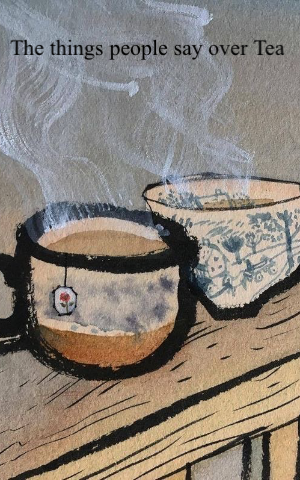
The things people say over Tea

The first thing I ever learned to make properly was tea.
Not noodles. Not toast. Tea.
I was eight when my mother finally allowed me near the stove after years of behaving as though I was one wrong movement away from burning the entire apartment building down. The kitchen window was open that evening, letting in the smell of rain and the distant sound of a vegetable seller loudly arguing with someone over coriander prices.
“Watch carefully,” my mother said, dropping crushed cardamom into boiling water. “Good tea is about patience.”
But at eight years old, patience sounded like the most boring ingredient imaginable
Still, I watched carefully. The water darkened slowly as the tea leaves spread through it like ink in clear water. Milk rose in soft swirls. Ginger crackled faintly against the heat. The entire kitchen smelled warm and alive in a way I could never properly explain.
Back then, I thought tea was just a drink adults were unnecessarily obsessed with. I did not understand why every conversation in our house somehow began with, “Should I make tea first?”
Relatives came over? Tea.
Someone failed an exam? Tea.
Guests arrived unexpectedly? Tea.
Family argument? Especially tea.
Tea appeared in happiness, awkwardness, celebration, grief, gossip, and apologies with equal dedication. And somehow, over the years, I became the designated tea-maker of the house.
“Ask her to make it.”
“She makes it better.”
“Not too sweet this time.”
“Actually, make mine sweeter.”
At first, I found it annoying. I would be peacefully existing in my room when suddenly someone would yell my name from another side of the house as though the nation depended on chai.
But slowly, I began noticing things. People became strangely honest around tea.
Maybe it was because their hands stayed occupied. Maybe because silence felt less uncomfortable when steam curled gently between people. Or maybe tea simply slowed life down enough for people to say what they actually meant.
My father, for example, never directly admitted he was stressed. Instead, he would stand in the kitchen pretending to “supervise” me while I made tea. “Little more ginger,” he would say casually.
That was his bad-day tea.
Extra ginger. Less sugar.
My mother drank tea absentmindedly while doing ten things at once and always forgot where she kept her cup. We once found one near the shoe rack after three hours.
My grandmother believed tea could solve almost anything.
Headache? Tea.
Cold? Tea.
Heartbreak? “Beta, first drink tea properly, then cry.”
Honestly, I suspect if somebody arrived with a broken arm, she would still offer chai before calling a doctor.
Then there was my brother.
My brother treated tea-making like a scientific inspection. Every single time I handed him a cup, he’d take one dramatic sip, narrow his eyes suspiciously, and say things like “Hm. The Cinnamon ratio is slightly unstable today.”
As though he was judging contestants on a cooking show despite surviving mostly on instant noodles.
One evening during summer vacation, his friends came over to study for exams. “Study” is a generous word, honestly. They spent two hours arguing over who would win this year’s IPL and thirty minutes pretending to revise chemistry.
At some point, one of them shouted from the living room, “Can someone make tea before I fail academically?” So naturally, everybody looked at me.
I walked into the kitchen dramatically suffering under oppression while six people shouted different tea preferences from outside.
“Less sugar!”
“More sugar!”
“Strong tea!”
“No ginger!”
“Extra ginger!”
At that point I genuinely considered poisoning all of them equally just to restore balance.
Still, I made it.
When I carried the tray back, the room smelled of old books, overheated chargers, and monsoon air drifting through half-open windows. Everyone grabbed cups carelessly mid-conversation.
And then something interesting happened. The noise softened. Not immediately. Slowly.
One friend admitted he was terrified of failing despite acting overconfident constantly. Another confessed he had lied to his parents about his test scores for nearly two months. Someone else started talking about wanting to study art instead of engineering before immediately laughing it off like it was a joke.
Nobody looked at each other while saying these things. They stared into cups instead, tracing fingers against ceramic edges.
That was the moment I realised tea was never really about tea.
It was about pause.
People spend entire days rushing through life — rushing through corridors, conversations, expectations, responsibilities — until eventually they forget how to sit still with each other. But tea forces stillness upon people, even if only for ten minutes.
Water boils.
Milk rises.
Someone waits.
Someone pours.
And during those tiny pauses, people become softer versions of themselves.
Years later, I still notice it everywhere. Teachers relaxing during staff meetings over paper cups of chai. Shopkeepers gossiping between customers.
My parents talking most honestly late at night in the kitchen while reheating tea neither of them truly needed.
People think superpowers have to be loud things. Flying. Invisibility. Reading minds. But I think my superpower is simpler than that.
I bring people together.
I create warmth where conversations begin.
I notice how people take their tea and somehow remember what they never say aloud.
I turn ordinary evenings into moments people stay longer than they intended to.
And maybe that sounds small.
But in a world where everybody is in a hurry to leave, I think being able to make people slow down, sit together, laugh honestly, and speak freely over a cup of tea is its own kind of magic.