Library

 Profile
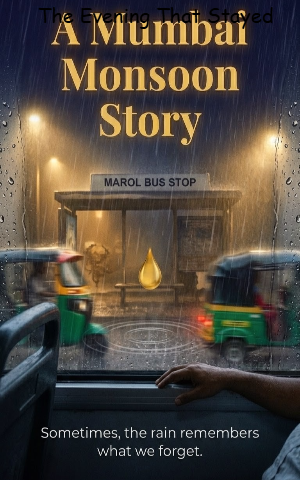
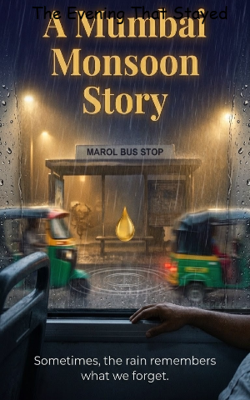
The Evening That Stayed
The Evening That Stayed

Every evening, as the monsoon clouds gathered over Mumbai, he found himself at the same bus stop. A man in his forties, office‑worn yet gentle in manner, was waiting for the bus that carried him home.
She arrived a few minutes later — younger, perhaps thirty, her dupatta fluttering in the damp breeze, her phone glowing with little bursts of laughter. He noticed her first not by sight, but by scent: a fragrance unlike any he had known, crisp and refreshing, cutting through the heavy air of rain and dust.
From that day, those two or three minutes became the best part of his routine. He never stared — only allowed himself a glance, no longer than two seconds, three at most. Enough to see her smile at a message, brush away the sweep of the jhadu wala, or tuck her hair behind her ear as the drizzle grew stronger.
Their eyes met once. She looked away, quick, almost dismissive. He understood. He was no teenager to chase strangers, no bold hero to force a conversation. He was simply a man who had found joy in the smallest rituals of another’s presence.
Days blurred into weeks, and the monsoon carried on with its endless symphony. He never spoke to her, never tried to bridge the silence. Yet each evening, as he stood under the tin roof, he felt a strange anticipation — not for the bus, not for the ride home, but for those fleeting minutes when her presence lit up the ordinary.
Her fragrance, her laughter at a message, the way she brushed aside the sweep of the jhadu wala — all of it became his secret ritual. A quiet happiness, unspoken but deeply felt.
And so he realised: waiting for the bus had never been better. Waiting for her had become the best part of his day.
The rain was relentless that night, drumming against the tin roof of the bus stop. Both buses were late — unusually late. For the first time, silence stretched too long, and he found himself glancing at her, then away, then back again. She caught his eyes and, instead of ignoring, smiled faintly.
“Looks like the buses have taken a holiday,” she said, her voice light, teasing the storm.
He chuckled, surprised at his own courage to reply. “Or maybe they’re waiting for the rain to stop.”
“I hate this rain,” she said suddenly, half to herself, half to him. “It ruins everything — clothes, shoes, even moods. And don’t get me started on the smell of wet socks in the bus.”
He smiled, amused by her candour. “True. Mumbai rain is a menace. But it’s also a magician.”
She raised an eyebrow. “Magician? Really? It’s more like a prankster.”
He chuckled. “Think about it. The rain turns the city into a mirror. Every puddle holds a reflection — of lights, of faces, of stories. It makes strangers huddle under one roof, like us now. And when it falls, it’s not just water. It’s music. The tin roof above us? That’s percussion. The splashes on the street? That’s rhythm. The drizzle on your dupatta? That’s melody.”
She laughed, shaking her head. “You sound like a poet stuck in traffic.”
“Maybe,” he said softly, “but without the rain, Mumbai would be just noise. With it, the city breathes.”
For thirty minutes, they spoke — about traffic, deadlines, the absurdity of office life. She teased him about his romantic view of puddles; he countered with dry humour about umbrellas that betray their owners. She laughed, genuinely, and for the first time, he felt the silence between them dissolve.
When her bus finally arrived, she stood, gathering her dupatta. Before stepping on, she turned and said softly: “You know, this wait wasn’t so bad. Sometimes strangers make the rain feel lighter.”
He carried those words home like a treasure. That night, he replayed them again and again, waiting for tomorrow with anticipation.
But tomorrow never came. Nor the day after. She vanished from the bus stop, as if the rain had washed her away. Days blurred into weeks, weeks into months. He returned to his routine — the newspaper, the buses, the drizzle.
His sunshine was gone. The bus stop was just a bus stop again. Yet somewhere in the rhythm of the monsoon, he still carried the echo of her words — proof that even a fleeting encounter can leave a lifetime of longing.
And so he thought, each time the rain returned: But waiting for the Chalo bus was never better!