Library

 Profile
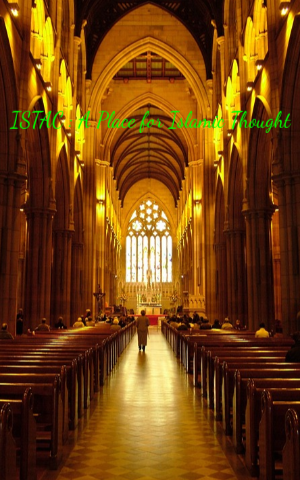
ISTAC : A Place for Islamic Thought
ISTAC : A Place for Islamic Thought

I visited the ISTAC campus today, renowned for its architecture. There was a seminar featuring a distinguished Muslim professor from Australia, along with several Australian women of different ages from the Australian High Commission. The High Commissioner delivered the opening speech. She was in her fifties and had a short hairstyle. Another woman caught my attention; she wore glasses and seemed interesting. Additionally, there were two young girls who fascinated me. I recognized them from a porn video I had seen before. Working as a waiter at the Pavilion, I had interacted with numerous white customers, so encountering them again after a long time was intriguing since I had been stuck on campus due to an assignment.
The main speaker discussed the presence of Aboriginals in Australia for the past 60,000 years. He also mentioned the trade relationship between Indonesian Muslims and the Aboriginals in the 1700s, long before white settlers arrived. The speaker praised Australia, highlighting how no country is entirely free from racism, but Australia has laws to maintain equity and justice. He contrasted this with Muslim countries, where freedom of expression and thought is often restricted. He also addressed the identity crisis faced by young Muslims, particularly those in their teenage years, who struggle to be recognized as Australians due to their Muslim background. Lastly, he talked about the rise of atheism and the increasing number of young Muslims leaving their faith. After the speech, some professors asked questions, and the main speaker responded by explaining how they are introducing logic and promoting critical thinking to counteract theism. Now, shifting my focus to their appearance, I noticed how eloquently these professors spoke English and how well-dressed they were. The High Commissioner had a somewhat lesbian style, but I remembered my supervisor's comment about Westerners excelling in presentation. I saw their real reflection: intelligent and very attractive individuals. There was no doubt about that. However, I couldn't help but notice that the girls I had admired weren't as tall as I had imagined. In fact, they were quite short in height( Obviously I saw so many tall and fatty western girls also in last 10 years ). Even the woman with glasses, whom I had liked the most, appeared human and not angelic. They were just like regular humans, like us. Discrimination arises from positions, wealth, and a country's status. This High Commissioner must have a degree from a prestigious university, and many of her friends couldn't achieve such a position. In that sense, she is successful. But what about her family life? Various questions flooded my mind.
Then, I shifted my attention to the questions being asked, and I noticed how logical and well-articulated they were. Some of the questioners were ISTAC students. Suddenly, a sense of resentment grew within me. It seemed as though ISTAC was established with the hope of reducing atheism, but most students were primarily attracted by the scholarships offered. Thousands of theses had been produced so far, and millions had been spent in the name of Allah, but is Allah still relevant today? These graduates do find jobs after graduation, no doubt about that. However, the fundamental problem faced by the Muslim youth is whether Allah can coexist with science. Prominent scholars like Osman Bakar were present, and they had written extensively on the integration of science and religion, establishing a Tawhidic paradigm. Yet, in reality, they hadn't achieved anything significant beyond what Christian professors had done in Western academia as long as funding was available. These works served as pseudo-science against figures like Richard Dawkins and other prominent scientists. I feel that Anwar and Attas did a commendable job, but it ultimately serves as a means for funding and discussion. Deep down, I doubt if we can find even one true Muslim among those who support the Islamization project. What I mean is, these professors and students are exceptionally intelligent and well-versed in Arabic and English, and their arguments are truly remarkable. I, on the other hand, feel like a donkey compared to them. However, the scientific and religious literature I have come across so far feels like a ghost story from my childhood. When I listen to a ghost story, I get scared, but once I go to school, I forget about it. Modern literature on the subject feels the same way. We may proclaim our faith during conferences and discussions, fueled by funding, but outside of those settings, we are all without faith. This is not just my problem; it seems to be a problem that plagues us all. They say we have knowledge, but we remain silent about injustices because we are old and have families to care for. I haven't found a single professor or student, including myself, whom I can genuinely call a true Muslim. I apologize for saying so, but that's the overwhelming feeling I have. As I left the seminar, these thoughts lingered in my mind. The beautiful architecture of the ISTAC campus no longer captivated me the same way. Instead, a sense of disillusionment and doubt took hold. I questioned the purpose of our academic pursuits if they were merely a means to an end, devoid of true faith and conviction.
Walking away from the campus, I felt a mix of emotions. Disappointment, perhaps, but also a glimmer of hope. Maybe, in the sea of scholars and students, there are those who genuinely strive to reconcile faith and reason, who hold steadfast to their beliefs despite the challenges and doubts. Perhaps, deep down, there are individuals who can inspire and lead by example. In the end, as I continued my journey, I resolved to seek answers and explore the depths of my own faith. Regardless of the doubts and contradictions I encountered along the way, I hoped to find solace in a true and authentic connection with my religion. And with that determination in my heart, I moved forward, ready to face the complexities of faith and reason, seeking a deeper understanding of what it truly means to be a Muslim in this modern world.