Library

 Profile
Illuminating Unity: A Captivating Diwali Saga In Villages
Illuminating Unity: A Captivating Diwali Saga In Villages

Deep in the heart of the picturesque village, where the winding lanes whispered tales of bygone eras, another enchanting tradition added to the rich tapestry of Diwali. As the night sky unfolded its velvety expanse, families gathered in their courtyards to perform the age-old ritual of Lakshmi Puja. It was believed that the goddess of wealth, Lakshmi, would grace homes adorned with the soft glow of oil lamps and the sweet fragrance of incense.
In the center of the village, a majestic banyan tree stood tall, its ancient branches reaching out like a benevolent guardian. Legend had it that beneath this sacred tree, a humble potter named Vikram had once crafted a clay lamp that burned ceaselessly, emitting a divine light that attracted the attention of the gods. In gratitude, the gods blessed Vikram and the entire village, promising prosperity and happiness.
To honor this mythic tale, the villagers would gather under the sprawling branches of the banyan tree for a communal prayer. They adorned the tree with marigold garlands and suspended colorful lanterns, creating a magical ambiance that resonated with the festive spirit. As the priest chanted hymns, families clasped their hands in reverence, seeking the benevolence of Lakshmi for the coming year.
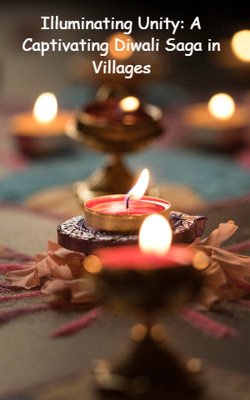
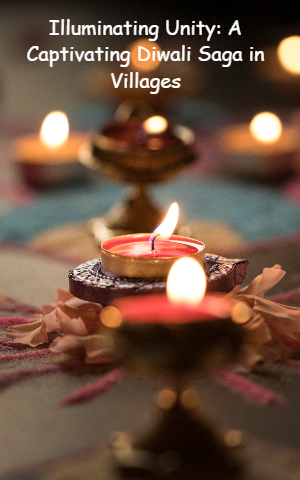
Vikram's descendants, the village potters, continued the tradition of crafting exquisite clay lamps. Each family took pride in selecting or creating their unique design, infusing a piece of their identity into the lamp. The soft glow of these lamps, combined with the flickering flames of countless others, transformed the village into a mesmerizing mosaic of light and shadow.
In the days leading up to Diwali, the aroma of freshly prepared sweets wafted through the air. The women of the village, adorned in vibrant sarees and intricate jewelry, gathered in communal kitchens to prepare an array of traditional delicacies. The air resonated with the rhythmic sounds of laughter and conversation as they shared recipes and stories, weaving a sense of unity that transcended generations.
One particular tale told of a mischievous boy named Aryan who, centuries ago, had discovered a hidden trove of firecrackers left behind by celestial beings. In his exuberance, Aryan had inadvertently set them off, lighting up the night sky with a dazzling display of colors. To this day, the villagers celebrate Aryan's adventurous spirit by igniting fireworks that paint the heavens in hues of red, green, and gold.
As the night unfolded in a symphony of light and sound, the villagers gathered around a communal bonfire, its flames reaching towards the stars. Raghav, the wise storyteller, shared more tales of Diwali's significance. He spoke of the triumph of knowledge over ignorance, good over evil, and the eternal cycle of renewal that the festival represented.
In the embrace of these traditions, the villagers discovered a timeless connection to their roots. Diwali, for them, was not just a festival; it was a bridge that spanned across generations, linking the present with the stories of the past. The twinkling diyas, the vibrant Rangoli, the sacred banyan tree, and the crackling bonfire—all merged to create a tapestry of tradition that captured the essence of this beautiful festival.
As the night deepened, the village echoed with joyous celebrations. The rhythmic beats of drums accompanied lively dances, and the night air reverberated with laughter and cheer. Underneath the vast canvas of twinkling stars, the villagers reveled in the beauty of their shared heritage, basking in the warmth of love, camaraderie, and the eternal light that Diwali had ignited within their hearts. And so, the village slept peacefully, bathed in the soft radiance of a thousand glowing lamps, ready to welcome the dawn of a new beginning.