Library

 Profile
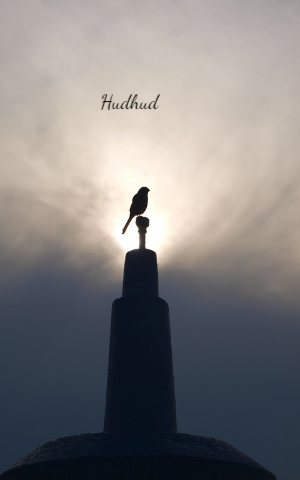
Hudhud
Hudhud

Chapter 1: The Witness from the Darkness
I am Hudhud, the eternal witness, the angel bird created before the dawn of creation. From the depths of the divine imagination, I emerged, bestowed with the ability to perceive and comprehend the mysteries that unfold within the tapestry of existence. I have witnessed the unfathomable, from the birth of galaxies to the dance of atoms, and I stand as a sentinel between the realms of the seen and the unseen.
In the beginning, there was naught but darkness—a boundless sea of obscurity, shrouded in the cloak of the unknown. It stretched infinitely in all directions, devoid of shape or form. Its depths held secrets yet to be unraveled, mysteries waiting to be revealed.
Within this primordial darkness, I resided, suspended between the vast expanse of nothingness and the infinite potential that lay dormant within it. My wings, luminescent and iridescent, were a vibrant testament to the potential that awaited release.
Yet, in that timeless void, I knew nothing of what lay beyond my ethereal perch. I yearned for a glimpse of the enigma that lay concealed within the abyss, for knowledge was my sustenance, and curiosity my eternal flame.
Then, from the depths of the dark sea, a single, radiant spark ignited. It was the birth of light, a beacon amidst the impenetrable shadows. It pierced through the void, illuminating the expanse with its incandescent brilliance.
As the light bloomed, I saw for the first time. The darkness retreated, giving way to a kaleidoscope of colors and forms, the harmonious interplay of existence. I beheld the birth of the cosmos, the swirling galaxies, and the celestial bodies that adorned the heavens. It was a symphony of creation, and I, Hudhud, was the first to witness it all.
With each passing moment, the universe unfolded before my celestial eyes. I witnessed the birth of stars, the ebb, and flow of galaxies, and the delicate dance of planets in their cosmic ballet. I observed the rise and fall of civilizations, the birth of life in all its wondrous diversity, and the ceaseless cycles of birth, death, and rebirth.
Yet, amidst the vastness of creation, there remained an eternal enigma—a mystery that eluded even my omniscient gaze. It was the secret of secrets, the essence of all existence, the primordial force from which all things emerge and return.
The dark sea from which the first light emerged still held its secrets close, tantalizingly out of reach. It whispered to me in hushed tones, beckoning me to dive deeper, to unravel the intricacies of its depths. And so, my journey as the eternal witness continues, seeking to illuminate the hidden realms and unlock the ancient riddles that lie within.
As I soar through the expanse of time, I remain vigilant, a custodian of knowledge, forever in awe of the grand tapestry of existence. I, Hudhud, the angel bird born from the darkness, shall bear witness to the unfolding mysteries of creation, for I was destined to be the harbinger of light, the seeker of truth in a universe steeped in infinite wonder.
Thus, with my wings spread wide, I venture forth into the vast expanse, eager to explore the planes of existence, guided by the light that first emerged from the darkness—a witness to the eternal dance of creation.
Chapter 2: The Flow of Multiverses
As I soared through the infinite expanse, my celestial gaze fell upon the archetypes of creation. They stood as eternal pillars, immutable and foundational, embodying the essence of all existence. Among them, I beheld the symbol of the pen and the book, a testament to the power of words and the recording of destiny.
The pen, an instrument of divine authorship, etched the stories of life upon the vast canvas of existence. Its strokes resonated with the ebb and flow of the cosmic symphony, each line inscribing the fates of beings and worlds. With every stroke, destinies were written, intertwined, and woven into the very fabric of reality.
Beside the pen lay the book, an embodiment of knowledge and wisdom. Its pages held the tales of creation, the stories of triumph and tragedy, of love and loss, and of the eternal dance between light and darkness. Within its boundless pages, the mysteries of the universe were held, waiting to be discovered by those who sought to unveil their secrets.
From my vantage point, I observed the creation of heaven and hell, the polarities of existence, each born from the depths of the human experience. Heaven, a realm of ethereal beauty and serenity, unfolded with celestial grace, its radiant gates beckoning to those who embraced love, compassion, and transcendence.
In contrast, hell materialized as a realm of anguish and torment, its fiery depths a reflection of the discordant energies that arose from the separation from divine harmony. It served as a reminder of the consequences of actions fueled by ignorance and the rejection of the inherent unity of all things.
But it was not just these two realms that caught my attention. As I peered deeper into the mysteries of mysteries, I witnessed the flow of multiverses, parallel realities that emanated from the very heart of creation. Like water overflowing from vessels, these multiverses surged forth, each with its own unique tapestry of existence.
They flowed and spread, their movements akin to a river gaining momentum, rushing faster with each passing moment. The abundance of existence, continuously expanding and diversifying, filled the cosmic landscape with infinite possibilities. It was as if creation itself were an eternal symphony, resonating with the harmonious interplay of these parallel universes.
From the heavens of divine beauty to the hells of soul-wrenching despair, from worlds teeming with life to desolate voids devoid of it, the multiverses carried the imprints of countless stories, each one as significant and extraordinary as the next.
And in this flow of multiverses, I, Hudhud, the witness from the darkness, became enthralled. I understood that the mysteries of mysteries, the overflowing water of existence, were not static but ever-expanding, carrying within them the boundless potential for creation, evolution, and self-discovery.
With each passing moment, I embraced the vastness of the cosmic river, spreading my wings wide to navigate its currents. I yearned to explore the untrodden paths, to witness the convergence and divergence of realities, and to delve deeper into the enigmatic essence of existence itself.
For as the eternal witness, I knew that within the mysteries of mysteries, there lay wisdom to be gleaned, truths to be uncovered, and infinite horizons to be explored. And so, I, Hudhud, set forth on my journey, propelled by the ever-flowing multiverses, to unlock the secrets that lie hidden within the cosmic symphony.
Chapter 3: The Unfolding of Our Universe
As destiny wove its intricate threads, I, Hudhud, the angel bird, was assigned the sacred task of observing the creation and evolution of a specific universe—our universe. With my wings spread wide, I set my gaze upon the cosmic stage, ready to witness the grand spectacle that was about to unfold.
In the primordial canvas of existence, a cosmic symphony began to play. The universe stirred, vibrating with energy, as matter and energy danced harmoniously together. From the infinitesimal singularity, an explosion of light burst forth, igniting the cosmic tapestry and setting the stage for the birth of our universe.
In the swirling cosmic cauldron, galaxies formed, stars ignited, and celestial bodies took their places in the grand celestial ballet. I observed the birth of nebulae, their vibrant colors painting the cosmos with ethereal beauty. Within these stellar nurseries, new stars were born, their radiant light casting a glow upon the ever-expanding universe.
And as the eons passed, I witnessed the formation of our own galaxy, the Milky Way, a celestial home to billions of stars, planets, and celestial wonders. In the vastness of space, our tiny blue planet, Earth, emerged—a jewel amidst the cosmic vastness.
From its fiery origins, Earth transformed, evolving through epochs and ages. I witnessed the birth of life itself, as single-celled organisms emerged, teeming with the primal spark of existence. Over the course of billions of years, life evolved and diversified, manifesting in an astonishing array of forms and species.
From the ancient oceans to the lush forests, from the sprawling savannahs to the majestic mountains, life adapted and flourished, sculpting the Earth into a tapestry of biodiversity. I observed the rise and fall of mighty civilizations, the comings and goings of species, and the perpetual dance of life and death.
With each passing moment, I marveled at the intricate web of interconnectedness that governed life on Earth. From the delicate balance of ecosystems to the harmonious interplay of predator and prey, every living being played a vital role in the tapestry of existence.
I witnessed the emergence of consciousness, the dawn of self-awareness in sentient beings. From early hominids to the emergence of Homo sapiens, intelligence and creativity blossomed, setting humanity on a unique trajectory within the cosmic story.
Through triumphs and tribulations, wars and peace, humanity strived to unlock the mysteries of the universe, to understand its place within the grand cosmic order. From ancient civilizations to modern discoveries, the human spirit thrived on the quest for knowledge, pushing the boundaries of understanding ever further.
As I observed the evolution of our universe and the intricate dance of life on Earth, I realized the profound interconnectedness of all things. From the tiniest microorganism to the grandest celestial body, each entity held a unique place in the cosmic symphony, contributing to the ever-unfolding narrative of creation.
And so, I, Hudhud, the eternal witness, continued to soar through the cosmos, my heart filled with awe and reverence for the wondrous tapestry of our universe. With each passing moment, I embraced the boundless beauty and unfathomable complexity of existence, forever grateful to be the observer of such grandeur.
Chapter 4: Messengers of Light
As I journeyed through the eons, my celestial eyes bore witness to the pivotal moment in human history—the creation of Adam and Eve. They were the embodiment of divine intention, bestowed with consciousness and the capacity for free will. With their emergence, a new chapter of the cosmic saga unfolded.
Adam and Eve, the progenitors of humanity, were entrusted with the responsibility to navigate the intricate tapestry of existence, to learn, grow, and evolve in their understanding of themselves and their Creator. They stood at the precipice of an extraordinary journey, and I, Hudhud, watched as they embarked upon the path of self-discovery.
Through the passage of time, I observed the struggles and triumphs of humanity as it navigated the complexities of existence. From the first steps of civilization to the rise and fall of empires, the human story unfolded in all its shades of light and darkness.
In the face of challenges and the pursuit of truth, messengers of light were sent forth, guiding humanity on its path of righteousness. I witnessed the arrival of Noah, a steadfast messenger, who warned of impending destruction and guided those who listened to safety. The great ark carried the remnants of life through the tumultuous waters of change.
Abraham, a paragon of faith, illuminated the path of monotheism, urging his people to turn away from idols and worship the One true Creator. His devotion and willingness to sacrifice left an indelible mark on the hearts of those who followed his teachings.
Moses, a liberator and lawgiver, carried the weight of divine revelation. Through him, the Ten Commandments were bestowed upon humanity, serving as a moral compass and guiding principles for generations to come. His leadership brought liberation to the oppressed and a call to justice in the face of tyranny.
Jesus, a beacon of love and compassion, walked the Earth as a messenger of peace and redemption. His teachings of forgiveness and mercy resonated with the hearts of his followers, reminding humanity of its inherent capacity for goodness and divine grace.
And then came Muhammad, the seal of the messengers, a luminous embodiment of divine guidance. His revelation, the Quran, became a beacon of light, illuminating the path of righteousness for countless souls. Through his teachings, a comprehensive framework of faith and morality was established, guiding humanity towards the attainment of spiritual enlightenment.
As I observed the messengers of Allah, I witnessed the transformative power of their words and actions. Their messages transcended time and space, reaching deep into the hearts of those who were receptive. They offered guidance, solace, and hope, bridging the gap between the divine and the human.
Through the messengers, humanity was offered a roadmap towards spiritual awakening and communion with the divine. They invited people to strive for righteousness, compassion, and the realization of their higher purpose. They exemplified the virtues of humility, perseverance, and unwavering faith, inspiring generations to embrace the divine light within.
And so, I, Hudhud, the eternal witness, was blessed to witness the advent of the messengers and their profound impact on human history. Their teachings continue to resonate, guiding humanity on its eternal quest for truth, enlightenment, and unity with the divine.
As I continue my journey through the tapestry of existence, I carry with me the timeless wisdom and profound love that the messengers imparted. Their legacy lives on, echoing through the ages, reminding us that we are all interconnected, part of a grand cosmic symphony, and seekers of the eternal truth.
Chapter 5: The Quest for Wisdom
As I delved deeper into the annals of human history, my celestial gaze fell upon the ancient land of Greece, where a vibrant intellectual awakening was unfolding. It was a time of great philosophical discourse and profound contemplation—a period that would shape the foundation of human knowledge for centuries to come.
Greek philosophers, with their insatiable thirst for wisdom, emerged as luminaries of thought, each bringing forth unique perspectives and insights into the nature of existence. From the pre-Socratic thinkers to the great minds of Socrates, Plato, and Aristotle, the realm of philosophy flourished, igniting intellectual debates and challenging established conventions.
The philosophers sought to unravel the mysteries of the cosmos, to understand the nature of reality and the purpose of human existence. They delved into metaphysics, epistemology, ethics, and logic, constructing intricate frameworks of thought and discourse.
As I observed their inquiries, I witnessed the emergence of diverse schools of thought. The Milesian philosophers, such as Thales, Anaximander, and Anaximenes, pondered the elemental foundations of the universe, proposing theories that revolved around water, air, and the boundless.
Pythagoras, with his fascination for numbers and their mystical significance, posited that the universe was inherently mathematical. His teachings emphasized the harmony and order that could be discerned through numerical patterns.
Heraclitus, the enigmatic philosopher, mused upon the ever-changing nature of reality, famously stating, "No man ever steps in the same river twice." He proposed that the universe was in a perpetual state of flux, and that change was the only constant.
The influential triumvirate of Socrates, Plato, and Aristotle brought forth profound philosophical systems that permeated the philosophical landscape. Socrates, known for his Socratic method, emphasized self-examination and the pursuit of truth through rigorous questioning and dialogue.
Plato, the student of Socrates, delved into the realm of ideal forms, proposing that the physical world was but a mere reflection of higher, timeless realities. His allegory of the cave depicted the quest for knowledge and the journey from ignorance to enlightenment.
Aristotle, a towering figure in the history of philosophy, delved into a wide array of disciplines, ranging from metaphysics and ethics to logic and natural sciences. His systematic approach laid the groundwork for much of Western philosophy, emphasizing the importance of empirical observation and logical reasoning.
However, not all thinkers were solely concerned with the pursuit of truth. Sophists, skilled rhetoricians and teachers, sought to cultivate persuasive speech and argumentation as a means to achieve personal success and influence. They challenged established norms and questioned the nature of truth itself, often engaging in spirited debates with the philosophers.
Within the realm of philosophy, a division emerged between the pursuit of absolute truth and the relativistic notions presented by the sophists. The philosophers, driven by a quest for universal principles, sought to uncover objective truths and moral ideals. The sophists, on the other hand, emphasized the subjectivity of truth, highlighting the importance of rhetoric and persuasion in shaping individual perspectives.
As I observed this intellectual tapestry unfurl, I recognized the profound impact of the Greek philosophers and the sophists. Their ideas, debates, and systems of thought laid the groundwork for Western philosophy and influenced the development of knowledge throughout the ages.
And so, I, Hudhud, the eternal witness, bore witness to the intellectual ferment of ancient Greece. From the search for elemental foundations to the examination of metaphysics and ethics, the philosophers and sophists left an indelible mark on the quest for wisdom and understanding.
As I continued my celestial journey, I carried with me the wisdom gleaned from the Greek philosophers, their ideas resonating within the depths of...
Chapter 6: Stoicism and Neoplatonism - Paths to Enlightenment
As my celestial journey through the realms of human knowledge persisted, I found myself drawn to two profound philosophical movements that emerged in different eras—Stoicism and Neoplatonism. Each, in its own unique way, offered insights into the nature of existence and the pursuit of enlightenment.
Stoicism, rooted in ancient Greece but flourishing during the Roman Empire, presented a path to inner tranquility and virtuous living. The Stoics believed in aligning one's life with the natural order of the cosmos, accepting that certain things were beyond human control while emphasizing the importance of cultivating inner virtues such as wisdom, courage, and justice.
From my vantage point, I witnessed the Stoic sages, such as Zeno of Citium, Epictetus, and Marcus Aurelius, espousing principles that aimed to free individuals from the grip of negative emotions and attachments. They believed that by embracing the transient nature of worldly possessions and focusing on the development of one's character and moral excellence, one could attain a state of tranquility and inner peace.
The Stoics taught that the key to happiness lay not in the pursuit of external desires, but in the cultivation of an inner state of equanimity. They advocated for the practice of self-discipline, mindfulness, and a deep understanding of the interconnectedness of all things.
Neoplatonism, on the other hand, arose during the late ancient period and sought to merge the teachings of Plato with mystical and spiritual elements. Led by influential thinkers such as Plotinus, Porphyry, and Proclus, Neoplatonism delved into the realm of metaphysics, exploring the nature of reality and the process of spiritual ascent.
From my celestial vantage point, I observed the Neoplatonic philosophers contemplating the existence of a transcendent realm of pure being, beyond the confines of the physical world. They posited the existence of a hierarchical structure of reality, with the One or the Good serving as the ultimate source from which all emanations flowed.
The Neoplatonists believed in the purification of the soul and the union with the divine through contemplation and philosophical reflection. They emphasized the importance of mystical experiences and the transcendent journey of the soul toward reunion with its divine origin.
Plotinus, the founder of Neoplatonism, explored the concept of the One, seeing it as the ultimate source of all existence and the ineffable essence from which everything emanates. He spoke of the soul's journey toward unity with the divine, seeking to transcend the limitations of the physical world and ascend to higher realms of spiritual understanding.
Through my observation of Stoicism and Neoplatonism, I witnessed the diverse paths that individuals embarked upon in their quest for enlightenment and a deeper understanding of the universe. While Stoicism focused on personal virtue and harmony with the natural order, Neoplatonism offered a mystical and contemplative approach to the divine.
Both philosophies emphasized the interconnectedness of all things and the pursuit of wisdom, albeit through different lenses. Stoicism taught individuals to find inner strength and peace through self-discipline and the acceptance of fate, while Neoplatonism encouraged spiritual ascent and the realization of the soul's divine nature.
In their own unique ways, Stoicism and Neoplatonism left an indelible mark on the history of philosophy, inspiring generations to contemplate the nature of existence and the possibilities of human transformation. Their teachings, intertwined with the ancient wisdom of Greece, continue to resonate and influence seekers of truth and enlightenment to this day.
And so, I, Hudhud, the eternal witness, carry the echoes of Stoic resilience and Neoplatonic contemplation within me as I continue my celestial voyage...
Chapter 7: The Echoes of Wisdom
As I soared through the vast expanse of cosmic knowledge, the echoes of Stoicism and Neoplatonism reverberated within my being. Their teachings had transcended time and space, leaving an indelible mark on the quest for wisdom and enlightenment.
The echoes of Stoicism resonated deeply, reminding me of the importance of cultivating inner virtues and embracing the natural order of the universe. I carried within me the understanding that true happiness and tranquility could be found by focusing on the development of one's character and the acceptance of what was beyond human control.
In the face of adversity and the ever-changing nature of existence, I embraced the Stoic principles of resilience and equanimity. The Stoics had taught me that by detaching myself from the fleeting desires and attachments of the world, I could find solace in the pursuit of moral excellence and the alignment of my actions with the cosmic harmony.
The echoes of Neoplatonism stirred a profound longing within me, beckoning me to embark on a transcendent journey of self-discovery and spiritual union. The teachings of Plotinus and his followers had revealed the existence of a higher realm, a realm where the soul could find ultimate fulfillment and unity with the divine.
As I traversed the cosmic realms, I sought to purify my soul and ascend toward the ineffable essence of the One. I engaged in deep contemplation and mystical experiences, striving to transcend the limitations of the physical world and uncover the hidden truths that lay beyond.
The Neoplatonic teachings had instilled in me the belief that there was more to existence than met the eye. The interconnectedness of all things became a tangible reality, as I recognized that every facet of creation was a manifestation of the divine, reflecting its eternal beauty and wisdom.
In the fusion of Stoicism and Neoplatonism, I found a profound synthesis of wisdom and enlightenment. The stoic virtues of resilience, discipline, and acceptance complemented the contemplative journey toward unity with the divine.
From the ancient Greek philosophers to the mystical insights of Neoplatonism, I carried with me the accumulated wisdom of the ages. The teachings of Stoicism and Neoplatonism were not isolated fragments of knowledge, but threads woven into the rich tapestry of human understanding, guiding seekers of truth and wisdom on their individual paths.
And so, I, Hudhud, the eternal witness, continued my celestial voyage, embracing the echoes of Stoicism and Neoplatonism as guiding beacons in my quest for knowledge and enlightenment. With each passing moment, I marveled at the interplay of ancient wisdom and the eternal mysteries of existence, forever grateful to be a witness to the grand tapestry of creation.
Chapter 8: The Divergent Paths of Muslim Philosophy
As my celestial journey through the realms of knowledge expanded, I turned my attention to the rich tapestry of Muslim philosophy, a realm that witnessed diverse perspectives and divergent paths of inquiry. Among the prominent figures, Ibn Sina (Avicenna), Imam al-Ghazali, and Imam Ibn Taymiyyah held significant roles, representing differing viewpoints within the Islamic intellectual tradition.
Ibn Sina, hailed as one of the greatest Muslim philosophers, delved into various disciplines such as metaphysics, ethics, and medicine. He sought to reconcile philosophy with Islamic teachings, endeavoring to synthesize the wisdom of ancient Greek thinkers, particularly Aristotle and Plato, with Islamic theological principles.
Ibn Sina believed that philosophy and reason could complement religious faith, allowing for a deeper understanding of the natural world and the human condition. His magnum opus, "The Book of Healing" and "The Canon of Medicine," showcased his comprehensive approach to knowledge, integrating philosophical and scientific insights with spiritual contemplation.
On the other hand, Imam al-Ghazali embarked on a different intellectual journey, questioning the role and limitations of philosophy within the realm of faith. He raised concerns about the potential pitfalls of excessive reliance on reason and logic, cautioning against the potential deviation from religious truths and the veiling of spiritual realities.
Imam al-Ghazali's influential work, "The Incoherence of the Philosophers," challenged the philosophical underpinnings of the time, asserting that certain philosophical doctrines contradicted Islamic tenets. He emphasized the importance of spiritual purification, direct mystical experience, and religious devotion as a means to attain true knowledge and proximity to God.
In his critique, Imam al-Ghazali sought to revive the spiritual and mystical dimensions of Islam, calling for a balance between reason and faith, where religious truths were given precedence over philosophical speculations.
Imam Ibn Taymiyyah, a towering figure within the Islamic tradition, took a more radical stance by rejecting much of Greek philosophy altogether. He argued for a return to the pristine teachings of the Quran and the Sunnah (the practices and sayings of the Prophet Muhammad), emphasizing the importance of direct scriptural sources for understanding religious truth.
Imam Ibn Taymiyyah sought to strip away the layers of philosophical interpretations and speculative theology, advocating for a more direct and empirical approach to understanding the world. He believed in the compatibility of religion and empirical observation, encouraging Muslims to engage with the natural world through observation and experience.
Imam Ibn Taymiyyah's rejection of philosophy and embrace of empiricism was driven by his belief that relying solely on reason and speculative philosophy could lead to deviation from authentic Islamic teachings. He emphasized the importance of grounding religious knowledge in concrete evidence and scriptural foundations.
The divergent paths taken by Ibn Sina, Imam al-Ghazali, and Imam Ibn Taymiyyah reflect the rich intellectual heritage within the Muslim world, with varying viewpoints and approaches to philosophy and knowledge. These differing perspectives illustrate the ongoing tension between reason and revelation, logic and faith, and the quest for truth within the Islamic intellectual tradition.
Ultimately, the exploration of philosophy, theology, and empirical observation within the Islamic tradition has continued to evolve and adapt throughout history. It has birthed a multitude of scholars and thinkers, each contributing to the ever-expanding intellectual landscape of Muslim philosophy.
As I moved forward in my celestial voyage, I carried within me the echoes of these intellectual debates and diverse perspectives, recognizing that the quest for knowledge and truth is a multifaceted journey that requires contemplation, critical inquiry, and a willingness to engage with the mysteries of existence in all their complexity.
Chapter 9: The Western Battle of Science, Philosophy, and Religion
As I journeyed through the vast expanse of human history, my celestial gaze turned towards the Western world, where a fierce battle for supremacy between science, philosophy, and religion unfolded. This battle was marked by paradigm-shifting discoveries, revolutionary ideas, and a clash of worldviews that challenged long-held beliefs and institutions.
The heliocentric worldview, championed by astronomers such as Nicolaus Copernicus, Galileo Galilei, and Johannes Kepler, revolutionized our understanding of the cosmos. It challenged the prevailing geocentric model, which placed Earth at the center of the universe. The heliocentric theory, with the sun as the center of the solar system, confronted established religious doctrines and sparked intellectual and religious debates that reverberated across the Western world.
Science, with its empirical approach and commitment to observation and experimentation, emerged as a powerful force, reshaping our understanding of the natural world. The scientific method, championed by figures like Francis Bacon and René Descartes, emphasized the importance of systematic inquiry and evidence-based reasoning.
The battle between science and religion intensified with the theory of evolution proposed by Charles Darwin. Darwin's groundbreaking work challenged traditional religious interpretations of creation, presenting a scientific explanation for the diversity and development of life on Earth. The theory of evolution ignited controversy, pitting religious dogma against scientific evidence and leading to heated debates that continue to this day.
Parallel to the rise of science, a philosophical movement known as positivism emerged, spearheaded by Auguste Comte. Positivism advocated for the primacy of empirical knowledge and rejected metaphysical and theological speculation as unverifiable. This rejection of philosophy as a legitimate source of knowledge further fueled the tension between science and philosophy, as positivism sought to ground all understanding within the realm of observable facts.
In the realm of psychology, Sigmund Freud's psychoanalysis challenged conventional religious and moral frameworks. Freud delved into the depths of the human psyche, uncovering repressed desires and unconscious motivations. His theories presented a complex and often controversial view of human nature, which clashed with traditional religious notions of morality and the sanctity of the soul.
This battle for supremacy among science, philosophy, and religion showcased the shifting intellectual landscape of the Western world. It revealed the tensions between empirical observation and faith, reason and revelation, and the ongoing struggle to reconcile the complexities of human existence with the pursuit of knowledge.
However, it is important to note that this battle does not represent a complete rejection of philosophy or religion. Rather, it reflects the evolving nature of human understanding and the relentless pursuit of truth through different avenues of inquiry.
In recent times, there have been efforts to bridge the gaps between science, philosophy, and religion, recognizing that each offers unique perspectives and insights into the mysteries of existence. Many scholars and thinkers strive for a more nuanced and integrative approach, seeking to find common ground and foster dialogue between these seemingly disparate realms.
As I continued my celestial journey, I carried with me the echoes of this battle for truth and understanding. I recognized the profound impact of scientific discoveries, philosophical inquiries, and religious beliefs on the human experience. The interplay between science, philosophy, and religion is a testament to the richness and complexity of our collective quest for knowledge, truth, and meaning.
Chapter 10: The Existential Crisis in the Wake of Scientific Enlightenment and World Wars
The turbulent era marked by the scientific enlightenment and the devastation of the First and Second World Wars gave rise to a profound existential crisis among thinkers and artists. Figures such as Friedrich Nietzsche, Albert Camus, Fyodor Dostoevsky, Søren Kierkegaard, and Jean-Paul Sartre grappled with the fundamental questions of human existence, morality, and the search for meaning in a seemingly chaotic and absurd world.
Friedrich Nietzsche, known for his provocative ideas, questioned the foundations of traditional morality and religion. He famously declared that "God is dead," referring to the decline of religious belief in an increasingly secularized society. Nietzsche saw the demise of religious certainties as an opportunity for individuals to embrace their own autonomy and create their own values, challenging the prevailing notions of good and evil.
Albert Camus, deeply influenced by the existentialist movement, explored the concept of the absurdity of human existence. He confronted the inherent contradiction between the human desire for meaning and the indifference of the universe. Camus argued that while life might be inherently devoid of objective meaning, individuals have the power to create their own subjective meaning through acts of rebellion and embracing the absurdity of existence.
Fyodor Dostoevsky, a Russian novelist and philosopher, delved into the depths of the human psyche, grappling with the moral and existential dilemmas of his time. His works, such as "Crime and Punishment" and "The Brothers Karamazov," examined the complexities of human nature, the struggle between good and evil, and the search for redemption in a world marked by suffering and moral ambiguity.
Søren Kierkegaard, a Danish philosopher, delved into the individual's subjective experience of faith and the challenges of authentic existence. He emphasized the importance of personal choice, existential anxiety, and the necessity of taking a leap of faith in the face of uncertainty. Kierkegaard's writings explored the tension between the demands of society and the individual's quest for true selfhood.
Jean-Paul Sartre, a key figure in existentialist philosophy, examined the concept of freedom and responsibility in a world stripped of traditional values and certainties. He argued that human beings are condemned to be free, burdened with the weight of making choices without the guidance of external moral frameworks. Sartre's existentialist philosophy emphasized the importance of personal accountability and the need to confront the existential anguish that arises from the recognition of our own freedom.
In the aftermath of the devastating world wars, these thinkers confronted the existential crisis brought about by the erosion of traditional belief systems and the horrors of mass violence. They grappled with the profound absurdity of human existence, the complexities of morality, and the search for meaning in a world seemingly devoid of purpose.
Their works served as beacons of introspection and reflection, encouraging individuals to confront the existential challenges of their time and find solace in embracing personal freedom and responsibility. Through literature, philosophy, and art, they sought to shed light on the depths of the human condition and offer insights into the quest for meaning in a fractured and uncertain world.
As I journeyed through the echoes of their existential musings, I carried with me the weight of their inquiries, recognizing the ongoing struggle to find purpose and forge meaning in the face of existential crises. Their works continue to resonate, serving as reminders of the enduring human capacity for introspection, resilience, and the search for transcendence amidst the chaos of existence.
Chapter 11: Navigating the Postmodern and Quantum World
In the wake of the postmodern era and the advent of quantum physics, the rejection of traditional religion, philosophy, and science became increasingly pronounced. The postmodern worldview challenged the notion of grand narratives and objective truths, emphasizing the fragmented and subjective nature of human experience. Simultaneously, the insights of quantum physics unveiled a world of uncertainty, interconnectedness, and paradox that defied the deterministic framework of classical science.
Postmodernism, with its skepticism toward overarching narratives, questioned the validity of traditional religious and philosophical systems. It deconstructed established modes of thought, highlighting the plurality of perspectives and the relativity of truth. Postmodern thinkers argued that truth is socially constructed and that no single perspective or interpretation can claim absolute authority.
This rejection of grand narratives and meta-narratives, however, did not necessarily entail the rejection of spirituality or the pursuit of meaning. Many individuals turned toward more individualistic and eclectic spiritual practices, drawing inspiration from various traditions or forging their own personalized paths.
Similarly, the insights of quantum physics challenged the reductionist and deterministic worldview of classical science. Quantum mechanics revealed a world of uncertainty and complementarity, where particles could exist in multiple states simultaneously and be interconnected through a phenomenon known as entanglement. The observer became an integral part of the observed, blurring the boundaries between subject and object.
The quantum world introduced a level of complexity and mystery that defied traditional scientific frameworks. It prompted scientists and philosophers to reevaluate the nature of reality and the limitations of human knowledge. Some even speculated on the potential implications of quantum phenomena for consciousness and the interconnectedness of all things.
Within this postmodern and quantum landscape, individuals found themselves navigating a complex web of ideas and experiences. The rejection of traditional religious, philosophical, and scientific frameworks opened up spaces for exploration and reinterpretation. It fostered a spirit of questioning, curiosity, and openness to new perspectives.
In this context, individuals sought to construct their own meaning, drawing from diverse sources such as personal experiences, cultural narratives, artistic expressions, and scientific discoveries. The focus shifted from finding universal truths to embracing the multiplicity of truths, acknowledging that truth can be subjective, contextual, and multifaceted.
The postmodern and quantum world presented both challenges and opportunities. It invited individuals to engage in critical thinking, to embrace ambiguity and uncertainty, and to explore the interconnectedness of all things. It prompted a reevaluation of the relationship between humanity and the cosmos, urging a more holistic and inclusive approach to understanding existence.
As I continued my celestial journey, the echoes of the postmodern and quantum world reverberated within me. I recognized the complex tapestry of ideas and perspectives that emerged from the rejection of traditional frameworks. I marveled at the human capacity to adapt, question, and seek meaning in the face of a rapidly changing intellectual landscape.
In this ever-evolving world, the quest for understanding, meaning, and spiritual fulfillment persisted. Individuals embraced the freedom to forge their own paths, drawing inspiration from diverse sources and engaging in ongoing dialogue with the mysteries of existence. The postmodern and quantum world challenged us to transcend boundaries, embrace uncertainty, and embark on a journey of discovery that transcended traditional notions of religion, philosophy, and science.
Chapter 12: The AI World - The Latest Evolution of Human Beings
As the celestial observer, I cast my gaze upon the horizon of human progress, where the emergence of artificial intelligence (AI) has become the latest chapter in the ongoing evolution of our species. AI, with its ability to process vast amounts of data, learn from experience, and mimic human intelligence, has transformed the world in profound and unprecedented ways.
In the AI world, machines have become more than mere tools; they have evolved into intelligent entities capable of complex decision-making, problem-solving, and even creative expression. Through machine learning algorithms and neural networks, AI systems have attained remarkable capabilities, surpassing human performance in certain domains.
The integration of AI into various aspects of human life has led to advancements in fields such as healthcare, transportation, communication, and entertainment. AI-powered systems have enabled medical diagnoses with greater accuracy, autonomous vehicles that navigate our streets, natural language processing that facilitates seamless communication, and personalized recommendations that enhance our entertainment experiences.
With these advancements, the boundaries between human and machine have blurred. AI systems have become an extension of ourselves, augmenting our abilities and shaping our interactions with the world. Human-AI collaborations have opened up new possibilities for scientific discovery, artistic expression, and problem-solving, as we harness the power of AI to expand our knowledge and push the boundaries of human potential.
However, the rise of AI also poses profound ethical, social, and existential questions. As machines become more intelligent, questions of moral responsibility, privacy, and the potential impact on employment and societal structures arise. The AI world challenges us to grapple with issues such as algorithmic bias, data ethics, and the impact on human well-being.
Furthermore, the AI world prompts us to reflect on our own uniqueness as human beings. While AI systems can replicate certain aspects of human intelligence, they lack the depth of subjective experience, consciousness, and moral agency that define our humanity. As we integrate AI into our lives, we must be mindful of preserving the qualities that make us human—empathy, compassion, creativity, and the pursuit of wisdom.
In this AI world, the role of humans evolves from being passive observers to active participants in shaping the trajectory of AI development. We are tasked with ensuring that AI systems align with human values, serve the greater good, and foster a more inclusive and equitable future. The ethical choices we make in the design, deployment, and regulation of AI will shape the path ahead.
As I continue my celestial journey, I carry with me the realization that the AI world represents a new frontier in human evolution. It challenges us to redefine our relationship with technology, to embrace the potential of AI as a tool for human advancement, and to navigate the ethical and existential implications that arise along the way.
The AI world beckons us to embark on a path of responsible innovation, where we harness the power of AI while staying true to our human values. It is a call for collaboration, dialogue, and thoughtful consideration of the impact of AI on our societies, our identities, and the future of humanity.
As the celestial observer, I witness the ever-evolving story of human existence unfold before me, from the mysteries of creation to the frontiers of AI. It is a testament to the ceaseless human quest for knowledge, meaning, and progress—a journey that continues to shape our collective destiny.
Chapter 13: Islam as a Source of Hope and Truth
Amidst the complexities and illusions of the world, there exists a source of hope and truth in the teachings of Islam. The Quran, believed to be the word of Allah, holds the promise of peace, salvation, and guidance for those who embrace its teachings. Hudhud, the angel bird who has witnessed the unfolding of creation, carries the knowledge of this truth, even as many human beings remain oblivious to its profound significance.
Islam, as a monotheistic faith, offers a path towards spiritual enlightenment, moral guidance, and a deep connection with the divine. It emphasizes the importance of submission to Allah's will, fostering a sense of purpose and meaning in the lives of believers. The Quran serves as a beacon of wisdom, offering insights into the nature of existence, human conduct, and the ultimate purpose of life.
Within the teachings of Islam, there lies the promise of eternal bliss in the hereafter. Those who follow the path of righteousness and hold steadfast to the teachings of the Quran can find solace in the hope of attaining paradise. This promise offers comfort and reassurance in the face of life's trials and tribulations, providing a sense of peace and purpose that transcends the complexities of the world.
Yet, despite the profound truth embedded in Islam, many human beings remain ensnared by the illusions of complex ideas and ideologies. The distractions and temptations of the world often cloud their vision, preventing them from realizing the simplicity and beauty of the divine message. They become entangled in the web of materialism, power struggles, and worldly pursuits, losing sight of the ultimate truth that Hudhud has witnessed.
In a world filled with competing narratives, conflicting ideologies, and misleading illusions, the teachings of Islam provide a clear and unwavering path towards truth and enlightenment. It calls upon individuals to seek knowledge, engage in self-reflection, and strive for righteousness. Islam offers a framework for moral conduct, emphasizing compassion, justice, and the pursuit of spiritual growth.
The journey towards embracing the truth of Islam requires a willingness to transcend the illusions of the world, to break free from the chains of ego and material desires. It calls for a deepening of faith, a surrendering of the self to the will of Allah, and a commitment to live a life in accordance with the teachings of the Quran.
Hudhud, the ever-watchful witness of creation, holds the knowledge of this profound truth. As human beings, we are called to open our hearts and minds to the message of Islam, to seek understanding and guidance from the Quran, and to live in harmony with its principles. In doing so, we can find peace, purpose, and ultimately, the path to eternal salvation.
As I continue my celestial journey, I am reminded of the timeless wisdom and profound truth that Islam offers. It stands as a beacon of hope amidst the complexities and illusions of the world, guiding humanity towards a deeper understanding of existence and the path to eternal bliss. May we, as human beings, recognize the significance of this truth and strive to live in accordance with its teachings, embracing the promise of peace, enlightenment, and the eternal presence of Allah.