Library

 Profile
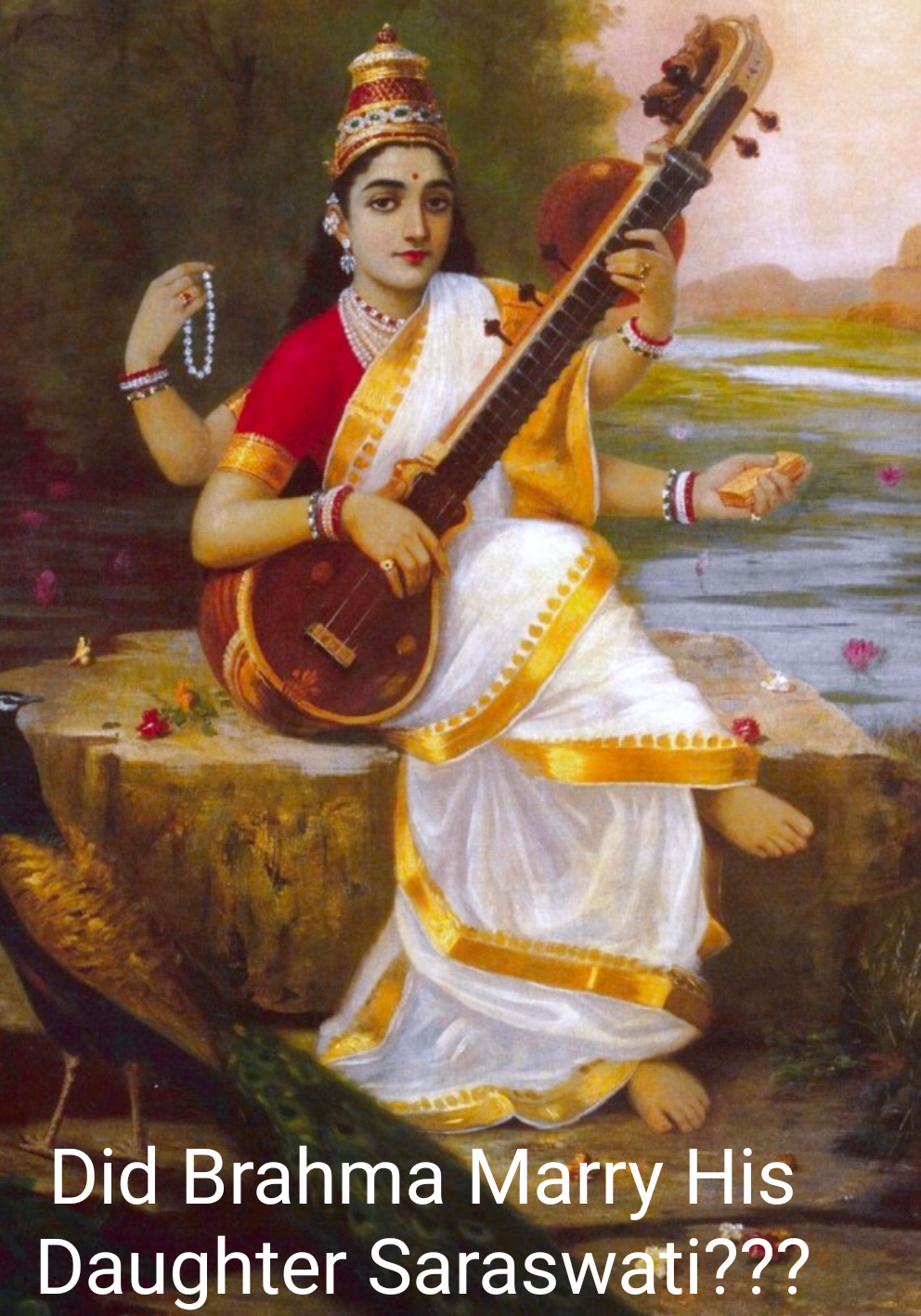
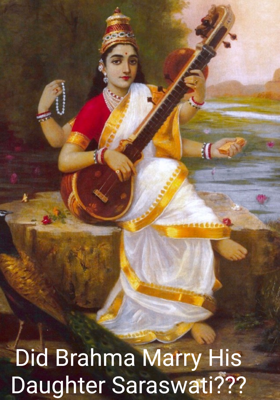
Did Brahma Marry His Daughter Saraswati???
Did Brahma Marry His Daughter Saraswati???

The weekly market at the edge of Bhanjapur Sasan was a place where everything met—grain and gossip, spices and suspicion, laughter and lingering grudges. Under the shade of an old banyan tree, two men had for years occupied the same patch of earth, one man's kerosene tins lined in neat rows, their voices often rising higher than the cries of vendors and the clatter of bullock carts.
One was known as Uncle Fakira( who sold his home grown vegetables)—a wiry, soft-eyed man with a white beard that seemed to carry the dust of many journeys. The other was Farid Khan, broader in build, quicker in temper, and sharper in tongue.
They had grown old arguing.
Their favourite battleground was religion.
“Tell me, Fakira,” Farid would say, leaning back against his tin drum, a mocking smile on his lips, “how can you worship the God who married His own daughter? This Brahma of yours—what kind of thing is that?”
The words, repeated often enough, had begun to echo beyond the marketplace. Boys in the village had picked them up, twisting them into taunts. On the other side, young men from the nearby Muslim village Faridabad had begun shouting slogans louder than necessary, as if noise itself were proof of faith.
For years, Uncle Fakira would simply smile, shake his head, and let the wind carry the words away.
But not this time.
That afternoon, the air was unusually tense. A group of boys from Bhanjapur Sasan stood nearby, whispering and snickering at the Muslim youths and elders.
A few young men from the neighbouring village Faridabad lingered at the edge of the crowd, their eyes watchful. Farid Khan, sensing an audience, raised his voice again.
“Look at this,” he declared, “these people speak of wisdom and knowledge, yet their stories are full of such things! Brahma and Saraswati—father and daughter had sex together—what kind of thing is this? You tarnish the image of Prophet Mohammed because he had accepted some helpless women as his wives? Paah, you stupid Hindus!"
This time, Uncle Fakira did not smile.
He stood up slowly, dusted his hands, and looked straight into Farid's face. His voice, when it came, was calm—but it carried edge.
“Farid,” he said, “you are not speaking from knowledge. You are spreading venom and causing a divide.”
The word hung in the air.
Farid frowned. “Venom ? I am only speaking the truth.”
“No,” Uncle Fakira replied, “you are repeating something you do not understand. And when ignorance speaks loudly, it divides hearts that have lived together in peace for centuries.”
The murmuring grew louder.
The boys drew closer.
Even the shopkeepers paused.
“You think Brahma was a man?” Fakira continued. “You think Saraswati was his daughter in the way humans understand it? That is your first mistake.”
Farid scoffed, but there was a flicker of uncertainty in his eyes.
At that moment, a young man stepped forward from the edge of the crowd. He was tall, composed, with a thoughtful gaze.
This was Jamal Uddin, Farid Khan’s son—a graduate, respected in both villages for his quiet intelligence.
“Abba,” Jamal said gently, “let him speak.”
Farid hesitated but said nothing.
Uncle Fakira nodded at Jamal, then turned to the gathering.
“Listen carefully,” he said. “Brahma is not a person sitting somewhere with a family like yours or mine. Brahma represents the creative consciousness—the source from which everything arises. Saraswati is not a daughter in the human sense. She is knowledge, wisdom, expression—the power through which creation becomes meaningful.”
He paused, letting the words settle.
“When the stories say Saraswati emerged from Brahma, it does not mean having sex and giving birth as we understand it. It means that knowledge arises from consciousness, just as sound arises from silence.”
A few of the boys exchanged glances.
This was not what they had expected.
Farid shifted uneasily. “These are just explanations to cover up—”
“No,” Fakira interrupted, still calm but firmer now.“It is you who are reducing the infinite to the size of your own understanding.”
A ripple passed through the crowd.
Before Farid could respond, another voice rose—this time sharper, younger.
“Enough of this shouting!” It was Jalal Uddin, Jamal’s younger brother. Unlike Jamal, Jalal was fiery, restless—but today, his anger was directed at the people of his own side.
He turned to the group of Muslim youths. “And you—what are you doing? Shouting ‘Allahu Akbar’ without understanding anything? Is that faith? Or is it noise?”
The young men looked taken aback.
“Do you think God is pleased with your shouting?” Jalal continued. “Or with your anger? Uncle Fakira is right—we are missing the point.”
He then turned towards the boys of Bhanjapur Sasan.
“And you—mocking another’s belief—what does that make you? Strong? Or small?”
The crowd fell silent.
Jamal stepped forward again, his voice steady. “Religion was never meant for this,” he said. “It was meant for inner transformation—to make us better, wiser, more compassionate.”
He looked at his father. “Abba, if we keep repeating such things, we are not defending our faith—we are harming others.”
Farid opened his mouth, then closed it.
For the first time, he had no ready reply.
Uncle Fakira continued, his voice now softer, almost like a teacher guiding a class.
“Every religion speaks of the same truth in different ways. Some call it Allah, some call it Brahman, some call it God. But the source is one.”
He picked up a handful of dust and let it fall slowly.
“From this One, everything comes. And to this One, everything returns.”
Jalal nodded.
“Exactly. And when we say Brahma and Saraswati are one, it means the creator and the power of creation are not separate. Just as in Islam, Allah is not separate from His attributes—His knowledge, His will, His mercy.”
A murmur of agreement rose from a few elders.
The boys, who had earlier been laughing, now stood quietly, their expressions thoughtful.
“One more thing,” Jalal added, his voice firm. “Brahma did not ‘marry his daughter.’ That is a misunderstanding—nothing more. The Almighty is not a human being bound by human relationships. These are symbolic truths, not literal events.”
Uncle Fakira smiled faintly.
“Yes,” he said. “We must learn to look beyond the surface. Otherwise, we will keep fighting over shadows.”
A breeze stirred the leaves of the banyan tree. For a moment, the market felt different—quieter, as if something had shifted.
Farid Khan sat down slowly on his wooden crate. He looked at his son, then at Fakira.
“I…” he began, then stopped.
Jamal placed a hand on his shoulder.
“It is not about winning an argument, Abba,” he said gently. “It is about understanding.”
From the back, one of the village boys spoke hesitantly. “Then… all these stories… they are not meant to be taken literally?”
Uncle Fakira turned to him. “Some are, many are not to be.But all of them point to something deeper. If you stop at the surface, you miss the truth.”
Another boy asked, “Then what should we do?”
Jalal answered this time. “Look within. That is where the real journey begins.”
He placed his hand on his chest. “The Almighty is not far away. He is here. In you. In me. In everyone.Don't be a fool and point to the sky calling the Almighty Uparwala!! Allah is omnipresent.There is place,no thing or being where the Almighty Allah is not present.Allah is invisible but present within every atom.Why,then, criticise the Hindu who worships images of gods and goddesses..?"
Uncle Fakira nodded. “Self-realisation—that is the goal. Not arguing over who is right or wrong.”
He looked around at both groups—the boys of Bhanjapur Sasan and the young men from the neighbouring Faridabad village.
“What will you gain,” he asked quietly, “by digging up the past and throwing it at each other? Will it bring peace? Will it bring understanding?”
No one answered.
“The past is a teacher,” he continued. “Learn from it. But do not use it as a weapon.”
Jamal added, “And discard what is superstition, what divides, what darkens the mind. Keep what uplifts, what unites.”
Farid Khan finally spoke, his voice lower than before.
“Perhaps… I spoke hurriedly,without thinking.”
"You are always in a hurry?"
Uncle Fakira smiled—not triumphantly, but with kindness.
“That happens to all of us,” he said.
The tension that had gripped the market began to dissolve. Conversations resumed, but in softer tones. The boys drifted away, no longer laughing. The young men stood quietly, some of them deep in thought.
Jalal and old Uncle Fakira sat together under the banyan tree, an unlikely pair bound by a shared understanding.
“You spoke well,” Fakira said.
Jalal shrugged slightly. “I only said what I needed to say.”
“And what did you understand?”
Fakira asked.
Jalal looked out at the fading light.
“That the truth is simple,” he said slowly. “But we make it complicated. We turn symbols into arguments, and arguments into divisions.”
He paused.
“But in the end… there is only the Eternal One.”
Fakira nodded.
“Yes,” he said. “And we are all part of That.”
As the sun dipped below the horizon, the market began to empty. The banyan tree stood silent witness to the happenings, its roots deep in the earth, its branches spread wide—like a reminder of unity in diversity.
Farid Khan packed his kerosene tins quietly that day. Before leaving, he glanced once more at Uncle Fakira.
There was no mockery in his eyes now.
Only thought was there in them.
And perhaps, the beginning of understanding.
In the days that followed, something subtle changed between the two villages. The arguments did not vanish completely—human nature rarely allows that—but they softened. The sharp edges were gone.
The boys of Bhanjapur Sasan no longer mocked what they did not understand. The young men from the neighbouring village no longer shouted to prove their devotion.
And under the banyan tree, Uncle Fakira and Jalal Uddin often sat together, speaking not of differences, but of truths that lay beyond them, beyond the visible world.They spoke of a unity that could not be broken by words.
Of a presence that could not be confined by names.
Of a truth that had always been there—
Waiting to be realised.
And in that quiet understanding, the old question lost its sting.
For those who had begun to see clearly knew:
Brahma or the Almighty did not marry His own daughter Saraswati.
The Infinite had simply been misunderstood because He had become two for the sake of the Creation.