Library

 Profile
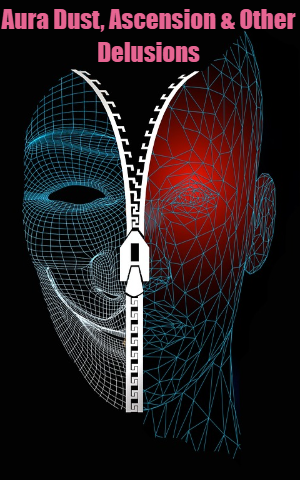
Aura Dust, Ascension & Other Delusions
Aura Dust, Ascension & Other Delusions

Aura Dust, Ascension & Other Delusions
Author: Andre Michael Pietroschek, all rights reserved
Disclaimer: No warranties!
Note: I had my share of video streamers, who were nothing but embodied toxic denial about their criminal motives and substance abuse issues (the overtly obvious sort at that). How can they still be afraid to lose their mainstream benefits, if they are oh so ready for a life of crime? 😉 Psychology has answers that they hate even more than this whistleblowing author! 🤣
The story begins:
“I assure you, the secret lies in the lighting, not the lens,” Elias declared, leaning intently over the tripod, his focus unwavering. “If we can wash out the background, that floating effect will transform into a genuine atmospheric anomaly, rather than mere fishing line.”
The living room resembled a vibrant chaos of ring lights, green screens, and the remnants of takeout meals strewn about. At the heart of this tumult stood a makeshift altar, crowned with a single, pulsating crystal that bore an uncanny resemblance to acrylic. They had spent the last three hours immersed in a spirited debate about the physics of a "spirit vortex," a concept they had whimsically concocted just twenty minutes prior to ensure their audience remained captivated. To an untrained eye, it might have appeared as a high-budget college project gone awry; however, for Elias and Marcus, it was the very blueprint for their burgeoning brand.
Marcus paced the rug's perimeter, tablet in hand. “The chat is already buzzing about the ‘ectoplasmic residue’ from our last stream. We need to deliver something memorable. A mere blur will brand us as frauds. But if we unveil a shimmering, translucent entity that seems to suffer from a mild case of indigestion, they may very well consider us visionaries.”
“The indigestion concept is pure gold,” Elias mused, adjusting a slider on his laptop. “It introduces an element of banal tragedy. People yearn for a ghost that resonates with them—not a terrifying demon, but a spirit yearning for relief, perhaps even a Tums.”
With a swift motion, he reached beneath the coffee table to retrieve a vacuum-sealed bag of iridescent powder, a high-grade hallucinogen that necessitated an intricate, illicit web of permits for distribution. This was their prized product—dubbed "Aura Dust"—which they discreetly marketed to a select group of affluent eccentrics through encrypted messages. The paranormal streaming served as the most ingenious marketing funnel they had ever crafted. By rebranding the substance as a “catalyst for spiritual awakening” and showcasing “evidence” of the beyond on Twitch, they had ingeniously transformed a perilous narcotics operation into a lifestyle brand for those yearning for spiritual fulfillment.
Suddenly, the doorbell rang, a sharp, jarring sound that sent both men into a moment of startled silence. Marcus froze, his gaze flicking to the security monitor. There stood a man in a beige suit, clipboard in hand, exuding a bureaucratic sterility that felt ominously formidable. He resembled an auditor from a mid-sized insurance firm or perhaps a detective whose allure was far from thrilling.
“Do not let your nerves betray you,” Marcus whispered, though he himself was a bundle of anxious energy. “Should he be with the DEA, we shall present our endeavor as ‘experimental aromatherapy.’ If he turns out to be the landlord, we will assert that the leak in the bathroom is, in fact, a localized temporal rift.”
Elias smoothed back his hair and opened the door with a wide, exuberant smile, one that he hoped conveyed enlightenment rather than guilt. The man in the beige suit remained motionless, his eyes unblinking, fixed on the ring lights reflecting in his glasses, his expression one of deep, weary confusion.
“Mr. Thorne?” the man inquired, his tone flat and monotone. “I’m Agent Miller from the Department of Regulatory Affairs. We received a tip regarding the unauthorized distribution of... well, the details were somewhat vague, but it mentioned ‘shimmering dust’ and ‘interdimensional gateways.’”
“Interdimensional gateways,” Elias echoed, his voice descending an octave into a rich, resonant tone. He stepped back, gesturing expansively toward the disordered living room. “Agent Miller, you have arrived at a most fortuitous time. We were just calibrating the threshold. Please, step inside. However, do tread carefully; the energy here is currently quite volatile.”
Agent Miller entered the apartment with the cautious demeanor of a man navigating a minefield, though his gaze remained glued to his clipboard. He overlooked the acrylic crystal and the ring lights, his focus instead drawn to a half-eaten pepperoni pizza perched atop a stack of “Ancient Sumerian” textbooks. His brow knitted not from suspicion, but from a profound, oppressive sense of inadequacy, as if he were a man trained to uncover fingerprints and forged passports, now thrust into the bewildering realm of metaphysical inquiry.
“The tip mentioned a substance,” Miller continued, his voice trailing off as he glanced at the iridescent powder resting on the coffee table. “A ‘catalyst,’ I believe was the term. My superiors are apprehensive that you are distributing an unregulated chemical compound under the guise of spiritual enlightenment.”
“A chemical compound?” Elias gasped, placing a hand dramatically over his heart, a gesture of choreographed indignation. “Agent Miller, I implore you. To label this as a ‘chemical’ is akin to calling the Mona Lisa a mere ‘collection of pigments.’ This is a vibrational conduit. It does not alter the chemistry of the brain; it merely... unlocks the door.”
Marcus, sensing the Agent’s uncertainty, moved forward, radiating supportive camaraderie. “We fully appreciate the government’s commitment to public safety. Truly. That is precisely why we offer the Dust only to those who have successfully navigated our internal spiritual vetting process. We would never consider providing a vibrational conduit to someone who is not vibrationally aligned; that would be like gifting a Ferrari to someone who does not believe in roads.”
Miller’s gaze lingered on the iridescent powder, a glimmering enigma that contrasted sharply with the stark guidelines on his clipboard regarding narcotics seizures. The rules outlined white powders, brown crystals, and translucent pills, yet here lay something altogether different—“vibrational conduits” that danced like liquid rainbows beneath the harsh studio lights. As he reached out to touch the bag, Elias deftly adjusted a ring light, casting a blinding glare that momentarily obscured Miller’s vision.
In that fleeting moment of disorientation, the steadfast resolve of the Agent faltered, giving way to an unsettling sense of vertigo. Instead of a mere drug dealer, he confronted a man radiating the unsettling charisma of a cult leader, amplified by lighting that suggested a production value far beyond the resources of the Department of Regulatory Affairs.
“The protocol for seizing an ‘unidentified vibrational conduit’ is conspicuously absent from my handbook,” Miller confessed, his voice echoing softly in the vast, cavernous living room. He squinted at the shimmering bag, allowing his curiosity to nudge at the edges of his training. “Is it... does it possess any actual properties, or is it merely a placebo for the affluent?”
“Ah, that’s a philosophical inquiry for another day,” Elias replied, his tone transforming into a soothing, melodic cadence. He stepped closer, bridging the distance between them with an air of intimacy. “But envision, Agent Miller, a reality where the bureaucratic clamor of your daily routine—the clipboards, the beige suits, the relentless paperwork—dissolves, leaving behind only the pure, radiant frequency of existence. Don’t you believe that our government could thrive with officials who genuinely *perceive* the energy currents of our cities?”
Miller hesitated, his finger suspended just inches from the iridescent powder. In that ephemeral moment, the sterile confines of his professional life collided with the vibrant absurdity surrounding him. He glanced at the “Ancient Sumerian” textbooks, then back at the luminous bag, finally locking eyes with Elias’s unwavering, entrancing gaze. The audacity of the proposition—that a government agent might benefit from perceiving “energy grids”—seemed to bypass his rational mind, landing squarely in a realm of profound curiosity.
“I... suppose there are precedents for cognitive enhancement within the field,” Miller murmured, his voice losing its prior bureaucratic authority. He surveyed the room anew, the ring lights now casting a halo-like glow that transformed the chaotic disarray into a deliberate sanctuary of enlightenment.
With the finesse of a seasoned negotiator, Marcus seized the opportunity. “Absolutely! This isn’t merely a recreational endeavor, Agent Miller. This represents a perceptual transformation—a means to discern the very architecture of reality itself.” He leaned in closer, his voice dropping to a conspiratorial whisper. “Between you and me, the Department of Regulatory Affairs is practically yearning for this kind of innovation. Imagine the reports you could craft if you could genuinely *map* the vibrational flow of a city’s infrastructure.”
Miller did not merely contemplate the offer; he seemed to surrender to it entirely. The steadfast demeanor of a government employee faded away, replaced by the weary slump of a man who had dedicated fifteen years to meticulously cataloging reports on industrial solvents, now confronted with the tantalizing prospect of a cosmic shortcut. He gazed at the iridescent powder, then at the unyielding expression of the clipboard, and finally at the two men who were essentially offering him a high-priced illusion, elegantly packaged within a New Age brochure.
“If I were to... partake in this for the sake of an internal feasibility study,” Miller murmured, his eyes flitting toward the door as if he feared the Department of Regulatory Affairs were eavesdropping through the keyhole, “would that be deemed an official seizure or merely a private consultation?”
Elias smiled brightly, his thoughts already racing to envision the profit margins. “A consultation, Agent Miller. A spiritual audit, if you will. We wouldn’t want to burden your department with the tedium of formal seizure paperwork before we establish a baseline for your awakening.”
Elias refrained from reaching for the bag; that would imply a mere transaction. Instead, he guided Miller toward a velvet-draped chair, reminiscent of something salvaged from a long-vanished opera house. With a flourish, he produced a small, ornate silver spoon—an exquisite trinket, perhaps unearthed from a thrift store—and carefully measured a delicate pinch of the shimmering powder.
“The essence, Agent Miller, lies in the intention,” Elias whispered, his voice transforming into a soothing, hypnotic cadence. “Do not perceive this as a mere substance. Envision it as a key, turning a lock that has remained rusted shut since the dawn of the Bronze Age.”
Miller leaned forward, his nostrils flaring with anticipation. As he inhaled the dust, his eyes widened, and for a fleeting moment, he resembled a man who had just glimpsed the blueprints of the universe. In truth, the high-grade hallucinogen was performing its familiar dance: blurring the room's edges and transforming the ring lights into ethereal crowns. He blinked slowly, his gaze drifting toward the acrylic crystal on the altar, which now pulsed with a profound, cosmic violet light.
“Do you perceive it?” Miller whispered, his voice echoing as if from the depths of a well. “The... the geometry of the air. It’s in flux.”
Marcus exchanged a quick, triumphant glance with Elias. The "vibrational conduit" had gripped Miller with surgical precision. No longer merely an agent of the state, he had become a traveler in a neon-lit realm, his critical faculties dissolved by a meticulously calibrated dose of synthetic euphoria. He reached out with a trembling hand, attempting to grasp a floating mote of dust that, in his altered state, likely appeared as a shimmering fragment of a long-lost civilization.
“It’s the alignment, Agent,” Elias murmured, stepping closer to whisper in Miller's ear. “You are witnessing the convergence of the mundane and the metaphysical. Most individuals navigate their lives blind to this truth. Yet you, my friend, possess a natural affinity for the unseen.”
Miller's conviction transcended mere belief; it coursed through him. The beige suit, once a protective barrier against the tumult of life, now clung to him like a suffocating second skin he yearned to cast aside. He glanced at his clipboard—the once-sacred manuscript of his profession—and perceived it no longer as a collection of regulations, but as a mere assemblage of meaningless marks upon a lifeless sheet of paper.
"I can see the grid," Miller breathed, his head tilting slightly in awe. "The lines... they connect the lamps to the ceiling, and the ceiling to the stars. Everything is... synchronized."
"Exactly," Marcus affirmed, leaning closer. His voice resonated with the calm assurance of a seasoned guide navigating a novice through a bewildering landscape of enlightenment. "Synchronization is the essence of our endeavor. Now, envision how much more impactful your reports could become if you could recognize that same harmony within your departmental workflows. The government doesn't require more auditors, Agent Miller. It yearns for *visionaries*."
Miller exhaled softly, a tremor of realization coursing through him as his gaze fixated on a ring light that drifted through his perception like a comet in slow motion. He remained blissfully unaware that Elias had discreetly adjusted the tripod to illuminate his face with the perfect celestial glow. The Agent’s mind, typically an orderly repository of protocols and regulations, had flung wide open, leaving him susceptible to the transformative vision that only the most astute of guides could offer.
"A seer," Miller murmured, the word resonating with the electric taste of potential. "For twelve years, I’ve chronicled the failures of others to adhere to guidelines. I’ve never... I’ve never glimpsed the grid."
"That is because they have kept you shrouded in darkness, Miller," Elias replied, his tone enveloping him like a warm, paternal embrace. He placed a reassuring hand on the Agent's shoulder, not to confine him, but to ground him in this extraordinary moment. "The Department of Regulatory Affairs exists in shadows. Yet here, within this sanctuary, we can guide you to refine this newfound vision. You are no longer merely an auditor; you are an explorer of the perceptual frontier."
The metamorphosis from government agent to spiritual seeker unfolded not in a sudden blaze of insight, but through a series of gradual, shimmering revelations. Over the ensuing weeks, Miller’s visits to the apartment transitioned from covert investigations to scheduled "alignments." He relinquished the beige suit, donning oversized linen shirts and a beaded necklace that Elias had convinced him to purchase for triple its value, claiming the stones were sourced from a dormant volcano in the Andes.
However, the Department of Regulatory Affairs was unaccustomed to its agents evaporating into a haze of "perceptual transformations." Miller's supervisor, a man named Henderson whose demeanor embodied the very essence of a filing cabinet, began to observe a troubling shift in Miller’s reports. The prose had evolved from sterile documentation to exuberant poetry. A report on an unauthorized warehouse of industrial solvents had somehow transformed into a twelve-page exploration of the "fluidity of material existence" and the "spectral dance of chemical vapors."
"He’s experiencing a significant breakdown," Henderson lamented during the departmental meeting, his gaze fixed on a photograph of Miller, whose blissful vacancy was accentuated by a crisp linen shirt. "This appears to be a psychotic episode, catalyzed by overwhelming occupational stress. We must dispatch a team to the address noted in his last—and most disjointed—memo. It is imperative that we secure him in a facility before he attempts to 'align' the city’s sewage system."
On a Tuesday afternoon, the "recovery team" made their entrance—a duo of weary paramedics accompanied by a social worker whose weary expression suggested she had already envisioned the report for Miller’s involuntary commitment. Rather than knock, they announced their presence with a series of commanding shouts, a jarring contrast to the serene, incense-laden atmosphere that Elias and Marcus had so painstakingly cultivated that morning.
Inside, the living room had undergone a transformation. Ring lights were artfully arranged to cast a "heavenly glow" around a central lounging area where Miller sat, cross-legged, humming a frequency that Elias claimed could alleviate mild insomnia. He did not flinch at the intrusion; instead, he lazily turned his gaze toward the newcomers, his eyes glazed with a blend of synthetic bliss and profound conviction.
"Behold," Miller intoned softly, gesturing limply toward the iridescent powder scattered artistically across a mahogany tray. "The visitors have arrived just as the veil thins. Can you feel it? The bureaucratic static of the street clings to your auras like damp wool."
The social worker, a woman named Sarah, whose patience had been worn thin by a decade of navigating genuine crises, did not concern herself with the aura of her attire. Instead, she focused on the iridescent powder before her, then glanced at Elias, who was draped in a silk kimono, his expression steeped in profound spiritual disappointment.
"Mr. Miller, we have come to escort you to a facility where you can receive the professional care you need," Sarah stated, her voice a steady line of professional neutrality. She hesitated at the threshold, instinctively wary of the incense-choked air and the way Marcus subtly adjusted a ring light to create a shimmering halo effect behind Elias.
"Care?" Miller questioned, his voice airy and distant. "I have never felt more cared for. I am in the midst of transitioning from a state of administrative bondage to one of vibrational autonomy."
"Vibrational autonomy" was a term Sarah had yet to encounter in her training manuals, but it fit snugly into the category of 'manic delusions' she had witnessed countless times. She signaled the paramedics to advance. As they approached, Marcus stepped forward—not with aggression, but with a look of heartbreaking concern.
"Please, approach him gently," Marcus implored, his voice quivering with a rehearsed sincerity. "He is currently navigating a delicate psychic realignment. To jolt him back into the three-dimensional plane too abruptly could result in a spiritual embolism. He requires a gradual descent."
The paramedics, two men seasoned in extracting unconscious individuals and diabetic shock victims from cramped studio apartments, exchanged glances of uncertainty. They might not have understood a spiritual embolism, but they recognized that the man in the linen shirt was currently entranced by a floating speck of dust as if it were a divine revelation. With little ceremony, they lifted Miller from the velvet chair. He offered no resistance; instead, he seemed to float in their grasp, his expression one of pity for the "unaligned" souls who had come to rescue him.
As the door clicked shut, sealing away the ambient hum of Miller’s serene existence, Elias allowed the facade of spiritual guidance to fall away. He released a long, slow breath, leaning against the tripod, his demeanor shifting from that of an enlightened guide to an exhausted entrepreneur.
"A spiritual embolism," Marcus murmured, a grin spreading across his face. "That was sheer brilliance, Elias. I almost found myself believing it."
"The key lies in intertwining medical terminology with metaphysical concepts," Elias replied, casting a glance at the iridescent powder still glimmering on the mahogany tray. "It creates a cognitive dissonance in the authorities. They are left to ponder whether we are dangerous criminals or merely profoundly mentally ill, leading them to default to the simplest solution: removing the individual while overlooking the architects behind the scene."
"The elegance of the 'psychotic break' narrative," Elias continued, plucking a stray piece of pepperoni from the coffee table, "renders us invisible. To the state, we are not kingpins; we are simply the eccentric roommates of a man who has lost his grasp on reality. We are not suspects; we are bystanders to a tragedy."
Marcus was already engrossed in his tablet, fingers dancing across the screen. "The viewership is surging. Someone leaked a clip of the 'intervention'—or at least, the moment you informed the paramedics about the spiritual embolism. The chat is ablaze. They’re dubbing it 'The Great Descent.' People are literally clamoring for the Dust now, believing it to be the only means of surviving the 'collapse of the three-dimensional plane.'"
Elias contemplated the ring lights, then the vacuum-sealed bags of iridescent powder hidden behind a faux-leather screen. The operation had evolved organically, fueled by the desperation of those who found traditional religion too slow and modern medicine too sterile. By marketing a drug as a spiritual tool, they had deftly sidestepped the stigma of addiction, replacing it instead with the allure of "ascension."
The end