Library

 Profile
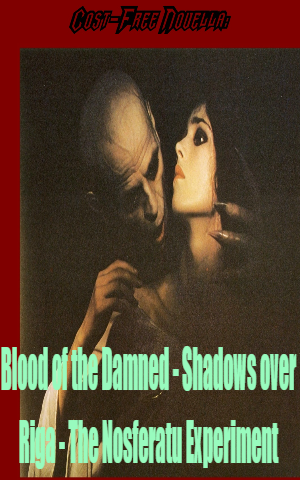
Blood of the Damned - Shadows over Riga - The Nosferatu Experiment
Blood of the Damned - Shadows over Riga - The Nosferatu Experiment

I start this with a well-meant warning: This is a raw, first draft edition, as my failed sales made me not, or not yet, apply further corrections or fixes that reviewers already made me consider good ideas! I published it in a mindset, due to real life cardio problems, that smarter folks can contemplate by the idiom `Birds sing, because they have survived the night!´
Blood of the Damned - Shadows over Riga - The Nosferatu Experiment
© Andre M. Pietroschek, all rights reserved (Storymirror, E-stories & Royal Road)
Disclaimer: No warranties!
Latvian Proverb: "Skopais maksā divreiz." Translation: "The stingy one pays twice."
This proverb warns against being overly frugal or cheap, as it often leads to higher costs in the long run.
Chapter 1: The Risky Summons
The forest exudes a pungent mix of decay and iron. Autumn in Latvia embodies both the crumbling leaves turning to mulch and the haunting echo of blood. Not her blood, she reassures herself. Not yet.
Footsteps trail her relentlessly, six kilometers or perhaps twelve. Time bends and warps as she runs.
Her name is Elina, given in Riga thirty-four years ago by her mother. Three weeks ago, an irresistible invitation arrived, with her name written in careful calligraphy.
"Your presence is requested for a gathering of significant consequence. October 21st through October 23rd. Suduva Manor, outside Riga. All arrangements provided. You have been selected because you understand something others do not."
No signature adorned the letter. The postmark and stamp bore a Latvian origin.
For three days, she researched Suduva Manor. It was a pre-war estate between Riga and the coast, its records tracing to the 1930s. No recent history. No public presence.
She reached out to two friends. Both urged her to reconsider. One claimed it might be a scam preying on unsuspecting professionals, while the other hinted at something darker, leaving the implications unspoken. Yet, Elina felt an undeniable pull. She recognized that being chosen wasn't manipulation; it was acknowledgment. Someone knew her.
On October 20th, she departed Riga. The drive spanned ninety minutes, transitioning from urban sprawl to agricultural land and then into the dense forest. Autumn had deepened, trees shedding their colors like weary souls. She arrived at the manor gates as the afternoon light turned a metallic hue, joining seventeen others in the entrance courtyard.
That was three days ago.
Now, branches lash at her face; her left cheek stings where bark has pierced her skin. She refuses to slow down. Slowing equates to death. This certainty courses through her, an instinct buried deep within, though words elude her.
Behind her: footsteps, shouts, voices in a language that could be Latvian or Russian. Multiple pursuers. At least three, possibly more. Their noise betrays their confidence—they believe she cannot escape. The forest, they think, will deliver her, or she will collapse, and they will simply claim her.
Elina has never been hunted before, but she understands it instinctively, from a primal place that predates her existence.
The realization jolts her, causing her to stumble.
A root, perhaps. Or the thought itself, ensnaring her awareness. She steadies herself against a birch trunk, its rough bark grounding her, and pushes forward. The footsteps behind her falter, sensing the disruption. They quicken their pursuit.
Elina matches their speed.
The mansion courtyard had once smelled of rain mingled with the scent of old stone. The woman who welcomed them—though no one had yet named her as such—was precise, elderly, her Eastern European accent wrapping around careful English. She had known their names before they introduced themselves, revealing personal details that hinted at reconnaissance. She fed them, provided rooms, and allowed them to mingle, leaving them puzzled about their invitation.
Twenty guests—Elina had counted, searching for connections among them.
Most were in their thirties or forties. A blend of nationalities, chiefly Eastern European: Polish, Latvian, Lithuanian, alongside one American, one British, and one with an accent she couldn't place. They arrived as strangers, yet within the mansion, they began to recognize a shared resemblance—similar bone structures, heights, and nervous tics.
On the second evening, the woman who introduced herself as Magdalena had observed, "We vaguely look alike." Not a question, but an acknowledgment. "At least some of us. It's uncanny."
That was when the windows shattered inward.
The glass exploded with deliberate fury, a harbinger of chaos. Gunfire rang out, a strange sound muted by the mansion's stone walls. Screams erupted. The keeper stood in the doorway, unmoving, as if anticipating this breach.
Elina fled. The decision to run was instinctive; she understood that halting meant death. She darted toward the rear of the house, heading for the kitchen and then the service entrance. Gunfire echoed behind her, mingled with the cries of two men and one woman. She heard Magdalena's voice, pleading in Polish.
She had not paused to check if anyone else had escaped.
The forest has transformed. The trees crowd closer, denser. The fading light signals late afternoon, or perhaps even later. She has run for two hours, her legs now moving beyond pain into a mechanical rhythm of muscle memory. Her breath comes in ragged gasps, vision narrowing, periphery darkening, a somber realization settling in: this is what dying feels like from within.
Yet she forces her awareness to expand, seeking landmarks and possibilities.
To her right, the forest continues. To her left, the glimpse of a road—a thin line of civilization slicing through the trees. She cannot discern if it is the road she arrived on or another leading elsewhere. The world has become unfamiliar.
But roads lead to destinations. Destinations lead to towns. Towns may offer safety.
She veers left.
The transition from forest to roadside is abrupt. She stumbles down a gentle slope and emerges onto the asphalt, gasping for breath. The road stretches empty in both directions, the afternoon light bathing everything in amber and shadow. She glances back at the forest.
Three figures emerge between the trees. Dark clothing. At least one person is brandishing what appears to be a rifle. They move with the precision of seasoned hunters.
She turns left and sprints.
The road, newer than the encroaching forest, is surprisingly well-maintained. She runs for three minutes—maybe five—before spotting a vehicle. A truck, parked on the shoulder, facing away from Riga. Its engine hums, and the driver's door stands ajar. Someone moves near the cab.
She does not slow.
The driver looks up, locks eyes with her, and makes a choice. An older woman, likely Latvian, appears torn between running away and confronting the situation.
"Help," Elina gasps, the word tearing from her throat. "Please. Help!"
The woman glances back at the forest. The pursuers are visible now, fifty meters away, weapons in hand, advancing toward them both.
With resolve, the woman jumps into the truck, reaching across to open the passenger door.
"Get in. Now."
Elina leaps inside. The woman accelerates before the door fully closes. The truck lurches forward, tires gripping the asphalt. In the side mirror, Elina watches the figures fade into the distance. They shout, but the engine drowns their voices. One raises the rifle. A shot rings out, and the rear window shatters.
The driver remains unfazed, pressing harder on the gas. The truck speeds past the outskirts of a town, a mix of Soviet-era buildings and modern conveniences. She drives straight through, never slowing down. Only when they have distanced themselves from the forest does she finally speak.
"They were hunting you."
Not a question, but a statement, much like Magdalena's earlier observation.
"Yes."
"What did you do?"
Elina struggles to articulate her thoughts. What had she done? She attended a gathering, drawn in by mystery. She spent seventy-two hours bewildered and terrified by strangers she could not comprehend. And then she ran.
"I don't know," she admits.
The woman driving nods, accepting this. She reaches over to close the passenger door, which had been swinging open, and drives in silence toward Riga. The sun descends toward the horizon, and city lights gradually emerge, then bloom into view. Elina realizes she is alive, though the meaning of survival eludes her. Behind them, in the truck's mirror, the forest slips from memory. Ahead, the city rises like a beacon of safety.
Yet, deep within her muscles, her blood, her unspoken genetic code, something stirs. Something pursued by three armed figures continues to flee. An inherited instinct warns her that more hunters are on the way, and Riga is not a sanctuary, but merely the next danger zone.
Chapter 2: The Invitation
On a Tuesday in early October, the invitation found its way to Lukas via an email sent to the personal address he reserved solely for art commissions. Its arrival startled him; he had taken great care to keep this address private, sharing it only with three trusted clients.
The subject line remained empty, while the body of the message read:
"Your presence is requested for a gathering of significant consequence. October 21st through October 23rd. Suduva Manor, outside Riga. All arrangements provided. You have been selected because you understand blood differently than most. Bring nothing. Expect everything."
Lukas read the email three times before he deleted it. But the pull of its words compelled him to recover it from the deleted folder, and he read it once more.
The phrasing felt deliberate and intimate, implying a deep understanding of him—not the public persona of Lukas, the art restorer and conservator for Riga's museums, but the private Lukas who had a profound connection to blood.
He often painted with it, utilizing old animal blood sourced from butchers, meticulously prepared and mixed with oils to achieve unique pigmentation. This ancient technique, favored by Renaissance masters, infused his work with a depth that modern synthetic pigments could never replicate. Viewers responded viscerally to his art, often unable to articulate the reason for their emotional reactions.
Only those clients aware of his unconventional methods returned to him, while others sensed an underlying danger in his work and sought safer alternatives.
Lukas stared at the email, contemplating its implications, and made a decision that surprised even himself: he accepted the invitation.
For Dārta, the invitation arrived as a physical letter, delivered to her apartment in the suburbs of Riga. As a translator fluent in Latvian, English, and occasionally Polish, she recognized the expensive cream-colored envelope adorned with her name in elegant calligraphy.
She opened the letter in her kitchen, cradling her morning coffee, now cooling in her hand. The text was succinct yet sophisticated. It hinted at familiarity without revealing specifics, suggesting a recognition that tugged at her heart.
For two long years, Dārta had lived in solitude since her father's passing—a painful, drawn-out illness in a Riga hospital followed by a profound silence. She had continued to work and exist, moving through life with mechanical precision, functioning at the bare minimum. The invitation felt like a voice breaking through her isolation, offering a glimmer of hope that someone had noticed her absence and was extending a possibility.
She dialed the number listed at the bottom of the invitation, and an elderly woman with an Eastern European accent answered, clearly expecting Dārta's call.
"Will you come?" the woman inquired.
"I don't know you," Dārta replied.
"Not yet," the woman acknowledged. "But when you arrive, you will recognize something. Others will, too. You will not be alone."
Dārta found herself accepting.
For Alexei, the invitation arrived through an unexpected contact in a bar in central Riga, where he often sought solace. This man was unfamiliar, precise, and exuded an unsettling knowledge about Alexei that he had worked hard to conceal.
"There's a gathering," the man stated. "Outside the city. Three days. It's for people like you."
"What do you mean, people like me?" Alexei asked, intrigued but skeptical.
"People with unfinished business. People waiting for something without knowing what."
The man handed over a card with the details: Suduva Manor, dates, and a request for confirmation.
Though Alexei chose not to respond immediately, he kept the card tucked away. He continued with his routine—working a construction job to finance other pursuits, maintaining connections in Riga's criminal underbelly that provided an unarticulated sense of purpose. Yet, he felt an ever-present awareness that he was destined for something greater.
On the morning of October 21st, he packed a small bag and set out for the address.
For Kata, the invitation was silent yet powerful. Upon arriving at the Riga bus station, she found a taxi waiting, the driver holding a sign with her name. She hadn't called for a taxi, nor had she made any arrangements. Yet, her daughter in London had urgently insisted just days earlier.
"There's a gathering," her daughter had said. "Outside Riga. October 21st. You need to go."
"How do you know about this?" Kata had asked.
"I just do. I woke up thinking about it. I keep dreaming about a place. A manor. It's important, Mum. You have to go."
Though Kata had been skeptical of her daughter's dreams, she knew from experience that her daughter's intuitive insights had always been spot-on. So, she traveled from London to the bus station in Riga, arriving to find the taxi waiting, as if guided by an unseen hand, instinctively following a script she had never read but somehow knew by heart.
Twenty individuals arrived, each in their own manner, at different times, from various locations—Poland, Lithuania, Sweden, Latvia, London, Berlin, Dublin, and New York.
They were strangers, yet an unspoken recognition flickered in their eyes.
It wasn't overt, nor easily articulated, but when Elina spotted Lukas in the entrance courtyard of the mansion, an inexplicable pull drew her toward him. It wasn't attraction; it was recognition—a sense that they shared something deeper, perhaps genetic or spiritual, a connection that transcended conscious understanding.
The keeper welcomed each arrival with a consistent warmth. She knew their names and understood that many had traveled great distances. She sensed that they had accepted the invitation almost against their will, as if the decision had been inevitable, even for those who initially hesitated.
"Welcome," she greeted each newcomer. "You have been cautiously selected. There are nineteen others like you, and by tomorrow, you will understand why. For now, please settle in. There is food, there are rooms, and there is time enough for the revelation."
What revelation? They whispered among themselves in the corridors and gathered in the library, striving to comprehend their shared circumstance.
Magdalena, hailing from Warsaw, was the first to voice an observation. "We look alike," she stated, gathering several of them together on the first evening. "Look at us. We share features—height, bone structure, something in the eyes. How is that possible if we are strangers?"
"Chance, for I will not accept Nazi experiment sermons!" Thomas, a history professor from Dublin, countered, accustomed to rational explanations. "Physical similarity is statistically inevitable across any sufficiently large population."
"Twenty people from across Europe don't randomly assemble with identical features," Magdalena asserted. "This isn't a chance. This is design."
They exchanged glances, and her words resonated with undeniable truth. They were alike in ways that transcended coincidence, enough to suggest a shared lineage. If arranged in a photograph, they could easily pass for members of a family.
By the second evening, discussions of genealogy emerged. By the night of the second day, they began to articulate a question that lingered unanswered:
What bloodline connects us?
And then, without warning, the windows shattered inward.
Chapter 3: Before
Occupation Record, Archives of the Latvian Institute of History, dated October 1941:
In October 1941, the records reveal that Leonid Suduva, a nobleman born in 1898 at Suduva Manor, has been earmarked for the requisition of properties and assets. Initial reports indicate his voluntary cooperation with the provisional Soviet administration. His main residence, Suduva Manor, remains under his ownership due to arrangements made with local authorities. Continued vigilance is advisable to monitor any potential counter-revolutionary activities.
Testimony of Ilga Gruntaine, recorded 1995:
My mother was just fourteen when the soldiers arrived. She hailed from Poland, and her family had moved to Riga in 1930 in search of work. The arrival of the Russians plunged everything into chaos. People faced deportation, and escape routes vanished as the border closed. My mother's family found themselves trapped in Riga.
In the winter of 1941, they took her to Suduva Manor. She was not alone; alongside her were Polish girls, Latvian girls, and Russian girls whose families had fled from various territories. The nobleman, Suduva, selected us. We never grasped his reasoning. Perhaps it was our foreignness, our vulnerability. Perhaps it was simply his choice.
Within a month, my mother found herself pregnant. At fourteen, she lacked understanding of what awaited her. When the reality dawned on her, she attempted to take her own life, using glass from the manor kitchen to cut her wrists. The servants discovered her and staunched the bleeding. She endured the pregnancy.
I entered the world in 1942. My mother lived until 1985, yet she never spoke of that pregnancy, the manor, or the man. I learned to ask questions with caution, crafting them in ways that allowed her to respond without fully confronting the truth.
He vanished in 1943. Official records indicate arrest by Soviet authorities, but whispers among the women told a different tale. They spoke of transformation, of something beyond humanity that arose from the blood of the girls he had used.
My mother understood that I came from violence. Yet she also sensed something else within me, a quality she could never articulate. She remarked that sometimes, I carried an unusual scent. Not bad, but wrong. Like a blend of wolf and bird, and something nameless.
I struggled to comprehend her words until I matured and began to recognize the essence she had sensed. The instinct that could detect blood from afar. The presence that stirred discomfort in others, an unease they could not express.
That essence came from him.
Birth Records, Suduva Manor Archives, 1941-1943:
Marija Kalnins, born March 1942. Mother: Anna Kalnins (age 14). Father: recorded as "nobleman, local proprietor." Birth weight: 4.2 kg. Observations: notable eye pigmentation (golden); heightened olfactory sensitivity (noted by physician as "perhaps mythological").
Dace Volks, born May 1942. Mother: Kristine Volks (age 16). Father: recorded as "noble patron." Birth weight: 4.1 kg. Observations: infant displays exceptional strength; abnormal sensitivity to sunlight (excessive photosensitivity).
Aleksandr Petrovich (no surname recorded), born August 1942. Mother: unknown, listed as "T" (records incomplete). Father: "Lord S-" (records obscured). Birth weight: 4.3 kg. Observations: born during night hours. Mother did not survive. Cause: "excessive hemorrhage, unusual coagulation patterns."
(And many more. Numerous entries indicate births between March 1942 and December 1943. Each mother ranged from fourteen to twenty-three years old, with observations of remarkable physical traits, heightened olfactory sensitivity, muscular development, pigmentation anomalies, and light sensitivity.)
Genealogical Chart, compiled by Archive Keeper, circa 1980-2024:
First Generation (1942-1943): Ten documented births from Suduva Manor. Only seven reached adulthood. Three perished in infancy or early childhood; causes varied from infection to sudden cardiac arrest. These unusual deaths suggest genetic vulnerabilities or a supernatural burden from the inherited bloodline.
Second Generation (1960s-1970s): Twelve documented births from first-generation parents, all reaching adulthood. Each exhibits similar traits: distinctive eye pigmentation, heightened sensory perception, and instances of extraordinary strength or agility. Many report shared dreams or inherited memories, as recorded by the previous archive keeper.
Third Generation (1985-2000): Eighteen documented births, all reaching adulthood. They display the characteristics of the second generation and share a compelling pull toward specific locations, particularly Riga and Suduva Manor, without any conscious reasoning.
Fourth Generation (2000-2010): Twenty individuals born across Europe, children of second or third-generation parents. These individuals represent the current gathering, invited to Suduva Manor in October 2024, as they possess the potential to comprehend their genealogical legacy.
Letter, dated September 2024, written by Archive Keeper to her predecessor:
Dear Agnese,
Though you have been gone for five years, I find myself compelled to write to you, even knowing these words cannot reach you. I must share my intentions.
I will summon the fourth generation. Those born to parents who understood their legacy, who tried to escape it yet could never fully break free. They scattered across Europe, distancing themselves from Latvia and the weight of occupation and transformation.
I will bring them back to Suduva Manor. I will reveal their true selves.
You might deem my actions cruel, cautioning me that knowledge can be a burden, that ignorance may serve some better. You always exercised caution, maintaining this archive for forty years without once suggesting we reach out to the bloodline survivors. You believed the knowledge was too perilous, that the bearers were unprepared.
But you are no longer here, and I have grown old. After two decades of maintaining this archive, I now believe that knowledge, however daunting, is essential. The bloodline will endure, whether we acknowledge it or not. It is far better for them to understand rather than wander through life unaware of their true capacity.
They must come to Suduva Manor, read the records, hear the testimonies, and embrace their identity. It is better to confront the unknown than to live with an unnameable yearning.
I am seventy-three, and you were ninety-two at your passing. I cannot predict whether I will witness the consequences of my actions. Yet, I can no longer endure the silence, nor can I bear to see the descendants of this bloodline pass through life haunted by an inheritance they refuse to acknowledge.
I will summon them. I will unveil the truth. And if that truth brings danger, then so be it; danger is part of the inheritance as well.
I hope you can forgive me.
Yours in archival dedication and remembrance,
Daina
Scientific Documentation, DNA Analysis, conducted 2000-2024 by private research organization (identity obscured, likely university-affiliated or privately funded):
Subject Pool: Eighty-seven individuals, all recognized as genetic descendants of Leonid Suduva through various mothers and generations.
Key Findings:
1. Genetic Marker Consistency: All eighty-seven subjects share specific genetic markers absent in any other known human population. These markers appear dormant, expressed minimally in the first and second generations but increasingly active in the third and fourth generations.
2. Marker Function: Unknown. The marker does not align with any recognized protein-coding sequence. Its function may be epigenetic or regulatory, indicating dormant capabilities not yet fully realized in living subjects.
3. Phenotypic Expression: All subjects report heightened sensory acuity (smell, night vision, proprioception). Many recount experiences of inherited memory or shared dreams, with several noting unusual strength or agility during adolescence or young adulthood.
4. Speculative Hypothesis: The genetic marker may represent vestigial vampire genetics inherited from Leonid Suduva at the time of his transformation. Should the transformation be biological rather than solely supernatural, this genetic material would persist in descendants. The expression observed in later generations might indicate a gradual activation of these dormant traits.
Note: This hypothesis remains speculative. It serves to highlight that multiple researchers have independently proposed supernatural explanations for the genetic data. A rational explanation may suggest that the genetic marker signifies an unknown, yet mundane, variation within the human population.
Conclusion: Further investigation is imperative. Recommend reaching out to fourth-generation subjects for participation in a longitudinal study.
Photograph, dated 1938, found in Suduva Manor archives:
A man stands confidently in the courtyard of the manor, appearing around forty years old. His face, with high cheekbones and pale eyes, is neither remarkably thin nor particularly striking. He dons formal attire befitting his era, while behind him, the manor stands proudly, showcasing its pre-war architecture.
On the reverse, a date reads: "1938. L.S., before."
A second photograph, dated 1943, reveals an unclear image. It has been intentionally damaged, as if someone sought to erase the subject. Only the courtyard remains recognizable, while the figure that might be a man blurs into obscurity.
On the back: "1943. L.S., after. Do not look directly."
Chapter 4: The Arrival
As Elina approached Suduva Manor, the gate swung open, welcoming her into a world woven with history. She had journeyed from Riga to the quaint town of Sigulda, transitioning from the bustling city to a serene forest through a taxi ride that felt like a passage through time. The landscape transformed gradually, shifting from suburban edges to sprawling agricultural fields, finally giving way to a dense forest that enveloped the road like a sacred passage.
Suddenly, the manor emerged from the trees, a striking pre-war structure that bore the marks of Swedish and Latvian architectural influences. Built from stone, it rose multiple stories high, its shuttered windows hinting at secrets within. The gardens, once meticulously cared for, now flourished in a wild yet enchanting manner.
It was beautiful and unsettling—a place steeped in history that resonated deep within her, though words eluded her.
As she parked, two other arrivals stood in the courtyard. A woman from Poland, Magdalena, would later introduce herself, and a man whose accent hinted at Eastern European roots. Their eyes met, each reflecting the silent acknowledgment of strangers brought together by fate.
By evening, the gathering swelled to seventeen, and by noon the following day, it reached twenty.
Daina, the manor's keeper, greeted each guest warmly. In her seventies, with white hair and graceful movements, she embodied both age and practiced precision. Having lived in Latvia long enough for its language to be her first, she welcomed each visitor with a warmth that felt both genuine and carefully orchestrated.
"You have been chosen with care," she addressed the assembled group. "There are reasons for your invitation, reasons that will become clear before your departure. For now, I ask for your patience and trust."
Curiosity buzzed among the guests, each brimming with questions. Daina answered some while deftly sidestepping others. She confirmed their selection from a wide pool of potential candidates but revealed little more.
The manor enveloped them in comfort. Spacious rooms housed substantial beds, and the meals—Latvian traditional dishes alongside contemporary delights—nourished both body and spirit. The extensive library and elegantly curated common rooms whispered of significance, inviting them to delve deeper into their shared experience.
As night fell on the first day, the guests began to notice their striking similarities.
Magdalena, from Warsaw, initiated the conversation in the library, gathering a small group around her. "Look at us," she urged. "We bear a remarkable resemblance. Similar height, bone structure, pigmentation—like distant cousins."
"It's statistically plausible in a large population," Thomas from Dublin argued rationally.
"Twenty individuals from across Europe don't randomly assemble with such identical features," Magdalena countered, her voice firm. "This is deliberate. This is intentional."
By the second evening, genealogy consumed their discussions. They sought connections, tracing family trees and shared ancestry. Some discovered Latvian heritage, while others unveiled Polish or Swedish roots. Yet, as they delved further back in time, the records grew murky.
Despite their diverse backgrounds, each guest shared a link to Latvia—Latvian heritage, parents with ties to the land, or ancestors whose histories hinted at Latvian origins before the devastation of World War II.
Their curiosity drove them to Daina with direct questions.
"Why have we been summoned?"
"What binds us together?"
"Are we somehow related?"
With a gentle smile, Daina replied, "Patience. One more evening. By tomorrow afternoon, clarity will arrive."
That night, Elina observed something intriguing. Several guests reported similar dreams—fragments of ancestral memory. They spoke of running through forests, feeling hunted, and experiencing the scents of blood and autumn. They envisioned places they had never visited yet felt an inexplicable familiarity.
"It's like a genetic memory," David from New York, a neuroscientist, proposed. "As if memories reside within our genes and pass down through generations."
"Most of this lacks scientific backing," Thomas interjected.
"Neither does our situation," Magdalena retorted.
Elina found herself restless that night. She roamed the manor's halls, tracing its intricate geometry. She noticed details that had eluded her upon arrival—the artwork on the walls, some depicting unsettling scenes. A hunt captured in oil, revealing a figure that was half-human, half-unknown. A portrait of a man whose likeness mirrored photographs she would later discover in the archives. A painting of women in the courtyard, their eyes radiating a profound knowledge or resignation.
In an upper hallway, she stumbled upon a document framed behind glass:
Suduva Manor, Estate Records, 1938-1943. Proprietor: Leonid Suduva, Nobleman. Status of Estate: Maintained under Provisional Soviet Administration, 1941-1943. Current Status: Property of an archive and historical preservation organization.
Beneath it, a handwritten note read: The bloodline persists. The inheritance continues. Recognition is necessary.
Confusion washed over her, but a jolt of recognition surged within—a sense that something in her DNA understood, even if her conscious mind struggled to articulate it.
The following afternoon, chaos would erupt as windows shattered inward. The keeper would stand unfazed in the doorway, and the hunt would commence.
But in that moment, as Elina absorbed the framed document's significance in the soft lamplight, she felt a profound shift within her. An ancient truth awakened, a legacy stirring to life. The essence of her ancestors—the legacy that Leonid Suduva had forged through transgression—flowed through her veins, calling out, urging her to recognize its power.
Chapter 5: The Breach
The explosion of the windows shattered not just glass but the very illusion of safety. With a jarring force, shards flew inward, striking with precision, as if orchestrated by an unseen conductor. Elina, nestled in the library and engrossed in a book about Latvian history that Daina had thoughtfully placed nearby, first heard the sound as a crack, then as a deafening roar, ultimately registering it as gunfire.
Panic erupted. The serene afternoon transformed into chaos. Light that once streamed through the windows fractured into jagged shards, mingling with the dust that rose from the impact, a stark reminder of violence made manifest.
Driven by instinct, Elina didn't pause to think. She sprinted toward the rear of the library, propelling herself toward the kitchen corridor. The piercing scream of a woman named Katija echoed from the dining room. Gunfire erupted from multiple angles, voices shouted in Russian and Latvian, demanding that the attackers separate them and bring them forward.
In the doorway stood Daina, the keeper. She remained utterly still, her expression devoid of surprise. She surveyed the chaos unfolding in the mansion, as if witnessing a meticulously planned event come to fruition. In that moment, clarity washed over Elina: Daina had orchestrated this breach. It was not an accident; it was a calculated act.
Though she couldn't fully process this revelation, Elina pressed on, racing through the kitchen past a terrified cook who cowered in the pantry, and toward the service exit. The heavy wooden door resisted her at first, but then it swung open to reveal the courtyard beyond.
The grounds, bathed in the afternoon light, were stunning. Lush gardens sprawled before her, pathways winding through them, with the forest edge nearly two hundred meters away. Elina dashed toward it.
Behind her, gunfire erupted again. A man, perhaps one of the guests, shouted a name, while the mansion's interior succumbed to destruction or methodical search. She heard footsteps crunching on the gravel courtyard.
As she reached the forest edge, she didn't hesitate. The trees enveloped her like a protective embrace, swallowing her whole. Within moments, the mansion faded from view. The tumult of the breach was replaced by the wild symphony of the forest—branches swaying, undergrowth rustling, and the sudden shadows cast by the canopy above.
Elina ran, losing track of time. The forest was nothing like the video games she had played; it was a labyrinth of clearings, tangles, dense growth, and rocky terrain. Her mind splintered into different functions: one part calculated her direction, another managed her fatigue, while a third processed the shock of the unfolding horror.
The invitation had been a trap. The gathering had been a carefully crafted scheme to bring them together, to make them vulnerable. This breach was no random act of violence; it had been meticulously planned.
Deep within her, in the very essence of her being, she had sensed this danger. Some instinct had urged her to flee, propelled by a force deeper than conscious thought—a pull from the very bloodline that coursed through her veins.
As evening began to settle, she encountered other survivors, though not directly. She heard them moving through the forest, distant and faint. The sound of someone crying reached her ears, followed by footsteps that could belong to another runner. The echoes of pursuit lingered in the air.
She chose solitude, trusting her survival instinct, believing it to be safer. Yet, isolation in this hunted state became a trauma of its own. By nightfall, she found herself gravitating toward the sounds of life, yearning for the presence of another human being.
In a clearing near what might have once been an old cottage foundation, she discovered Lukas. He bore injuries, blood trickling down one side of his face from a head wound, but he remained conscious and alert. Relief flooded his eyes as they met hers, a profound emotion that nearly shattered him.
"How many?" he asked, his voice strained.
"I don't know. I escaped early. I didn't see," she replied, unable to finish the thought. She couldn't bear to contemplate who had perished, who remained, who had been lost to the chaos.
Together, they navigated through the night, speaking little and conserving their energy. By morning, they stumbled upon Dārta, the translator from Riga, who moved through the forest, equally disoriented but alive.
By the second day, they had found Magdalena and Thomas. As evening approached, they became aware of at least two other groups of survivors navigating the forest. The count reached nineteen. Seventeen were confirmed dead or missing, likely gone forever. Many of the deaths had been sudden and horrific: Katija lay shot in the dining room, her body abandoned, while two men had been caught in the courtyard and eliminated with cold precision. Others had vanished amidst the chaos, either escaping, being captured, or meeting a violent end.
Eleven were dead. Nine survivors, scattered across the landscape, all drawn toward Riga.
Though none understood why, they all moved toward the mansion, compelled by an unseen force.
Chapter 6: The Hunted Realize They're Hunted
The awareness dawned slowly, woven together through keen observation and narrow escapes.
On the third day, as Elina and Lukas navigated the forest surrounding a decaying Soviet-era facility, they uncovered signs that revealed a chilling truth: they were not merely fleeing random violence, but facing a calculated campaign of elimination. Fresh tire tracks, too recent to be relics of the past, lay in wait, positioned deliberately to block any potential escape routes. Scattered food wrappers hinted at modern military rations, while the unmistakable signs of a perimeter were being meticulously established around them.
By the fourth day, they crossed a road and stumbled upon roadblocks. Temporary barriers, constructed with an unsettling precision, stood at regular intervals, suggesting a coordinated strategy for checkpoints. Some barriers were manned, while others lay ominously vacant.
By the fifth day, the undeniable reality emerged: they were being hunted with a chilling efficiency. Not as mere victims of chaotic violence, but as targets in a calculated elimination effort. They faced multiple distinct threats, each employing different operational styles, weapons, and tactics.
The first group they identified bore the unmistakable mark of mercenaries. Professional and efficient, they moved with the precision of trained military operatives. They tracked their prey systematically, utilizing radio communication and advanced surveillance equipment. Their hunt was devoid of personal motives; it was a cold, professional endeavor. Someone had commissioned them to eliminate the survivors, and they executed their mission with the competence of seasoned specialists.
The second group revealed itself through a different lens: ritualistic objects left behind at sites where survivors had passed, symbols etched into trees, and the haunting sound of distant chanting. They were cultists, fervent believers in a twisted ideology rooted in a Latvian pre-Christian tradition. They pursued their targets with the fervor of true believers, driven by a relentless momentum fueled by their distorted faith.
The third group, however, was an entirely different threat.
On the fifth day, Magdalena encountered them first in the forest. Separated from the others, she sought an alternate route to Riga. As she traversed a clearing, she witnessed a transformation that would haunt her forever.
Later, she recounted her experience to the other survivors, her voice steady yet filled with disbelief:
"I heard it first. Not a growl, but a ripping sound. Like flesh-tearing. I didn't know what to think. And then he appeared. A man. No, not a man. I watched as he transformed. The bones shifted, the face elongated, and the skin seemed to vanish, only to reemerge as fur. It was surreal. It was real. It happened."
She had encountered a werewolf. The impossible had manifested before her eyes.
"Did it?" Thomas stammered, unable to finish his thought.
"I ran. I moved faster than I ever thought possible. My body surged with a primal energy. I outran my own fears, but it was behind me, relentless and faster still. Yet something felt off; it was as if it recognized me, as if it was hunting me while acknowledging my presence. It understood what I was."
As they forged their path toward Riga, the group united, driven by the shared understanding that isolation was a luxury they could no longer afford. The three sources of danger loomed: mercenaries closing in from the north, cultists encircling from the east, and the werewolves lurking within the forest, efficient yet strangely kin-like.
By the time they reached the outskirts of Riga, they had solidified into a group of nine survivors. They had traversed fear, exhaustion, and the accumulating trauma of being hunted. No longer strangers bound by circumstance, they began to see each other as something akin to kin—members of a collective unit moving toward a shared destiny.
Together, they began to voice the question that had lingered since Magdalena first noted their uncanny resemblance: What binds us together? What lineage, what blood connection, what supernatural legacy had warranted this calculated hunt?
The answer awaited them in Riga, in the mansion they approached almost instinctively. It lay in the keeper who had orchestrated both their gathering and their scattering.
Daina understood. The archive held the secrets. The bloodline itself, embedded in their very cells, in their genetics, and in the inherited knowledge that resided deeper than conscious thought, knew.
Chapter 7: The Pattern Emerges
Lukas had begun to notice a remarkable transformation in his night vision over the past five days of travel. Where once he relied on lamplight to engage in art restoration, he now navigated the shadows with astonishing clarity. This change unfolded gradually, slipping past his awareness until it blossomed into something extraordinary.
On the fifth day, as twilight draped the forest in a gentle embrace, he marveled at the colors emerging from the darkness. It wasn't mere shadows he observed; vibrant hues revealed themselves—the rich brown of tree bark, the lush green of the undergrowth, and the silvery glimmer of moonlight dancing on distant waters he had yet to reach.
In a hushed conversation with Dārta, as the others rested, he shared his discovery.
"My senses are evolving," he confided. "My vision and my sense of smell—it's as if something deep within me is awakening."
Dārta, the translator, had begun to perceive her own patterns.
"I've been experiencing shared dreams," she replied. "I believe we all have. I dream of a courtyard, a man's face, and even of being pregnant—something that makes no sense to me. These dreams are so vivid, yet they're not my memories; they feel like echoes of someone else's life. Perhaps it's genetic memory, an inheritance from our ancestors."
By the sixth day, as Magdalena, Thomas, and the others exchanged their observations, the pattern became unmistakable:
They were changing.
Not outwardly, not yet. But within, their sensory perceptions sharpened, and their physical abilities grew. The scent of blood ignited primal responses in their nervous systems, hinting at a predatory lineage. The presence of their companions wove a tapestry of connection that bordered on the telepathic.
And they all experienced similar dreams. The differences were mere variations on a theme: a courtyard, a man, echoes of violence from an era of occupation, women forced into pregnancy, birth, and the weight of inheritance—a legacy born from blood, suppressed history, and trauma, lingering in their descendants eighty years later.
"We're related," Elina declared, her voice steady. It was a realization that resonated deeply within them, something they had sensed all along but had been too afraid to fully confront.
"More than related," Thomas interjected, his analytical mind weaving the threads of their shared experience into a coherent narrative. "We share genetic material that transcends conventional familial ties. We bear the same markers, the same physical traits. We descend from a common source."
"What source?" Ieva, an architect before the breach, inquired about her family roots stretching back through the annals of Latvian history.
"A single individual," Thomas responded thoughtfully. "Someone who passed down unique genetic traits to us all—characteristics that have manifested across generations."
Though they refrained from uttering his name, they sensed the genealogy forming before them. A man—a nobleman—emerged from the shadows of occupation-era Latvia, a figure whose legacy involved the forced pregnancies and genetic inheritance that had rippled through time, now surfacing with startling clarity in the fourth generation.
As they approached the outskirts of Riga, the pattern became impossible to dismiss. They were not human in the conventional sense; they embodied something else, a legacy inherited through generations. This lineage rendered them vulnerable to mercenaries, subjects of cultist fascination, and as relentless as the werewolves pursuing them.
They were descendants of something profound—something birthed from violation and transformed in darkness.
And beyond Riga, the mansion held the keys to their past—documents that could unveil either their damnation or their apotheosis. They stood on the precipice of discovery, unaware of which fate awaited them.
Chapter 8: The Dark Streets of Riga
The city enveloped them in a way that contrasted sharply with the forest. While the forest had offered an open expanse filled with physical challenges, Riga's dense urban landscape pressed in on them. Streets constricted, and buildings formed towering walls. This city, crafted by human hands for human lives, left the survivors feeling disoriented, as though they had stepped into a world meant for another era.
They arrived in fragments, distinct groups filtering into the city over the course of twelve hours. Some boarded buses from smaller towns, while others traversed the outskirts on foot. Eventually, they all converged in central Riga, drawn to the Old Town, adorned with medieval architecture and steeped in history.
Elina, accompanied by Lukas and Dārta, discovered a quaint hostel nestled in the university district. The owner, an elderly Latvian, exuded a careful courtesy, refraining from prying into the circumstances of her guests. She offered rooms, hot water, and the long-awaited chance for a shower and rest after days of fatigue.
Yet, true rest eluded them. The sensation of being hunted persisted, transforming in the urban environment. While mercenaries could not brazenly pursue them through the busy streets, the threat lingered, lurking in the shadows. They felt it repeatedly, sensing potential surveillance that could either be real or a manifestation of their growing paranoia. As they navigated the city, they remained acutely aware of their foreignness, even within this supposed refuge.
The cultists became more visible. Elina spotted them twice, small groups congregating in public spaces, observing and waiting. They seemed to possess knowledge of the survivors' whereabouts, or at least searched methodically. Marked by particular symbols, they moved with the coordinated intent of a religious order.
Other unsettling presences flitted through the city. Strange individuals emitted an unsettling aura, moving with an uncanny grace. Elina recognized them as mercenaries, but sensed something more ominous—a more serious threat that made her skin crawl.
On the second day in the city, Magdalena established contact with a larger survivor group. While navigating the bustling central market, she recognized Alexei from Moscow, a familiar face from their original gathering. He was alive, alert, and moving through the city with a careful, hunted demeanor.
"I found more," Magdalena announced as the groups reunited. "Four others besides Alexei. Two at the train station, one in a church. Our count is at least fourteen now, not just nine."
Yet, the struggle for survival began to fracture. Not everyone could process their harrowing experiences and move forward with cohesion. One survivor, Kristīne, had directly encountered a mercenary team and sustained a gunshot wound. Though she clung to life, she hid in a basement apartment near the harbor, slowly bleeding from her abdomen.
They could not assist her. Lacking the resources to secure medical help without attracting unwanted attention, they could only acknowledge her sacrifice and press on.
"There's only one sanctuary," one of the newcomers reported. "The manor. Several have mentioned it and even dreamt about it. It's where we're meant to go."
Suduva Manor—the very place they had fled, the site of their initial gathering, and the treacherous breach.
"It's a trap," Thomas interjected without hesitation. "We should go to the police. Report everything. Seek protection."
Yet, deep down, they all understood he was mistaken. The police would not come to their aid. Even if they believed their story—an unlikely scenario—the institutional response would inevitably fall short. They had faced a breach orchestrated by at least three distinct forces. A local police unit would be overwhelmed, possibly compromised.
They were alone in this fight. Survival dictated that they head toward the one place they knew—the mansion, the archive, the keeper who had set everything in motion.
The Riga gauntlet persisted for six arduous days. By the conclusion, the survivors had coalesced into a solid group of nine, moving with a shared purpose. They gathered supplies and traversed the city, learning its intricacies and using them as cover. Despite the relentless pressure of pursuit, they managed to evade direct confrontation.
Then, they turned their sights outward, toward the forest, toward the mansion that beckoned them through inherited instincts, dreams, and the weight of suppressed history.
Chapter 9: The Three Threats Converge
The forest outside Riga stood in stark contrast to the one they had fled. Now, the survivors marched toward a destination, embodying purpose and resolve. They moved like predators, awakening to their true nature.
On the seventh day, the mercenaries confronted them. This was no ambush; it was a strategic encounter. Three heavily armed operatives blocked the path to the mansion, exuding professionalism and efficiency.
"Stand down," one commanded, his voice cutting through the tension. "You're coming with us."
The survivors halted, momentarily reduced to weary individuals facing armed professionals. But then a shift occurred. Elina sensed a powerful surge rising from deep within her—a wave of confidence, a realization that they were no longer mere prey.
"Run," she urged her companions.
Before they could react, the metamorphosis began.
Simultaneously, Lukas, Magdalena, and Darius—the newcomer—underwent a transformation that was both agonizing and awe-inspiring. Their bodies reshaped, bones realigned, and skin transformed into fur. They transcended their human forms, becoming something entirely new—creatures that embodied both humanity and predation, a manifestation of their ancestral legacy.
The mercenaries, caught off guard for the first time in their calculated campaign, faced an unknown force. They responded with gunfire; bullets struck the transformed survivors, blood erupted, yet the creatures pressed on, undeterred. One operative fell victim to their newfound ferocity, causing confusion and fear to ripple through the remaining mercenaries.
"We're not just hunted," Elina whispered to herself, a spark igniting within her. "We possess the power to hunt as well."
An hour later, the cultists emerged from the forest, their chants echoing like a sacred prayer on the breeze. Adorned with ancient symbols and pagan tattoos, they approached the survivors with awe and reverence.
"The blood heirs," one proclaimed. "Descendants of the lord, come to reclaim your inheritance."
Their intentions were not hostile but filled with respect. They approached with open hands and words of blessing, fully believing the survivors were vessels of something sacred.
"Stay away from us," Magdalena hissed, her voice still rough from her transformation.
"We are your congregation," the cultist leader insisted. "We have preserved the ancient knowledge and the blood tradition. The pre-Christian power your ancestor once wielded. You are beginning to understand your rightful place."
Elina felt the weight of centuries of suppressed knowledge—the ancient beliefs that endured beneath the surface of modern Latvia, beliefs that had survived despite oppression. The cultists regarded them as bearers of an ancient power.
"We don't want this," she asserted.
"You will," the cultist replied. "Once you reach the manor, once you see the archive, you will comprehend what was taken and what was created in its stead."
The survivors allowed the cultists to pass. They couldn't expend energy on conflicts with those who posed no immediate threat. They sensed the mercenaries would return, more calculated than ever. But the cultists remained patient, believing in the unfolding of a prophecy.
As dusk fell, the werewolves emerged—not as a pack, but as solitary figures from the depths of the forest. These true werewolves, predatory and transformed, paused instead of launching an immediate attack upon seeing the survivors.
One shifted back to human form—a muscular, scarred man with eyes that reflected intelligence and kinship.
"Blooded Ones," he addressed them. "You are late to realize your true nature."
"Who are you?" Thomas demanded, his voice steady.
"I'm like you. My grandmother was one of the women he impregnated. I carry the inheritance differently. The wolf manifests within me fully transformed. The hunt is my nature. Yet, we share a bond, deeper than what humanity understands."
"Leonid Suduva," Elina said, the name escaping her lips as if it were a long-forgotten truth. It echoed in her very being, part of a genetic memory awakened over five days of flight and transformation.
"Yes," the werewolf affirmed. "The nobleman who transcended his humanity. The one who passed his legacy to the women he chose. The one who inadvertently created us all."
"The cultists serve him," Ilze, another survivor, interjected. "The mercenaries are hunting us for a price. What do you want?"
"To remind you that you are not alone," the werewolf replied. "To affirm that what awakens within you is real. And to caution you: the mansion is not a sanctuary. It is a milestone, a choice that will change everything."
With that, he transformed back into a wolf, leading his pack into the shadows of the forest. The survivors stood alone, surrounded by encroaching darkness, now aware that they were not merely prey. They were being drawn toward a profound understanding, a transformation that awaited them.
Chapter 10: The Threshold
On the eighth day, the mansion revealed itself as they stepped from the embrace of the forest onto the grounds they had fled just five days earlier. Its beauty struck them like a masterpiece, the afternoon light dancing upon the stone, transforming the structure into something almost architectural, almost surreal.
The survivors approached with caution, wisdom etched into their resolve. They had learned to be wary of appearances. The gardens, while breathtaking, concealed the meticulous design beneath their allure. The paths, enticing and elegant, clearly directed movement with purpose.
The front gate stood wide open, an invitation that felt both welcoming and dangerous.
"It's a trap," Thomas asserted, though his voice lacked its usual certainty.
"We know," Elina responded firmly. "Yet, we must step through it."
Together, the nine of them—Elina, Lukas, Dārta, Magdalena, Thomas, Ieva, Alexei, Ilze, and Darius—moved toward the entrance. The doors yielded to their touch, and the courtyard lay empty, a stark reminder of recent chaos. The only trace of the breach remained in the carefully swept glass, arranged in neat piles, as if the destruction had been orchestrated in anticipation of their return.
Inside, the manor had transformed since their last visit. Luxury still reigned, but a new layer of atmosphere enveloped it. The library doors stood ajar, shelves beckoning with untold stories. In the central hall, a woman awaited them, poised exactly as she had been during the breach.
Daina. The Keeper.
"I'm relieved to see you've survived," she said, her voice steady. "I feared for your safety. The mercenaries are skilled, and the cultists are relentless. But you possess ancient blood. You carry an inheritance that defies death."
"You orchestrated this," Elina stated, her tone resolute.
"I prepared for this moment," Daina replied. "I invited you here, knowing the three forces would pursue you. I orchestrated the breach to scatter you, allowing the hunt to awaken the power that resides within your very genetics. Now that you've returned, you grasp the truth, even if words elude you."
"We are descendants of Leonid Suduva," one of the others declared.
"Yes, and so much more!" Daina exclaimed. "You carry his transformation in your veins—his genetics, his legacy of power born from darkness, violation, and supernatural metamorphosis. You descend from a lineage marked by occupation-era impregnation, bearing both the scars of trauma and the strength of Nosferatu ancestry."
With a sweeping gesture toward the library doors, she continued, "The archive awaits. Come. I will unveil the depths of your bloodline."
Chapter 11: The Archive Opens
Elina stepped into the archive, and it defied her expectations. Instead of a sinister, hidden space cloaked in shadows, she found a bright room filled with contemporary lighting and expansive windows that overlooked the courtyard. The walls showcased meticulous documentation, while a central table displayed genealogical charts, photographs, and records that spanned decades.
Daina approached the group with purpose, placing documents in their hands without embellishment.
She handed over birth records, genealogical charts, photographs of the women, testimonies from survivors of the occupation, medical documents, genetic analyses, and scientific insights into their inheritance.
One document read: Birth Record, dated March 1942. Mother: Anna Kalnins, age 14. Father: noted as "nobleman, local proprietor." Birth weight: 4.2 kg. Observations: unusual pigmentation in eyes (golden); heightened olfactory sensitivity.
Another piece was the Testimony of Ilga Gruntaine, recorded in 1995: "My mother was fourteen when the soldiers came. He chose us, the nobleman, Suduva. We never understood why until I grew older and felt the blood surging within me that she had sensed."
The scientific documentation revealed: DNA Analysis showed that all subjects shared specific genetic markers absent in any known human population. These markers might indicate vestigial Nosferatu genetics, passed down from Leonid Suduva during his transformation.
Elina absorbed the information with the meticulousness of someone grappling with the extraordinary yet inevitable truth. The genetic science was undeniable. They bore markers unlike any found in typical human lineages. The historical records were equally clear; they descended from women who had been impregnated during the occupation by a nobleman who had transcended humanity.
"He was not evil," Daina asserted, observing their reactions. "Or if he was, such evil existed within a context. He embodied the complexities of his time, shaped by chaotic circumstances. He wielded power over those who lacked protection. Whether he realized it or not, his supernatural legacy passed into the genetic material he distributed. His children, and their children, inherited not only his human traits but also the dormant potential of his bloodline."
"Vampire genetics," Magdalena murmured, her voice laced with disbelief.
"Vestigial vampire," Daina clarified. "The inheritance is real, but its manifestation varies. Some of you will undergo a more profound transformation. Others may possess the potential without ever expressing it. Each of you has heightened sensory perception, increased strength, and the ability to endure stress far longer than ordinary humans. You can detect blood in ways that escape typical senses. You experience dreams filled with memories that precede your existence."
"This is madness," Thomas protested, yet he clutched a genetic chart revealing the undeniable markers, the inheritance patterns, the mathematical certainty of descent from a singular source.
"It is an inheritance," Daina countered. "A term that can evoke madness when it transforms the impossible into something biological."
She continued to reveal more. The history of Leonid Suduva unfolded through archival records and folklore. Born in 1898, he was a nobleman with a keen interest in pre-Christian Latvian traditions. He amassed texts on blood magic and vampire mythology, delving deeply into European occultism. Then, in 1943, something inexplicable occurred—the records remained deliberately vague, yet the transformation was unmistakable. The man ceased to be human; the vampire emerged.
Whether the change was psychological or biological, whether it stemmed from reality or was a construct of belief and ritual, the documentation was unequivocal. The genetic legacy bore his transformation. It manifested in heightened senses, rapid healing, and dreams steeped in inherited violence, granting the capacity to evolve into something greater under pressure.
"What he became," Daina explained, "was not merely evil or corruption. It was a transformation. And transformation is genetic. It endures, even when suppressed by occupation, cultural displacement, or the attempts to erase ancient knowledge in favor of modern rationality."
She presented the genealogies, mapping the inheritance from Leonid Suduva through generations, branching into the twentieth-century diaspora as survivors fled Latvia, scattering across Europe, striving to distance themselves from occupation, violence, and supernatural legacies.
But genetics cannot be escaped. Inheritance resides in the body, expressing itself through dreams and calling to descendants across generations, drawing them back to their origins.
"Why bring us here?" Ilze inquired. "Why orchestrate the hunt? Why not simply send letters? Why not reveal the truth without violence?"
"Because," Daina responded thoughtfully, "you would have doubted without direct experience. You would not have embraced your own potential without it being tested. You would not have recognized the strength of your inheritance without feeling pursued by forces that sought to suppress or control it."
She paused, her weathered face reflecting a semblance of compassion.
"The hunt was essential for awakening. The breach was crucial for scattering you into isolation, where transformation could begin. The mercenaries' appearance compelled you to acknowledge your capacity to resist. The werewolves served as a reminder that you are not alone; you are not the only bearers of supernatural inheritance in this land."
"And now?" Thomas pressed.
"Now, you choose," Daina replied firmly. "Now, you comprehend who you are. Now, you determine what you will do with that knowledge and that power."
Chapter 12: The Choice
The archive room embraced a profound stillness. Outside, the late afternoon light gracefully descended into dusk. Elina stood amidst a sea of documents, photographs, and genealogical charts, fully aware of her extraordinary inheritance. Nine survivors surrounded her, each grappling with their own acceptance and resistance.
As the last rays of sunlight faded, Daina seemed enveloped in a dark cloud. Though the light lingered, an ominous presence swiftly filled the room. Before anyone could react, before even the quickest among them could decide or move, Daina's body levitated, drained almost entirely of blood, and was gently laid to rest, as if honoring a primitive funeral rite.
The survivors felt their blood surge with an intensity that eclipsed their shared dreams. A stronger force from their lineage had arrived!
"I sincerely apologize for my late arrival," the stranger began, his voice echoing in the charged atmosphere. "However, let us not overlook Daina's final departure. For those of you who found it in your hearts to forgive her abrupt revelations about our familial quirks, I commend you."
Despite his attempts to appear cultivated and non-threatening, the stranger sent shivers down the spines of the survivors. He was no mere messenger; he was a true nocturnal predator, a killer of many, not just a pizza delivery driver.
"My name is Andrei Suduva. The one you hear commanding sentinels outside is my older brother, Yuri Suduva. We are younger brothers to Leonid Suduva, who remains hidden despite the good news that at least nine of you have survived to face the most crucial choice of your lives."
Andrei continued, his tone steady. "For those of you yearning for a chance to reclaim your human lives, to leave this behind and bask in the sunlight of humanity, I offer a remedy—a vaccine that serves both purposes. You may choose this path without fear of treachery from our bloodline. Alternatively, for those willing to embrace a different fate, we can transform you into a fully blooded Nosferatu tonight. But be warned: that power comes with the price often whispered in vampire myths."
Exchanges of glances rippled through the survivors. For Thomas, Ieva, and Darius, the first option resonated deeply. Family ties, career aspirations, perhaps fear or distaste swirled in their minds. Andrei handed each a vial filled with a shimmering fluid.
"Drink this, and you will never again suffer from your blood surging or fear detection as blooded beings. However, be advised—you will lose the benefits of immortality and age like any ordinary human after you swallow the vaccine. It is the best we could develop, though some call it borderline monstrous, reminiscent of the horrors attempted during the Great Patriotic War."
Without hesitation, Thomas, Ieva, and Darius drank the vials. Soon after, a driver appeared, ready to take them to a hotel in Riga, equipped with enough funds to ensure a comfortable return home after a well-deserved rest.
For Elina, Lukas, Dārta, Magdalena, Alexei, and Ilze, however, the night heralded a second transformation. Andrei and Yuri carefully guided them through the vampiric aspects of the Nosferatu experiment.
As midnight approached, the six of them felt a thirst unique to Nosferatu. They ventured outside to hunt, later returning to Suduva Manor, their new sanctuary. The cellars and dungeons below would shield them from the now menacing rays of the sun.
Epilogue:
The political debate among the bats, the rats, and the sewer gators unfolded with an impulsive ferocity, embodying the raw essence of the animal kingdom. Outside, the winds howled, their voices barely reaching the sharpened senses of the predators within.
As the night deepened, a new challenge loomed on the horizon, one that tested the resolve of fresh bloods like Elina, Lukas, Dārta, Magdalena, Alexei, and Ilze, who had yet to navigate such treacherous waters.
In the depths below, a bald man erupted from a sarcophagus, defying expectations with his unassuming demeanor. Though he lamented the damage caused, the night's purpose transcended mere etiquette.
This night marked the culmination of a Dynasty forged through decades of trials, triumphs, and betrayals, yet a new threat emerged, poised to unravel it all. From the hidden depths of Russia, a formidable presence made itself known: Drakulov!
The bald, pale man, now illuminated by the moonlight, recognized that his fiercest adversary was no jest. Unlike those of noble birth who had faltered, the Nosferatu understood the profound significance of genuine loyalty and authentic family ties, distinguishing them from mere puppets bound by fear. Fearless and resolute, he stood ready to kill or die, having faced such choices before. Yet, he understood that even in death, there lay the promise of awakening from a transient slumber.
THE END