Library

 Profile
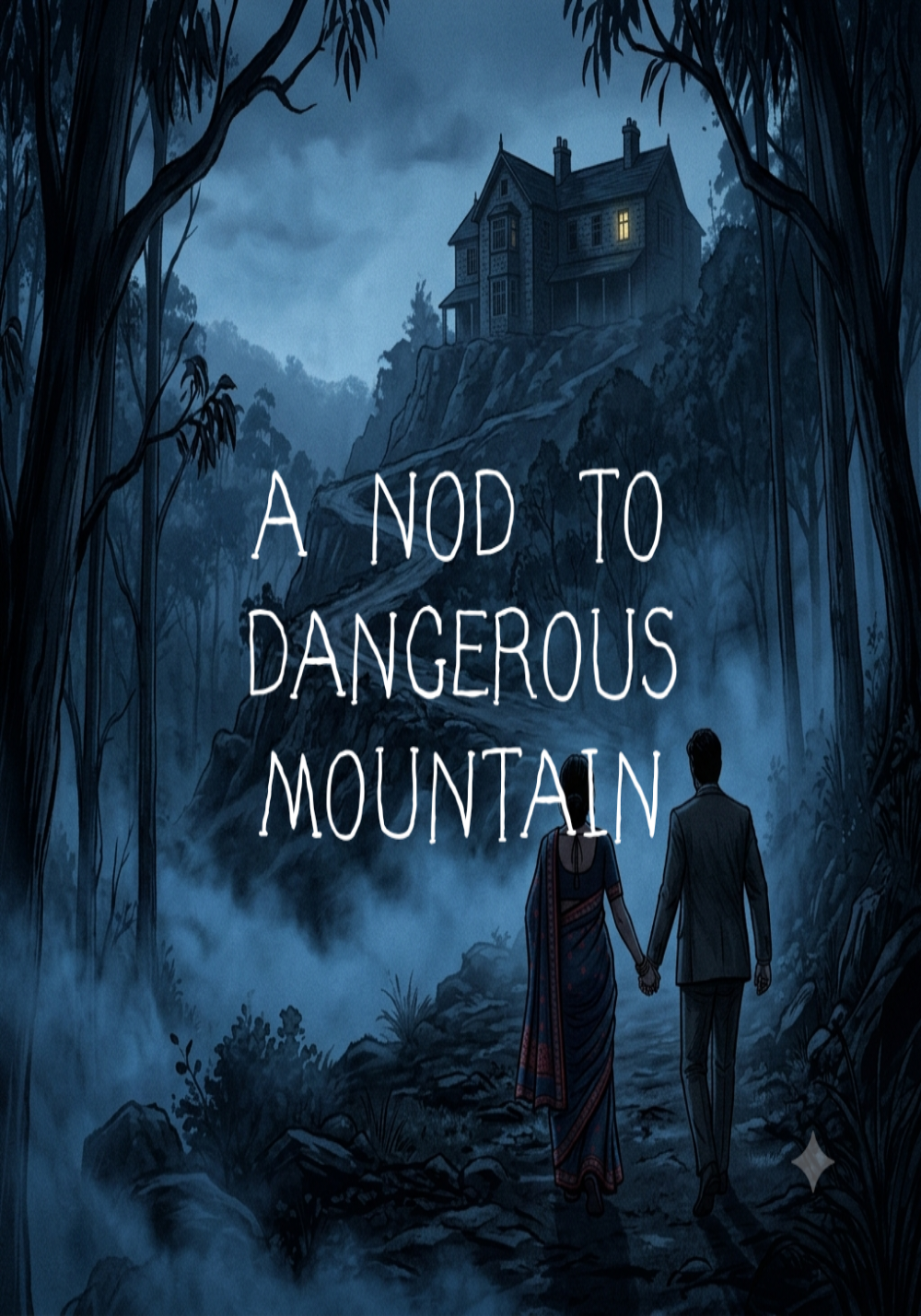
A NOD TO DANGEROUS MOUNTAIN ( full story)
A NOD TO DANGEROUS MOUNTAIN ( full story)

Authors note
Hi everyone!
I wanted to share a quick update regarding The Not-So-Dangerous Mountain:
Earlier, due to a technical glitch, Part 2 didn't upload properly on the series dashboard. To make it as easy as possible for everyone to find and read the full story without missing any parts, I decided to re-upload the complete story (all chapters in one) directly on the main story dashboard.
I know it might look like a duplicate if you follow the series dashboard, and I apologize for any confusion caused by the re-upload! I just wanted to make sure no one missed out on the ending.
If you haven't checked it out yet, please give it a read! A huge thank you to everyone who has already read it and left a 5-star review—it truly means the world to me! ❤️
⚡ What's Coming Next?
For everyone following The Unwanted Silence, Chapter 2 is almost ready! The next episode will be uploaded in 2 to 3 days, so stay tuned!
The steering wheel of the Maruti felt like lead in my palms. My head was pounding, a dull, relentless throb right behind my eyes that hadn't gone away since we locked up our rented flat in Hyderabad for the last time.
Everything we had built—the business, the small savings, the illusion of safety in the city—had unraveled in less than six months. When the debts caught up, I didn't have a choice. I sold everything, liquidated whatever assets were left, and paid off what I could. What remained wouldn't even cover a down payment on a pigeon-hole flat in Kochi. We couldn't afford a flight, and the train tickets felt like an unnecessary luxury we couldn't gamble on, so we packed our remaining life into the back of a second-hand hatchback and drove south. Two thousand kilometers of highways, toll booths, and swelling anxiety.
My parents stayed behind in Telangana. They were too old for the migration, too tired to start over in a state they hadn't lived in for decades. “You go, mone, and take care of Gauri,” my mother had told me, her eyes watery as she patted my hand. My father stood beside her, placing a heavy hand on my shoulder. “Be safe out there, son. And look after her.” “Find solid ground first,” mom added softly.
The hardest part wasn't the money, though. It was the silence in the passenger seat.
For five years, the doctors’ words had echoed in our heads like a final verdict. When the last clinic in Hyderabad gently confirmed that we would never have a child, something inside Gauri simply broke and refused to mend. The vibrant, talkative woman I had married faded away. She stopped going out, stopped visiting friends, and barely spoke to me unless it was an absolute necessity. She retreated inward, wrapped in a heavy, suffocating grief, while I watched helplessly as the wife I loved turned into a ghost sharing my address.
And then, we reached the high ranges of Vagamon.
We had come to Kerala to start over—to scrape together a modest resort business where the mountain air was cool and the tourists wanted weekend peace. For a whole month, we dragged ourselves across the winding hills, looking for something within our microscopic budget.
That was when we found the Morris Bungalow.
It sat isolated on a high ridge, surrounded by towering eucalyptus trees and slopes of wild grass that vanished into afternoon mist. It was a sprawling, British-era plantation house with high ceilings and heavy wooden beams—a place that looked like it had been forgotten by time itself.
I expected Gauri to shrink back from it. The house was gloomy, choked by silence, and terribly remote. But the moment we stepped through the heavy front door, something shifted.
Her eyes, dead and heavy for half a decade, suddenly widened. She took a deep breath, her fingers unclenching. She turned to me, a faint, genuine smile touching her lips—the first real smile I had seen in five years.
"Ankit, let's buy this," she said softly, her voice carrying a quiet, sudden conviction. "I really want this to be our next step to business."
Seeing that life return to her face melted every ounce of caution I had left. I didn't care about the isolation. I didn't care about the cracked plaster or the peeling paint.
When we finally sat down across from Ram Mohan in his polished office, I had to fight for every single rupee.
"Mr. Mohan," I started, leaning forward across the mahogany desk. "We are both Keralites. We've come all the way back to our soil. You know how hard things are for young entrepreneurs starting from scratch. Surely we can do something about this price?"
Ram Mohan didn't even look up from his ledger. He turned a page slowly. "The price is already printed on the proposal, Mr. Ankit. Six acres with a heritage structure in Vagamon. It's dirt-cheap as it is."
"Dirt-cheap for someone with estate money, maybe," I pressed, keeping my voice steady even as my palms sweated. "For me, every thousand rupees is a brick for the resort. Knock off at least two lakhs. Help a fellow Keralite out."
Ram Mohan finally looked up, his heavy eyes narrowing behind gold-rimmed spectacles. A cold, humorless chuckle escaped his throat. "Two lakhs? You're trying to strip me bare before you even step foot on the lawn. No. I'll drop fifty thousand, and not a paisa less. Take it or leave it; there are others looking."
I swallowed hard, glaring at the final figure on the paper. Fifty thousand wasn't enough, but looking at Gauri waiting outside in the car, I knew I couldn't walk away.
"One and a half lakh," I shot back, holding my ground. "Meet me in the middle. One-fifty off, and I sign the papers right now."
He stared at me for a long, uncomfortable moment, the ticking of the wall clock the only sound in the room. Then, a strange, knowing smile touched the corner of his lips—a look that felt less like a defeat and more like a trap snapping shut.
"Fine," Ram Mohan murmured, sliding the pen toward me. "One and a half lakh. It’s yours."
I was stunned. A surge of triumphant relief washed over me. We had secured a massive estate bungalow for next to nothing. It felt like a miracle—a stroke of unbelievable luck that would finally let us breathe and give Gauri her life back.
In my desperate happiness, I signed the papers, took the heavy brass key, and completely ignored the cold prickle at the back of my neck. I never stopped to wonder why a powerful landlord was so easily beaten down on a valuable piece of land.
I didn't realize yet that luck in a place like this always comes with a price.
Chapter 2 -
We had to return to Telangana first—a grueling, depressing trip back to sell off whatever remnants of my failed business remained. It was the final, painful severing of our old life. But the drive back up to Elappara is where the mountain truly decided to change the rules.
It was late afternoon, the mist rolling over the hairpin bends like a damp blanket, when we saw her.
A young girl, barely in her early teens, standing completely alone by the edge of the asphalt. No houses around for miles, no luggage, just a thin, torn dress and bare feet scraped raw by the cold road. Her face was hollow, her eyes blank against the gathering fog.
Before I could even ease off the accelerator, Gauri’s voice cut through the cabin, sharp and desperate. "Stop the car. Ankit, stop the car."
I hesitated, my hands tightening on the steering wheel. This was a lonely stretch, hours away from the nearest town. But when I looked at Gauri—at the sudden, fierce intensity that blazed behind her eyes for the first time in years—I couldn't say no.
I pulled over. Before the engine had even settled, Gauri was out of the door, hurrying through the wet grass. She knelt down in front of the child, asking her gentle, frantic questions. The girl didn't speak. She just let out a ragged sob, threw her arms around Gauri’s neck, and buried her face into her shoulder. She wouldn't say a word about where she came from, who her family was, or how she ended up on a desolate mountain ridge.
And right there, holding a stranger in the middle of nowhere, Gauri made her choice.
"We are taking her with us," Gauri whispered to me later, her voice leaving no room for an argument. I agreed. With the hollow ache of our own empty future pressing down on us, taking in an abandoned child felt like a second chance at life. We named her Maya.
When we finally unlocked the Morris Bungalow, the house felt different from the day we first toured it. A month of locked-up solitude had let the dampness sink deep into the timber. A thick layer of grey dust coated the heavy mahogany furniture, and the air smelled faintly of rotting leaves and wet stone. It took us the entire evening just to sweep the floors, scrub the windows, and make the place habitable.
Yet, through all the exhaustion, Maya settled in with an eerie, unblinking swiftness. Too swift.
The days blurred together as she followed us from room to room, her eyes wide, fixed on us with a grin that never quite reached her eyes. She smiled and smiled and smiled, as if she had won a prize she had been waiting a lifetime for. But it grated on Gauri in a subtle, quiet way. Maya kept calling us "aunt" and "uncle." Every time those words left the girl's mouth, Gauri's shoulders would tense.
""She has to call us Amma and Acha," Gauri muttered to me on the third night, her fingers clutching a tea glass too tightly. "She isn't a guest here. She's ours."
For a full week, the tension lingered in the damp halls. But a week later, after a long afternoon where Gauri gently pulled the girl close and taught her how to say the words, Maya finally looked up.
"Amma," she whispered. Then she turned her wide, unblinking gaze at me. "Acha."
A strange, overwhelming wave of emotion crashed over my chest. For five years, I had mourned the father I would never become. Hearing that single word felt like the sun breaking through the thickest mountain fog. I smiled, pulling them both into a tight embrace, completely blinding myself to the creeping unease that should have stopped my heart right there.
Because beneath the surface, something about Maya was deeply, sickeningly wrong.
It happened three nights later. The house was dead silent, save for the heavy, dripping rhythm of the rain outside. I woke up with a start, a sudden, ice-cold draft sweeping across the bedroom floor. I reached out blindly, but Gauri was fast asleep beside me, breathing softly.
The small cot we had set up for Maya in the corner of our room was empty.
I sat up, wrapping a blanket around my shoulders, a knot of dread tightening in my stomach. I didn't wake Gauri; I slipped out into the hallway, the floorboards creaking under my bare feet like old bones. I checked the kitchen and the dark corridor, but when I looked toward the front, I saw a pale sliver of light cutting through the massive living room.
I pushed the heavy door open.
The moonlight poured through the high, arched windows, casting long, skeletal shadows across the floor. Maya was standing right in the dead center of the room, completely motionless, staring up at the dark rafters with her head tilted at an impossible angle.
And she was smiling that same creepy, unmoving smile.
"Maya?" I called out, my voice sounding thin, swallowed entirely by the cavernous space.
She didn't answer. She didn't even flinch. She just stood there like a doll left out in the rain.
Panic seized my chest, heavy and suffocating. I forced my trembling legs to cross the cold floor, reaching out to grab her shoulder. "Maya," I muttered louder, shaking her gently.
Slowly, agonizingly, her head whipped around. Her neck made a sickening, dry pop. Her smile stretched wider, splitting her pale face in the moonlight, until her lips parted.
Her voice wasn't the voice of a young girl anymore. It was dry, ancient, and layered with a sickening echo that filled the entire room, freezing the blood in my veins.
"Ankit," she whispered, her eyes locked dead onto mine.
"You entered the wrong place."
Chapter 3 -
I woke up with the pale, watery morning light cutting horizontally across the bedroom floor.
For a long moment, I lay completely still, my eyes locked on the rough wooden rafters overhead. The silence of the bungalow was absolute. I reached out with a trembling hand, feeling for the small cot in the corner.
Maya was fast asleep.
Or at least, she looked like she was. Her chest rose and fell in a calm, regular rhythm, her dark hair tangled softly against the pillow. Sitting up slowly, I rubbed my face, staring down at my hands. Was it a dream? A fevered hallucination born from the exhaustion of the drive and the heavy, damp air of the mountains? My heart had hammered a frantic, terrified rhythm in my chest just hours ago, yet looking at her now, bathed in morning sun, it all felt like a trick of a tired mind.
I got up and walked over. Before I could even process my own thoughts, Maya’s eyes fluttered open. Instantly, that wide, cheerful grin spread across her face.
She sat up straight, threw her arms around my waist, and buried her face in my shirt. "Good morning, Acha," she whispered happily, her voice light, innocent, and entirely normal.
A cold shiver raced down my spine, tightening every muscle in my body. I froze. Every instinct I had screamed at me to push her away, to tear my arms back from a stranger who had spoken with an ancient, echoing voice in the dark. But forcing my hands to move, I awkwardly patted her back, offering a stiff, terrified smile as I pulled away.
Just then, the door clicked open. Gauri walked into the bedroom holding a steaming mug of black tea, her sharp eyes sweeping over me. She lingered on the dark, heavy bags under my eyes and the unnatural stiffness in my posture.
"You look like you didn't sleep a wink," Gauri said, her voice laced with quiet confusion and a touch of frustration. She set her mug down on the bedside table and crossed her arms. "Did you forget what today is?"
I blinked, trying to clear the static from my brain. "Today?"
"The furniture, Ankit," Gauri reminded me, stepping closer. "We promised we’d go into town today to source everything we need for the resort rooms before the tourist season shifts. Did you manage to find out where the local markets are? Somewhere we can pick up timber and furniture at a reasonable price?"
Her voice was entirely practical, anchored completely in the waking world of business plans, budgets, and new beginnings. She had no idea what had been standing in the center of the dark living room while she slept.
"Right," I managed to say, my voice sounding hollow even to my own ears. "The market. I'll... I'll check the routes."
As Gauri turned away to dress, Maya looked up at me from the corner of the room. Her smile didn't reach her eyes. She tilted her head just a fraction—a microscopic nod toward the door leading out into the cold, foggy hills of Elappara.
Chapter 4
The hunt for furniture turned out to be a dead end. Every shop we visited either carried pieces far beyond our tight budget or offered water-damaged timber that wouldn't survive a single season in the damp hills. With the sky turning a bruised, heavy grey and a violent mountain downpour beginning to lash against the i20's windshield, we had no choice but to call it quits and head back. We would have to try again tomorrow.
By the time we pulled up to the bungalow, the rain was coming down in sheets, blurring the edges of the estate into a wall of gray mist.
Inside, the house felt colder, heavier. After washing up and changing into dry clothes, I sat down on the living room sofa, the bone-deep exhaustion from the drive weighing heavily on my limbs. Maya sat right beside me.
At first, I didn't think much of it. But then, a low, mesmerizing tune began to drift from her lips. It wasn't a children's nursery rhyme, nor anything I had ever heard before. It was a strange, ancient melody that seemed to vibrate right through the floorboards. The rhythm of her voice, matched with the relentless drumming of the rain outside, acted like a drug. My eyelids grew impossibly heavy, my thoughts dissolved into static, and despite every instinct warning me to stay awake, I slipped into a dark, dead sleep.
When I finally woke up, the room was pitch black. The rain had stopped, leaving an unnatural, suffocating silence in its place.
I sat up, rubbing my eyes. Across the room, illuminated only by the pale moonlight cutting through the window, sat Gauri.
She was frozen on the edge of the chair, staring into the dark corner of the room. Her face was entirely drained of color, her eyes wide with a deep, frozen terror.
"Gauri?" I asked, my voice cracking in the quiet. "What's wrong? Why do you look so scared?"
She didn't move. She didn't even blink.
She said nothing at all.
Chapter 5
When I finally woke up from that deep, unnatural sleep, the room was cast in heavy shadows. Across the dim space, my breath caught. Gauri was sitting on the floor, holding Maya tightly in her arms, gripping the child with a desperate, white-knuckled intensity. Both of them were trembling, their faces pale and hollowed out by a shared, silent terror.
Panic surged through me. I scrambled up, rushing over, demanding to know what had happened, what had scared them both into such a state. Neither of them answered. They just stared past me, breathless and paralyzed.
Then, Maya’s lips parted to say something to me—her mouth opening to speak the truth of what happened in the dark. But before a sound could escape, Gauri threw her hands out, stopping her instantly, her eyes wide with a frantic, desperate warning that told me not to let her talk.
The next day, desperate to escape the suffocating weight of the house for a few hours, I drove down to the market alone to try and pick up the furniture we needed.
It took longer than expected. When I finally pulled the i20 back up the winding driveway and stepped into the bungalow, the silence hit me like a physical blow.
"Gauri?" I called out, setting the bags on the hallway table.
No answer.
I checked the kitchen, the study, and the upper bedrooms. Nothing. The house was dead quiet. A cold panic began to crawl up my spine as I threw open the front door and searched every corner of the estate—the overgrown gardens, the rusted perimeter fence, the damp paths leading into the looming eucalyptus woods. Gauri was gone. And Maya was nowhere to be found.
I rushed back down to the village, frantically questioning the shopkeepers and neighbors. But their faces were flat, masked behind a heavy, shuttered indifference. They shook their heads, claiming they hadn't seen Gauri, hadn't seen the child, hadn't seen anyone on the road.
By nightfall, when the empty rooms of the bungalow echoed back my own panicked breathing, I drove straight to the local police station and filed a missing persons report. The officers took notes, their expressions weary and practiced.
The search parties came and went. They combed the slopes, beat the bushes, and questioned the locals, but the mountain gave up nothing.
Then the days began to blur.
One day finished. Two days finished. Weeks melted into a numb, agonizing blur. The police files gathered dust. Yet, as time stretched on, the attitude of the people in the area shifted. They grew strangely sympathetic toward me, treating me almost like a tragic, marked man, watching me with a quiet, heavy pity whenever I crossed their paths.
Seasons changed, and the mountain rains washed the estate over and over again. I never found them.
Chapter 6
One evening, sitting alone in the growing dark of the hollow bungalow, I found Gauri’s diary tucked away on her shelf.
I opened it, the pages rustling in the quiet room, and began to read her words.
First Entry:
Ankit is not the man I thought he was when I married him. He used to be so kind, such a loving husband. But the moment he realized I couldn't bear a child, he completely changed. He grew cold, ignored me, and stopped coming home like he used to. Later, I heard the absolute worst from someone—he was having an affair with his cousin. I was totally shattered. I never talked to anyone about it after that; I just kept it inside, trying to believe that somehow he would change back. But when we came to this bungalow, I could finally see my old Ankit here. He was so kind to Maya. He treated her like a daughter. I was so happy with my life again.
My eyes scanned down to the next page, noticing how the handwriting suddenly deteriorated into frantic scribbles.
Second Entry:
I was wrong. He never changed at all. Tonight, while Ankit was fast asleep on the couch, his phone lit up the dark room with a relentless stream of notifications. When I crept over to check it, I saw a hundred unread messages that had poured in just moments before. My blood ran cold as I read through them. He wasn't here for a fresh start—he was plotting. He was deeply disturbed by Maya's arrival, convinced that if he could eliminate both of us and bury us out here in the wilderness, he could collect the insurance and finally marry his cousin. Looking back down at him sleeping on the couch, his face looked so innocent, so much like the kind man I once loved. But it was all a mask.
My hands tightened around the paper as I turned to the final, torn page.
Third Entry (scribbled wildly in terror):
I don't know who will ever find this diary, but I am telling you—Ankit is going to kill me. He is coming right now. I can see him dragging a heavy iron rod out of the shadow. Maya is by my side, weeping in my arms. I don't know what to do. I am screaming for help, but there is no one for miles, and the storm is drowning out our cries. Heavy rain is pounding against the glass. I know this is the end for me and Maya. If anyone finds these words, please... please expose him.
I slowly closed the diary. My fingers flicked open a small lighter, touched the flame to the corner of the pages, and watched as Gauri’s final confession—and everything that belonged to her—turned into black, weightless ash.
And as the fire finally died out in the dark, I just smiled.
Chapter 7
Everything has happened precisely as I planned.
The massive insurance payout from Gauri’s disappearance will clear soon, setting me up for a lifetime of absolute freedom. I’ll finally live openly with my cousin—she is so loving, so ready for what comes next. And the townspeople? They are entirely, blindly on my side. Everywhere I go, everyone in town treats me with heavy, crushing sympathy, telling me I'm young enough to start over, marry a new wife, have children, and leave the nightmares far behind.
To keep the illusion airtight, I didn't sell the Morris Bungalow. I simply locked it up and moved into a quiet, unassuming house on the other side of Vagamon. Leaving that massive, isolated estate empty on the hill makes the locals whisper even more about its dark, cursed nature, ensuring no one will ever dare to go near the backyard or ask dangerous questions. The local ghost stories do all the guarding for me.
I even cooked up those supernatural rumors myself—the tales of the mountain, the creepy atmosphere, and how Maya supposedly twisted her head and warned me. I spun the whole fiction to perfection, shaping the narrative just the way I needed to mask the truth and convince the world that the mountain swallowed them.
I wiped Gauri right out of my way. At first, I honestly doubted whether I could pull it off. But I did. I actually managed it.
Before I abandoned Morris Bungalow for good that night, I stepped out through the back door into the cool, biting mountain air. Looking out over the estate, everything was a breathtaking, lush green—except for two bare patches of freshly turned earth near the edge of the eucalyptus trees, right where I dug the graves and buried Maya and Gauri.
I walked out toward that dark soil, cupping my hands, and scattered the fine, black ashes of Gauri’s diary across the dirt where they lie beneath. Let her own words feed the earth that hides them.
And now, sitting safely in my new home miles away with the doors bolted tight, a slow, deeply satisfied smile stretches across my face.
I am rich. I am free. And I am finally at peace.
The End