Library

 Profile
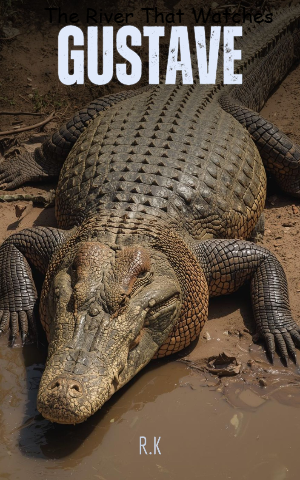
The River That Watches
The River That Watches

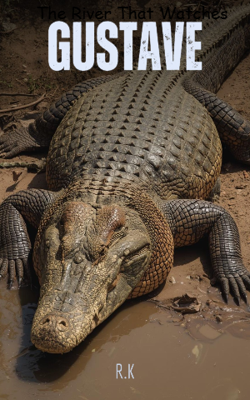
The Ruzizi River did not move quickly that morning. As a sheet of gray glass that concealed more than it revealed, its surface was slow and viscous. Dawn crept across the valley like a thin hand, brushing the reeds with pale light. The trees were covered in a mist that rose from the water. Only the distant lowing of cattle and the croak of frogs interrupted the insect hum from the Burundian side. The river in Gatumba was more than just water to the locals; it was also an edge, a dividing line between the living and the dead. Every family had lost someone to it. They spoke of drownings, but everyone knew that the river had a hunger of its own. They stated that something waited beneath its skin.
A small group of fishermen gathered near the shallows that morning and spoke quietly in Kirundi. They had seen the ripples again during the night: wide, deliberate rings that spread outward like thunder rolling under the surface. It only had one meaning. Gustave was awake.
To them, Gustave was not an animal. He was a spirit in scaled flesh—the keeper of the river’s wrath. The oldest man in the village, Mukoma, said the creature had outlived the wars and governments that had come and gone. He would whisper, "He remembers the blood of soldiers." “He feeds when men forget to fear.”
When he spoke of Gustave, the others turned away, afraid to look at the river for too long. It was said that the monster could feel a man’s gaze.
The Stranger in the Hills
A Frenchman worked under the hood of an old Land Rover in a dusty garage outside Bujumbura, far from Gatumba. His name was Patrice Faye, a herpetologist who had spent half his life in Africa cataloguing reptiles and amphibians. He was lean, weathered, and perpetually sunburned—the kind of man whose notebook pages smelled faintly of mud and smoke.
It was 1998 when he first heard the name “Gustave.” A merchant from the southern hills had stopped by for fuel and told him of a crocodile too large for reason, one that devoured men whole. Then, Faye had laughed. Every river had its monster. Every fisherman had a tale to tell. But later that evening, the merchant showed him a photograph: a wide shot of the Ruzizi River taken from the bank near Magara. A number of canoes were visible in the frame, as well as a series of ripples that seemed to radiate from a single point and were so large that they dwarfed the canoes in the background. For the first time in years, Faye felt the pulse of curiosity that had once driven him into the Congo swamps and Tanzanian marshes.
Two weeks later, he packed his equipment: a field camera, transect flags, a shotgun for emergencies, and a stack of logbooks. He drove south through hills still scarred by Burundi’s civil war. The roads were lined with burned vehicles, and villages lay quiet under the shadow of tall acacia. The air smelled of dust, cordite, and river silt.
The sun had set by the time he reached the Ruzizi floodplain. He pitched a small green tent near a cluster of mango trees and listened. The river breathed in the dark—deep, steady, endless. Something huge moved through the reeds somewhere downstream. The Fisherman's Tale" The next morning, Faye walked into the nearby village. People who had witnessed too much conflict and too many strangers were wary as they looked at him. He spoke French and broken Swahili; a young man translated.
He asked about the crocodile.
Silence broke out. The translator shifted uneasily before an old fisherman stepped forward, his face a map of wrinkles. He whispered, "You should not ask about it." “The river remembers.”
Faye pressed on.
The fisherman pointed to the water. “Three years ago, it took my brother. The moment the river opened, he was cleaning nets. Not like a crocodile, it was. It was like the earth itself swallowed him.”
He made a motion with his hands—something enormous breaking upward, then gone.
That night, Faye sat outside his tent, writing by the light of a lantern.
Observation: Locals consistent in description—the creature is immense, aggressive, and attacks unprovoked. Claims of bullet scars. adult male, possibly territorial. Size estimates: six meters or more. Unusual behavior: kills but does not always feed. could mean more than just hunger; it could also mean dominance or territorial claim. *
The moon rose over Lake Tanganyika, swollen and yellow. The water glimmered like metal. Somewhere across the bank, a hippo snorted, then fell silent again.
Faye closed his notebook and listened.
And then he heard it—a sound low and heavy, a shifting of reeds, the slow push of something vast through the shallows. He froze. The sound continued for several seconds, then stopped as suddenly as it had begun.
That night, he did not go to sleep. The First Expedition
Over the following months, Faye returned with a small team: two Burundian rangers, a cameraman named Jean-Luc, and three local guides. They set up base camp near a section of river where disappearances were most frequent.
The first thing they found was an antelope carcass, torn open but not eaten. Faye crouched beside it, his gloved hands tracing the wound.
“A predator kills to feed,” he said, almost to himself. “But these… these are displays.”
He took photographs, marking the coordinates.
Jean-Luc knelt beside him, the camera whirring. “Maybe it’s just a kill interrupted?”
Faye shook his head. “No. Examine the traces of drag. He played with it.”
That word—played—unsettled everyone.
As days passed, the team followed trails of crushed grass and gouged mud down to the river’s edge. In one place, they found flattened reeds arranged in a semicircle—the spot where a woman had vanished while washing clothes.
There, the water was serene and almost inviting. Jean-Luc whispered, “It could be anywhere.”
Faye gave a slow nod. “If the stories are true, it’s watching us already.”
The Glimpse
They spent weeks waiting. The heat was unbearable. Mosquitoes came in clouds. The sound of moving water in the dark, hippos' grunts, and the distant scream of something caught kept the nights awake. Then one evening, just as the sun melted into the horizon, it happened.
The river bulged.
At first, it looked like a slow ripple, then a surge, and suddenly a massive tail broke the surface, curved like a black sail, and then vanished again with a boom that rocked their boat.
Jean-Luc’s camera jerked up too late. The lens caught only the final wave crashing against the bank.
Faye sat frozen, staring at the receding circles. He measured the distance between them in his mind—six meters, perhaps more.
He whispered, “He is real.”
Awe and dread mingled in his voice. The rangers said nothing. The cicadas, too, remained silent. Faye wrote his final line of the day as the campfire burned low that night as he stared at the dark water: “We have seen him—the river’s god, the old one.” He has scars that look like medals. He cannot be killed, according to the villagers. Tomorrow, we will go closer.
The flames crackled. The water started moving again, this time slowly and carefully somewhere in the reeds. It was as if the river itself exhaled.
Gustave kept an eye on them, far beyond their light circle.
Part 2 – Tracks in the Mud
The morning after they first saw Gustave, the riverbank was quiet. Too silent. The birds that normally sang from the papyrus reeds had fallen silent, and the water itself seemed to hold its breath. Faye walked along the shore, notebook in hand, his boots sinking into the soft, black mud. Every step left a print that filled with slow, seeping water.
Near the bend where they had seen the creature’s tail rise, he found what he was looking for: a trail of **impressions** pressed deep into the earth. Each one was as wide as a dinner plate, claw marks raking backward like knives. He sketched and measured with a tape while he knelt next to them. “Front foot,” he murmured. “Nearly thirty-eight centimeters across. Unlike any other crocodile." Jean-Luc crouched beside him, the camera humming. “It’s moving inland?”
“Probably returning to the river after feeding.” Faye’s voice was calm, but his hands trembled slightly. “We’re standing where it walked last night.”
A young man by the name of Emmanuel, one of the guides, pointed to the trees. “Monsieur, there’s more. There.”
They followed the marks for almost fifty meters until they ended in a churned-up clearing where the mud was mixed with something else—dark, half-dried stains that had seeped into the soil. It didn't need to be explained to Faye. He swallowed hard. “Blood.”
There had been a recent death here. ### Putting the traps in place That afternoon, the team decided to deploy baited traps—steel cages anchored to the riverbed with heavy chains, strong enough (they hoped) to hold a six-meter crocodile. The idea was simple: a cow carcass suspended just above the waterline, the scent drifting downstream. While working in Madagascar, Faye had previously developed the system, but none of them had ever tested it on anything like this. Faye spoke into his voice recorder as they worked: > “We are setting the first trap at 12°37′ South, 29°04′ East. Local reports indicate repeated attacks within a five-kilometer stretch. Hypothesis: single dominant male exhibiting territorial aggression. The villagers claim he has been shot multiple times without injury. If true, that suggests significant dermal ossification or heavy scar tissue.”
Jean-Luc adjusted the camera focus, catching Faye’s face glistening with sweat. “Do you actually think we can capture him?”
Faye glanced at the wide, slow water. "At least we'll prove he's real if we can't." As night fell, the cow carcass swayed gently above the current. The air smelled of rot and diesel from the generator. Crickets sang. Faye sat on a folding chair beside the trap, rifle across his lap, listening.
Hours passed. The mist thickened. A faint splash echoed from the far bank—then another, closer. The men tensed.
The water shifted, not as a ripple but as a pulse—a slow heave that moved against the current. The carcass quivered on its chain.
“Something’s there,” whispered Emmanuel.
Faye raised the flashlight. A pair of **eyes** glinted just above the surface—two dull coals, unblinking. Then, as if aware of being seen, they sank without a sound.
Minutes later, the trap chain groaned. Metal screamed.
The water exploded.
The men shouted as the carcass vanished in a surge of foam and blood. With a hollow clang, the trap cage buckled and then flipped to the side. Faye fired once, the muzzle flash slicing the dark. The sound was deep and powerful, like a submerged engine, and it was caused by a massive thrashing just below the surface. Then—silence.
When the water settled, the trap was gone. On the bank, all that was left of its twisted anchor chain. Faye lowered the rifle slowly. His voice shook. “That… that was no ordinary crocodile.”
### **The Dead Ranger**
At dawn, one of the Burundian rangers, a man named Nduwimana, went missing. His rifle was found near the waterline, half buried in mud. His footprints led toward the reeds but did not return.
They searched for hours, calling his name. Emmanuel finally yelled. Something pale had washed against the roots downstream—a torn shirt sleeve. Then they saw the rest of him.
The body was grotesquely intact. No limbs missing, no devouring—only massive punctures down the torso, as if whatever took him had **gripped and released**.
Faye forced himself to examine the wounds. “He wasn’t eaten,” he said quietly. “It was… deliberate.”
Jean-Luc turned away, retching. “Deliberate? You think it killed him and let him go?”
Faye looked at the still water. “A message. Territory.”
That night, no one spoke. The jungle around them seemed alive with unseen eyes. The campfire hissed in the damp air, and every snapping twig made them flinch.
Jean-Luc whispered, “We should leave. This isn’t research anymore. It’s suicide.”
But Faye only wrote in his notebook:
> *The creature defends its range as a conscious ruler, not an instinctive predator. I no longer doubt intelligence — not human, but ancient and cold. The villagers may be right to call it a demon. Tomorrow we relocate further upriver. *
### **The Old Story**
Before they broke camp, Mukoma—the old fisherman who had first spoken to Faye—appeared again. He had walked for hours through the wetlands to find them.
“I told you the river remembers,” he said. “You took its offering, and now it watches you.”
Faye tried to reason with him. We are not looking for it. We’re studying it. Understanding it might protect people.”
The old man shook his head. “It doesn’t care about understanding. It only knows trespass.”
He told them a story passed down from his grandfather—that long before Burundi had a name, there was a drought so fierce that the villagers prayed to the river for mercy. The vast and bronze-like crocodile that rose from the depths was a crocodile. It brought rain, but when the floods came, it stayed. It fed on men and cattle alike. The people built fires to drive it away, but bullets, spears, and even poison could not kill it. So they gave it a name: **Gustave.**
Mukoma said, "Once you say its name by the water, you call it to you." Faye said nothing. He didn’t believe in curses. But that night, when he heard the reeds parting outside his tent and the deep exhalation of the river, he wondered if names had power after all.
### **Departure**
By the end of that week, two guides had deserted, leaving their pay behind. The remaining men worked in silence. Faye took pictures of the bite marks in the steel, recorded the destroyed trap, and sampled the mud. The data was invaluable—but the cost had already been too high.
On their final evening, Jean-Luc packed the camera cases. “What will you tell them back in Bujumbura?” He inquired. “The truth,” Faye replied. “That we found something the world doesn’t believe in. And that it’s still out there.”
He stared at the river one last time. The sunset turned the water into molten glass, exactly as it had looked the morning he arrived. For a long moment, nothing moved. Then, far downstream, a single ripple spread—wide, deliberate, and unhurried.
Faye whispered, "Until next time," as he closed his notebook. The ripple reached the shore and faded into stillness.
But in the darkening reeds, a low rumble rolled beneath the surface—not quite thunder, not quite a growl—as if the river itself was laughing.
Part 3 – The Bait of Legends
Months passed before Patrice Faye returned to the Ruzizi. The dry season had made the river into a narrow, dark serpent that wound between shattered banks and hushed reeds. Burundi’s skies were clear, the light sharp and white as bone. Yet even in daylight, the valley felt uneasy, as though something vast and patient lay just beneath the surface, waiting.
Faye had become a passing curiosity in Bujumbura. The story of the giant crocodile had spread through cafés, government offices, and foreign embassies. Some laughed; others listened in silence. The press called it myth; the villagers called it memory. But Faye could not forget the trap torn apart, the ranger’s body, or those yellow eyes burning through the dark.
This time, he did not come alone. A team of six joined him: Jean-Luc again behind the camera, a biologist from Kenya named Dr. Otieno, two Burundian soldiers for protection, and two new guides who swore they feared nothing. They brought with them a flat-bottomed aluminum boat, radio equipment, motion sensors, and a reinforced steel cage designed to withstand an elephant.
When they reached the same stretch of river where the last trap had vanished, Faye stood at the water’s edge for a long time, saying nothing. Then he whispered, “We’re back.”
The men began unloading supplies. Metal clanged, ropes hissed, and the smell of fuel and river mud mixed in the hot air. The soldiers scanned the reeds, rifles ready. Every few minutes, one of them would turn sharply, certain they had heard something moving. But there was only the slow breathing of the river.
That night, as they built their camp, Jean-Luc adjusted the tripod and spoke softly into the camera.
“Day One, second expedition. Stable conditions Dr. Faye believes the animal will return to this area by the new moon. The locals continue to avoid the location. Under a lantern's light, Faye was sitting nearby and writing in his logbook. Observation: Creature’s range estimated at fifteen kilometers. Multiple attacks during rainy season, usually around the full moon. Possible behavioral pattern linked to spawning cycle. Hypothesis: Gustave is no longer breeding; his aggression may be redirected toward territorial assertion.
He stopped and listened to the reed rustle. Somewhere out there, the river whispered back.
---
The next morning, they set the new bait. This time it was not a carcass but a living goat tied to a raft, bleating into the still air. The sound echoed along the water, drawing the attention of herons and dragonflies. The men watched from a safe distance, cameras rolling, the steel trap ready to drop.
Hours passed. The sun climbed high, the heat unbearable. The goat quieted, exhausted. Then, as the afternoon waned, the river stirred.
It began with a single ripple. Then another.
Jean-Luc raised the lens. “Movement,” he said.
A bulge swelled near the center of the current. The water seemed to gather itself, forming a slow, rising mound. Then the surface broke.
A head emerged—immense, dark, scarred. The creature’s nostrils flared, and for an instant, its eyes caught the sunlight like gold coins. The goat screamed. The water exploded.
The trap triggered. The steel cage slammed shut with a thunderous clang. The crocodile slammed into the cage with its tail, causing the river to turn white. Metal groaned. The men yelled. One of the soldiers fired into the air, though Faye yelled for him to stop.
For twenty seconds, the world was chaos. Then, with a wrenching twist, the cage shifted—and the creature was gone. The entire frame had been dragged beneath the surface, the anchor chain snapping like thread. Bubbles rose, then silence.
Jean-Luc lowered the camera slowly. “It broke the cage.”
Faye stared at the empty water. His mouth moved, but no sound came out. Finally, he whispered, “It’s larger than I thought.”
---
For two nights, they stayed near the site, waiting for another chance. They heard splashes in the distance, saw waves moving against the wind, and once glimpsed a dark shape gliding past their boat, silent and smooth. Each time, the creature vanished before the cameras could capture more than a shadow.
On the third night, a storm rolled across the valley. Lightning flashed over the water, illuminating the reeds in ghostly white. The rain came hard, drumming on tents and metal. In the chaos, one of the motion sensors beeped—something massive moving along the bank.
Faye grabbed his flashlight and stepped out into the downpour. The remainder followed. The beam of light caught deep impressions in the mud—fresh, enormous, trailing toward the camp.
Jean-Luc’s voice shook. "It's moving in our direction." The soldiers raised their rifles. Faye shouted over the rain, “Don’t shoot! Back to the tents!”
But the ground trembled. A wave rolled up the slope, spilling over their boots. In the flash of lightning, they saw it—the massive head rising from the shallows, jaws half open, water pouring from its teeth. It looked like it was just looking at them, eyes shining with ancient patience. Then it sank again, leaving only ripples that lapped at the soldiers’ boots.
The men ran back to camp, shouting. Faye stood a moment longer, staring into the black water. He wrote even though his notebook was wet and the ink was splattering all over the page. Observation: The creature approached during storm conditions, possibly drawn by vibration or scent. No direct assault. Behavior again suggests intelligence—testing, warning.
---
At dawn, they discovered the soldiers’ boat half submerged and slashed open. No footprints, no drag marks. Just the torn hull and a single tooth embedded in the wood. Faye pried it loose carefully and turned it in his hand. The tooth was longer than his finger, heavy, ridged, and old.
He placed it in a sample bag and wrote one line beside it:
Physical evidence obtained. Proof at last.
But later that morning, Emmanuel, the younger guide, refused to stay another day. He said as he packed his belongings, "The river has chosen." “It wants us gone.” The others didn’t stop him. He walked north toward the hills, disappearing into the heat.
By the fourth night, the camp was restless. Faye rarely slept. The rifle was between his knees as he sat by the water with the tooth next to him. Jean-Luc filmed him from a distance, the lantern flickering behind. The scientist’s face looked hollow, his eyes fixed on the dark surface.
“Why do you keep watching it?” Jean-Luc asked.
“Because it’s watching back,” Faye said quietly. “And it’s learning.”
The photographer hesitated. “You think it knows you?”
Faye didn’t answer.
Far out on the river, a wide circle of ripples spread across the moonlit water.
The men followed the motion until it vanished. The jungle was utterly still. And from somewhere deep below, a low sound rolled upward—like the rumble of the earth itself, steady and endless.
The camera was turned off by Jean-Luc. No one spoke again until morning.
---
By the end of the week, they packed up what remained of their equipment. They brought back the tooth and footage, even though the cage was gone and the boat was only half-destroyed. It was enough to prove that something extraordinary lived in the Ruzizi Valley.
As the convoy drove north, Faye looked back once more at the river. The mist hung over it like breath. For a moment, he thought he saw a shadow moving under the surface, following them.
Then the road curved away, and the valley disappeared behind the trees.
In his final note that day, he wrote:
He has not been caught by us. We will never do it. He is part of this land, as old as the river itself. We have brought him back to life. And somewhere in the silence of the Ruzizi behind them, a single slow, deliberate, and never-ending ripple spread across the black water.
The River's Curse, Part 4
The footage from the second expedition reached Bujumbura first, then Nairobi, and within weeks it had crossed oceans. The clips were shown late at night on television networks. They included grainy shots of a dark figure breaking water, the sound of shouting, and a glimpse of a tail as thick as a tree. The majority of viewers viewed it out of curiosity as yet another African mystery. But for scientists who studied crocodilians, the details were impossible to ignore.
In Nairobi, the tooth sample was examined using ultraviolet light. It was undeniably authentic, massive, and aged beyond the expected limit of any living Nile crocodile. Its enamel bore deep stress fractures, evidence of long use and regeneration. After Dr. Otieno whispered only one word as he compared it to museum specimens: impossible. At a small symposium, Faye presented his findings. His tone was precise, and his notes were methodical. He showed maps, attack records, and his surviving trap footage. The academics listened respectfully until the final slide, which featured an expanded still image of two yellow eyes that were perfectly aligned to reflect light. Then came the questions. Was it perspective distortion? A submerged log? Fabrication?
Afterward, Faye stood alone outside the building. Rain and exhaust permeated the evening air. The voices of the skeptics faded into the city’s hum. Jean-Luc joined him, camera bag slung over his shoulder.
“They won’t believe until they see a corpse,” Jean-Luc said.
“I don’t want a corpse,” Faye replied. "I want comprehension." He looked out toward the dark silhouette of Lake Tanganyika. Somewhere far south, the Ruzizi River flowed into it like a wound that never closed.
---
A month later, the reports began again. The capture of a fisherman near Magara A boy missing from the reeds at dusk. On the riverbank, a soldier's boot was discovered. The stories multiplied, spreading north with the flood season. Newspapers wrote of “The Curse of the Ruzizi.” The monster had returned.
Faye tried to ignore the rumors. He told himself it was coincidence—normal predation, media exaggeration—but then he received a radio message from Gatumba. It was Mukoma, the old fisherman. His voice trembled as he spoke.
“You woke it,” Mukoma said. “Now it remembers the taste of men.”
The line crackled and went dead.
Within days, Faye was on the road again. Jean-Luc came despite protests from his family. They drove south through villages that had emptied in fear, fields abandoned to weeds. The air grew thicker, the light dimmer, until they reached the same bend of river where everything had begun.
The previous expedition's camp had vanished and been replaced by grass. But in the mud lay evidence that others had been there recently—fresh footprints, broken reeds, and a torn piece of military fabric. The soldiers had come again, without him.
Near the water’s edge, Faye found something that stopped him cold: a row of wooden stakes driven into the mud, each capped with a piece of cloth. The villagers’ warning. A line drawn against trespass.
Jean-Luc lifted his camera. “They think it’s a curse now.”
Faye nodded slowly. “Maybe it always was.”
---
That night, they stayed in the old village hall. The wind pushed against the tin roof, and the smell of the river crept in through the open windows. Jean-Luc set up the camera and began filming, though his hands shook.
“Do you ever think it’s more than an animal?” he asked.
Faye didn’t answer right away. He stared at the map spread across the table, the thin blue thread of the river winding like a vein through the valley. “Every creature becomes legend when we stop understanding it,” he said finally. “But legends come from something real.”
He closed his notebook. “Tomorrow, we go to the place Mukoma mentioned—the deep pool where the river bends. The villagers call it ‘The Eye.’ If Gustave exists anywhere, he will be there.”
Outside, thunder rolled over the hills. Just before midnight, it started to rain. Faye dreamed of eyes glowing beneath the surface, watching from the dark.
---
The Eye was not far, but the journey took hours. The path wound through tangled reeds and shallow ponds where frogs scattered at their footsteps. When they reached the clearing, the water lay still as polished stone. It was wide, circular, and perfectly calm even as rain fell elsewhere.
Jean-Luc whispered, “It doesn’t even ripple.”
Faye stepped closer, the mud sucking at his boots. He threw a handful of fish entrails into the center and waited. Nothing happened. Minutes passed. He took out the camera, adjusted the focus, and suddenly the water trembled.
A slow current formed around the bait. Then it vanished, pulled straight down as though swallowed by the river itself. The surface closed again, smooth, silent.
Jean-Luc lowered the camera. “Did you see that?”
Faye nodded. “Downward pull. No outflow. There’s something beneath.”
As he dipped a probe into the water, he knelt. The reading showed unexpected warmth. “Thermal pocket,” he muttered. “Maybe a cave entrance.” But even as he said it, he felt the same pressure he had felt months earlier—a weight that wasn't there, like the air was watching. Without warning, the water erupted. A massive shape surged upward, the tail striking like a hammer. Mud and reeds exploded into the air. As the camera fell, Faye stumbled backward and grabbed Jean-Luc by the arm. For a moment they saw it clearly: the head rising, jaws open, scars crisscrossing its hide. The creature’s eyes caught the light, yellow and cold. Then it sank, the current spinning violently before settling back into stillness.
Jean-Luc retrieved the camera, shaking. “Tell me that recorded.”
Faye nodded, breathing hard. “It did. But no one will believe it.”
---
They fled the site and drove to the next village, soaked and silent. The people there refused to speak to them. Only a child approached, holding a strip of torn cloth. Faye recognized the pattern—it matched the military uniform he had found on the bank. The boy pointed south, toward the river, then ran away.
That night, Faye developed the footage in a makeshift tent. When the image appeared, he felt both triumph and dread. The form, motion, and undeniable mass of it were all there. Proof at last. But something else caught his attention: in the final frame, as the creature sank, its eyes turned not toward the bait, but directly toward the lens. Toward him.
He switched off the light. The endless and low river murmured outside against its banks. Somewhere in the dark, something moved—just a whisper of water against reeds, steady and deliberate.
Jean-Luc whispered from his cot, “Do you hear it?”
Faye nodded. “It knows we’re here.”
Neither man slept. By dawn, the mist had thickened over the river like smoke. Faye opened his notebook and wrote a single line.
It is no longer research. It is a conversation between man and something older than fear.
---
A week later, when Faye returned to the capital, the footage caused an uproar. Copies were demanded by media outlets, and scientists disagreed on television. Some called it a breakthrough, others a hoax. But those who had lived by the Ruzizi didn’t need evidence. They had seen the ripples and heard the screams in the night.
Mukoma’s village emptied again. Fields were uncultivated. Fishermen refused to launch their boats. And in every story whispered by the firelight, the name returned—spoken softly, fearfully, as if it might rise at the sound.
Gustave.
The curse of the river had resurfaced, and this time not only the villagers were paying attention. It was the world.
Part 5 – The Hunt
The Burundian government could not ignore the growing panic. New sightings and disappearances occurred each week. The Gustave rumors spread more quickly than the Ruzizi River's own current. The Ministry of Environment called an emergency meeting in Bujumbura. While men in crisp shirts argued over maps inside, soldiers in green fatigues stood guard at the doors. Patrice Faye sat quietly in the corner. Muddy footprints, twisted nets, and the hazy outline of something vast beneath the surface were all in a file that his hands were resting on. Finally, the heavy-voiced, sharp-eyed minister turned to him. “You have seen this creature,” the minister said. “You have filmed it. Can it be destroyed?”
Faye hesitated. He carefully stated, "It can be captured." “But destroyed? I don’t know. It is older than we understand, and killing it may not solve what created it.”
The minister leaned forward. “People are dying, Monsieur Faye. The world is watching. Burundi must not be a land of monsters.”
Within days, a new expedition was formed—half scientists, half soldiers. It was called *Operation Mamba*. Helicopters were loaded with cages, tranquilizer guns, and heavy steel nets. They were joined by a television crew to record the mission. Additionally, Jean-Luc showed up pale but determined. “This time,” he told Faye, “we end it.”
---
They reached the Ruzizi under a bruised sky. The rains had swollen the river into a brown torrent that boiled and twisted around uprooted trees. On the same plateau where Faye had filmed their last encounter, camp was set up. The soldiers patrolled with rifles; the scientists set motion sensors and bait lines.
At night the jungle never stopped moving. Frogs called, insects hummed, and sometimes the deeper sound of something shifting in the water made even the guards fall silent.
Faye sat by the monitor, watching the live feed from a submerged camera. The screen flickered with drifting silt and dark shadows of fish. Hours passed. The silt finally broke up just before midnight, and there it was. A massive body glided into view. The scales shimmered dull bronze, the ridged back wider than a canoe. The creature moved without effort, its long tail pushing it forward with ancient grace. When it turned, the camera caught the scars across its snout and one eye clouded white.
Jean-Luc whispered, “He’s here.”
Faye leaned close to the screen. “Activate the bait line.”
A winch whirred. From the riverbank, a carcass slid into the current. The crocodile paused, sensing vibration. Slowly it turned toward the bait. Its mouth opened, teeth gleaming like wet stones. Then, without warning, it sank beneath the surface and disappeared.
The sensor alarm started to blink. The motion detectors one by one went dark—north line, east line, south. Unnoticed, something was moving along the bank. A soldier shouted. “Behind the reeds!”
Spotlights cut through the rain. The surface cracked open. Gustave lunged upward, closing his jaws on the bait line. The steel cable snapped with a crack. The river became chaos—water, mud, and shouting men. Bullets hammered the surface, but the creature had already vanished.
When calm returned, one boat was missing. The searchlight found it overturned, floating near the far bank. The radio was answered by nobody. Faye insisted on staying, despite the minister's assistant's desire to retreat. He stated, "He is testing us." “He knows the sound of the engines, the smell of metal. We will lose him if we move once more tonight. So they waited, drenched, the river whispering beside them.
---
By morning the water had dropped a little. The mud near the boats was marked by pot-sized footprints. The team followed them inland until they ended at a pool half hidden by papyrus. Something shimmered beneath the surface—oil, blood, or both.
A soldier waded in to check. Faye shouted a warning, but it was too late. The man vanished after the surface once more exploded. Only his helmet remained, spinning slowly before sinking.
Jean-Luc turned away, face pale. “We can’t fight this,” he said. “It’s not an animal. It exerts force. Faye looked at the pool. “Every force has a weakness. We just haven’t found his.”
He returned to camp and studied his notes. Crocodiles were territorial but predictable; they followed old routes, nested in dry seasons, hunted along fixed banks. Gustave, however, broke all patterns. He moved between territories, killed without hunger, vanished for months, then returned.
Faye made a decision that night. “We stop hunting him on the surface,” he told Jean-Luc. “We go where he hides.”
---
The following day, divers entered the deep, circular pool known as the Eye, where Gustave had first appeared. They carried sonar gear and cameras on tethered cables. The current was sluggish at the top but strong below, pulling downward into darkness.
At thirty meters, the first diver reported a cavern mouth. Inside, visibility dropped to nothing. The camera caught glimpses of rock walls covered in algae, bones scattered like driftwood.
Then, suddenly, movement. The sonar spiked.
“Something’s down here!” The diver exclaimed. “It’s moving!”
Static filled the radio. The winch was pulled by the violent jerking of the cable. When they hauled it up, the line came back shredded. The diver was gone.
Jean-Luc screamed into the water, but there was no reply. The rest of the crew backed away from the edge.
Faye was frozen as she observed the rising bubbles. “He guards his den,” he said softly. “Like a king.”
---
By the third day, morale collapsed. The soldiers were unwilling to approach the water. The television crew packed their equipment, saying there would be no more footage worth dying for. The minister’s aide called for extraction.
Faye sat alone under the tarpaulin, writing in his journal. *It is not madness that drives me to stay. It is duty. The river owns him now, and perhaps it owns me too. *
Jean-Luc came slowly up. “Patrice, we have to leave. This isn’t science anymore.”
Faye looked up. He had hollow eyes. “You can go. But I will not let him vanish again. Someone must witness the end of this.”
Faye walked down to the water that evening with only his camera while the others packed their trucks. Thunder rumbled in the distance and the air was thick. He placed the tripod at the edge and waited.
The first lightning flash showed the river smooth as glass. The second showed a ripple, long and deliberate, moving toward him.
Faye whispered, “Come then. Let's finish what we started." The camera light blinked once, twice—and went out.
When the team returned at dawn, they found his notebook on the bank, pages soaked but legible. The last line read:
*The river is aware. And it never lets go.
His body was never found.
Weeks later, Jean-Luc developed the final footage. The first few minutes were silent, until Faye's breathing, the sound of rain, and a faint current swirled. In the last frame, a dark shape filled the screen, eyes shining like lanterns in the deep.
The picture became black. And the river kept flowing, as it always had, ancient and patient, carrying its secret beneath the surface.
Part 6 – The Legend Returns
The Ruzizi River flowed on, wide and silent, as if nothing had ever happened there. Rain fell again over the valley, washing away the last traces of the camp. The villagers claimed that the river would now rest because the water had taken another outsider hostage. But it did not.
Three months after Patrice Faye’s disappearance, a boy from the village of Magara went missing. His small canoe was found drifting in the reeds, the paddle floating nearby, the seat smeared with mud. The men who searched would not speak of what else they saw—only that the water had rippled without wind and that a single great bubble had risen before bursting in silence.
Jean-Luc couldn't sleep in Bujumbura. He had tried to leave Africa behind. But the footage wouldn't let him rest. Night after night, he stopped at the final frame, which showed two eyes shining and the faint outline of a nose. Each time, he felt Faye’s voice in his head: *He is not just an animal. He is a presence.*
He played the recording again, slowing it down. There, in one flash of lightning, he saw something else—a mark on the water behind Gustave, a shadow of movement, not the crocodile itself but a second ripple. He paused, rewound, and watched again. He felt a chill go through him. He realized the truth. Gustave wasn't the only one. ---
Jean-Luc returned to Burundi in January, during the dry season when the river shrank and revealed its bones. He only brought a camera, a notebook, and Emmanuel, a young ranger who had heard the stories all his life. “Why come back?” Emmanuel inquired as they traveled to Gatumba on the dusty road. “ Many have tried to see him. Nobody responded. “Because someone has to tell the story right,” Jean-Luc said quietly. Faye died trying to prove he was real. I must prove why.”
They reached the ruins of the old camp. The rusted cages remained in the mud despite the absence of the tents. Jean-Luc discovered Faye's clear, weathered initials carved into a wooden crate. He touched it gently, like an old gravestone.
At dusk they launched a small boat onto the still water. The jungle appeared to be holding its breath while the sky turned orange. Jean-Luc set the camera facing the channel where Faye had filmed his last moments. Emmanuel held a spear, though both knew it would do nothing if the monster came.
They drifted for hours. Frogs croaked. Bats wheeled above the reeds. Then a faint tremor passed under the hull—a pulse from something deep below. The water jerked around. Emmanuel froze.
"Do you think that?" Jean-Luc nodded. He turned the camera toward the sound. The lens caught the reflection of the moon, then something darker rising beneath it—a shadow, wide and slow.
The boat rocked. Emmanuel whispered, “It’s him.”
The shadow grew, breaking the surface. A back emerged, ridged and scarred, water cascading off it like oil. The smell was heavy and metallic. The creature’s head lifted slightly, one pale eye catching the moonlight. It looked at them. Not with hunger, but with recognition.
The voice of Jean-Luc trembled. “He remembers.”
The crocodile sank again, leaving only a wide ring on the surface. The current pushed the boat backward toward shore.
Emmanuel exhaled. “We should leave.”
But Jean-Luc was staring at the camera’s screen. Even after Gustave had vanished, the recording showed ripples moving. They were smaller, quicker—like the wake of something young.
“There’s more than one,” he said.
---
Over the next week they searched the tributaries north of the river, following reports from fishermen who had seen strange shapes in shallow water. In one lagoon, Jean-Luc found a nest—half buried under reeds, lined with bones. Inside were shells the size of footballs, cracked and empty.
Emmanuel backed away slowly. “If these hatched…”
Jean-Luc finished the thought. “Then Gustave’s line continues.”
They moved camp that night, unable to sleep near the nest. But as they prepared to leave, they heard splashing near the bank. Jean-Luc turned his light and froze. Two small eyes gleamed just above the surface—far too small to be Gustave’s. The water rippled softly, as if the creature were watching them curiously. Then it slipped away.
He wrote in his notebook: *They are learning. They are now more than just prey; they have survived war, fire, and even time itself. Gustave was not a mistake of nature. He was its response.*
---
Word of the new sightings spread again. The journalists came back. The villagers grew restless. The government denied any problem, but the river crossings became empty after sunset. Some said the crocodiles now hunted in pairs.
Jean-Luc’s footage reached France, where it aired on a small documentary channel under the title *The Shadow of Gustave.* Scientists debated whether it was the same animal and whether it was possible for it to reproduce at that age. But none could explain the size of the tracks or the pattern of kills—mutilated but untouched, as though marking territory.
A few weeks later, Emmanuel sent the message, "The river is changing." The fish are gone. The hippos have moved north.”
Jean-Luc returned once more, unable to resist. Rain and rot permeated the air as he approached the riverbank. The surface was calm. Too calm. He waited until twilight, when the water turned black.
A single ripple appeared near the center. Then another beside it. Next, a third. He whispered, “They are here.”
Lightning flashed across the valley, revealing the outline of three massive shapes moving together beneath the water.
The legend of Gustave had become something larger—something that no man could capture, no bullet could kill. It had become the river itself.
Jean-Luc lowered his camera, realizing at last that Faye had been right. Some forces were meant only to be witnessed, never conquered.
He turned to leave, but behind him the water stirred again, closer this time, heavy and deliberate. The reeds parted, and the sound of slow breathing came from the dark.
The river was awake.
Additionally, the legend was no longer alone.
Part 7
Return to Tanganyika The storm season came early that year. Over the wide plain of the Ruzizi Valley, clouds built like towers of smoke, and the wind carried the smell of rain and rot. Down in Bujumbura, the papers began again with the same headline: The Beast of the River Returns.”
Although Jean-Luc had no intention of becoming famous, the popularity of his documentary surpassed his expectations. Scientists wrote to him, hunters too. The footage of the three silhouettes beneath the lightning sky ran on news channels and gathered millions of views online. Everyone had a point of view. A monster, a hoax, a survivor of another age.
Dr. received a letter from Dar es Salaam that was signed one evening. Samuel Mtemba of the University of Tanganyika.
> “If you wish to understand what you filmed,” the letter read, “come to the lake. There are tales here that go back further than the river itself. Jean-Luc could not resist. Within a week he boarded a truck headed south, crossing the border along the old dirt road. Emmanuel, carrying a rifle encased in canvas and still wary but loyal, met him there. “Back again?” the ranger asked.
Jean-Luc gave a nod. “Faye searched this lake once. He thought the Ruzizi flowed into something greater. Maybe this is where Gustave began.”
---
Lake Tanganyika spread before them like an ocean trapped between mountains. The water was black and deep, and the wind carried a constant sigh through the papyrus. In a fishing village near Nyanza, Dr. Mtemba waited with a small research boat. The professor was thin and grey-haired, his voice measured. “You are the one who followed the Frenchman,” he said. “He came here years ago. He believed the great crocodile was not unique, that it was part of a line that began in this lake before men came.”
Jean-Luc showed him the footage. Mtemba watched in silence, then said, “There is a legend told here by the Twa. They speak of the *Banyama-Bikubwa*, the old ones of the water. The first rivers carried them to the lowlands when the earth cracked. One stayed behind. They say he still guards the mouth of the lake.”
That night they anchored near the delta where the Ruzizi joined Tanganyika. Through the cloud's cracks, the moon shone. The current from the river met the stillness of the lake, forming eddies that looked like breathing.
Mtemba pointed. “There. He would arrive there. The warm water draws fish, and fish draw him.”
They lowered a camera on a cable, its red light disappearing into darkness. For an hour nothing moved. Then, at sixty meters, the feed shook—something huge passing close, stirring silt like smoke.
On the screen they saw scales. Then the wide sweep of a tail.
Jean-Luc whispered, “It’s him.”
Mtemba frowned. “No. Look at the pattern. These scars are new. This is younger.”
The image vanished into murk.
---
For days, they listened to the readings. Each morning brought a new disturbance: torn nets, missing fish, and boats found half sunk. Once they found a carcass of a hippo along the shore, the bite marks were deep enough to fit a man’s arm.
Mtemba took samples, recording measurements, muttering under his breath. “Too strong, too clean. This is not murder at random. They are learning to hunt together.”
At the university, he showed Jean-Luc a map of the region. The Ruzizi connected to the lake through underground channels, he explained. Water surged in both directions during heavy rains. “If they move between here and the river, then they have a sanctuary no human can reach.”
Jean-Luc stared at the map. “That’s why we could never catch him. He was never only in the river.”
That night, as they prepared to leave, the wind died. The lake lay flat as polished stone. From somewhere far out came a low sound—half splash, half growl. Then another answered it.
Mtemba looked toward the dark horizon. “There are more of them than we thought.”
---
Back in Burundi, the government denied any new incidents, but the villages told another story. People stopped using the ferry at night. The banks were cleared of cattle. A priest in Uvira held a mass for the souls of the river, saying it was the only way to calm them.
Jean-Luc wrote everything down. In the hope that someone would take the threat seriously, he sent copies of his logs to several journals. But most readers dismissed it as myth dressed as science.
Only Mtemba kept writing back.
> “They are older than memory,” he said. “And if the climate keeps changing, the water will give them more room. The question is not whether they survive—it is whether we do.”
---
Months later, during another expedition, their sonar recorded a shape moving along the bottom of the lake—larger than any recorded crocodile. When it rose toward the surface, the boat rocked as if struck from below.
Jean-Luc grabbed the camera and filmed until the lens was sprayed with water. Through the shaking frame, the world saw it: the head, the eyes, and the body that seemed endless. Gustave—or something that carried his blood.
When the video aired, panic spread again through the region. The government ordered the lake closed to fishing until further notice. Helicopters searched in vain as they circled. Mtemba looked at Jean-Luc across the dock. “You wanted proof,” he said. “Now you have it. What will you do with it?”
Jean-Luc watched the horizon, where the rain was falling in silver sheets. “Tell the truth,” he said. “Even if no one believes.”
At dusk he walked alone along the shore. The air was thick with mist, and the waves lapped softly at his boots. He remembered Faye’s last words from the notebook: *The river remembers. And it never lets go. *
From far out, a ripple spread toward him—slow, wide, and deliberate.
He stood there until it reached his feet, then turned away. He was aware that he would not be the hero of the story. The water would go on telling it long after men were gone.
The lake swallowed the light. The river kept breathing. And somewhere beneath the surface, eyes opened once more.
Part 8 – The Silent Depths
The world had begun to take notice. On international networks, scientists from Europe and the United States demanded copies of Jean-Luc's Lake Tanganyika footage for analysis. Some people thought it was fake, while others said it was the find of a prehistoric survivor. The name *Gustave* returned to headlines everywhere.
But it wasn't a story for the Ruzizi people who lived there. It was life. The fishermen had stopped working the river at night. Mothers warned their children never to bathe where the reeds grew thick. Even the hippos—the kings of the shallows—had moved to quieter waters.
After being summoned by Dr., Jean-Luc found himself once more on the banks of the Ruzizi. Mtemba. The professor looked older now, his face drawn.
“I’ve received word from Nairobi,” Mtemba said. "A joint research mission is beginning to emerge. They want to explore the deep channels under the lake—submersible drones, sonar mapping, everything. They’ve asked us to guide them.”
Jean-Luc pondered. "Do you think it's smart?" Mtemba smiled faintly. “Wise? No. Necessary? Yes. Every generation must face its monsters.”
---
The expedition began at dawn. A moored floating platform near the Ruzizi's mouth served as their headquarters. Engineers assembled the submersible—an egg-shaped craft no bigger than a small car, its hull bright yellow, its cameras designed for deep darkness. It could fall 200 meters, far beyond any diver's reach. Screens with sonar lines shone inside the control tent. The operators ran final checks, and Jean-Luc stared at the monitors, feeling that same mix of awe and dread that had haunted him since the first time he saw Gustave.
Otieno, a Kenyan pilot, made his way forward. “Ready when you are.”
“Begin descent,” said Mtemba.
The sub slid from its harness into the lake. The light was swallowed by the water as it closed over it. On the screen, murky green turned to black. The sonar pinged steadily.
They reached the first layer of silt at forty meters. Rocks, limbs, and fish-shadowed shadows appeared as faint shapes. The bottom fell out at seventy. “Entering trench,” Otieno said. “Depth: one hundred meters.”
Then came the first sound—a low, rhythmic thud that echoed through the sonar feed.
“Is that the engine?” Jean-Luc asked.
Otieno shook his head. “No. That’s external.”
Something was moving slowly with power down there. A swirl of silt was captured by the cameras, and then a shape—a ridge, a tail, and a faint glint of eyes—glided past. “It’s him,” whispered Jean-Luc.
The sub trembled as a pressure wave hit it. The sonar went bonkers. The creature had circled back. A long shadow filled the screen, brushing against the hull. Metal groaned.
Otieno gripped the controls. “We need to surface.”
“Wait,” Mtemba said. “Look behind it.”
Through the swirling water, more shapes appeared. Not one, not two—several. Smaller, but each massive in its own right. The sonar registered six moving forms.
“My God,” Otieno said. “It’s a family.”
Then the feed cut to static.
---
On the surface, alarms blared. The tether cable jerked violently, then went slack. Divers scrambled to recover it. The line came up shredded, as if bitten through by blades.
For two hours they waited, calling into the radio. Nothing answered. Then the submersible broke the surface, dented and half-flooded. Otieno was inside, pale but alive.
“They let me go,” he said. “They could have crushed us, but they didn’t. They just… watched.”
When they played back the recording, the room fell silent. The footage showed the creatures moving together through the deep—six giants gliding in slow formation. Their eyes shone faintly, reflecting the sub’s light. One, larger than the rest, led them. Across its flank was a familiar scar, pale and jagged.
Jean-Luc whispered, “Gustave.”
He was shadowed by the other people. The legend had become blood, had multiplied.
---
The expedition made headlines worldwide. The possibility of ancient genetic lines remaining isolated was discussed by scientists as an intriguing aspect of evolution. The Burundian government sealed parts of the lake, declaring them ecological preserves. But locals knew better. They said the preserve was for men, not for beasts.
Jean-Luc and Mtemba stayed on the floating station for weeks, studying the data. Under the lake, vast hollows carved by ancient rivers were discovered by sonar scans. These caverns were deep. Some reached far beneath the land, connecting again to the Ruzizi and even to hidden springs miles inland.
“They’ve built a world beneath ours,” Mtemba said. “No wonder we never found them. They never needed to surface.”
One night, as the camp slept, Jean-Luc sat by the water with his notebook. The surface was calm, starlight glimmering faintly. He thought of Faye, of the years that had passed, of the endless circle of men chasing what they could never understand.
He wrote: *Perhaps the monster was never Gustave. Perhaps it was our need to conquer what should only be respected.*
The lake gave no answer.
But then the water moved—a single, slow ripple spreading outward.
Jean-Luc looked up. In the reflection of the stars, he saw two eyes just above the surface, watching him.
He remained still. The creature sank silently, leaving only the whisper of water behind.
---
The research platform was taken down a few weeks later. The official reports spoke of “significant crocodile specimens” and “unconfirmed sonar anomalies.” The footage was archived.
Jean-Luc returned to France. He gave lectures, wrote articles, and tried to move on. But each night he dreamt of the dark water, of the gliding shadows. Sometimes he woke thinking he heard the low thud of tails against the current.
Gustave's legend endured without fear but with knowledge. Somewhere in the depths of Tanganyika, beneath layers of silt and time, an ancient family moved together, silent and unseen.
And though men had looked into their world, they had not changed it. The river was still remembered.
The river still waited.
Part 9 – The River’s Memory
The Tanganyika expedition had taken place fifteen years previously. The world had changed—new governments, new wars, new technologies—but in Burundi, the Ruzizi River still flowed with the same patience as always, cutting through the low hills like a scar that time refused to heal.
Jean-Luc Lambert had reached old age. His beard was white now, his hands still stained with ink. He lived alone in a stone house on the outskirts of Lyon, surrounded by maps and journals. He gave talks about river ecology and crocodile behavior from time to time. He generally declined interviews. When asked about Gustave, he would smile politely and change the subject.
But one day in late August, a letter arrived.
It came from a university in Bujumbura. The handwriting was hurried, the paper creased.
*Dear Monsieur Lambert, ,*
*Please pardon the intruder. My name is Dr. Nadine Faye, daughter of Patrice Faye. I am conducting research on crocodile populations in the Ruzizi Basin. During a recent sonar survey, we recorded large moving signatures—similar to those you described in your expedition logs. I think Gustave or some of his kin are still alive. I ask for your guidance.
The signature caught Jean-Luc's attention for a long time. *Faye.*
He had not heard that name spoken aloud in decades. Patrice had vanished long ago, last seen heading toward the northern shore of the lake, chasing a rumor.
Jean-Luc folded the letter and packed his bag. He was going back.
---
The air in Burundi was thick with memory. At the airport, he was greeted by Nadine, a tall woman whose father spoke softly and with steady eyes. She drove him through the outskirts of Bujumbura, past markets and fishing villages, until the asphalt gave way to red dirt.
“You look like him,” Jean-Luc said softly.
Nadine smiled. “I’ve heard that before. My father always said you were the only one who understood why he never stopped looking.”
“Did he ever find Gustave?”
“No,” she said. “But he said something once—‘You don’t find the river’s spirit. It locates you.'" They reached a research station near the Ruzizi delta. Solar panels gleamed on the roof; tents and boats lined the bank. Screens displayed sonar maps of the riverbed inside the control tent. One of them was pointed out by Nadine. “Here. This trench wasn’t here twenty years ago. The flow patterns have changed. Something big moves through it regularly.”
Jean-Luc leaned closer. The sonar showed a sinuous line, wide as a canoe, stretching for nearly thirty meters.
“It’s not alone,” Nadine said. “There are others. Smaller ones.”
Jean-Luc clenched his throat. “A family.”
She nodded. “We think so. Maybe even a breeding population. We’ve also found remains—bones of buffalo, zebra, and even hippos—dragged into the shallows.”
---
At night, the camp was alive with the hum of insects and the pulse of the river. Jean-Luc sat by the fire with Nadine, staring into the dark water.
“Do you believe they’re still dangerous to humans?” she asked.
“Danger is relative,” he said. “The river isn’t cruel. It’s just honest. Gustave didn’t kill for sport. Men forgot they weren't alone, so he killed. “Maybe we still haven’t learned.”
From somewhere downstream came a splash. Both of them froze. Then the sound came again—heavy, deliberate. The water rippled, then stilled.
Jean-Luc felt the same chill he’d felt decades ago. “He’s here,” he whispered.
---
At dawn they launched the drone boat. It was a small, remote-controlled craft equipped with a sonar array and an underwater camera. Nadine guided it down the channel while Jean-Luc watched the monitor.
The images came slowly—silt, reeds, drifting fish. Then something vast moved across the screen.
“Depth fifteen meters,” Nadine said. “Target approaching.”
The shape grew clearer. A broad head, ancient scales, and a ridged back. Then, two, three, or possibly four smaller forms swam in close formation behind it. Jean-Luc’s voice was barely a whisper. “The lineage survived.”
The largest crocodile turned slightly toward the camera. Its eyes reflected the light. The scar across its flank was unmistakable, though faded by age.
Gustave.
The drone trembled as the water around it shifted. A tail swept past, then silence. The feed went dark.
Nadine exhaled. “He’s still the king.”
Jean-Luc smiled sadly. “No. He’s the river now.”
---
They spent weeks documenting the creatures—never approaching too close, always respecting the invisible boundary between man and legend. The data was extraordinary: evidence of a multi-generational population, larger than any other Nile crocodiles ever recorded.
Before leaving, Nadine led Jean-Luc to a quiet bend in the river. “My father used to come here,” she said. “He said if the river accepted you, it would show itself.”
Jean-Luc nodded. He placed a small wooden carving on the shore—a crocodile, hand-carved long ago by Patrice. It was gently pulled toward the deeper water by the current. The surface rippled once, as if in acknowledgment.
Nadine turned to him. “Do you think they’ll ever let us study them up close?”
He looked out across the Ruzizi, the sunlight glinting off the slow current. “No. And we shouldn’t. Some mysteries need to remain wild.”
They stood in silence, listening to the hum of the river, the whisper of reeds, and the echo of something older than memory.
Somewhere beneath them, a shadow moved—vast, patient, eternal.
It was carried away further into its secret heart by the river. And for the first time in years, Jean-Luc felt at peace.
Part 10 – The Last Witness
The rains came early that year. Clouds rolled in from the Congo, swallowing the hills and turning the Ruzizi into a mirror of thunder. For days the river swelled, heavy with silt and memory. The water that had once hidden Gustave now rose high enough to touch the branches of the fig trees.
Jean-Luc Lambert's health was failing. His breathing had grown shallow, and his hands shook when he held a pen. However, he insisted on remaining. Nadine pleaded with him to return to Bujumbura, yet he refused.
“I came here to finish what we began,” he said, his voice thin but steady. “If I leave now, the river will close again, and no one will ever believe what we saw.”
Every night, he wrote by the dim glow of a lantern. The river's bends, Gustave's scars, the behavior of the smaller crocodiles, and sketches and memories filled his journal. The scientist in him fought against the storyteller. But he allowed himself to write the truth in the quiet before dawn, when the world was still asleep: *He is not merely a beast. He is a recollection that will not go away. *
---
One morning, after the storm passed, Nadine found him sitting by the water, staring at the current. He had his camera next to him. “I dreamt of my father last night,” she said quietly. “He was walking along the river, calling to something I couldn’t see.”
Jean-Luc nodded. “He’s still here, too. The river keeps its own kind of ghosts.”
They launched a small boat and drifted downstream, passing the same banks where Faye had once camped. The air smelled of wet grass and iron. The surface of the water was calm, almost glassy.
Then, without warning, the current shifted. A wide circle appeared on the surface, as if something massive had stirred below. Nadine turned on the sonar. One massive figure was moving directly beneath them as the screen flickered briefly before stabilizing. “Depth six meters,” she whispered.
Jean-Luc held onto the boat's side. "He's watching us." The creature rose slowly, deliberately, until its head broke the surface just a few meters away. For a heartbeat, the world stopped.
The crocodile was ancient now. It had a cloudy left eye and worn-out, smooth back ridges. But the scar remained—the deep mark from an old bullet, silver under the morning light. Gustave.
He did not lunge or strike. He merely floated beside the boat, his golden eye fixed on them. Nadine’s hands trembled as she raised the camera, but Jean-Luc stopped her.
“No,” he said softly. "Let him remain." They sat in silence, two humans and a creature older than history. The river flowed around them, slow and endless.
Then Gustave sank back into the depths, the ripples widening and fading until only calm remained.
Jean-Luc exhaled. “He wanted us to see. Not to prove, not to capture. Just to remember.”
---
That night, Jean-Luc returned to his tent and sealed his journals in a waterproof case. He labeled it carefully: *Ruzizi Records, 2025 – Faye & Lambert Archive. *
He handed it to Nadine. “If I don’t wake tomorrow, promise me you’ll take this to Geneva. Let them study it, but not exploit it. The story belongs to the river, not to men.”
She nodded, eyes glistening. “I promise.”
He smiled faintly. “Good. Then it’s finished.”
The next morning, when Nadine entered his tent, the lantern had gone out. Jean-Luc was sitting upright, his face calm, his eyes half-closed as if still watching the water.
Outside, the river murmured, carrying away the mist.
---
Weeks later, Nadine stood on the same bank where they had last seen Gustave. The water was low again, revealing the mud and reeds. In her hands she held Jean-Luc’s ashes. She scattered them into the current, and the wind carried them away.
She spoke softly, not to the river itself but to its inhabitants. “You outlived war, drought, and time itself. Maybe that’s what my father meant—that you were never a monster, only the last guardian of something older than we understand.”
The current shimmered as the sunlight broke through the clouds. For a moment, she thought she saw a shadow moving far downstream, the faint rise of a scaled back before it disappeared again.
She grinned. “Goodbye, old king.”
---
Years later, a new research team surveyed the Ruzizi delta. They recorded several large crocodiles—each over five meters long, each bearing strange scars. But the locals still spoke of one larger than the rest, one that appeared only at dusk and moved like a ghost through the reeds.
They still called him Gustave.
And when the water rippled in slow, deliberate circles beneath the rising moon, the villagers whispered the same old words:
The river remembers.