Library

 Profile
The Fading Footsteps of Thanda
The Fading Footsteps of Thanda

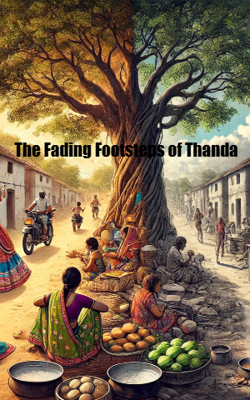
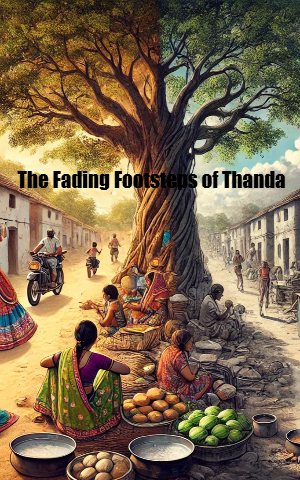
The boy had always known his home by the rhythm of footsteps—children running through dusty lanes, women in bright Kaalipetiya skirts adorned with mirrors and embroidery, moving gracefully as they worked, their silver jewelry jingling with each step. Men returning from distant markets. His Thanda, a settlement of the Banjara community in Telangana, was more than just houses and pathways. It was once alive with music, stories passed down through generations, and voices that echoed through the air. The wind carried the scent of freshly made jowar rotis, and the night sky was lit by both moonlight and the laughter of families gathered around fires.
But now, when he visits, silence greets him.
As he walks through the same narrow lanes, they feel wider, emptier. The brightly painted houses have faded, some walls cracked with age, others abandoned altogether. Many doors remain locked, windows broken, memories frozen in time—their owners having left for the cities. The elders still sit under the old neem tree, their wrinkled hands clutching wooden sticks, their eyes carrying stories of a time when the Thanda was bustling with people. They recall how their ancestors had once moved from Gandhara Mahajanapada, traveling across lands in search of trade and livelihood, making the forests and plains their home. Now, their own children and grandchildren leave in search of a different future—one built in concrete jungles instead of the open lands of the Thanda.
The boy remembers how, as a child, he would see his mother and sisters wear Kaalipetiya every day. Now, it is pulled out of wooden trunks only for festivals and ceremonies, its mirrors reflecting a past that is slowly being tucked away. Their food has changed—once, their meals were filled with jowar rotis, spicy chutneys, and wild greens, but now, instant food from the city has taken over. He wonders, Is this progress or loss?
Now, the air is heavy, not with music, but with silence. “It feels like a graveyard,” he whispers one day as he walks through the empty lanes. During the village festival, the Thanda comes to life again—at least for a day. Families return, and the air fills with drumbeats, dances, and old songs. But when the festival ends, so does the gathering. The Thanda returns to its eerie silence, resembling a forgotten graveyard where only memories linger.
One evening, he sits beside his grandfather, watching the fire flicker in the dimly lit courtyard. “Where is technology taking us? Is it good or bad?” he asks.
The old man sighs, staring into the distance. “It is like fire—it can cook food or burn a home. We thought cities would give us a better life, but they have taken our roots. Now, even when we return, we are strangers in our own land.”
The boy knows this Is true. Even in his own family, traditions are slipping away. His mother once wore Kaalipetiya daily; now, it is only taken out during festivals and ceremonies. The bright colors, heavy silver ornaments, intricate mirror work—it all remains, but only as something to be worn for a day and then put away.
Even their food is not the same. He remembers the taste of his grandmother’s jowar rotis, the spicy chutneys made from sun-dried red chilies, the smoky aroma of slow-cooked dal in clay pots. But in the cities, food is fast, convenient, packaged. Even when his mother tries to cooktheir traditional dishes, the taste is not the same. The air, the soil, the water of the Thanda—it had its own essence, one that cannot be found in concrete jungles.
The boy looks around and feels the weight of these words. The Thanda is still here, but it is not the same. And neither is he.
Maybe the past cannot return, but can it still be preserved? That question lingers in his heart as he leaves the Thanda, footsteps echoing in the empty lanes.
But will it remain, or will it turn to dust?