Library

 Profile
Swachh Bharat: A Decade of Change Through Local Lenses
Swachh Bharat: A Decade of Change Through Local Lenses

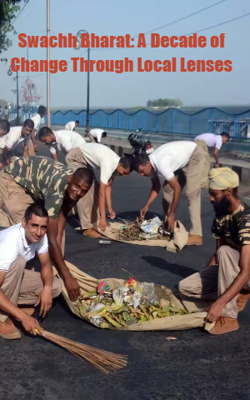
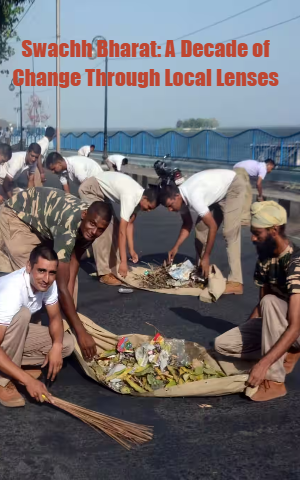
Swachh Bharat Mission is the biggest sanitation reform attempt in India, launched way back in 2014. Over the last decade, it has brought tremendous change in how people across India understand and approach cleanliness, hygiene, and sanitation. More than a policy, it was a movement that threw up a national call to action, awakening the conciseness of rural and urban India. To fully understand the impact of SBM, we need to perceive it from both local experience and vernacular languages and how it cuts through regional issues, cultures, and challenges.
Vernacular Language to Drive the Movement of SBM
The Swachh Bharat Mission thrives by communicating in the local language it adapts, as India is such a vast country with many languages and cultures. It uses local languages to penetrate the depths of the rural areas in particular, especially in areas where literacy in English or Hindi is low. Whether slogans, public announcements, or awareness campaigns are disseminated through regional languages, every person is going to hear the hygiene message, ODF status, and sanitation.
Take, for example, Tamil Nadu; campaigns in the language of Tamil went directly close to the local tradition and values, hence making people more responsive to the issue of cleanliness. In a state like Maharashtra, for example, Marathi languages such as the use for SBM made local leaders and influencers faces of the campaign, and regional pride became the added dimension for that movement. With this regional approach, SBM has been able to work with nuances of community differences to fill the gap that exists between policy and people.
Regional Relevance: Coping with Local Sanitation Problems
Sanitation challenges vary across different regions of India. While in the states of Bihar and Uttar Pradesh, open defecation had been common, behavioral issues were highly intrinsic; therefore, in these two states, the main challenge for SBM was to change this behavior. Whereas in the state of Kerala, with relatively well-developed sanitation infrastructure, the main problem that the state was facing was waste management and sustainability.
This included hilly terrains in Uttarakhand, where the construction of toilets turned out to be a challenge for logistics. Here, SBM itself had to join hands with local Panchayats and come up with practical solutions that could culturally blend in with the context. In coastal areas like Odisha, SBM focused entirely on building flood-resistant toilets that can sustain even the worst weather conditions of this specific region.
Phase II of SBM launched in 2020, took even the exercise much further from that regional consensus. The sustainability of ODF status and the establishment of SLWM systems formed an important plank of Phase II. The promise to transform every village into an ODF Plus Model by 2024-25 speaks to the continued commitment to the regional challenges in that no remote parts of the country would be left behind.
Capturing Insights from Local Communities
Any movement in which the voices of people who experience its impact are important lies in success. For example, villagers in states like Madhya Pradesh appreciate the fact that SBM has made a huge difference in eliminating open defecation. There is dignity and pride in these surroundings now. Perhaps the most vocal group behind SBM has been women, as the toilets constructed at home provide safety, privacy, and most importantly, empowerment.
One such example is that of one small Rajasthan village where the community and government officials jointly worked towards obtaining ODF status. The head of the village, Sarpanch Sunita Devi, motivated every household to build a toilet; she arranged funds and resources for the economically weaker sections. Today, the village not only maintains ODF status but also has a small unit to dispose of house waste through composting and acts as a role model for several nearby villages.
Impact and Reach through Local Media
This article should hence be published in the regional newspapers and e-sites so that the message comes out to have the maximum impact. Newspapers such as "Sakal" in Maharashtra, "Eenadu" in Andhra Pradesh, and "Dainik Bhaskar" in the Hindi belt have large readerships and would ensure that the message goes down to the grassroots. These publications are the widely trusted voices in their communities, making them very ideal platforms for spreading the message of the 10 years of the Swachh Bharat journey.
Plus, regional radio stations and social media hubs in local languages have become humungous reach-out platforms. A campaign done at the right time, where local heroes are covered on stations like All India Radio or through channels like YouTube in regional languages, will bring the article into circulation, making it all-inclusive in its reach, touching people at every stratum of society.
Conclusion: A Change to Go for Every Region
This is the moment when India is to reach its target of declaring all the villages ODF Plus by 2024-25, and it calls for reflection on the seemingly unbelievable progress so far under the Swachh Bharat Mission. The journey of change has been energized not only by policies but also by the people themselves who have embarked upon the movement in their languages, contexts, and cultures.