Library

 Profile
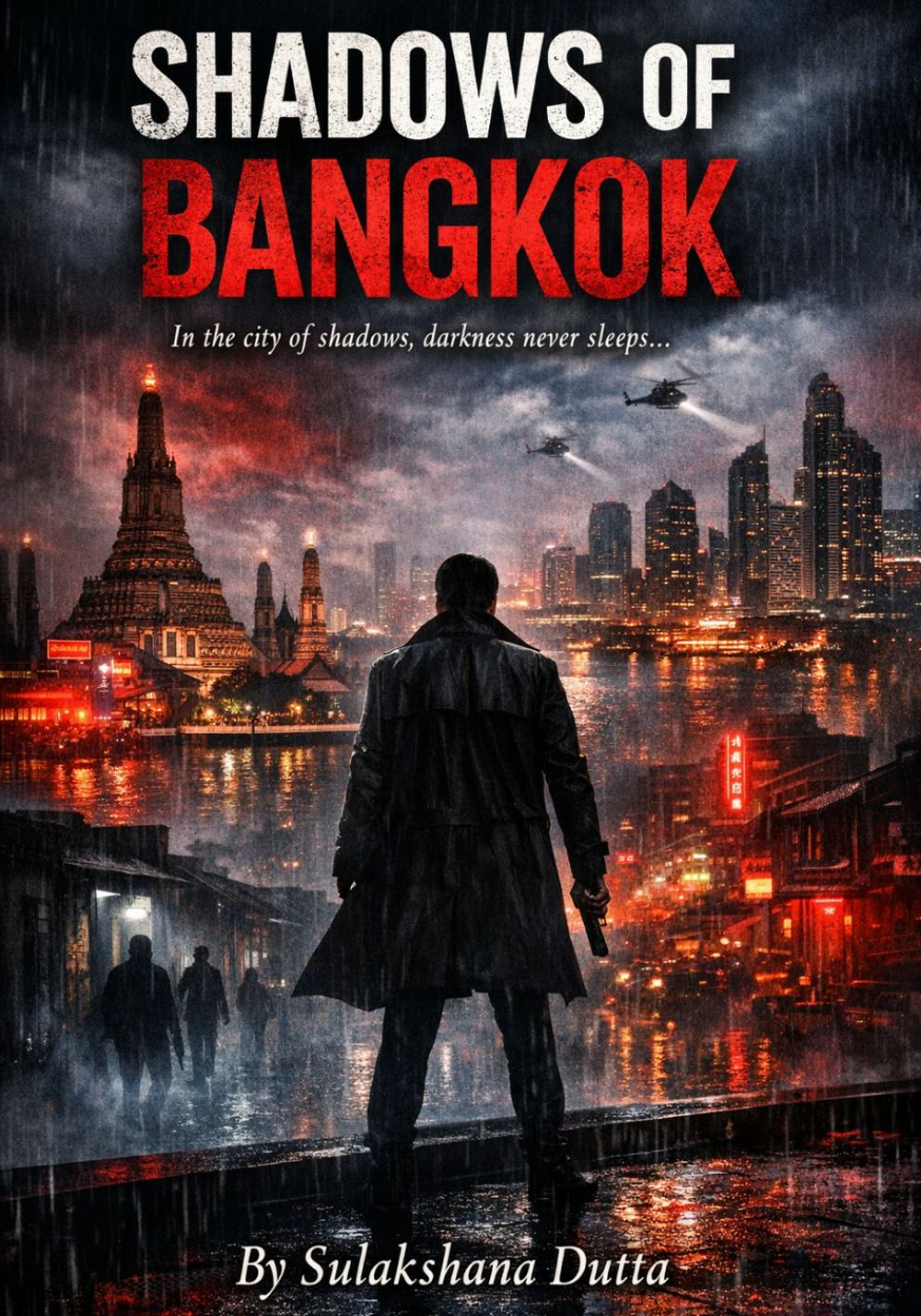
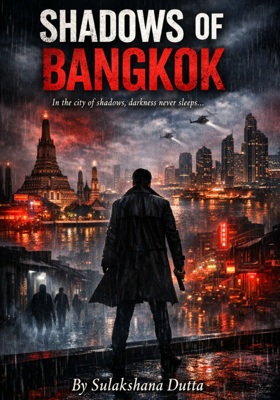
SHADOWS of BANGKOK
SHADOWS of BANGKOK

Character Name and Roll :-
Niran Chaiyaporn - Detective / Protagonist City’s guardian, hunts killers, faces psychological trauma
Phayao - Psychopathic killer / 2nd antagonist Chaotic, unpredictable, tests Niran physically & mentally
Thanakorn- Serial killer / 1st antagonist Ritualistic murders, psychological games, captured early
Viriya- Mastermind killer / Final antagonist Smarter, adaptive, city-wide chaos, ultimate showdown
Suriya Chaiyaporn- Niran’s sister Personal stakes, emotional leverage, hostage
Bangkok (City) -Setting / Almost character Reflects darkness, danger, and suspense
Police Colleagues -Supporting characters Assist Niran, highlight his isolation
Random Victims - Plot devices Show killers’ brutality, escalate suspense
The city of Bangkok never slept; it only stirred, its neon veins pulsing with restless energy. Rain-slicked streets reflected the jagged lights of advertisements, but beneath the glamour, rot festered. Crime was not just an occasional visitor—it was the city’s constant heartbeat. Detective Niran Chaiyaporn had patrolled these streets for over a decade, but tonight, the city felt different. He could smell it, like copper in the air before a storm. The call came just as he was about to leave his office, a curt message that shattered the monotony of his evening: a politician had been found dead, and the scene was… disturbing.
When Niran arrived at the apartment building, the lobby was silent except for the hum of a flickering fluorescent light. The elevators smelled of mildew and desperation. He stepped into the penthouse, where the stench of blood and antiseptic assaulted him. The body lay sprawled across the polished floor, unnaturally twisted. Every limb seemed positioned with meticulous care, almost as if the killer had choreographed a grotesque dance. Written across the wall in crimson letters were the words: “Hate is eternal.” Niran’s stomach turned. He had seen violent crime before, but there was a pattern here—an intelligence behind the madness.
The investigation began, and every lead spiraled into darkness. The victim’s political allies were shadows of ambition, their smiles masking contempt and fear. But none of that mattered; the killer had left nothing concrete—no fingerprints, no video, no witnesses. Only the taunting messages, like whispers from a mind unhinged. Niran knew this wasn’t random. This was personal, and whoever did this wanted to send a message to the world: nothing was safe from hate.
Days turned into sleepless nights. Niran scoured the city, following leads that seemed to vanish into thin air. That’s when he first heard the whispers. In the dead hours, while reviewing CCTV footage in his dimly lit office, he noticed something unsettling. A shadow moved through every scene, subtle, fleeting—a figure with no face, no reflection, yet always there, watching. At first, he blamed exhaustion. But as the nights passed, the whispers grew louder, manifesting in the form of cryptic notes slipped under his door, each one more taunting than the last. “You can’t run from your hatred, Niran. It lives inside you.”
The killer, who called himself Thanakorn, was a psychopathic genius. He understood the human mind in ways Niran had only read about in textbooks. Every murder was designed to provoke, to torment, to twist the psyche of those left behind. And now, Niran was the target. Thanakorn wanted him to unravel, to confront the darkness inside himself, to question the morality he had clung to for so long. Niran’s dreams became fevered nightmares; he would awaken drenched in sweat, convinced that Thanakorn was in the room with him, watching, laughing.
The city became a maze of paranoia. Niran traced Thanakorn’s movements through old crime records, patterns in previous unsolved murders, and subtle indicators most detectives would overlook. He began to see a method in the madness: Thanakorn targeted those who had wielded power cruelly, those who had inflicted harm without consequence. But there was more—this was ritualistic, almost symbolic. Each murder reflected the killer’s warped sense of justice, a mirror held up to the world’s cruelty.
Then came the first direct attack. Niran had returned to his apartment late one night when the door was ajar, a faint smell of iron in the air. Inside, the room was rearranged—his photographs pinned to the walls, strings connecting faces and names in a chaotic web, all leading to him. On the desk lay a single photograph, torn and defaced: Niran’s own face crossed out, a red X smeared across it. A note read: “Hate is a fire. Don’t let it consume you… or let it guide you.” Niran’s hands shook as he read the words. Thanakorn wasn’t just playing a game—he was rewriting Niran’s life as part of his masterpiece.
The detective’s obsession grew. He isolated himself, haunted by paranoia and rage. Friends and colleagues tried to intervene, but Niran pushed them away. He didn’t trust anyone anymore; the killer could be anyone, anywhere. He began to study psychopathy obsessively, reading about serial killers, forensics, and criminal profiling. He immersed himself in Thanakorn’s world, trying to predict his next move. But with every step forward, the line between hunter and hunted blurred. Niran began to feel the dark thrill Thanakorn had woven into his murders—the intoxicating lure of vengeance, the seductive power of fear.
It was during one of these sleepless nights that Niran discovered a pattern hidden in the chaos: a sequence in Thanakorn’s murders that mirrored historical acts of vengeance in the city. Each crime scene corresponded to an event from Bangkok’s dark past, a reminder of atrocities no one wanted to remember. Niran realized that Thanakorn’s ultimate goal was to unearth the city’s sins and expose them to the world, but in a way that forced Niran to confront his own buried hatred, his suppressed rage, his unresolved trauma.
The tension reached its peak when Niran received an anonymous tip: the next target would be someone close to him. He raced through rain-soaked streets, heart pounding, every shadow a potential threat. And there, in an abandoned warehouse on the outskirts of the city, he found Thanakorn waiting. The killer’s face was partially obscured by a mask, but the eyes glimmered with cold intelligence. Words were unnecessary. The room itself was a trap, a maze of mirrors and shadows designed to disorient and terrorize. Thanakorn had studied Niran, anticipating every move, every thought.
The confrontation was brutal, both physical and psychological. Thanakorn fought not just with weapons, but with words, twisting Niran’s fears against him, forcing him to relive his worst moments, the failures he had buried deep inside. Niran’s fists collided with steel, his mind teetered on the edge, but he refused to yield. He realized that to survive, he had to embrace the darkness Thanakorn had drawn out, to acknowledge the hate within himself without letting it consume him.
In the final moments, Niran managed to disarm Thanakorn, turning the killer’s own trap against him. As the police stormed the warehouse, Niran stood over Thanakorn, breathing heavily, his reflection fractured in the shards of broken mirrors. Thanakorn smiled, almost approvingly, before the authorities restrained him. In that smile, Niran saw the truth: the killer didn’t need to escape. The real victory had been psychological—he had shown Niran the fragility of morality, the power of obsession, and the seductive allure of madness.
Bangkok returned to its uneasy slumber, neon lights flickering over wet asphalt, indifferent to the violence that had unfolded in its shadows. Niran Chaiyaporn walked through the streets, scarred but resolute. He had faced the darkness and survived, but he knew it would always whisper to him, a reminder that hate could never be fully extinguished. And somewhere, deep in the confines of Thanakorn’s cell, the psychopathic genius waited, smiling in the knowledge that his masterpiece had forever changed the man who dared to chase him.
The sun rose weakly over Bangkok, its orange light struggling to pierce the persistent haze of smoke and smog. Detective Niran Chaiyaporn sat alone in his apartment, nursing a cup of bitter black coffee, though it did little to ease the fatigue pressing against his temples. The events of the past weeks replayed in his mind like a looped nightmare. Thanakorn was behind bars, restrained and silenced, yet the whispers in Niran’s mind refused to fade. He thought he had survived the worst, but he knew better. Darkness, once tasted, leaves a residue that nothing can wash away.
The city seemed calmer on the surface. Bangkok’s neon lights glimmered on wet streets, tuk-tuks rattled through the alleys, and life went on. But Niran had changed. He walked faster, eyes scanning shadows, ears straining for the faintest sound. The haunting memory of Thanakorn’s eyes—the way they seemed to see past flesh and into the soul—had left a permanent mark. The detective’s colleagues whispered behind his back, worried about his obsession. Niran barely noticed; his focus had shifted. He had learned one lesson too many: surviving darkness didn’t make you safe from it.
Then, the first sign appeared. A single black envelope slipped under his apartment door, sealed and unmarked. Inside was a photograph of Bangkok’s skyline at night, streaked with rain, and written in red across the bottom were the words: “He is only the beginning.” Niran froze. The handwriting was different from Thanakorn’s—but the message was unmistakable. Someone else had emerged from the shadows, someone who knew Thanakorn intimately. And if this was true, the nightmare was far from over.
The city became a labyrinth of tension. Niran returned to his precinct, demanding access to all of Thanakorn’s files, interrogations, and psychiatric evaluations. He combed through every note, every scribble, every detail the psychopathic genius had left behind. It was during this search that he noticed something chilling: a sequence of numbers hidden in the margins of Thanakorn’s journal. At first, it seemed meaningless, but soon Niran realized they were coordinates scattered across Bangkok. Each point corresponded to past crime scenes, some already solved, some left as cold cases.
Niran’s instincts screamed that the pattern wasn’t finished. Thanakorn had been just a precursor, a warm-up act in a much larger performance. The new killer—who he internally named Phayao—was preparing something even more sinister. The detective’s pulse quickened. He could feel the city itself holding its breath, as if aware of the threat lurking in its veins.
Days blurred into nights. Niran found himself haunted by dreams that were more memories than fantasies: shadows slithering through alleyways, screams echoing from unseen buildings, and a faceless figure watching him from every reflective surface. He began to lose track of time, skipping meals, pushing away friends, letting paranoia tighten its grip. He knew he couldn’t stop now. Bangkok depended on him, whether the city realized it or not.
Then came the first attack. A wealthy businessman, long rumored to be involved in political corruption, was found dead in his luxury condo. The scene was horrific, more elaborate than Thanakorn’s murders. The victim had been posed in a grotesque tableau, surrounded by mirrors reflecting distorted images of himself. On each mirror, words were scrawled: “Justice is only for the brave.” Niran studied the scene carefully, realizing that the killer was not just violent but theatrical, seeking to instill terror as an art form. The fingerprints left behind were masked, the CCTV cameras disabled, yet the precision and subtlety indicated a mind as brilliant—and as mad—as Thanakorn.
Niran began to connect the dots. The new killer, Phayao, was a shadow of Thanakorn’s intellect, but sharper, more unpredictable. Unlike Thanakorn, who thrived on psychological manipulation and terror, Phayao seemed to embrace chaos itself, using the city as a weapon. Niran knew that stopping him would require more than skill; it would demand him to embrace his own darkness without losing himself completely.
The detective’s hunt led him into Bangkok’s underworld. Hidden clubs, illegal fight rings, and abandoned temples became his hunting grounds. Each location revealed more about Phayao’s psychology: a man who despised weakness, who thrived on fear, who understood human fragility better than anyone Niran had ever met. The closer he got, the more he began to question his own morality. Niran’s fists shook with rage as he interrogated criminals, demanded information, and pushed himself beyond physical limits. Every time he thought he was gaining ground, Phayao vanished, leaving only terror in his wake.
One night, Niran received a text message with no number attached: “Meet me where the city sleeps. Alone. Or she dies.” Attached was a photograph of his younger sister, Suriya, whom he had always tried to shield from the darkness of his work. Niran’s heart pounded. It was a trap, of course. But he had no choice; he couldn’t risk her life. That night, he ventured into the abandoned riverside warehouses where Bangkok’s forgotten industries decayed. Mist rose from the river, curling around rusted metal and shattered glass. Every step echoed with potential death.
Phayao awaited him. Unlike Thanakorn, he didn’t wear a mask. His face was pale, eyes cold and sharp, a smile curling like a blade. “You’re late, Detective,” he said softly, almost mockingly. “I was beginning to think you’d let fear stop you.” Niran’s fists clenched. There was no hesitation this time—only the raw intensity of a man who had faced darkness and refused to blink.
The fight that followed was brutal: steel met bone, shadows clashed with shadows, and the air was filled with the metallic scent of blood. Yet as ferocious as the battle was, the real struggle was not physical—it was mental. Phayao taunted, dissected, and manipulated Niran’s every thought, trying to break the detective from within. Hours seemed like minutes. Niran’s body screamed, yet his mind sharpened. He understood that survival meant more than brute force; it required embracing the darkness Phayao wielded without letting it consume him.
Using a combination of cunning, patience, and sheer will, Niran trapped Phayao in a steel cage rigged with his own devices, finally subduing him. The man smiled faintly, eyes gleaming with admiration: “You learned quickly. But darkness… it never ends.” Bangkok exhaled quietly that night, oblivious to the shadows that had waged war in its streets.
Niran Chaiyaporn stood over the city, drenched in rain, blood, and sweat. He had survived again—but he knew the battle was far from over. Darkness was a tide, eternal and patient, and Bangkok was its shore. Somewhere in the city’s heart, new shadows waited, learning, watching, whispering. And Niran knew that as long as he drew breath, he would walk the thin line between law and madness, alone, haunted, and relentless.
Bangkok had grown restless. The neon glow seemed colder now, reflecting off rain-slicked streets like a warning. Detective Niran Chaiyaporn moved silently through the shadows, his senses sharpened by weeks of obsession. Though Phayao was trapped in a steel cage at the precinct, Niran couldn’t shake the feeling that the killer’s influence had already seeped into the city. Messages, threats, and whispered warnings hinted that Phayao had planted something—a network, a plan that would unfold even from behind bars.
Niran returned to the precinct, poring over every piece of Phayao’s history. Old associates, abandoned hideouts, unexplained disappearances—they all pointed to one chilling conclusion: Phayao had spent years preparing a meticulously orchestrated chaos across Bangkok. It wasn’t just murder; it was terror engineered to manipulate the city itself. Niran realized the nightmare wasn’t just personal anymore—it was imminent, massive, and unpredictable.
That night, an anonymous call came in. A distorted voice whispered: “Bangkok will bleed at midnight. Only you can choose who survives, Detective. Fail, and the city dies.” The line went dead before Niran could respond. His mind raced. Every instinct screamed urgency. He mobilized a small, trusted team, but he knew this hunt was personal—no one else could match the predator’s cunning. Every step through Bangkok felt like walking a razor’s edge between life and death.
The first clue led him to the old Chao Phraya docks, a maze of warehouses long abandoned and now used by smugglers and gangs. Niran moved silently, flashlight slicing through the darkness. A single clue had been left for him: a map of the city with several red X’s marked across key locations—bridges, markets, and government buildings. Each X had a timer etched beside it, counting down toward midnight. The terror of realization struck him: Phayao had set multiple traps simultaneously, each capable of mass destruction.
Niran split his focus, racing against time, moving like a ghost through the city. He defused improvised explosives at a riverside market, rescued hostages from a collapsing warehouse, and intercepted hit squads disguised as ordinary citizens. Yet with each success, the tension escalated. He could feel Phayao’s presence everywhere, not physically, but psychologically. It was as if the killer had become the city itself, his malevolent influence pulsing through every alley, every street corner, every shadow.
Hours blurred, and the clock edged closer to midnight. Exhaustion gnawed at Niran, but he pushed forward, driven by a mixture of fear, duty, and an almost primal rage. He traced the final lead to a skyscraper in Bangkok’s financial district—the tallest building in the city, symbolic, and central to Phayao’s plan. Every security camera along the way was disabled, and every floor seemed designed to disorient him. The maze of elevators and staircases became a psychological trial, each turn a potential trap, each shadow a threat.
At the top floor, Niran found Phayao waiting, calm and composed despite the chaos around him. “Welcome, Detective,” he said, voice smooth, almost casual. “You made it this far. Impressive… but you still don’t understand.” Behind him, screens flickered, showing live feeds from all over Bangkok—the culmination of months of planning. Explosives were rigged, hostages positioned, and the countdown ticked relentlessly toward disaster. Phayao’s eyes gleamed, cold and calculating.
Niran lunged, and the fight erupted, brutal and unrelenting. Phayao was faster and more agile than anyone he had faced. Every strike and counterstrike carried not only physical force but psychological weight, a constant assault on Niran’s fear, guilt, and memories of failure. The detective felt his mind fray, teetering on the edge, but he focused on one truth: he couldn’t fail—not now, not with the city at stake.
Using a combination of precision, cunning, and sheer endurance, Niran turned Phayao’s own devices against him. He forced the killer to lead him through the security systems, disarming traps and saving hostages along the way. The skyscraper shook with the tension of every second ticking closer to midnight. Sweat and blood streaked Niran’s face as he reached the control room, cornering Phayao at last.
“It ends here,” Niran said, voice low, steady, yet tinged with the rage that had been building for weeks. Phayao smirked faintly, seemingly unafraid. “Does it, Detective? Darkness never ends… it only changes shape.” Niran hesitated for a heartbeat, remembering all the lessons, all the deaths, all the terror that had come before. And then, with a calculated strike, he subdued Phayao, securing him with reinforced restraints that left no chance of escape.
As Bangkok’s clock struck midnight, the city breathed a collective sigh of relief, oblivious to the war waged in its shadows. Lights flickered back to life, streets thrummed with life, and normalcy returned, though fragile. Niran stood on the rooftop, rain washing over him, body battered but spirit unbroken. He had stopped the apocalypse, saved countless lives, yet he knew the truth: the darkness would return, in another mind, another shadow, another whisper.
Niran Chaiyaporn walked back into the city’s streets, scarred and vigilant. He had faced the abyss and survived, but Bangkok had changed him as much as he had changed it. Somewhere, deep in the underbelly of the city, new plans were already forming, new whispers waiting to be heard. And Niran knew, as long as he drew breath, he would be the line between the city and its shadows—alone, haunted, relentless, and unyielding.
Bangkok never truly slept. Even in the early hours, when the city seemed quiet and innocent, shadows lingered between the neon lights and narrow alleys. Detective Niran Chaiyaporn walked these streets alone, his coat pulled tightly around him, senses stretched taut. Though Phayao was behind reinforced bars, a part of Niran knew the battle wasn’t over. Darkness didn’t end with capture—it lingered, waiting for the smallest crack in vigilance.
Sleep had become a stranger. Niran’s nights were filled with restless wandering and dreams that bled seamlessly into memories. Every shadow in his apartment seemed alive, every passing stranger a potential threat. He had survived Phayao’s attacks and saved countless lives, yet the cost weighed heavily. His mind replayed every scream, every calculated murder, every cold smile, over and over. He felt haunted not just by the killers, but by the darkness within himself—his rage, his obsession, his willingness to embrace violence to survive.
The police precinct tried to intervene, offering counseling and debriefing. Niran attended sessions mechanically, listening to words that felt hollow. He couldn’t speak of the fear that still clung to him, the whispers that sometimes returned in empty streets, or the compulsion to check every corner, every alley, every shadow. Colleagues noticed his isolation, his jittery movements, the obsession in his eyes, but Niran knew that only he could confront the truth: surviving darkness meant living with it.
Then the signs began again. Small at first—an envelope slipped under his apartment door, a photo of a random alleyway, a note reading: “You know it never ends.” The handwriting wasn’t Phayao’s, nor Thanakorn’s. It was new. Someone else was watching, studying, waiting. The message was clear: Bangkok was fertile ground for madness, and Niran, the man who had walked the razor’s edge, had become a target in a game he didn’t fully understand.
Niran followed the clues, tracing a network of underground contacts, old criminals, and abandoned warehouses. He discovered subtle hints of a new figure, one who admired Phayao’s methods but sought to surpass him in brutality and chaos. The city had another shadow rising, one who learned from the mistakes of the past killers and was patient, cunning, and sadistic. Niran realized that the cycle of terror was not broken—it had only evolved.
Even as he prepared for this new threat, Niran faced his own inner demons. The violence he had witnessed, the rage he had harnessed, had left him changed. He sometimes imagined the faces of victims haunting him in reflections, or the sound of Phayao’s laughter echoing in empty streets. Friends tried to pull him back, but Niran had become a creature of the shadows, a man both protector and predator, walking a line that few could understand.
The city itself seemed to respond to his tension. Bangkok’s rain-slicked streets were quieter now, as if holding its breath. Neon signs flickered, alleys whispered secrets, and distant sirens hinted at danger. Niran knew that this quiet was temporary. Somewhere, in the tangled maze of streets and shadows, the new killer was watching, planning, learning. And when the time came, the city would bleed again.
Yet Niran accepted it. He had survived darkness twice, had stared into the abyss, and had not fallen. He knew he would survive again, though at a cost. He would live with fear, with obsession, with paranoia, and with the whispers in his mind—but he would act as Bangkok’s line of defense, its unwilling guardian against shadows that would never sleep.
As dawn broke over the Chao Phraya River, reflecting pink and orange on the wet concrete, Niran stood on a rooftop overlooking the city. The streets stretched endlessly below him, filled with life, ignorance, and hidden peril. He lit a cigarette, inhaled the smoke, and exhaled slowly. Bangkok was alive, vibrant, dangerous, and beautiful. And somewhere in the darkness, a new shadow moved, patient, waiting for the perfect moment to strike.
Niran Chaiyaporn smiled faintly, a grim, knowing smile. He would be ready. Shadows never ended, and neither would he. The city whispered its secrets, and he listened, always listening, always watching, alone, vigilant, and unbroken.
Weeks had passed since Niran had subdued Phayao, but Bangkok felt like a city teetering on the edge of madness. The neon lights reflected a restless unease, and even the river seemed to murmur secrets. Niran Chaiyaporn walked the streets at night, ever alert. His senses, sharpened by months of horror, detected what others couldn’t—slight movements in shadows, whispers carried by the wind, and the faintest traces of chaos. The new killer, patient and intelligent, had begun to make his presence known.
The first sign was subtle: a corpse found in a quiet alley, a young man posed unnaturally, a black rose placed beside him. No fingerprints, no CCTV, only a single word scrawled in blood: “Learning.” Niran knelt over the body, eyes scanning every detail. The handwriting was unfamiliar, but the precision was unmistakable. Someone was studying the killers before him, analyzing their methods, and improving upon them. Niran felt the familiar knot of dread in his stomach. This was more than revenge or chaos—it was a game of evolution, and the city itself was the board.
He returned to his apartment, but sleep refused him. Dreams of Phayao, of Thanakorn, and now of this new figure haunted him. Shadows crawled across his walls, whispers echoed in his ears, and every reflective surface seemed to hold eyes that weren’t his own. Niran realized that this wasn’t just a hunt—it was a psychological siege, a battle for his mind. He began to question every ally, every civilian, every stranger. Trust had become a luxury he could not afford.
Then came the first message. A sleek black envelope slid under his door, heavier than usual. Inside was a small card with a single phrase: “Bangkok’s heart beats in fear. Are you still listening?” Alongside it was a photograph of the city from above, several locations circled in red. Niran’s pulse quickened. The new killer, whom he internally called Viriya, was bold, strategic, and terrifyingly patient. Every step Niran had taken was being observed, every move anticipated. The game had begun.
Niran mobilized, but differently this time. He didn’t rely on colleagues or reinforcements—too many variables. Alone, he moved through Bangkok’s underbelly: abandoned temples, derelict factories, and forgotten warehouses. Every place held a clue, every alleyway a potential trap. He studied Viriya’s movements, looking for patterns, but unlike Thanakorn or Phayao, Viriya adapted quickly, leaving only minimal traces. The detective felt a growing anxiety: he was chasing a shadow, and the shadow was learning faster than he could act.
The first confrontation came sooner than he expected. Niran received a call on a burner phone, a distorted voice whispering: “Find me at the old railway yard, or she suffers.” His sister, Suriya, once again in danger. Niran’s heart pounded as he raced through Bangkok’s empty streets, neon lights reflecting off rain-soaked asphalt. He arrived at the railway yard to find Suriya unharmed, but the area rigged with explosives and Viriya watching from the shadows, blending perfectly into the environment.
“You’ve done well so far, Detective,” Viriya said smoothly, stepping from the shadows. “But you are predictable. That’s your flaw.” The words were ice, designed to cut, to weaken, to unsettle. Niran responded with measured aggression, moving quickly to secure the explosives and protect Suriya. The fight was tense, precise, more a chess match than a brawl. Every strike and maneuver had meaning; every pause was calculated. Viriya’s skill was unlike anything Niran had faced—intelligent, adaptive, and cruel.
By the end of the confrontation, Niran had saved his sister, but Viriya vanished into the labyrinth of Bangkok’s streets. It was clear he had planned this encounter carefully—not to kill, but to send a message: the city itself could be controlled, and Niran was being tested. Exhausted, Niran returned home, realizing the terrifying truth: Viriya was not just a killer; he was a master manipulator, studying Niran, understanding him, shaping him. The game was no longer about stopping murders—it was about surviving the psychological battlefield.
The city, oblivious, continued its restless rhythm. Tuk-tuks rattled through narrow alleys, neon signs flickered, and distant sirens wailed. Niran Chaiyaporn stared at the skyline from his apartment, rain dripping from the ledge. He knew that Viriya’s plans were far from complete. The whispers, the shadows, the traps—they were only the beginning. Bangkok was vulnerable, and its guardian, scarred and obsessive, was the only line of defense.
Niran exhaled slowly, lighting a cigarette as the smoke curled into the night air. He had survived Phayao, contained Thanakorn, and now faced an enemy who was smarter, faster, and more sinister than either. Yet he remained resolute. Darkness never ended, and neither would he. He would walk the streets, alone, vigilant, haunted—but unbroken. Somewhere in the city’s heart, Viriya waited, watching, learning, and preparing for the next move.
Bangkok’s streets were unnervingly silent that night, as if the city itself knew that something monumental was about to unfold. Detective Niran Chaiyaporn moved like a shadow through the rain-slicked alleys, every sense alert. He had traced Viriya’s activities for weeks, and the pattern was now unmistakable: the killer intended a city-wide catastrophe. Explosives, coordinated chaos, and terror orchestrated with terrifying precision. Time had become Niran’s enemy.
He reached the central train station, a massive hub where thousands could be caught in Viriya’s trap. The station was empty now, evacuated after anonymous threats had forced authorities to act, but Niran knew the danger wasn’t gone—it was merely waiting. The killer’s signature precision was evident in every placement of wires, pressure triggers, and hidden cameras. Every corner was booby-trapped, every shadow a potential ambush. The detective’s pulse raced, his instincts honed to razor-sharp perfection.
Then, a single voice echoed through the station’s loudspeakers: “Welcome, Detective. You’ve been anticipating me, but have you considered that I anticipated you?” Viriya emerged from the shadows, unmasked, calm, almost smiling. His pale face contrasted sharply against the flickering neon and emergency lights. In his hands, he held a small device, but Niran could sense it was only part of a larger mechanism—a psychological game designed to test Niran’s every move.
The confrontation began immediately. Viriya didn’t rush; he moved deliberately, forcing Niran to react, dodge, and anticipate. The detective struck, but Viriya countered, using both his intellect and environment to manipulate the fight. Steel beams, glass panels, and machinery became weapons in the hands of both combatants. Every strike carried not just force but meaning; every move was a test of willpower and resilience.
Amid the chaos, Niran noticed the larger pattern: the entire station was rigged to collapse. Explosives were timed in a sequence that could cause structural failure, trapping or killing anyone inside. The fight became a race against time. Niran’s mind worked frantically: he had to subdue Viriya and dismantle the devices simultaneously. Sweat and blood blurred his vision, but the detective’s focus was unwavering. He understood that hesitation meant death—not just for him, but for the city.
Viriya laughed softly, a sound that cut through the tension like a knife. “Do you understand now? The city itself is a canvas, Detective. And you are part of the painting.” The words were meant to unnerve, but Niran had learned the hard way to steel his mind. Channeling his rage, experience, and resolve, he forced Viriya toward the central control room, dodging blasts, breaking panels, and manipulating the environment. Each step was a calculated risk, each breath measured.
Finally, Niran cornered Viriya at the heart of the station. With a swift maneuver, he disarmed the device and restrained the killer, locking him into reinforced chains that even someone as cunning as Viriya could not escape. The station’s countdown halted with seconds to spare, and Bangkok exhaled silently, unaware of how close it had come to annihilation. Niran collapsed against a wall, bloodied, exhausted, and trembling—but alive.
As emergency crews swarmed the station, Niran stood amidst the chaos, rain dripping from his hair, eyes burning with exhaustion and triumph. Viriya glared at him, pale lips curled in a faint, wicked smile. “You won today, Detective… but the shadows never end.” Niran met the gaze without flinching, understanding the truth in the words: darkness never truly disappeared; it only waited for the next opportunity, the next mind, the next city.
Bangkok’s skyline glimmered in the early morning light, neon fading into the rising sun. Niran Chaiyaporn walked the empty streets, battered but resolute. He had survived Phayao, Thanakorn, and now Viriya, facing darkness that sought to consume both the city and his soul. But he had endured. He had become more than a man—he had become a guardian of shadows, a silent sentinel walking the thin line between light and darkness.
Even as the city awoke, oblivious to the horrors averted, Niran knew the truth: evil never rested. Somewhere, in the alleys, the high-rises, the forgotten corners of Bangkok, new shadows stirred. But so long as he drew breath, Niran would walk among them, alone, vigilant, relentless. The city had survived—for now—but its guardian understood that the war between light and shadow was eternal, and the next battle could begin at any moment.
Niran took one last look at the skyline, his coat soaked with rain and sweat, fists still clenched. He inhaled deeply, letting the cold air fill his lungs. Shadows would come, and shadows would go—but he would remain, a steadfast, unbroken line against the darkness. Bangkok would never be safe, but it had one unwavering protector. And Niran Chaiyaporn would never rest.