Library

 Profile
Heartbeat
Heartbeat

Mira had never liked hospitals. The air was too clean, too dry. The walls hummed with fluorescent light, and time didn’t seem to move right—either dragging or skipping ahead with no warning. But she’d been living in one for the past nine days. Her father, Daniel Mehta, had collapsed in his garden while pulling weeds, and his heart hadn’t been the same since.
The ICU was quiet when she arrived each morning. Machines blinked and beeped, nurses whispered, curtains fluttered faintly with the air conditioning. It felt like waiting in an airport where no one ever boarded a plane.
On the tenth day, just after 3 a.m., the rhythm changed.
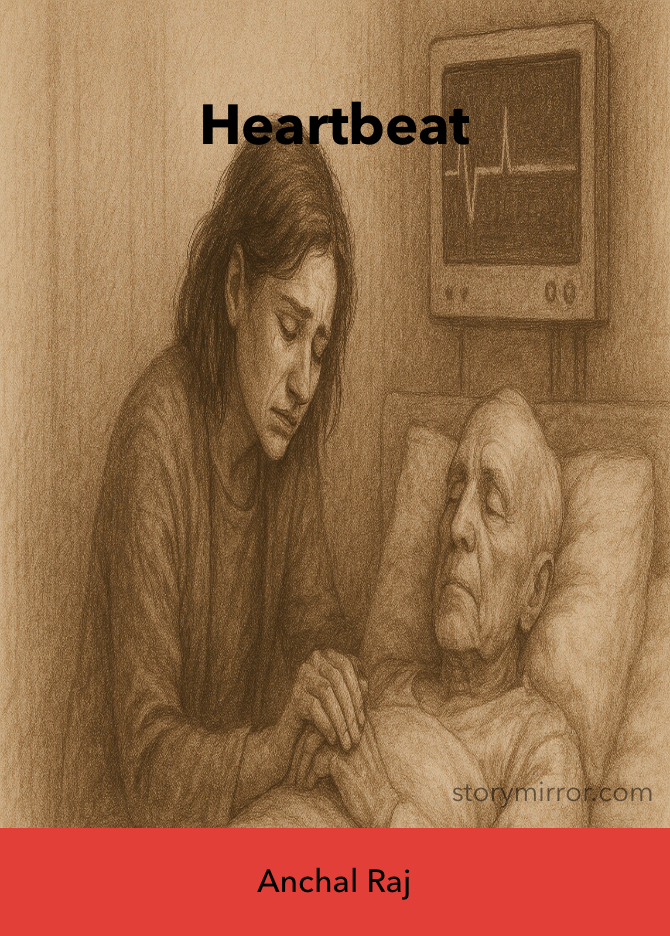
She had her head resting lightly against his mattress, watching the green line pulse steadily. She’d memorized it by now—the speed, the dips, the tiny glitches that didn’t alarm the nurses but still made her stomach clench. Then came the pause.
One beat.
Silence.
Another, slower.
Then longer silence.
She stood up, heart thudding in her ears. “Dad?” she said. It was almost a whisper, but it felt loud in the sterile room.
The nurse came in a moment later, calm, brisk. Checked his vitals. Wrote something down. “This happens sometimes,” she said. “He’s tired.”
But Mira had never known her father to be tired. The man who raised her worked twelve-hour shifts at the factory, then came home and cooked dinner. Even after the heart attack last year, he had insisted on walking every day, refusing help up the stairs. “A body at rest stays at rest,” he’d say, quoting someone he never named.
Yet now, here he was. Still. Not resting—drifting.
She sat back down and studied him. His face had thinned, sunken a little more each day. The beard he used to trim so precisely was patchy now. But his hands still looked strong. The same hands that taught her how to change a flat tire. Fix a leaky sink. Hold a cricket bat.
His heart, though, that was something else. His heartbeat had always been part of the background—steady, reliable. When she was a child, he’d hold her during thunderstorms, and she’d fall asleep against his chest, listening to the rhythm. Safe.
Now, it was uneven. Struggling.
And for the first time, she heard more in the pauses than the beats.
She imagined what his heart might be trying to say.
I’ve done my job.
I raised her.
I made a home.
I fought long enough.
She reached out, took his hand. It was warm, barely, but the warmth was leaving him slowly, like steam escaping a cooling kettle.
“It’s okay,” she said. “You can rest.”
He didn’t open his eyes, but something in his brow relaxed. Just a little.
She sat with him through the last hour. No one else was there. Just the two of them and the machines.
At 3:38 a.m., the monitor gave one last soft beep, then a long, unbroken tone. The flatline wasn’t as loud as she’d expected. It was strangely soft. The nurse moved quickly, did what needed to be done. Mira didn’t cry. Not yet.
She stood up, leaned down, and pressed her forehead against his.
“Thank you,” she whispered.
She walked out into the corridor, dazed. Everything felt too bright. Her body felt heavy, but her heart—her heart was beating faster than before. Like it knew it had to pick something up.
In the days that followed, she found herself noticing heartbeats everywhere.
In the ticking of her old wristwatch, the one he’d given her when she left for college.
In the muffled thump of the washing machine at night.
In her own chest when she sat in silence and finally let herself cry.
Grief came in waves. But the rhythm stayed. A pulse beneath it all.
Weeks later, she stood in his garden, pulling weeds. Her hands dirty, sweat running down her temple. She felt her heart pounding—not from sadness, but from labor. From living.
She smiled.
Still here, she thought.
Still beating.