Library

 Profile
Ekwaal: The Nation of Equals
Ekwaal: The Nation of Equals

The Unseen Divide
In the heart of a chaotic, crowded nation called Navbharat, children raced through dusty streets, dreams in their eyes and calluses on their feet. But not all dreams were equal. Boys from poor families, like 17-year-old Rahul, walked 7 kilometers daily to school, watching girls ride past on free cycles. They weren’t angry at the girls—just broken by the system that forgot them.
Rahul's best friend, Aaryan, noticed. Quiet, observant, and far-sighted, Aaryan wasn’t the kind to argue in public. But his mind boiled with questions: Why is help decided by gender or caste? Why not by need?
A Silent Spark
One night, Aaryan sat beside his mother, who worked late into the night stitching clothes to pay their school fees. He opened his old laptop and wrote the first draft of what he called the Equal Relief Code (ERC). It read:
> "No citizen shall be left behind based on gender, caste, or creed. The only factor for assistance shall be economic vulnerability."
It sounded simple. Too simple, maybe. But truth often is.
Building in Shadows
Instead of shouting slogans, Aaryan learned coding from YouTube. In six months, he launched Ekwaal, a mobile app that gave:
Verified transport passes to BPL/EWS students
Healthcare discounts based on income proof
Free learning kits for poor students regardless of gender
He did it all anonymously, using the alias "Samya" (meaning balance).
A Ripple Turns Wave
In a small town, a girl named Farhana received a textbook bundle through Ekwaal. She posted a thank-you video. Within a week, the video went viral. No politician could claim credit. People started asking, "Who is behind this? Why is this more fair than our government?"
Soon, districts across Navbharat adopted ERC-style models. Even some local leaders copied the idea to survive elections. They called it “Modern Welfare”, not knowing it all came from a teen in a rented flat.
The Day of Balance
Ekwaal grew into a national movement. No protests. No anger. Just quiet, data-driven reform. When Aaryan was finally revealed by a journalist, people expected a rebel. They found a soft-spoken boy who simply said:
> "I don’t want power. I just want balance. We rise by lifting those who need it most, not those who check the right identity box."
Navbharat changed. Slowly, but deeply. For the first time, people voted not by caste or freebies, but by logic.
Aaryan never ran for office. But his legacy lived in every schoolboy who didn't drop out, every girl who felt equal, and every citizen who finally felt seen.
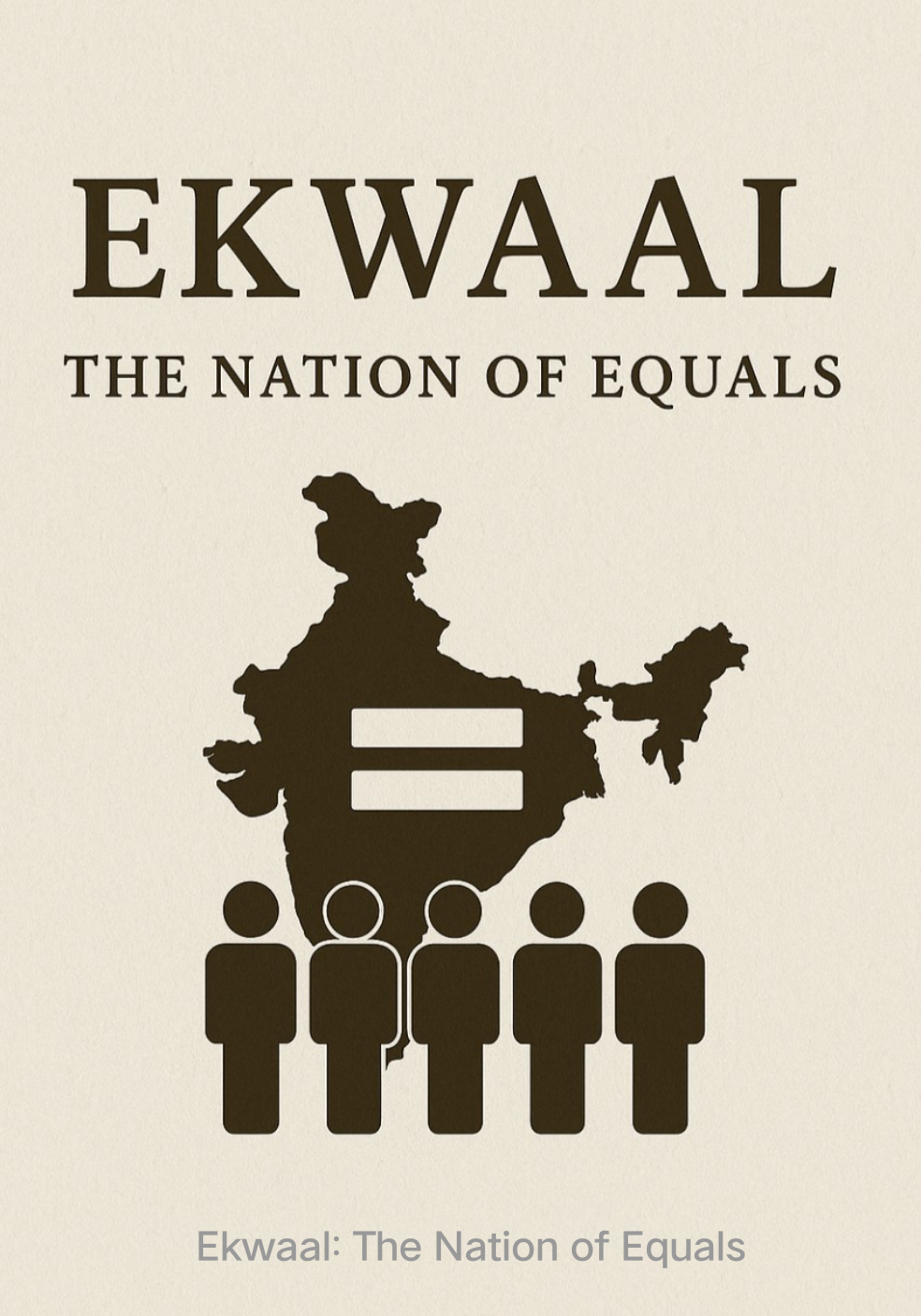
And thus, from a small room, Ekwaal: The Nation of Equals was born.