Library

 Profile
The Degradation of Human Software and Hardware
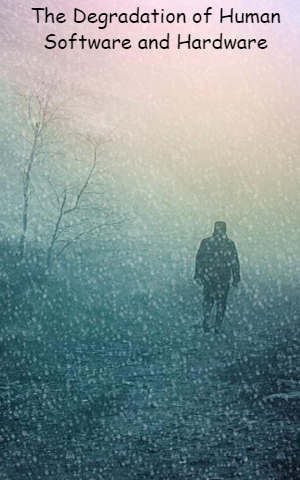
The Degradation of Human Software and Hardware

"Humans are the only creatures on Earth that will cut down a tree, turn it into paper, and then write 'Save the Trees' on it."
This quote, though humorous, hints at the contradictions in our modern lives. We create technology to simplify life, yet find ourselves more stressed. We invent ways to connect, yet feel more disconnected. Our progress, while undeniable, often comes at the cost of something deeper, something fundamental. I've been pondering why it feels like our "software" and "hardware"—our minds and bodies—are wearing out faster than ever.
The Overloaded MindHave you ever felt like your brain is a computer with too many tabs open? I know I have. We live in an age where information is everywhere, and it’s relentless. Notifications ping from our phones, emails flood our inboxes, and social media feeds never stop scrolling. It’s like trying to drink from a firehose, and our minds, the "software," are struggling to keep up.
But why is this a problem? Our brains were not designed to process so much information all at once. Historically, we dealt with information in small, manageable chunks. But now, we’re bombarded with data—most of which is irrelevant to our daily lives. This constant influx of information doesn't just make us feel tired; it changes how we think. Studies show that the average attention span has dropped significantly over the past few decades. We’re becoming skimmers, not deep thinkers.
And then there’s the anxiety. We’re more connected than ever, but loneliness is on the rise. Why? Because online connections often lack the depth of real-world relationships. We scroll through highlight reels of other people’s lives and compare them to our own unedited versions. It’s no wonder mental health issues like depression and anxiety are on the rise. Our software is overloaded, and it’s starting to crash.
The Declining BodyNow, let’s talk about our "hardware"—our bodies. I’m sure you’ve noticed that we’re not as strong, fast, or healthy as we used to be. The modern lifestyle, while convenient, is wreaking havoc on our physical health.
Think about it: most of us spend the majority of our day sitting—at work, in the car, at home in front of the TV. Our ancestors, in contrast, were constantly on the move. They hunted, gathered, and built things with their hands. Their bodies were their primary tools for survival. But today, we’ve engineered physical activity out of our lives.
This sedentary lifestyle is a ticking time bomb. It’s linked to a host of health issues, from obesity to heart disease to diabetes. And it’s not just about the big diseases. Even small, everyday aches and pains—back pain, joint stiffness, eye strain—are becoming more common. Our hardware is rusting, and we’re paying the price.
The Fast-Food EffectLet’s not forget about what we’re putting into our bodies. The rise of fast food and processed meals has changed how we eat, and not for the better. These foods are designed to be tasty and convenient, but they’re often devoid of real nutrition. They’re high in sugar, fat, and salt, and low in vitamins and minerals.
Eating this way doesn’t just lead to weight gain; it affects how we feel and think. Poor nutrition can lead to fatigue, brain fog, and mood swings. It’s hard to feel sharp and focused when your body isn’t getting the fuel it needs. Our ancestors ate whole, unprocessed foods, and thxeir bodies were better for it. But today, we’re feeding our hardware junk, and it shows.
The Disconnection from NatureThere’s something else that’s been bothering me: we’re increasingly disconnected from the natural world. When was the last time you spent a whole day outside, just being in nature? For most of us, it’s been a while. We spend our days in climate-controlled buildings, under artificial lights, staring at screens.
But our bodies and minds are designed to be in nature. There’s a growing body of research showing that spending time in natural environments has profound effects on our health. It lowers stress, boosts mood, and even improves cognitive function. Yet, we’re spending less and less time outdoors. We’re losing our connection to the natural world, and with it, an essential part of ourselves.
The Search for SolutionsSo, what can we do about all this? How can we reboot our software and upgrade our hardware? The first step is awareness. We need to recognize that something is wrong and that change is necessary.
One of the most effective things we can do is to unplug—literally. Take time away from screens and gadgets. Limit your intake of information. Give your brain a chance to rest and reset. Engage in activities that require deep thinking and focus, like reading a book, writing, or even meditating.
For our bodies, the solution is simple, though not always easy: move more. Find ways to incorporate physical activity into your daily life. It doesn’t have to be complicated. Take the stairs instead of the elevator. Go for a walk during your lunch break. Play a sport or take up a hobby that gets you moving. And pay attention to what you eat. Choose whole, unprocessed foods whenever possible. Your body needs real nutrients to function at its best.
Reconnecting with nature is another powerful step. Spend time outdoors, whether it’s in a park, the woods, or by the sea. Feel the sun on your skin, breathe in the fresh air, and listen to the sounds of nature. These experiences are more than just pleasant—they’re vital to our well-being.
The Path ForwardIt’s easy to feel overwhelmed by the challenges we face. But the good news is that we have the power to change. Our software and hardware may be under strain, but they’re also incredibly resilient. With the right care and attention, we can reverse much of the damage and set ourselves on a path to better health and happiness.
We’re at a crossroads. We can continue on the path we’re on, letting our minds and bodies degrade further, or we can take action. It won’t be easy, and it won’t happen overnight. But every small step we take—whether it’s turning off our phones for an hour, going for a walk, or choosing a healthy meal—brings us closer to the life we’re meant to live.
In the end, it’s about balance. We need to find a way to harness the benefits of modern life without losing touch with what makes us human. It’s a challenge, but it’s one I believe we’re capable of meeting. After all, if we can create the technology to connect with someone on the other side of the world, surely we can find a way to reconnect with ourselves.
Let’s take care of our software and hardware. Let’s live in a way that honors our bodies and minds, and the world around us. Because in the end, that’s what it truly means to be human.