Library

 Profile
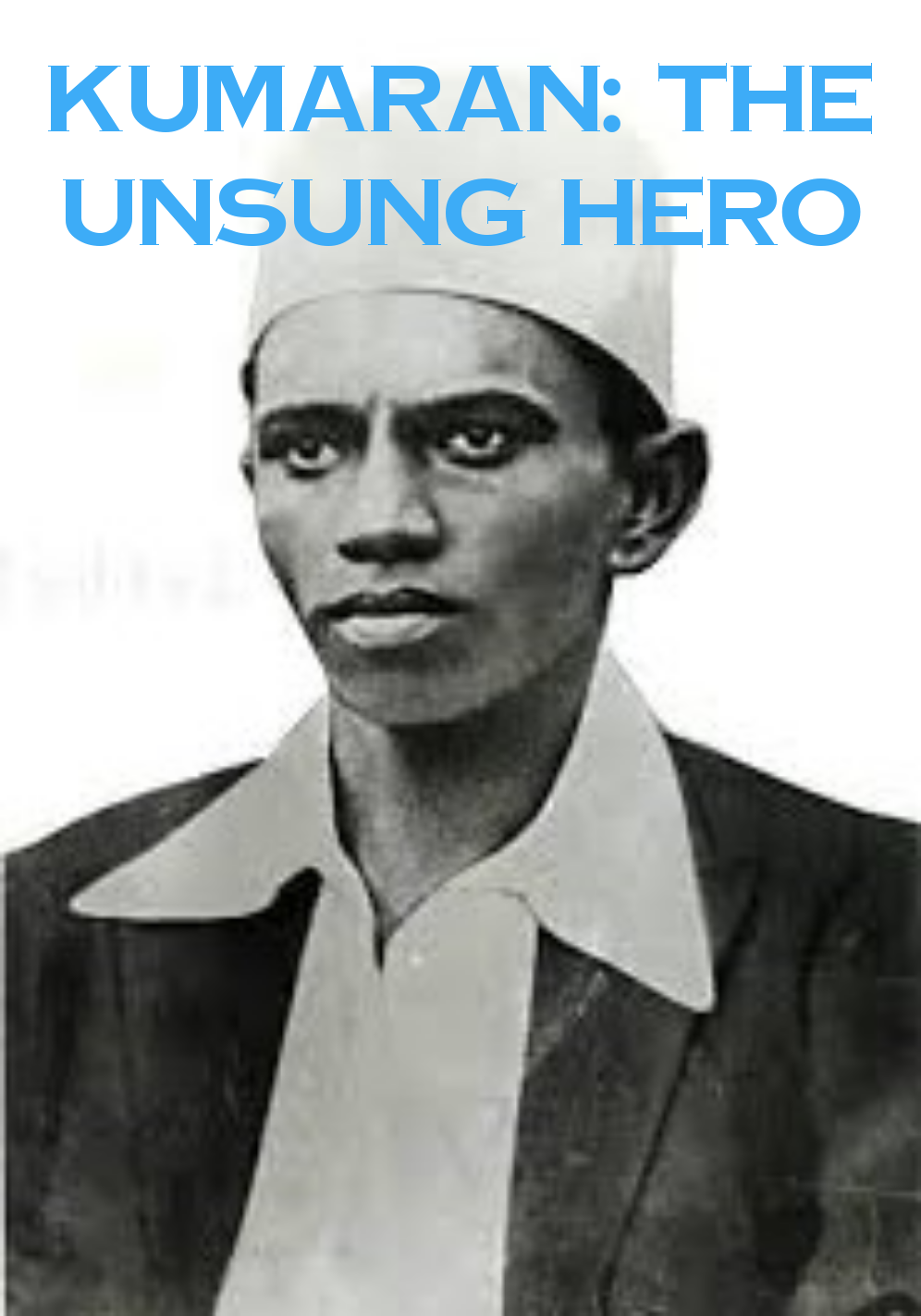
Kumaran: The Unsung Hero
Kumaran: The Unsung Hero

Note: This is the biographical-drama of Tiruppur Kumaran. I have did lots of research to write this work as the history must be accurate. Except for the character Swaminathan and few more, everything in this story is based on the life of Tiruppur Kumaran.
Due Credits: The story is dedicated to all those unsung heroes, who have fought for the freedom of our country. Including Tiruppur Kumaran, I give due credits to each and every freedom fighters of India.
4 JANUARY 1932:
LONDON:
In 1932 the Viceroy, Lord Willingdon, after the failure of the three Round Table Conferences (India) in London, now confronted Gandhi's Congress in action. The India Office told Willingdon that he should conciliate only those elements of Indian opinion that were willing to work with the Raj. That did not include Gandhi and the Indian National Congress, which launched its Civil Disobedience Movement on 4 January 1932. Therefore, Willingdon took decisive action. He imprisoned Gandhi. He outlawed the Congress; he rounded up all members of the Working Committee and the Provincial Committees and imprisoned them; and he banned Congress youth organisations. In total he imprisoned 80,000 Indian activists. Without most of their leaders, protests were uneven and disorganised, boycotts were ineffective, illegal youth organisations proliferated but were ineffective, more women became involved, and there was terrorism, especially in the North-West Frontier Province. Gandhi remained in prison until 1933. Willingdon relied on his military secretary, Hastings Ismay, for his personal safety.
2018:
PSG COLLEGE OF ARTS AND SCIENCE:
COIMBATORE DISTRICT:
"Madam. This is really interesting. Who have wrote this book Kumaran: The Unsung Hero?" asked Sai Adhithya, a B.Com(Accounting and Finance) student in PSG College of Arts and Science. He is slim, leaner and looks like a wrestler in his looks with thick beard and rough moustache.
His teacher said: "The book had been written by a popular novelist Swaminathan."
"May I meet him mam? Is there any appointment?" asked Adhithya to which, the teacher said: "No Adhithya. You can't meet him. Because he have died before two years."
Adhithya is however curious about this book. Hence, he asked her: "Is there any relatives for him mam?"
Thinking for a while, she said: "Yeah. There is a relative for him. His name is Commander R. Krishnan. If you meet him, you could know more about this book."
Adhithya goes to meet him at the streets of Coimbatore International Airport, where he meets Krishnan in his house. Sitting in his seat, he drinks the coffee gave by his wife.
After drinking the coffee, Adhithya took the book "Kumaran: The Flag Holder" and said, "Sir. I read a few pages of this book. It was written by your ancestor Swaminathan sir. A doubt sir. May I ask?"
"Ask me my boy" said Commander Krishnan.
"What's the connection between this title Kumaran- The Flag Holder and to the events, described in this book?"
Smiling for a while, Krishnan asked him: "Have you heard about Napoleon Bonaparte?"
"Yes sir. I have even read a lesson about him when I was in 8th standard sir. He was such a grear warrior in the country of France."
Hearing this, Krishnan said Adhithya: "My grandfather have wrote a poem in Page 320. Look into it kindly."
Adhithya turns up the page and reads: "Never interrupt your enemy when he is making a mistake,
Religion is what keeps the poor from murdering the rich,
A soldier will fight long and hard for a bit of colored ribbon,
Death is nothing, but to live defeated and inglorious is to die daily,
History is a set of lies agreed upon,
You must not fight too often with one enemy or,
You will teach him all your art of war."
Adhithya now remembers something and turns his eyes to Krishnan. Looking here and there for a while, he asked him by holding his hands: "Sir. Is this about the life of Tiruppur Kumaran, who protected the flag?"
Krishnan smiled and said: "Yes. It is about his life, my great grandfather Swaminathan wrote about. Let me explain you in brief on what happened in India during the British rule."
1930:
When India's independence struggle was in full swing across India, countless patriotic people in Tamil Nadu joined the struggle and showed their solidarity with other Indian freedom fighters. That India got her freedom from Britain with ease without losing people in thousands is a matter of conjecture. People in tens of thousands lost their lies in some part. Many patriots and heroes died unsung. Millions died in Bengal famine of 1770 and 1943, the latter being artificially created by Churchill and his cronies who committed genocide on the Indian soil. As you may be aware, Churchill supposedly most famous personality was a sworn racist and was against giving freedom to India. The British never wanted to loosen their tight grip on India which was a milch-cow- giving them the needed revenue to run the empire and the small British island.
4 OCTOBER 1904:
CHENNIMALAI:
It is during the period of 1904, everything took a turn. Kumaraswamy Mudaliar was born to Nachimuthu Mudaliyar and Karuppaayi. Raised by a family whose occupation was handloom weaving, young Kumaraswamy had to drop out of school by class 5.
His family couldn’t afford his education, and he had to contribute to the income by joining the family profession.
PRESENT:
At present, Adhithya asked to Krishnan: "Sir. Doesn't he married anyone? Did he dedicate his whole life for the nation?"
Krishnan smiled and said: "He indeed married a girl of his parent's choice in 1923."
1923:
In 1923, when he was merely 19 years old, he gave in to family wishes and got married. During this time, he continued working as an assistant in the spinning mill. While the independence movement was gaining momentum in the country, Kumaran too found himself influenced. Inspired by Gandhi’s principles and ideals, Kumaran began to participate in the demonstrations announced by Bapu.
WORLD WAR II:
In the wake of WWII there was a big change in the political scenario or kaleidoscope as if it was given a fresh shake. Fighting German, Italian, Japanese and other Axis armies, air-forces and navies across Europe was a tough job. Britain was not capable of taking on mighty German army that had far superior war weapons. Britain had to depend on its colonies and their revenues, among them India's contribution was vast interims of men, food and other supplies running into millions. India's participation in the WWII was based on Britain' assurance to make India a free country.
Britain having taken severe crippling financial strains both in the home land and abroad in WWII (financed by loans and contribution from her colonies), India became unmanageable and the British had no choice except to leave India for good. India could have gotten her freedom long ago, but the conservative British politicians, in particular, Winston Churchill never wanted Britain to leave India as it was the main source of income for the British. It is a known fact that the British economy had vastly improved since Clive and others and adjacent regions grabbed rich Bengal in the 18th century. The vast plunder of Bengal directly contributed to the Industrial Revolution in Britain. In the following centuries Britain grabbed the Indian states one by one, using various ruses. Indians were pushed to he point of asking the British government to leave India for good.
With the money amassed from Bengal, the British used it to invest in British industries such as textile manufacture and greatly increased British wealth. They became export-oriented and now India became import-oriented, particularly finished products from Britain. To make up the war losses Indians had to pay heavy taxes. Many factors already led to de-industrialization and famines in Bengal. In the following centuries Britain grabbed the Indian states one by one, using various ruses. Indians were paused to the point of asking the British government to leave India.
PRESENT:
Looking at the book and Krishnan, Adhithya thinked for a while and asked him: "Sir. Doesn't his family stop him? And one more doubt. Did Viswanathan was a part of this freedom movement?"
Krishnan looked at the book and turned to Adhithya.
1930-1931:
In the 1930s, the freedom struggle in India occurred sporadically and may patriots came forward unmindful of their family, livelihood, peaceful life, risk to their survival, etc., and did something memorable and got a lasting name for their sacrifice, bravery and patriotism. One such person was Kumaran of Madras Presidency (now Tamil Nadu).
When Tiruppur Kumaran came to his home for lunch, his mother said: "Kumaran. You have a family. We believe in your income. So, please. You don't get involved in the movement unnecessarily."
However, Kumaran said: "Just stop it mom. This is our nation. Some outsider is ruling this country. For how many years should we have to wait patiently?"
As he didn't pay heed to her words, his family would even approach his workplace and would tell his colleagues to discourage him. But Kumaran took no heed to the discouraging advice. Instead, he was an active member in the Indian Freedom movement and soon started “Desa Bandhu Youth Association”.
This consisted of young people in and around Tamil Nadu, willing to fight for India’s freedom. They conducted various protest marches against the British all over Tamil Nadu. They inspired a lot of people, especially youth.
11 JANUARY 1932:
During a protest march in Thiruppur holding the national flag led by patriot P.S. Sundaram against the British government on 11 January 1932 over the arrest of Gandhiji, one of the prominent participant was the young and married man Kumara, aged about 27. The protest march, it is said, was not turned unruly, but the unsympathetic police resorted to heavy lathi charge. Caught in the severe beating was young Kumaran who died from injuries sustained from a police assault on the banks of Noyyal River in Tiruppur. His body was lying on the road with his hand firmly holding on to the national flag highlighting his patriotic zeal and freedom from the oppressive British rule. At that time, the British government banned the National flag created by the Indian Nationalists and gave severe punishment to those who had held the flag or hoisted it on buildings, etc. Display of National Flag in public means severe punishment; the violator will face severe thrashing.
PRESENT:
"Kumaran, courageous as he was, had no fear for death or harsh punishment for expressing his loyalty to his mother land. Most importantly when dying, he was firmly holding the Indian National flag and he had never let it go off his hand. This gave rise to the epithet Kodi Kaththa Kumaran (Kumaran who held the flag)." Krishnan said in a low voice.
1933:
My great grandfather Swaminathan have accompanied Tiruppur Kumaran when he was working with him in the mill. They used to listen the ideologies of Gandhi and his motivating freedom quotes. Though Tiruppur Kumaran's brutal death have depressed him, he felt proud when he protected the flag. After independence in 1947, he decided to write a book on Tiruppur Kumaran. Without success, he wrote the book on life of Tiruppur Kumaran and after much challenges, he published the book in 1975, post the death of K.Kamaraj, the then Chief Minister of Tamil Nadu. Because, this book is about the tale of an unsung hero, who protected our Indian Flag.
"Wasn't he honoured for the freedom fight sir?"
"Many people like these including Bhagat Singh were unsung heroes of our nation. The State government on 3 October 2021 issued a G.O. for naming the road in Sampath Nagar in Erode after the late freedom fighter." Krishnan said and additionally mentioned, "The Present CM of TN Sri M.K. Stalin on October 4 named a road on the occasion of his birth anniversary. He unveiled the name board.
'Thiyagi Kumaran Road'. The road is across the Erode Collectorate who is still fondly being remembered as Kodi Katha Kumaran."
Adhithya thanked him for explaining about Tiruppur Kumaran for one and a half hours. He gets up from the seat and wears his slippers after coming out of the house. When walking, he realizes a "New Patriotic feel in his mind. Since, he heard the story of a brave unsung hero Tiruppur Kumaran."
EPILOGUE:
India’s independence movement was a series of historic events and sacrifices by thousands of freedom fighters. Undoubtedly Mahatama Gandhi, Jawaharlal Nehru, Netaji Subhas Chandra Bose, Bhagat Singh, Mangal Pandey, Rani Lakshmibai and many more are amongst the famous freedom fighters and have got the spotlights but there are some unsung heroes who played crucial role in India’s freedom movement. While the country celebrates 75years of its Independence, let’s take a look at some lesser-known freedom fighters of India.
1.) Khudiram Bose:
He was one of the youngest revolutionaries who opposed British rule of India. Bose’s tale of valour and contribution in India’s freedom struggle is significant as he was just 18 years old when he was sentenced to death.
2.) Aruna Asaf Ali:
An active participant in the Indian Independence movement, she gained prominence at the age of 33 as she hoisted the Indian National flag at the Gowalia Tank Maidan, Bombay during the Quit India Movement in 1942.
3.) Peer Ali Khan:
One of the initial rebels of India, who participated in the Indian Independence movement, is yet not known to many. He was a part of the 1857 freedom struggle and was hanged in full public view along with 14 other rebellions who participated in the mutiny.
4.) Bhikaiji Cama:
One must have heard her name on roads and building but many are not aware of her tale of valour. One of the prominent figures in the Indian Independence movement, she also stood for gender equality. In her appeal for human rights, equality and for autonomy from Great Britain, Cama unfurled Indian flag at the International Socialist Conference at Stuttgart in Germany, 1907, which she called the ‘Flag of Indian Independence’.
5.) Tirot Sing:
Also known as U Tirot Sing Syiem, was one of the chiefs of the Khasi people in the early 19th century. He was a constitutional head sharing corporate authority with his Council, general representatives of the leading clans within his territory. Tirot Sing declared war and fought against British for attempts to take over control of the Khasi Hills.
6.) Lakshmi Sahgal:
Commonly referred as ‘Captain Lakshmi’, she was an officer of the Indian National Army and the Minister of Women’s Affairs in the Azad Hind government. Sehgal also served time as a prisoner in Burma during the Second World War. She heard Netaji Subhas Chandra Bose was recruiting women soldiers, so she enlisted herself with a mandate to set up a women’s regiment, to be called the Rani of Jhansi regiment, where she was appointed as a Captain.
7.) Kanaklata Barua:
Also known as Birbala and Shaheed, was an Indian Independence activist and AISF leader. Barua was shot dead by the British while leading a procession bearing the National Flag during the Quit India Movement of 1942. She was only 17 years of age at the time of her martyrdom.
8.) Benoy-Badal-Dinesh:
The three comrades, Benoy, Badal and Dinesh were 22, 18 and 19 years old respectively when they decided to kill N S Simpson. The trio dressed in European attire entered the Writers’ Building and shot dead Simpson in his office. The revolutionaries managed to evade the responders for some time but were eventually cornered later. However, the three did not wish to be arrested and so they took their own lives. The martyrdom and self-sacrifice of Benoy, Badal and Dinesh inspired further revolutionary activities in India.