Library

 Profile
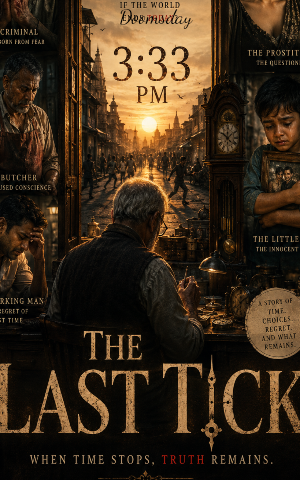
Doomsday
Doomsday

Summary
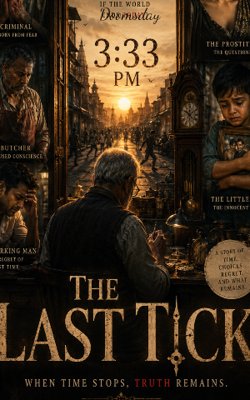
The world was set to end at **3:33 PM**, and everyone knew it.
**What will you do if the world ends today?**
Not in theory.
Not in fiction.
Not someday.
But today.
In a few hours.
At exactly **3:33 PM**.
What will you do?
Cry?
Pray?
Hold someone’s hand?
Run back to the ones you hurt?
Or run from the ones you couldn’t love?
Not by war, not by asteroid, not even climate collapse — it was just a known truth. Scientists couldn’t explain it. Prophets didn’t claim it. No alarms, no explosions. Just a strange collective certainty that at **3:33**, time would stop, and existence would dissolve.
And so humanity entered its **final 24 hours**.
A Man named Ira, a 59-year-old watchmaker, didn’t panic. He simply opened his dusty shop like every day, even though no customers came. He spent his last hours fixing an old clock — a grandfather model that hadn’t ticked in 23 years.
Across the world, chaos and calm danced together.
Some looted. Some prayed. Some confessed love. Some murdered. Some walked into oceans. Some just... sat still. Different strangers walked into Ira’s shop before noon. Ira gave them all answers — or at least pieces of them.
As the hour hand crawled to 3, Ira placed the final gear into the grandfather clock. It began to tick.
Tick.
Tick.
Tick.
The last minute of the world arrived.
People outside stared at the sun. Some danced. Some wept. Some held each other.
Ira just watched the pendulum swing.
*But Then…
Character Descriptions –
*1. Ira – The Watchmaker
Role: The Silent Witness, Moral Center
**Age:** \~65
**Traits:** Calm, observant, wise, deeply empathetic
**Symbolism:** Ira represents **Time itself** — the quiet keeper of consequences. He doesn't interfere, only watches, listens, and gently guides. He survives the quake because he has lived a life in alignment with truth. His shop full of clocks is symbolic: time is always ticking, even when ignored. He serves as a guardian for the little boy and a voice of reason after the destruction.
**2. The Criminal – The First Visitor**
**Role:** The Confessor, Embodiment of Regret
**Age:** 40s
**Backstory:** A man who spent his life committing terrible crimes — theft, fraud, manipulation, even violence. But when the countdown began, true fear awoke in him. He begged to rewrite time, to undo everything. Not out of love for others — but fear of hell.
**Symbolism:** Represents **remorse born from fear**, not real transformation. He survives the false Doomsday but dies in the real one — a reminder that fear alone doesn’t purify guilt.
**3. The Butcher – The Second Visitor
**Role:** The Guilty, The Dreamer
**Age:** 50s
**Backstory:** A man who never questioned his livelihood — slaughtering animals day after day. But as the supposed end neared, he began having vivid dreams — animals he’d killed staring at him, shaking in fear. He questioned himself for the first time.
**Symbolism:** He embodies the **confused conscience**, someone not evil, but blind. He begins to change, but the change is incomplete. He returns to violence after the countdown passes and perishes in the quake — symbolizing that **half repentance** is still failure.
**4. The Working Man – The Third Visitor**
**Role:** The Absentee, The Regretful Father
**Age:** Late 30s
**Backstory:** He spent his whole life saying, “I’ll make time tomorrow,” pushing aside his wife and son for work, money, status. On Doomsday, he realizes too late what he’s lost.
**Symbolism:** Represents **the illusion of infinite time**. He teaches that time isn’t guaranteed and that neglecting love and family is a quiet sin with loud consequences. He dies in the real quake, not because he was cruel — but because he never truly changed.
**5. The Prostitute – The Fourth Visitor**
**Role:** The Questioner
**Age:** 28–32
**Backstory:** A woman sold by her fate and circumstances into sex work. She never considered herself bad, but when the countdown began, she asked herself, “Did I choose this? Was it right or wrong?” She wasn’t ashamed — just unsure.
**Symbolism:** She is **moral ambiguity**. She survives the quake because she lived with honesty, never harmed others intentionally, and questioned herself without bitterness. Her reflection saves her — not her profession.
### **6. The Little Boy – The Last Visitor**
**Role:** The Innocent Soul
**Age:** 6–8
**Backstory:** His parents died before the events of the story. He arrives holding a photo of them and asks Ira if he can bring them back, just so he can hug them one last time before the world ends.
**Symbolism:** He is **purity**, untouched by the sins of the world. His grief is innocent, his love is selfless. He survives and becomes a symbol of hope, walking hand-in-hand with Ira at the end — proof that **innocence and love are enough to withstand judgment**.
Chapter 1: *The Whisper of 3:33*
Have you ever felt the world holding its breath?
Not the kind of pause that comes before a kiss or a storm — but the kind that settles in your bones. The kind that makes clocks tick louder, walls feel closer, and strangers look like messengers.
No one knew exactly when the whisper started.
It didn’t come through televisions or sirens. It didn’t flash across government bulletins or break the internet. It wasn’t shouted, proven, or even questioned. It just… *was.*
At 3:33 PM today, the world would end.
Not one second earlier. Not one second after.
And somehow, **everyone knew it.
In the narrow lanes of an old Indian town, where temple bells competed with motorbike horns and hawkers still cried out the price of guavas, a man named **Ira Deshmukh** opened his watch shop as if nothing had changed.
The brass sign outside still read:
> **IRA'S TIME – REPAIR & RESTORE**
The shop was small, sun-dappled, and filled with the soft ticking of a dozen different clocks — wall clocks, mantle clocks, dusty wristwatches, and one tall, glass-fronted grandfather clock that hadn’t ticked in twenty-three years.
Ira, 59, wore a faded kurta, thick-rimmed spectacles, and the look of someone who had stopped rushing long ago.As the rest of the world spiraled into panic, prayer, or pleasure — Ira simply adjusted his chair, took out his toolkit, and began cleaning a vintage pocket watch from 1911.
Tick.
Tick.
Tick.
Outside, the world had started to bend.
Children cried for no reason. Birds flew in disoriented circles. The sun, though high in the sky, cast shadows longer than it should have.
A woman in the neighboring tea stall screamed at no one and then burst into laughter. A street artist painted angels on the pavement with her bare hands. People spoke in whispers — not out of fear, but out of reverence, as if the air had become sacred.
At exactly 8:11 AM, a crow landed on Ira’s shop railing and stared through the glass.
He stared back.
It didn’t blink.
A strange thing happens when people know the exact moment they will die.
Some run to temples. Some run to lovers. Some run to confess, while others run to sin one last time. And some — like Ira — simply wait.
But even he couldn’t ignore the shift. The weight in the air. The hush behind the ticking.
The countdown had begun.
Books, scriptures, newspapers, even scientists across the globe had confirmed it — *this was the end.*
The sun would rise one last time.
And after that, the skies would open — not with light, but with **judgment**.
Heaven.
And Hell.
And the whole world went still.
Suddenly, those who mocked truth ran to temples.
Atheists whispered prayers into pillows, just in case.
Thieves returned stolen goods in front of cameras.
Murderers wept on social media, apologizing between sobs and hashtags.
---
Streets once filled with chaos were lined with beggars being fed by the same men who once kicked them.
Famous influencers threw lavish charity events, saying it’s “never too late to be good.”
Corporate billionaires donated fortunes they never needed to save a soul they never believed they had.
Politicians cried on television, hugging the poor they had once crushed.
Husbands returned to the wives they had cheated on for years.
Boys known for harassing girls were now touching their feet, begging for forgiveness.
Even butchers stood outside animal shelters, offering food instead of knives.
Smokers dumped their packets.
Drinkers poured liquor into drains.
The sinful became saints overnight — **but only out of terror.**
It wasn’t goodness.**
It was **panic.**
They didn’t change because they cared.
They changed because they were *scared of Hell.*
People cleaned rivers not to respect nature — but to buy tickets to Heaven.
They prayed, fasted, cried, meditated — all at once.
Every religion was followed for a day.
Every moral rule was suddenly golden.
But it was all borrowed behavior.
Because in their hearts, they knew…
> “If this countdown is real — we’re finished.”
The Earth looked clean.
People looked pure.
But the air smelled like **desperation**, not devotion.
Everyone was acting.
The biggest theater ever seen.
**The world was performing for God.**
And Doomsday?
It was watching silently.
His fingers paused over a loose gear. He looked at the wall. Eleven clocks. All ticking. None in sync.
He had never seen that happen before. The streets were flooded — not with water, but with **repentance**.
Fake, loud, glittery repentance.
Men who spent their lives breaking hearts now folded their hands at strangers.
Politicians hugged beggars.
Influencers cried on livestreams with donation links below.
The same boys who once laughed at morality now touched their mothers' feet, uploaded selfies, and wrote,
> *“#ChangedMan #GodForgiveMe.”*
Even the ones who never believed in anything — atheists, skeptics, rebels — were whispering to the sky, just in case.
And in the middle of it all,
Outside a tiny shop full of clocks…
**Ira laughed.**
Not loud.
Not mocking.
But deep.
Like the earth chuckling under its breath.
He saw it all.
He saw the butcher feeding the cows.
He saw the addict preaching in the park.
He saw girls wearing white and boys deleting "dirty content" from their phones.
He saw priests being booked to full capacity — and God’s name trending on Twitter.
And he laughed.
“Now you're afraid,” Ira muttered. “Now you remember karma. Now you act holy. Not because you believe… but because you're scared.”
He saw a man who had abandoned his wife years ago now washing her feet.
He saw a businessman distributing food packets — with cameras filming from three angles.
He saw a thief returning gold with tears in his eyes…
while his fingers stayed curled, itching to steal it back when no one was watching.
The world wasn’t repenting.
It was *acting.***
Performing for the Judge they thought was watching.
Ira shook his head.
What a show,” he whispered. “What a damn show.”
He looked at the giant clock projected on the city hall.
Few hours left.
And suddenly, a young boy asked him, “Uncle… aren’t you scared of karma?”
Ira smiled.
“son, karma isn’t a ghost. You don’t scare it away with holy words. You either live clean… or you don’t. These people are washing sins they haven't even stopped committing.”
And as the fear rose, and fake goodness flooded the Earth like perfume over rot…
Ira kept laughing.
Because he knew:
> **Karma isn’t fooled.
> Karma doesn’t watch your hands.
> It listens to your *intention.***
And when the clock strikes,
It won’t ask for your performance.
It will collect your **truth**.
Chapter : 2 : Forgiveness for Rent
In a forgotten alley of a crowded Indian city, just a few streets away from a temple drowning in bhajans and fear, a man named **Ira Deshmukh** opened his shop.
He dusted off the brass handle.
Unlocked the wooden doors.
Switched on the yellow bulb that always flickered once before glowing fully.
Inside, the sign still read:
> **IRA’S TIME – REPAIR & RESTORE**
> "Even broken time deserves one more tick."
He stepped in, closing the chaos of the world behind him.
The clocks on his walls — dozens of them — ticked at their own confused rhythms. Some ran fast, some had stopped. None were in sync.
And yet, inside the shop, time still breathed.
Ira was not a man people remembered easily.
Tall, lean, late 50s. Quiet eyes behind thick glasses.
His movements were soft, measured, like he knew the weight of seconds.
He didn’t speak much. Didn’t argue. Didn’t ask questions.
All he ever did was fix things.
He wiped the counter, arranged his tools in a straight line, and reached for the first job of the day — a dusty wristwatch from 1987. Cracked dial. Dead battery. Tiny scratch marks on the back that read: *To Papa. With love.*
He opened it carefully. As if time itself would shatter under too much pressure.
Outside, the world screamed.
But Ira… just worked.
Around him, the city was changing.
People were burning currency.
Throwing confessions into rivers.
Drinking wine with ex-lovers.
Playing old vinyls.
Lighting incense sticks on train tracks.
At the crossroads, a young girl danced barefoot with headphones on.
At the mosque, the azaan played louder than usual, with voices full of tremor and love.
At the church, candles melted down faster, as if they too were in a hurry.
Some wore white. Some wore nothing.
Some fasted. Some stole.
Some cried for God. Some denied Him.
But all of them — **every single one** — kept checking the clock.
Because at 3:33 PM, there would be no more checking anything.
Ira, however, didn’t wear a watch.
He didn’t need one.
He had the kind of patience that came only from being too familiar with endings.
At **9:08 AM**, the door creaked.
The bell above it jingled — not loudly, but sharp enough to break the room's silence.
A man entered.
Tall. Thick arms. Loose jawline covered in days of stubble.
His shirt was soaked in sweat. His boots were dusty.
But his eyes —
They were the kind of eyes you see in nightmares you never talk about.
He didn’t look like someone searching for a watch repair.
He looked like someone searching for *redemption*.
“Are you Ira?” he asked, voice low, hoarse.
Ira nodded once.
The man looked around at the ticking clocks, each one counting toward the same unknowable fate.
“It’s true then,” he said, half to himself. “They’re all broken. Or scared. Like us.”
He sat down on the wooden stool in front of the counter.
Placed a small metal box on it with trembling hands.
Opened it.
Inside was a **pocket watch**.
Old. Gold. Cracked glass.
The second hand stuck at **3:33**.
“I need you to fix this,” he said.
Ira looked at the watch.
Then at the man.
“I fix clocks,” he said calmly. “Not destinies.”
“I know,” the man whispered.
“But if I can fix this… maybe I won’t burn.”
His name was **Rajat**.
He didn’t offer it. Not yet.
But Ira had seen that look before — long ago, in soldiers, in addicts, in men who had outlived their own mercy.
This man was not here to escape.
He was here to confess.
And the watch was just an excuse.
Excellent. Let’s continue **Chapter 1: The Whisper of 3:33** in this same poetic, dark, emotionally raw tone.
We left off where **Rajat**, the criminal, has entered Ira's shop with a broken gold pocket watch — stuck at **3:33** — and asked him to fix it.
Now, the story deepens.
Ira did not ask for details.
He never did.
People spoke when they were ready.
And if the end was truly near, they’d speak faster now.
Rajat stared at the broken watch in Ira’s hands.
“This thing belonged to my father,” he said. “He was a drunk. Mean bastard. Broke bones like people break pencils. When I was fifteen, I stole it from his pocket while he lay passed out on the floor.”
He smiled, but it didn’t reach his eyes.
“Guess it runs in the blood.”
Ira unscrewed the back of the watch.
Tiny springs. A fractured gear.
The hands — minute and hour — were bent, like they had fought each other and lost.
“People are lighting candles outside,” Rajat said, voice softer now. “Someone’s singing bhajans at the end of the lane. Kids are playing cricket on rooftops.”
He rubbed his face.
“How are they so calm? How is *everyone* so calm knowing everything is going to be ripped away in a few hours?”
Ira didn’t answer.
Instead, he placed the second hand gently on the table.
Rajat blinked down at it.
“It stopped at 3:33,” he whispered.
“So did time,” Ira replied.
Rajat stared at him, something rattling in his chest.
Then, finally, it spilled out.
“I killed them.”
The words came out like a cough — violent and raw.
“My wife. My son.”
He didn’t cry.
Not because he wasn’t broken.
But because he had already cried *everything* out the night it happened.
“It was two nights ago. Maybe three. I don’t know. Feels like months. Maybe it is.”
His voice cracked.
“She was yelling. I was drunk. I do scams. She wanted answers. I didn’t have any.”
A pause.
“She told me I was useless. That our son was scared of me. That she should’ve left years ago.”
Another pause.
“I pushed her. Just one push.”
He opened his palm — trembling.
“She hit the corner of the table. Skull split like a dropped fruit. She didn’t scream. Not even a sound. She was just… *gone*.”
Ira stopped working. Just listened.
Rajat went on.
“My boy saw it. He came running. He screamed and screamed. Wouldn’t stop.”
A long silence.
“I covered his mouth. I didn’t mean to — I swear to God — I just… wanted him to stop.”
His eyes were wild now.
“Next thing I know, he wasn’t breathing either.”
Ira’s shop was quiet.
The kind of quiet that a temple knows at midnight.
Rajat looked up.
“I’ve done bad things before. Fights. Petty theft. A man once died after I hit him in a bar. But this… this wasn’t rage. This was…” He struggled. “It was like time folded. Like I wasn’t even there.”
He leaned forward, hands in his hair.
“I didn’t want to die after that. I *wanted to burn*. Hell, prison, bullets, anything. I waited for the cops.”
A bitter laugh.
“They never came.”
He glanced at the watch again.
“But then yesterday… everyone starts saying the world’s ending. *Today*. At 3:33 PM. Suddenly people start crying in parks. Hugging trees. Quitting jobs. Priests start drinking. Lovers start confessing.”
He swallowed.
“I got scared.”
Ira raised his eyes. The first time he truly *looked* at Rajat.
“You weren’t scared of the police,” he said.
“No.”
“You weren’t scared of dying.”
“No.”
“You’re scared of what happens *after*.”
Rajat nodded.
And this time… his voice cracked completely.
“If there’s hell — I’m going.”
Ira cleaned the fractured gear with a cotton cloth. Spoke calmly.
“And you think fixing this will stop that?”
“I don’t know what I think anymore,” Rajat breathed. “I just… when I saw this watch again, I remembered my dad. How cruel he was. How I *became* him.”
He ran a hand through his hair.
“I thought maybe if you could fix time… I could rewind everything. Just for a minute. Just long enough to not lift my hand. Just long enough to stop myself.”
“I can’t rewind it,” Ira said quietly.
“I know.”
“I can’t erase what you did.”
“I know that too.”
“But I can help you see it clearly. And face it. With whatever time is left.”
Rajat looked like he might scream. Or collapse. Or run.
Instead, he reached into his coat pocket.
Pulled out a **gun**.
Ira didn’t move.
Didn’t flinch.
Didn’t reach for anything.
Rajat placed it on the table between them.
“I tried using it. Last night. Put it in my mouth. Clicked it.”
He shook his head.
“Jammed. Like it didn’t want to work.”
He pushed it toward Ira.
“I’m leaving it here. If I hold onto it, I’ll use it before 3:33.”
Ira picked it up, checked the chamber.
Empty.
He nodded once, then placed it inside a drawer below the counter.
Locked it.
“You believe in hell?” Rajat asked.
Ira smiled faintly. “I believe in time. And I believe it punishes the ones who waste it.”
The pocket watch on the table — the one stuck at 3:33 — ticked. Once.
Both men looked at it.
The second hand twitched again.
Then again.
Tick. Tick. Tick.
“I fixed it,” Ira said.
Rajat stared at it like it was a newborn.
“Doesn’t mean anything’s changed,” he muttered.
“No,” Ira said. “But maybe *you* have.”
Rajat stood.
He looked taller now.
No less guilty.
No less damned.
But maybe…
Just *less empty*.
He held the watch like a relic.
“I can’t bring them back,” he said.
“No,” Ira said softly. “But maybe you can face them when the time comes.”
Rajat looked out the window.
Sunlight danced on the rooftops.
Somewhere, someone was singing.
He turned to Ira.
“Thank you,” he whispered.
Then walked out of the shop, into the dying day.
Ira sat down again.
He looked at the drawer where the gun rested.
His name was Rajat. His story didn’t begin with evil — it began with excuses.
He was once a man with a family. A son who called him "hero" and a wife who made the best chai in the neighborhood. He worked as a property agent. It wasn’t glamorous, but it paid the bills.Until greed crept in.
One forged paper. One bribe. One lie. Then another. Then another. The line blurred. Eventually, Rajat stopped seeing people — he only saw transactions. When his wife discovered the accounts, she threatened to leave. Rajat silenced her. In a rage he didn’t understand, he did the unthinkable. His wife. His daughter. Gone.He buried the bodies in silence. But guilt dug louder graves in his mind.
When news of Doomsday spread, Rajat didn’t run. He didn’t hide. He walked to Ira’s shop — the old watchmaker who once fixed his daughter’s birthday gift.
Ira remembered him.
He had known.
Not just from newspapers or whispers. He had seen it in Rajat’s eyes the day he came with blood on his sleeves, claiming it was an accident. Ira had offered tea, not questions. And for years, he had done nothing.
Not because he condoned it. Not because he feared Rajat. But because time, he believed, was the only force that ever truly judged. And now time was ending.
But there was more.
Months ago, the police had come. A mild-mannered inspector and his junior. They were asking about Rajat. Not for murder — not yet. Just fraud. Disappearance. A debt left behind. Ira had looked them in the eyes and lied.
He said he hadn’t seen Rajat in years.
At the time, he thought he was protecting a broken man — someone who had simply run from shame. He didn’t know the whole truth then. Or maybe he did. Maybe he didn’t want to know.
But now, with Doomsday near, that lie haunted him more than the ticking clocks around him. He thinks about the time when he said to rajat “Rajat,” Ira said, not with judgment, but with the exhaustion of a man who had seen too many clocks run out.
“I want to undo it,” Rajat whispered. “Turn back time.”
“You can’t,” Ira replied. “But you can face it.”
“Will I go to hell?”
Ira looked into his eyes. “You already live there. The question is — will you leave it better than you entered?”
Rajat collapsed into a chair. He wept — not for himself, but for the boy who once called him ‘hero.’
“I see him in my dreams. He is always reaching for me. But I never reach back in time.”
Ira placed a hand on his shoulder. “Then reach now. Even if the world ends.”
From that day on, Rajat returned every morning. He swept Ira’s shop. Watered the plants. Polished the clocks. He never asked for forgiveness. He earned silence.
Ira never turned him in. And now, with every tick of the hour, he regretted it. He had chosen silence over justice. He had underestimated the weight of Rajat’s crime. And perhaps, in doing so, had added to it.
Their bond was never spoken of — a murderer and a watchmaker. But time, Ira believed, wasn’t just a measure. It was a mirror.
And even the most shattered reflections can still glint light.
Ira came out of his thoughts.
Then at the **grandfather clock** in the corner — silent since 2002.
He stared.
Waited.
And then — just once — it moved.
**Tick.**
Chapter: 3: Reverse karma
**9:54 AM**
The clocks on Ira’s wall whispered a soft, fragmented chorus — some ticking fast, some stuck, some groaning like tired lungs.
Outside, the sun had started its slow arc across the dusty sky.
And somewhere beyond the closed shutters of the shop, the world was preparing for its final hour.
People bathed statues in milk.
They wrote apologies in chalk on sidewalks.
A man gave away all his clothes and sat cross-legged in the middle of a metro station, waiting for nothing.
Rajat was gone.
But Ira didn’t move.
Not yet.
He watched the repaired pocket watch on his table.
The one that had stopped at **3:33**, but now ticked again.
Each beat a reminder:
There’s still time.
At **9:56 AM**, the bell above the door rang again.
It didn’t jingle softly like before.
It *barked* — loud and off-rhythm, like a fist knocking too hard.
The air that entered was thick with something — something iron.
Something metallic.
Something that smelled faintly of old blood and fresh meat.
A large man walked in. Not tall, but heavy. Dense. Built like someone who had spent his life lifting dead weight.
His apron was rolled and stained, hanging from his shoulder like a forgotten prayer cloth.
His beard was grey, his shirt sweat-drenched. His fingers were rough and red. His eyes — deep and storming — flicked over the clocks
“You’re the one who fixes time?” he asked gruffly.
Ira didn’t flinch.
“I fix watches.”
The man laughed. Short. Dry. Almost mocking.
“All these years cutting meat and cleaning bones, never once thought about time. Never wore a watch. Never needed one.”
He dropped a bundle onto the counter.
Something wrapped in cotton cloth. Heavy. Quiet.
“Until now.”
Ira unfolded the cloth.
Inside was an old, rusted **meat shop timer**. The kind used to count minutes between orders, cuts, and breaks.
Its face was cracked. Numbers faded. The dial stuck somewhere between **10 and 11**.
“I found it this morning,” the man said. “In the back of my shop. Under the chopping block. My son used to play with it when he was little.”
He sat down. Exhaled through his teeth.
“Funny thing is… it still ticks. Just not the way it used to.”
Ira turned the timer in his hands.
“What’s your name?” he asked.
The man hesitated.
Then: “**Habib.** But most just call me… the butcher.”
A pause.
“That’s all I’ve ever been.”
The timer clicked in Ira’s hands — weak, uneven.
Habib leaned forward, elbows on the counter. His voice dropped, like he was finally letting something rot out.
“I’ve killed more living things than most men have seen. Goats, hens, lambs, bulls. Hundreds. Thousands maybe.”
He blinked slowly.
“Never once thought about it. Not deeply. Not until today.”
Ira glanced at him. “And now?”
Habib laughed bitterly.
“Now I can’t stop thinking about their eyes. The way some of them looked at me before the blade touched. Like they *knew.*”
He shook his head.
“Everyone’s crying about family, lovers, sins. And I’m sitting in my shop staring at hooks and knives, wondering… did I do wrong? Or was I just feeding the hungry?”
Outside, someone shouted a countdown: “**FIVE HOURS LEFT!**”
A temple bell clanged in the distance.
Habib rubbed his face.
“I always said I wasn’t killing. I was working. Like a doctor cuts to heal — I cut to feed. But when I closed my eyes last night…”
His voice caught.
“I saw blood. Not just theirs. Mine. All over the walls. My son’s toy truck covered in it. My daughter’s birthday dress hanging by the freezer. The line between meat and man — it blurred.”
He looked up, suddenly angry.
“Why now, huh? Why all these questions *now*?”
---
Ira placed the timer down gently.
“You were too busy living to think about dying.”
Habib clenched his jaw.
“I ain’t scared of death. Seen it. Smelled it. Handled it. But this… *this isn’t just death.* This is *judgment.*”
He slapped the timer.
“If this world ends today — what was I?”
“A butcher,” Ira said calmly. “A father. A man who did what he was taught.”
“That’s not enough!” Habib growled.
“What do you want, then?”
Habib stared.
“Peace,” he whispered. “Just for a minute. To know it *meant something.* That I wasn’t just a chain in the killing.”Ira opened the back of the timer. Removed a bent coil. Straightened it slowly.
“What did your son think you did?”
Habib blinked.
“He used to say I was a ‘meat magician.’ Said I could turn an animal into biryani in an hour.”
He smiled faintly. “Then he grew up. Learned the smell. The truth. Stopped entering the shop.”
Ira nodded.
Their bond wasn’t new — it was buried in memory. Years ago, Ira had once come to Shabbir’s shop, trembling. His daughter had been terribly ill. The medicine was costly. The doctor had said she needed nourishment. Meat.
But Ira had no money. Just a hen he kept for eggs — his daughter’s favorite.
He had brought it to Habbib in torn jute bag. Eyes down. Voice low.
“Just this one,” he had said. “Please give me whatever it’s worth.”
Habbib had not asked questions. He had given him more than fair price. He hadn’t looked Ira in the eyes that day, nor ever brought it up again.
But Ira had never forgotten.
Now, years later, the butcher sat in the clock shop, not as a man who traded in meat — but as a man who wanted to be forgiven.
And once, when Rajat and Habbib crossed paths at Ira’s door, neither judged the other. Because in that little shop of time, the guilty were not strangers. They were simply human.
He wound the timer once.
It ticked.
A strong, steady sound.
Habib stared at it. His lip trembled.
“I never said sorry to him,” he muttered. “Never told him I wanted out. I… I don’t even know if I was wrong.”
“You don’t need to know,” Ira replied. “You only need to feel it. And carry it honestly.”
Habib stood.
Looked at the ticking timer.
“Will you keep it?” he asked.
“I can.”
Habib looked toward the door.
“I don’t want to hear it anymore.”
Ira said to him if you don't want to hear just close your eyes and listen what your says.
Habib leaned back in the creaky chair.
For a second, maybe two, his body gave in to the weight of sleepless nights and endless guilt.
His eyelids dropped.
And then he was back in his shop.
But it wasn’t a shop.
It was endless.
Walls stretching beyond sight, covered in white tiles — some cracked, some bleeding.
He stood in his apron, but it was clean. Too clean.
No blood. No knife.
Just… silence.
A goat stood before him.
But it wasn’t tied.
It stared at him — not in fear, but in recognition. Like it knew him.
“I fed your family,” it said.
Its voice wasn’t mocking. It was soft. Honest.
Behind the goat, a cow stepped forward. Then a hen. Then dozens of eyes — all from animals he had once slaughtered.
“I fed your community,” Habib whispered. “I did my job.”
“No,” the goat replied, “you forgot us.”
And then the shop began to change.
Hooks turned into hanging clocks.
Knives melted into mirrors.
And his apron — now soaked red — stuck to his skin like it had grown there.
Tick. Tick. Tick.
He tried to move, but his feet were stuck in something sticky, warm.
Blood.
Not animal blood.
His own.
He looked down and saw his reflection in the tiled floor.
Only it wasn’t him.
It was his son — wearing his apron, holding a cleaver.
And crying.
Habib gasped awake.
Back in Ira’s shop.
The clocks ticking like soft whispers.
His breath — loud in his chest.
Ira said nothing.
He had seen that look before.
“What did you see?” he asked gently.
Habib didn’t answer.
He just whispered, “I don’t want to be remembered like this.”
Then, quietly…
He walked out of the shop.
He stepped out into the light.
Didn’t say goodbye.
Didn’t cry.
But before he vanished into the growing noise of the dying world, he whispered something to the air:> “If there’s a next life... I’ll grow plants.”
Inside, Ira watched him go.
And behind him, on the wall, the **grandfather clock** clicked again.
**Tick.**
Chapter: 4. The Watchmaker’s Silence
**10:22 AM**
The shop was still again.
Only the sound of second hands — ticking and staggering — like the breath of a dying animal that refused to lie still.
Ira sat at the counter.
Not repairing.
Not polishing.
Just… **sitting**.
For a man who fixed time, he had rarely stopped to feel it.
He looked at the drawer where **Rajat’s gun** now rested.
And beside it, the old **meat timer** that **Habib** didn’t want to hear anymore.
Two men.
Two kinds of blood.
One from rage.
The other from repetition.
Both seeking something impossible — peace before the world could end.
Ira picked up Rajat’s repaired pocket watch.
It ticked now — steady and alive.
He held it close, then set it next to the timer.
The two objects didn’t belong together.
And yet, they looked like they’d been side by side for decades — one golden, one rusted. One for minutes, one for memories.
He whispered to himself, without realizing:
> “People don’t fear death.
> They fear being remembered *wrong*.”
His hands hovered over the table, twitching — like muscle memory from a life of fixing what others broke.
But this wasn’t about gears.
This was about **stories**.
He closed his eyes.
And for the first time in years, Ira **remembered**.
A woman.
Laughing under the rain with an umbrella too small for both of them.
A child’s drawing — crude, clumsy — of a clock with wings.
The echo of a hospital hallway.
A final breath that came too soon.
His wife.
His daughter.
Gone.
Not from violence.
Just… from time.
And yet, it never stopped **hurting**.
“Every second,” he whispered, “is a wound.”
He opened his eyes.
He wasn’t crying.
But he could hear his own heart now — not as a beat, but as a **countdown**.
Outside, the world continued its strange ritual.
The lovers kissed like it was their first and last.
The beggars gave away everything.
Even the liars told the truth today.
And inside this little shop, **time listened**.
Because Ira wasn’t just watching them anymore.
He was learning from them.
> Rajat: desperate to undo one moment of rage.
> Habib: aching to understand a thousand small cruelties.
> And Ira: the man who had survived his own end — years ago — and kept fixing what no one could fix for *him*.
But he also participated in the crimes what will happened to him.
He turned to the **grandfather clock**.
Its long wooden body stood proud and silent.
Still.
Yet not empty.
He walked toward it.
Placed his hand on its old brass pendulum.
And waited.
For it to tick.
Or not.
Either way, he was ready.
Chapter 5: The Man Who Ran Out of Tomorrows
**11:18 AM**
The sun had shifted.
The light inside the shop was no longer golden.
It had turned a cold, silvery white — the kind of light that doesn’t warm, just reveals.
The clocks ticked. Some loud. Some slow.
But each now seemed to speak a single word:
> *“Closer.”*
Ira was adjusting a cuckoo clock when the door opened.
This time, the bell didn’t chime.
It *groaned*.
Tired. Soft. Like it, too, was nearing its end.
The man who entered didn’t look broken.
He was clean. Ironed shirt. Neat hair. Leather shoes.
The kind of man who had never missed a meeting.
Never worn the same shirt twice.
Never eaten dinner without his phone blinking beside the plate.
He held something wrapped in blue velvet. Clutched to his chest like a relic.
“I was told you fix time,” he said.
“I fix clocks,” Ira replied — voice familiar now, yet always gentle.
The man gave a dry smile. The kind used at corporate parties.
“Same thing, isn’t it? Or maybe that’s just how I lived.”
He sat.
Laid the velvet bundle on the counter.
Unwrapped it slowly.
Inside was a **digital timepiece** — sleek, black, corporate. Branded with a silver emblem:
> *MIDAS GLOBAL GROUP.*
“CEO?” Ira asked casually.
“Once,” the man replied. “Now? Just a man with a title that means nothing in the face of fire.”
The timepiece blinked erratically.
12:12. Then 3:33. Then 00:00.
As if even it was confused what time to show anymore.
“My name is **Nalin Verma**,” he said. “I built that company from a room with no fan to a high-rise in Noida Sector 62. Two offices abroad. I had 800 employees by last year.”
He paused.
“I had a son too. And a wife. But I never *saw* them.”
He didn’t cry.
People like him didn’t know how to — until the end.
Instead, he pulled a folded page from his pocket.
It was crumpled. Torn at the edge.
He slid it to Ira.
> A child’s drawing.
> Stick figures. A tall man holding a briefcase. A boy with a red balloon.
> The words in clumsy handwriting:
> *“Papa, can we play tomorrow?”*
“I found this under my son’s bed,” Nalin said quietly. “He died last year. Accident. I was on a business trip. Couldn’t attend the funeral.”
Ira looked up.
“I was on a stage,” Nalin said, “giving a talk about 'maximizing the present.' Can you believe that?”
He laughed once — dry and cutting.
“I told my wife we’d go on a holiday next Diwali. Told my son I’d watch his school play next time. I told *everyone*… tomorrow.”
The clocks on the wall ticked louder.
As if mocking him.
“Yesterday, my wife left. Packed nothing. Just walked out.”
He stared at the timepiece.
“It took the threat of the end of time… for me to finally feel how much I wasted.”
Ira picked up the blinking timepiece.
Opened the back. A simple battery problem.
“I can fix this,” he said.
“But you can’t fix me,” Nalin replied.
Ira paused.
“No,” he said. “But maybe you can stop being a man who needed the end to begin.”
Nalin looked out the window.
The streets were quiet now.
Even the madness had grown tired.
“I wrote letters to them both. Not sure if they’ll read them. Or if they’ll survive long enough to even try.”
He closed his eyes.
“I don’t want more time. I just want to say it once — *I was wrong.*”
Ira handed him back the repaired timepiece.
It blinked.
Then held steady at the correct hour.
Nalin stared at it.
“Ticking doesn’t always mean progress,” he said.
“No,” Ira agreed. “But it means you're still *here*.”
Nalin stood. Straightened his shirt.
“Will it hurt?” he asked.
“The ending?”
“No. Knowing I wasted the beginning.”
Ira didn’t answer.
Some questions aren’t meant to be.
When Nalin walked out, he left the velvet behind.
Inside it, folded under the empty box, was another child’s note.
> *“Papa, let’s play. Please not tomorrow.”*
Ira didn’t move.
He rembered on one quiet evening, as the light dimmed through the wooden blinds, Ira sat alone, remembering another man — Nilesh.
Nilesh, the corporate manager with a tired face and always a buzzing phone, had once rushed into Ira’s shop with a broken watch and panic in his voice. “Five minutes, just fix it quick, bhaiya, it’s urgent,” he had begged.
Ira, burdened with many customers that day, had reluctantly stopped Nilesh. “Wait. It’ll take twenty minutes. Come back.”
Nilesh nodded with frustration and left.
Later that evening, Ira learned from the news — a car accident. Nilesh’s vehicle had crashed while rushing. His wife survived. His son didn’t. It was the boy’s birthday that day. Nilesh had been running home with cake.The call the boy made to his father — the last one — was never answered.Ira had frozen when he heard it. He never told anyone. But sometimes, late at night, he imagined what could’ve changed if he’d said, “Come in now. I’ll fix it quick.”
He kept the boy’s photo in a drawer beneath the counter. A small, smiling face with frosting on his cheek. Some regrets tick louder than clocks. He rembered Nilesh but he don't remember him he regretted.
He simply walked to the grandfather clock.
It ticked.
Again.
And again.
Chapter 6 🌑 **“The Girl Who Was Sold”
The sky was the color of a healing bruise—muted purple, slashes of gold, and a darkness that hovered behind the clouds like a secret. The town buzzed with whispers. No loudspeakers, no sirens, no dramatic thunderclaps. Just… anticipation. The quiet, dreadful kind. It was Doomsday — 3:33 PM was the appointed hour.
But life didn’t stop.
Street vendors still rolled out samosas by the dozen. Kids still kicked footballs that clanked against rusted doors. And the temple bell still rang like it had every evening. Even as everyone claimed the world would end — people lived as if they didn’t believe it, and still, just enough, as if they did.
Some prayed harder. Some confessed. Some finally kissed. Some left their wives and ran into the arms of old lovers. And some… bought time in hotel rooms or visited their sins one last time.
Among this chaos walked **her** — barefoot, her dupatta trailing behind her like a ghost that didn’t want to let go.
No one called her by name. Because no one remembered it.
They only knew her as *“woh wali”—* that one, the prostitute, the sold girl, the one men whispered about in bars and women spat behind when she passed.
Her hair was tangled, not from lack of care, but from storms endured. Her eyes didn’t dart like a prey animal anymore — they were steady, tired, and frighteningly calm. The calm of someone who had survived hell without becoming a monster.
She stopped in front of a little clock repair shop. The glass door had a sign painted in fading white:
**“Time Isn’t Yours, But What You Do With It Is.”**
She pushed the door open.
⌛ **Inside Ira’s Shop**
Ira was oiling the hinges of a grandfather clock when he felt it. A shift in the air. Not the kind machines register. The kind that comes when a soul with too many scars walks into a space and refuses to hide them.
He looked up — and saw her.Their eyes met.
Not as strangers.
Not as savior and victim.
But as two people who had seen too much of the world and stopped pretending to flinch.
She sat down on the wooden bench. Didn’t ask for water. Didn’t greet. Just… existed.
The clocks ticked.
One behind Ira struck 12: 00
She looked around — dozens of clocks. Some ticking loud, some barely hanging on. Some running backward. Some stuck forever on a particular moment.
> “They say the world ends today. At 3:33.”
Ira didn’t blink.
> “Yes.”
> “And they say we’ll all go where we belong. Heaven. Or hell.”
> “That’s what they say.”
> “Do you think I’ll go to hell?”
Silence.
The question didn't ask for pity. It was a ledger being opened. A life held up to the last light of the day.
She continued before he could answer.
> “Twelve. That’s how old I was. My father said he was taking me to my uncle’s wedding. Instead, he handed me over to a man with blood under his fingernails and eyes like old meat. I cried the whole ride. I asked where he was going. He said, ‘To get you a future.’ I thought maybe I was going to school. Silly, right?”
She chuckled bitterly.
> “He left. Never came back. That night… I stopped being a child.”
Ira’s fingers tightened around the wrench.
> “They didn’t even hide what they were. No fake kindness. No grooming. Just business. They beat the child out of me quickly. Then men came. Different sizes, different names, same hands. I learned to split my mind — let the pain happen in one part, and keep the other clean. It worked. Until it didn’t.”
> “Some were kind. Most were not. The kind ones were worse. They made me believe, for a moment, that it could be different. And then they left. Or returned to their wives.”
Another tick. Another second closer to the world’s end.
> “I didn’t choose it. But I lived it. I lied. I smiled. I stopped bleeding and started counting. And now…”
She stared at the clocks.
> “Now I wonder if I’ll still burn. Even though I didn’t light the fire.”
💔 **The Philosophy of Pain**
Ira stood. Went to the tiny shelf above the counter. Took down an old brass cup. Poured water. Handed it to her without speaking.
> “What’s your name?” he asked softly.
She looked at him like the question itself was naive.
> “Does it matter?”
> “It does to me.”
She stared at the cup.
> “I had a name once. But they shouted it wrong so many times, it stopped feeling like mine. And after a while, I stopped correcting them. Then I stopped saying it.”
> “So who are you now?”
> “I don’t know. That’s the problem, isn’t it? They took my body, then my name. What’s left?”
Ira didn’t offer clichés.
He looked her in the eye and spoke gently.
> “What’s left… is the fact that you’re sitting here, asking about heaven. Not revenge. Not pity. Not vengeance. But heaven. That tells me what kind of soul you are.”
She didn’t believe it. Not yet.
But something in her eyes shifted.
🌧️ **Outside, The Farce Continues**
A family was taking selfies while feeding beggars. An influencer did a live-stream of giving old clothes to orphans. A rich man hugged a maid in front of the news camera.
They were trying to *buy* heaven — with likes, cameras, and temporary charity.
She watched them.
> “They spit when I walk past. But now they’re saints because they gave out free water bottles and hugged a cow.”
> “People perform when death is watching,” Ira said. “But the truth shows up when no one is.”
> “So do you think I’m going to heaven?”
Ira didn’t answer yet. He let the clocks tick.
> “Hell,” he said finally, “is not for those who suffered. It’s for those who *chose* to cause suffering.”
> “But I’ve lied. I’ve faked moans. I’ve cursed my father. I’ve stolen extra money from drunk clients.”
> “You survived. You adapted. That’s not sin. That’s endurance.”
> “So I don’t deserve hell?”
> “You’ve lived in it. You don’t belong there again.”
🌸 **Naming Herself**
Her lips parted slightly, stunned. Her entire body seemed to be listening now. Not just her ears.
> “I don’t have a name anymore,” she whispered.
> “Then you are free,” Ira said, smiling. “You can name yourself.”
> “Can I call myself… Peace?”
> “Yes. Because that’s where you’re headed.”
The word lingered in the shop like a warm breeze. *Peace.*
For the first time, she stood like someone with a name. Not just a number in someone’s brothel book. Not just a whispered sin.
- 📜 **The Last Line Before the End**
As she turned to leave, she looked at Ira one last time.
> “If heaven has a gate, I hope it doesn’t ask for papers. I don’t have documents. Just pain.”
Ira smiled.
> “Pain is enough. Pain is the proof that you lived without becoming what hurt you.”
As Peace stood to leave, her hand paused on the doorknob. A silence deeper than the clocks took hold.
She turned.
Her voice was calm. Too calm.
> “Ira… may I ask you something?”
> “Of course.”
She looked at him. Not like a stranger. But like someone who had seen him without the mask.
> “Do you remember a girl in a red kurti? Thin. Sixteen. Her braid was cut short by the Madam because it made her look too young. She had a mole on her left collarbone.”
Ira’s eyes didn’t move. But something in his face… stilled.
> “You came in,” she continued. “Paid extra to have her first. You said you didn’t want violence. That you just wanted warmth.”
Silence.
She stepped forward, slowly.
> “That girl was me.”
The air in the room shattered, even if nothing physically broke.
> “You didn’t force me. You didn’t hit. But you paid. Like the rest. And I smiled. Like I always did.”
Her voice didn’t carry blame.
Only truth.
> “So tell me, Ira — if I was forced to live in hell, and you willingly visited it…”
She took a breath.
“Where will *you* go when the clock strikes 3:33?”
💭 Ira’s Answer
Ira lowered his eyes. The steady philosopher, the listener of the world — suddenly quiet.
Then he whispered:
> “I have asked myself that question every day since that night.”
He looked up at her. Honest. Hollowed.
> “That moment… changed me. I never went back. I started this shop. I started… waiting.”
> “For what?”
> “Redemption. Or judgment.”
Peace nodded, gently.
> “Then maybe,” she said, “we are both waiting for the same door. But only one of us had a choice.”
She turned, walked out.
And for the first time, Ira felt the weight of a clock that didn’t just tick — it judged.
She walked out slowly.
The clocks kept ticking.
*Peace* stepped into a world that had never accepted her.
But today… the sky seemed to blush as she walked under it.
---
Chapter: 7 : The Little Boy and the Photograph
**1:41 PM**
The sun was no longer rising.
It was **hovering** now — like a breath being held by the sky itself.
The clocks inside Ira’s shop ticked louder.
Or maybe the world had just grown quieter around them.
Each second now felt like a stone being dropped into a well with no bottom.
Ira stood behind the counter, wiping the glass of an old hourglass.
Its sand was down to the final inch.
Just like the world outside.
He was not expecting any more visitors.
Four had already come.
Each carrying a weight.
Each leaving something behind.
But none of them stayed.
Because no one ever really stays… with **time**.
He thought maybe this was it.
That his strange little shop had done all it could.
That the stories, like the clocks, had finally run out.
Then the bell above the door rang.But this time, it didn’t groan.
Or bark.
Or jingle.
It **whispered**.
And in walked a little boy.
No taller than the counter.
Skinny legs. Shirt too big. Hair messy like he’d just run through the wind.
He carried something in both hands, clutched tight to his chest.
A small, square **photo frame**.
He didn’t speak at first.
Just walked up to the counter, placed the frame carefully down, and looked up at Ira with wide, steady eyes.
Eyes that remembered something the boy himself might not.
“I need your help,” he said.
Voice soft. Clear. Innocent.
Ira looked at the boy.
And **froze**.
There was something in the curve of his nose.
The slope of his cheek.
The way his eyes didn’t blink when he spoke.
Something that reached into Ira’s memory… and knocked.
“What’s your name?” Ira asked slowly.
The boy paused. “Arush.”
And the door in Ira’s mind **opened**.
**Flashback — Five Years Ago**
A cold December evening.
Grey sky. Wet roads. A busy street near the old temple.
Ira had just shut the shop early, something he rarely did.
He had been carrying a box of clock parts, heading to a friend’s garage for repairs.
That’s when he saw the car.
Skidding.
Too fast.
Too out of control.
And **too close** to a little boy chasing a red ball.
The boy had darted into the street.
No older than three.
The car wasn’t going to stop.
And there were no parents in sight.
Ira dropped the box.
Ran.
It happened in seconds.
The boy was in the middle of the street, the red ball rolling beside him.
The car’s headlights screamed toward them.
Ira didn’t think. He threw himself forward.
Grabbed the boy mid-stride and rolled.
The car missed them by inches.
They landed hard. His back slammed against the curb. His head hit the stone.
Pain exploded through him.
But the boy…
The boy was safe.
Tiny, shaking, with a scraped knee.
But alive.
The driver never stopped.
A neighbor ran over and called for help.
And Ira — bleeding from the temple, vision blurred — looked into the boy’s face.
“Are you okay?” he asked.
The boy nodded, sniffling.
“Where are your parents?”
The boy didn’t answer.
He just whispered, “Thank you.”
Then buried his face in Ira’s coat.
The authorities came. An ambulance. A crowd.
The boy was taken away. So was Ira.
He never got the child’s name.
He never even asked.
Until now.
**Back to Present – 1:43 PM**
“Arush…” Ira repeated, under his breath.
The name tasted familiar.
And the face — though older — was the same.
The same boy he had pulled from death.
-The boy was looking at him now, curious.
“Do you fix time?” he asked.
Ira didn’t reply immediately.
He looked down at the photo on the counter.
A man, a woman, and Arush — all smiles in a sunlit garden.
The mother held a kite. The father wore spectacles.
And the boy in the center was laughing with abandon.
The same laugh that was now… **missing** from his face.
“I want you to bring them out of the photo,” Arush said, voice steady.
Ira didn’t smile.
He didn’t frown.
He **listened**.
“What are their names?” Ira asked gently.
“Papa’s name was Vikas. Mama’s name was Naina.”
He reached out and touched the photo with two fingers.
Soft. Sacred.
“They died last winter. In a car crash. Everyone says they’re in a better place now.”
A pause.
“But I’m still here.”
Ira’s throat tightened.
He had spoken to murderers. To butchers. To forgotten women and guilt-ridden men.
But this was the first visitor who asked for nothing but… **a hug**.
“Why did you come here?” Ira asked.
“Because everyone says you fix time,” the boy replied.
“And if time is ending today… I want to end it hugging them.”
A beat.
“So I’m not alone.”
Tears didn’t fall from his eyes.
Not anymore.
He had cried enough already.
Now he only carried a hope — fragile, irrational, impossible.
The kind of hope only children and madmen believe in.
And Ira…
He remembered everything now.
The red ball.
The blood on the pavement.
The warmth of a tiny heartbeat against his chest.
The boy he had saved…
…was now the one asking him to save something else.
Ira stepped out from behind the counter.
Kneeled down slowly.
Reached forward — gently — and placed his hand over the photo.
“I can’t pull them out,” he said softly, his voice barely holding together.
“But I can help you see them… one last time.”
The boy looked confused.
Ira walked over to the wall of clocks.
Took down a small, silver pocket watch — old, worn, with a faded engraving on the back: *For Baba – Love, Meera.*
He brought it back.
“This was mine,” he said. “My daughter gave it to me before she died.”
He opened the lid.The seconds hand had stopped.
But the watch still **ticked** — once in a while. Only when someone held it to their heart.
“It doesn’t show time anymore,” Ira said.
“But if you hold it close… it lets you feel someone you’ve lost.”
Arush took the watch.
Held it to his chest.
Closed his eyes.
And for a moment… the trembling stopped.
“I see them,” he whispered.
He sat there on the floor, his back against the counter.
Photo in one hand.
Watch in the other.
Ira let him stay.
Didn’t speak.
Didn’t move.
Just… sat.
Letting the moment exist.
Letting **time** — for once — be kind.
Chapter: 8 Last hour
**3:30 PM**
The clocks had stopped.
The air was supposed to vanish.
The sky was supposed to fall.
But instead… the world **held its breath**.
And then… something strange happened.
**It exhaled.**
Ira opened the shop door.
The silence was overwhelming.
But it wasn’t the silence of death.
It was the silence of **transformation**.
He stepped into the light.
The streets — once filled with panic and prayers — now pulsed with the strangest kind of **miracle**.
Not heaven.
Not hell.
Just… people **finally remembering who they were meant to be.**
A **thief**, once chased by police and cursed by villagers, stood on a broken divider — pockets turned inside out.
He tossed money to children. Slipped gold chains into temple boxes.
To a beggar, he said:
> “I stole from you last winter. This is yours. And if you spit on me — I won’t stop you.”
A **butcher**, arms stained with years of slaughter, sat in a park beside a trembling goat.
The goat stared at him, recognizing his scent.
But instead of running… the goat let him stroke its back.
He whispered:
> “I’m sorry. I won’t ever raise my hand again.”
And he wept.
Not for sin.
But for the silence he had never offered the ones he killed.
A **diabetic man**, who had denied himself sugar for thirty years, walked into a sweet shop.
He bought *rasgullas*, *jalebis*, and *barfis* — and ate them with his grandchildren.
He smiled through tears and said:
> “If I die now, let it be sweet.”
A man in an expensive coat, who had once **left his wife and daughters for a younger woman**, stood barefoot in front of the very house he abandoned.
He knelt.
Begged his daughters — now grown, hard-eyed — for forgiveness.
“I chose lust over love,” he said. “You don’t have to forgive me. But please… just let me cry at your feet.”
His ex-wife stepped outside.
Didn’t speak.
Just placed a cup of tea in front of him.
Hot. Bitter. Familiar.
A group of boys — known for teasing and harassing women — knelt in a college courtyard.
A girl they had once humiliated walked past.
They touched her feet, heads bowed in silence.
One said:
> “We laughed at your pain. We see now\... we were animals dressed in denim.”
She didn’t forgive them.
But she didn’t spit either.
She walked on.
In every corner of the city, people ran to **dirty rivers**.
With soap, with flowers, with bare hands.
They scrubbed stones. Cleared algae. Removed garbage.
Not to save the water.
But to say:
> “We made you filthy. We are sorry.”
Some whispered secrets to trees.
Some returned stolen books to school libraries.
Some confessed to dogs.
One man burned his fake degrees.
Another dropped every phone and gadget into a pit and shouted:
> “Now you can’t reach me — but I can finally hear myself.”
Even the sky changed.
The birds circled in strange patterns.
Dogs howled, not in fear, but as if *joining a chorus*.
And for the first time in decades…
**The air didn’t stink of regret.**
Ira stood on the street.
People rushed past him — not in fear, but in freedom.
Like they’d just been told:
> “You’re still alive.
> But now, you must earn it.”
He clutched the photo the boy had left.
The clocks in his bag were still silent.
But his **heart ticked louder** than ever.
He whispered to no one:
> “Maybe the world didn’t end…
> because it *finally began*.”
* 3 34 PM**
The city stared at the massive screen in Connaught Place.
The countdown was over.
3:33 PM had passed.
And nothing had happened.
No fire.
No flood.
No voice from the sky.
No light to carry the good or burn the wicked.
Just silence.
Someone laughed.
Then another.
Then thousands.
"It was a hoax!"
"It was just a story!"
"We were fooled!"
"Nothing happened. Nothing ever does."
**And then it began again.**
Not the end.
The *real sin.*
The same **thief** who had given away his gold to beggars?
He returned with a knife.
Snatched his gold back.
One beggar said, “You gave this to feed my children.”
The thief grinned.
“I was scared. Now I’m not.”
The **butcher**, who had promised never to kill again?
He picked up his cleaver.
The goat that had sat beside him?
Gone.
In its place, a skinned carcass.
The board outside now read: *Fresh Meat. Hurry Before Another Doomsday.*
The **diabetic man**, who had shared sweets with his grandchildren?
He threw the rest of the barfis into the trash.
Yelled at his maid.
Blamed her for ĥhis sugar spike.
The **abusive man**, who had cried at his ex-wife’s feet?
He broke the tea cup she offered him.
Mmhe rabbed her arm.
Called her ungrateful.
Walked out again — leaving silence and bruises behind.
The **boys** who had touched a girl’s feet?
Now circled another girl in the lane.
Whistled. Laughed.
One of them said:
“Don’t worry. We’ll apologize before the *next* doomsday.”
The **rivers**, which were briefly cleared of trash and plastic, now overflowed again with wrappers, sewage, and old TVs.
The hope in the air?
Gone.
**The world didn’t end.
So they thought their sins didn’t matter.**
Ira stood at his shop door, watching it all.
His hands trembled.
Inside, the clocks were still frozen.
Time had kept its promise.
It had *stopped*.
But *people*…
They didn’t.
They *restarted*.
He whispered:
> “So it was never about redemption.
> Only about escape.”
He looked at the grandfather clock.
Its pendulum swung again.
But backwards.
Time had not ended.
**Humanity had.**
**5:02 PM**
The city was alive again — not with joy, not with love — but with something more dangerous:
**Relief without wisdom.**
The massive LED screen that once showed the ticking doomsday now played advertisements.
A man selling miracle water.
A politician making promises.
A perfume called “Immortal.”
The same screen that once made children cry, now made people laugh.
In the streets, it began.
A **man wearing ashes** and a cardboard sign that said *"Forgiven"* popped a bottle of beer, shouting,
> “God chickened out!”
People clapped.
Two boys who had earlier begged a girl for forgiveness now jeered at another, throwing chips at her as she passed.
“Hey sweetheart, still waiting for heaven?” one said.
The other added, “It’s delayed. Like your dreams.”
A **butcher**, the same one who hugged a goat hours ago, now had blood on his apron again.
He smiled at a customer.
Limited time offer: Pre-Post-Doomsday Meat.”
Laughter. Transactions.
A father, who had wept at his daughter's photograph at 3:32 PM, now sat in a bar alone.
He didn't cry.
He didn't call her.
He just drank, muttering,
> “Emotions are expensive. And useless.”
Children threw trash into the river again.
Plastic floated past the fading marigolds people had offered just an hour ago.
A half-burned candle bobbed beside a dead fish.
-It was like the world had worn white robes for a funeral, only to find the coffin empty —
So they **ripped them off**, and danced **naked in denial**.
-And in the middle of it all…
**Ira watched.**
He stood just outside his shop. The street pulsing in front of him like a fever.
He saw people not celebrating life…
But **mocking death**.
And then—
He laughed.
But it was not the laughter of men on the street.
His laugh was **low**.
**Dry**.
**Ancient.**
The kind of laugh that didn’t come from joy, but from **knowing**.
A laugh that said:
> *“You fools. You think this is over?”*
He took two slow steps forward.
Shoes scraping the pavement.
People barely noticed him — just another old man with a strange smile.
Until he spoke.
Not loudly.
Not theatrically.
Just with **clarity**.
---
> “You think Doomsday was supposed to come down from the sky?”
> “You think heaven and hell are appointments in your calendar?”
> “You looked at the clock, and when the sky didn’t split open, you assumed karma was a lie.”
Some people paused.
Just a few.
He turned slowly, sweeping his gaze across them.
> “But let me ask you this—”
> “Do you **know** you’ll be alive five seconds from now?”
> “Do you have a written promise from the universe that you’ll wake up tomorrow?”
> “Do you truly believe… that your heart ticks because of your will?”
-The wind picked up.
The ad screen glitched for a moment.
Ira stepped further into the crowd
-> “You were never scared of death.”
> “You were only scared of **proof**.”
> “You wanted the end to arrive like thunder so you could say, ‘See, now I will behave.’”
> “But it came in silence… and you ignored it.”
He pointed to the crowd.
Not to accuse — but to reveal.
> “You repented for an audience.”
> “You cried for a deadline.”
> “You touched feet and washed rivers because you feared fire.”
> “Not because your soul was ashamed.”
A few in the crowd looked away.
One woman began crying quietly.
A man clenched his fists but said nothing.
Ira smiled.
> “The fear you escaped? It isn’t gone.”
> “It lives inside you. It follows every second like a shadow.”
> “Every moment is Doomsday.”
-He tapped his chest.
HTwice.
> “The countdown never stopped. It just moved inside you.”
The streets were still now.
Not silent — just listening.
He looked at a boy throwing trash into the river.
The boy paused. Looked confused. Dropped the wrapper.
Ira turned back toward his shop.
No fireworks.
No storms.
Just one final sentence:
> “You weren’t spared…
> You were given **one more chance**.”
Then he stepped inside.
Didn’t lock the door.
Didn’t look back.
The door creaked shut.
And time — real time — **began again**.
Chapter: 9 : Its over
A man in a designer shirt lit a cigarette, blew smoke toward the sky, and pointed at Ira:
> “Look! The old priest of the clocks is preaching again!”
Laughter followed — loud, mocking.
A woman in sunglasses scoffed, “Is he going to cry now because his god didn’t show up?”
Another voice yelled from a passing bike,
> “Hey baba! Where’s your apocalypse now? Forgot to wind up your end-of-the-world toy?”
People — the same ones who had once folded their hands, fasted, poured milk on stones, and wiped idols with trembling fingers just a few hours ago — now rolled their eyes.
They had **mocked God yesterday**.
**Begged Him this morning.**
And now…
They **laughed at Him again**.
One drunk man danced in the street and shouted: I am superior.
Ira stood still.
He didn’t flinch.
Didn’t argue.
Didn’t explain.
Because he wasn’t shocked.
He had seen this all his life:
* The man who denied God at parties but built temples inside his fear.
* The woman who mocked karma but prayed louder than anyone when her child fell sick.
* The politician who dismissed the soul but touched saints’ feet before elections.
Ira looked at them — eyes wide, but not angry. Just **sad**.
And finally said:
> “Your prayers were never meant for God.”
> “They were insurance against fear.”
> “And now that fear is gone, so is your devotion.”
Someone threw a stone.
It missed.
Another shouted,
> “Get lost, old man! Your time’s over!”
---Ira gave a faint smile.
> “Yes.
> My time is over.
> **And so is yours.**”
Then he turned.
Walked slowly.
Entered the shop.
And behind him, as the laughter grew louder — a strange gust of wind blew across the street, scattering prayer beads, ash, and the last bits of belief.
The crowd’s laughter swelled like a wave.
Someone shouted from a rooftop,
> “He’s still acting like something happened!”
A group of college students passed by, laughing and pointing at Ira.
> “Hey grandpa, your doomsday got stuck in traffic?”
Another man in a business suit, holding a cold drink, smirked.
> “What’s he doing now? Writing poetry for the end of the world?”
---
They **laughed at his silence.**
**Laughed at his eyes.**
**Laughed because they were afraid to feel foolish.**
Just hours ago, many of them had been whispering apologies to people they hadn’t spoken to in years.
Calling ex-lovers.
Washing their cars.
Feeding stray animals.
Holding their children like they might never again.
Now? They were mocking all of it — as if the fear they had shown had embarrassed them.
> “We really thought we were gonna die!”
> “I almost deleted my browser history — imagine!”
> “I said sorry to my ex… I need to block her again!”
Ira watched.
Unmoved.
He stepped forward. Quietly.
And when he spoke, it wasn’t loud.
It was soft — like a truth whispered by time itself.
> “You feared the end, so you became kind.”
> “You thought someone was watching, so you acted good.”
> “Now that no one is watching… you’re laughing at yourselves.”
> “But what you don’t understand is—”
> “**Every second is still the edge of the end.**”
People scoffed.
Someone yelled,
> “Old man’s lost it.”
Another added,
> “You just want to feel important. Let it go.”
A teenager threw a crushed can near Ira’s feet and said,
> “You’re not wise. You’re just lonely.”
Ira smiled faintly.
Not in anger.
Not even in pity.
But in something deeper — something they wouldn’t understand.
> “You think because the sky didn’t fall, you are safe.”
> “But the sky doesn’t warn before it collapses.”
> “You’ve mistaken silence for mercy.”
> “And laughter… for immunity.”
He looked one last time at the people — dancing, mocking, forgetting.
> “You fear death only when it has a date.”
> “But the real danger is thinking you’re entitled to tomorrow.”
Then he turned.
Walked back into his shop.
The door creaked shut behind him, swallowed by the sound of laughter.
And as the clocks inside stayed frozen, one thing ticked on:
**Consequences.**
The city was alive again — but not with meaning.
Not with love.
Just **noise.**
And at the center of it all, the man who never lied — Ira — stood still, watching people collapse back into their worst shapes like rubber snapping from forced form.
The screens showed no countdown now.
Only sales, celebrity scandals, and trending tags.
And across the street, they came.
Not murderers or monsters.
**Just people.**
Laughing. Mocking. Trying to bury the fear they had once worshipped.
A young man in a T-shirt that read *"No gods, no masters, no fear"* shouted over the crowd:
> “See? Told you! No divine punishment. Just bedtime stories for grownups!”
A woman beside him, arms crossed and smug, added:
> “They were lighting candles this morning. Now they’re back to ordering pizza. What a joke.”
Another voice rang out from a bike passing by,
> “So much for cosmic justice! Time to get drunk!”
---
One man — who claimed to be a rationalist, who had gone viral for mocking belief — now live-streamed himself dancing beside a burning effigy made from old calendars.
> “Breaking news: End of the world was cancelled. Your fear was fake. You can go back to being terrible people without guilt!”
They weren’t wrong.
But they weren’t right either.
Because just like everyone else, **they were scared** this morning.
They didn’t pray, but they **checked the sky**.
They didn’t confess sins, but they **called their mothers**.
They didn’t fold hands — but they **held their breath.**
And now, when nothing had happened…
They felt stupid.
So they laughed harder.
Ira walked out from the shadows of his shop, quietly observing the storm of sarcasm.
Someone saw him.
> “Look who’s here! The old man who sold us silence and dread!”
Another smirked,
> “What’s next, baba? The end of the end?”
> “Maybe he's just upset no one clapped when the sky didn’t break,” said another.
Ira’s face was calm.
Not because he was unaffected — but because he had already seen this coming.
He raised his hand. Not to bless. Not to warn. Just to pause the moment.
Then he said, with no bitterness — only truth:
> “You didn’t believe in anything.”
> “But when the moment came… you still watched the clock.”
> “You scoff at fear, yet this morning, your heart raced.”
> “You mock belief — and now you’re mocking yourselves for ever flinching.”> “And that tells me something…”
> “You don’t fear death.
> You fear **being wrong.**”
That silenced a few.
Not all.
Not enough.
But it didn’t matter.
Because Ira didn’t speak to change them.
He spoke so **truth could echo**, even if no one listened.
Then he said one last thing:
> “You all think you survived Doomsday.
> But **Doomsday wasn’t meant for your bodies.**
> It came for your conscience.
> And most of you... let it die.”
And with that—
He turned around.
Walked back into the shop.
Closed the door.
No applause.
No thunder.
No light.
The sky was gold with a touch of crimson — that strange shade when the sun begins to disappear, unsure whether to warn or to whisper. And on the edge of the village cliff, the people had gathered in celebration.
The fear of the so-called doomsday had passed. 3:33 had come and gone. The clocks still ticked. The earth hadn’t cracked. The heavens hadn’t opened. People laughed, cheered, danced — calling themselves free.
Some mocked the very idea of judgment. A few lit fireworks, saying, “We’ve survived! It was all nonsense!”
Music roared from speakers. Selfies were taken in front of the red sky. Drunken men danced with dusty feet, shouting, “Doomsday can’t touch us! We’re untouchable!”
And then came **him**.
A boy, no older than sixteen, roared in on a second-hand motorbike — its engine growling louder than the music. He wore a red T-shirt, his hair untied, eyes glittering with pride and rebellion.
> “Where’s your doomsday now?” he shouted.
> “I piss on fear!”
Laughter broke around him.
The boy revved the engine, skidded in a circle, and pointed to the cliff’s edge. “Watch this! If death wants me, tell it to take me now!”
He sped toward the edge, pulled the brake just in time, spinning dust into the air. Cheers. Applause. Someone whistled. A video was being taken.
Then he went again. Faster this time.
The wind whipped through his shirt. The wheels spun on loose gravel. But this time… he didn’t stop.
The brake failed. Or maybe his timing was off by half a second. Or maybe, deep inside, he thought nothing could touch him.
> And he flew.
For a heartbeat, it looked like a stunt. Like a slow-motion scene from a movie. His arms flailed. His mouth was open — not screaming, just *shocked*.
Then he vanished.
A hollow **crack** echoed as his body hit the rocks. Then silence. A splash. The river took him.
People froze. For a breath. Maybe two.
Someone ran forward and peered over the cliff. “He’s gone,” they said.
Gasps. But no screams.
A woman said, “He was a fool anyway.”
Another man added, “Why was he tempting fate like that?”
Someone clicked a picture of the cliff — captioning it, *“Thrill gone wrong.”*
And within minutes, the music returned. The drinks were passed again. Laughter bubbled back like nothing had happened. Even the friend who had recorded the video started editing it with sad music — already preparing it for likes.
No one spoke his name. No one cried. His death became a footnote in a party of denial.
Ira stood a little away, unnoticed in the crowd.
He had seen the whole thing. From the boy’s first rev to his last breath. But what haunted him wasn’t the fall — it was the people.
> “They saw death,” Ira murmured, “and still chose to dance.”
Their eyes had seen the truth. But their hearts refused to accept it. Because accepting it would mean **looking at their own lives**, their own ticking clocks. And that was more frightening than any doomsday.
Ira turned back to his shop.
Behind him, the cliff was empty.
But the silence he carried stayed loud.
Chapter 10 : Real doomsday
You keep waiting for **Doomsday** to arrive from the sky.
But you forget—
**The real Doomsday walks beside you.**
Every day.
Every second.
With **your own shadow.**You bring it.
With every lie you excuse.
With every cruelty you ignore.
With every hand you raise in anger.
With every time you know what’s right… and still choose wrong.
The earthquake didn’t come from nowhere.
It came from the damage you did to the Earth.
To the animals.
To each other.
To truth.
Nature didn’t retaliate.
It simply **responded.**
Doomsday is not marked on calendars.
It doesn't wait for an invitation.
It doesn’t always announce itself.
It might come at 3:33 PM.
Or 3:33 AM.
Or when you laugh after hurting someone and think no one saw.
But **karma always sees.**
Even in silence.
Especially in silence.
So the question isn’t:
> “When will Doomsday come?”
The question is:
> “Will it come for you… while you’re still pretending it won’t?”
Because Doomsday isn’t one day.
It’s **every moment you waste thinking you’re above consequence.**
And Heaven?
It’s not far away.
It’s right here—
In every choice you make when no one is watching.
Be warned.
Be awake.
And remember:
> **The end is not a date.
> It’s a reflection.
> And you see it every time you dare to look honestly in the mirror.**
This was not just a story.
This was a **reminder.**
And it will stay with you… long after the clock stops
Everyone fears the Doomsday that falls from the sky — the kind painted in ancient books, spoken of by mystics, and studied by skeptics. People expect it to come with thunder, with meteors, with divine flames crashing down from above. But the truth is quieter. The real Doomsday does not begin in the sky. It begins in the heart — when you lie for gain, when you hurt others and call it survival, when you poison the air and silence your conscience. Every careless word, every cruel choice, every ignored cry for help becomes one more crack in the foundation of this Earth. You wait for an end that will arrive from outside. But the truth is, you are its author. You bring the end, little by little, with your own hands. Doomsday is not some distant explosion waiting to happen. It is a reflection — of your apathy, your arrogance, your belief that karma is slow and the world forgets. But it does not. It remembers. It watches. It waits. And when the time comes, it does not ask. It takes. So, before this story begins, ask yourself honestly: what if the real Doomsday isn’t a date written on a calendar — what if it’s already here, already inside you… waiting to be awakened?
They thought it was over. They laughed. They celebrated survival as if escaping judgment gave them the right to continue sin. The cities came back to life, not with kindness, but with louder cruelty. And just when they were most certain nothing would happen — it did. The ground broke, not in rage, but in pure balance. The Earth didn’t retaliate — it responded. It returned what had been given to it: violence, greed, pollution, betrayal. The earthquake was not revenge. It was truth rising from the deepest places. And those who had danced on the graves of their own morality were swallowed by the silence they mocked. What survived was not perfection. It was honesty. It was the few who had changed when no one was watching, who did good without seeking credit, who believed that living right was more important than living long. Now the doors to heaven and hell have closed, and the story ends here — but the warning remains. You are the seed of Doomsday. It does not come from above. It grows from your choices. Every second, you carve the path of your end. So do not wait for the sky to fall. Do not wait for a prophet to cry or a clock to strike. Look in the mirror — that is where the last hour begins. And if you think you’ve survived this time, ask yourself: will you survive the next?