Library

 Profile
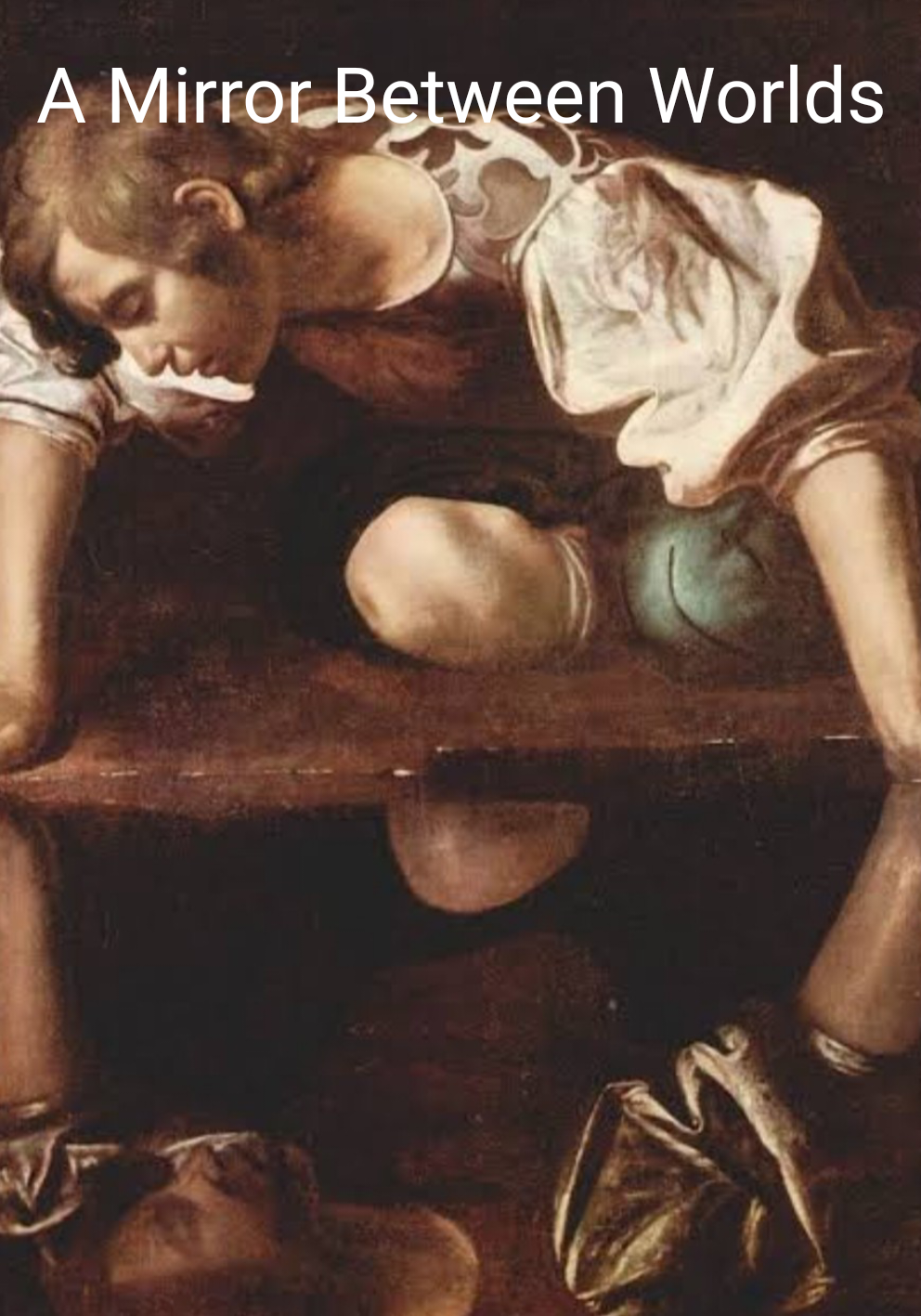
A Mirror Between Worlds
A Mirror Between Worlds

Title: A Mirror Between Worlds
In the quiet town of Saaketh valley, nestled between golden hills and ethereal rivers, the world walked with both magic and melancholy. It wasn’t the kind of magic that threw fireballs or summoned dragons — it was quieter, softer — like the way dawn turned shadows into light, or how thoughts of someone dear could make a flower bloom in your hand.
Dr. Priyansha Mishra, the youngest faculty member at Sanskar University, had mastered this kind of magic without knowing it. At just twenty-seven, her shelves overflowed with academic laurels. She had left behind a world that didn’t want her — a mother who saw her as the accident that ruined her youth, four sisters who sneered at her, and a brother who spoke only in order. Only her father, Prof Balbir Mishra, an IITian, who had spent most of his years in nurturing youth, imbibing values in them, had warmth and affection for her. As luck would have it, he was now paralyzed and cast aside by the rest of the family, considering him as a burden. He had ever looked at Priyansha with gentle eyes and she had accepted this challenge with utmost respect & love.
Her world now was built of books, lectures, and the lilac-scented evenings she spent with her father, whose fingers still trembled when she played old ghazals on the gramophone.
And then there was Arvind Rathore.
Arvind was forty -six, head of the Philosophy department, a man of slow thoughts and slow words, like the river nearby that took its own time to touch the sea. Married, father of two boys who barely acknowledged him, and husband to a homemaker named Kusum who had been the quiet root of their family tree. But Arvind had not loved in years — until Priyansha walked into his life.
She had been his PhD student once, bold-eyed and quick-witted. She made arguments in class that turned lecture halls into battlefields. Somewhere between her dissertation and her first lecture as faculty, Arvind found himself waiting for her in his office, offering her coffee, calling it “mentor support.”
It didn’t take long for his feelings to grow possessive.
“Priyansha,” he’d whisper after meetings, “you deserve more than just research papers. Let me be with you.”
But Priyansha refused every time, gently but firmly. “You have a family. And I have a life.”
Yet Arvind was like a vine — creeping, curling, returning. When the distance didn’t work, he took darker turns. He started using opium, then stronger potions brewed in the black alleys of Saaketh valley. When that didn’t win her affection, he turned cunning.
He re-entered her life masked as fragile, as needing “help.” In moments of her fatigue — after a draining day at work or a night spent tending her father — she let him in, for company, for conversation.
And then, one evening, he slipped a powdered haze into her tea.
It started as laughter. Then came visions of floating gardens and singing mirrors. Priyansha, who had never touched more than spiced coffee, was pulled into a spiral she didn’t know she’d stepped into.
For months, their relationship became a blur of meetings in secret corners, of dreamy afternoons and strange dependencies. At work, Priyansha began missing seminars. Her students whispered. Her father, always watching, knew something had changed — the way her steps didn’t hum anymore, the way her magic didn’t bloom flowers.
But the universe, ever playful, intervened.
One monsoon morning, Priyansha met Aryan — a PhD student , wide-eyed and brilliant, with questions that stretched to the skies. He stayed back after classes, not to flatter her, but to understand her. Over time, their conversations turned to laughter, then late-night poems shared over chai, and then into an intimacy she hadn’t expected.
Arvind noticed the change instantly.
He burst into her office one day, veins thumping with fury and something more terrifying — desperation.
“You let him touch you?” he screamed. “You’re mine, Priyansha”
“No one owns me,” she snapped, trembling. “And I’ve never been yours.”
In a moment of madness, he reached for the paper cutter on her desk. What followed was chaos — shouts, shattering glass, a wound on her shoulder, and colleagues bursting in to pull him away.
The college suspended Arvind indefinitely. Priyansha took leave. The town whispered. But she stayed strong — for herself, and for her father who needed her.
Time passed, and things grew quieter. Arvind’s wife, Kusum, who had always watched in silence, was now fighting a more silent war — stage four cancer. When she finally lost the battle, Arvind reappeared at Priyansha's doorstep.
“I’m free now,” he said, hands trembling. “Let’s marry. Let’s start again.”
To Priyansha's own surprise — and her father’s gentle nod — she said yes.
Maybe it was a pity. Maybe it was the ghost of what she once felt. Or maybe she just wanted closure.
But fate was not done with its games.
Aryan, her student lover, returned. Heartbroken, angry, unmoored. He had seen the wedding announcement in the university circular. He confronted her outside the campus gate.
“You said you loved me,” he cried. “And now you marry him?”
“I didn’t promise you forever,” she said quietly. “We both knew it wasn’t that.”
“I’ll kill him,” he whispered.
But he never got the chance.
Arvind died two nights later. No signs of violence. Just a quiet cardiac arrest, curled in the bed they’d never shared. Priyansha found him in the morning, a cup of tea growing cold beside him, a half-written letter in his hand:
"I never deserved you. But for a moment, I believed I did. Thank you for that illusion."
Priyansha didn’t cry. But she didn’t breathe for a long time.
For days after, she moved like a shadow. Not because of grief, but because of the strange emptiness that follows when a long chase ends, and all the noise vanishes.
Then, one night, the warden called.
Aryan had taken his life. A rope, a note, and a poem titled "Unwritten Chapters."
I wrote this line with trembling hands,
For love I thought you'd understand.
Each word I bled, each tear I hid,
Spoke of a heart you never did.
You smiled once — I made it more,
A fragile dream I dared adore.
But love, it seems, is not the same
When only one speaks out the name.
You turned away, and I stood still,
A silent boy on a windowsill.
I wrote to you, my final page,
My quiet pain, my quiet rage.
Not to blame or beg you to stay,
But to give the words I couldn't say.
That in this ache, so sharp, so true—
My last breath only thought of you.
And though I go where you won't see,
I leave this note: "I loved you... me."
A chapter lost, a light grown dim
A boy who died believing in him.
The university held vigils. The town grieved.
Priyansha did not speak for weeks. Her father watched her with eyes that held galaxies of sorrow and love. One evening, as the sun painted their home golden, he beckoned her closer with his trembling hand.
“You are not cursed,” he said. “You are the river. They tried to dam you, drink you, drown in you. But you... you keep flowing.”
She wept then, not for Arvind, not for Aryan, but for the girl she once was — the sixth child, the unwanted one — who had survived it all.
And so she lived. For her father. For herself.
Years later, a new student arrived at the university, curious and brilliant.
He asked her once, “Ma’am, do you believe in magic?”
She smiled faintly and made a flower bloom in her palm.
Author: Ratna Kaul Bhardwaj